Roughly 425 million years ago, warm Silurian seas covered southern China, where a meter-long bony fish ruled as the top hunter. Researchers recently uncovered a complete skull of Megamastax amblyodus, revealing its jaws bristled not with blunt crushers, but with clusters of sharp fangs mounted on strange “tooth cushions.” This landmark fossil, published in Nature, offers fresh insights into the dawn of bony fishes and their path to dominating modern oceans and land.
A Skull That Shattered Expectations
A Skull That Shattered Expectations (Image Credits: Wikimedia)
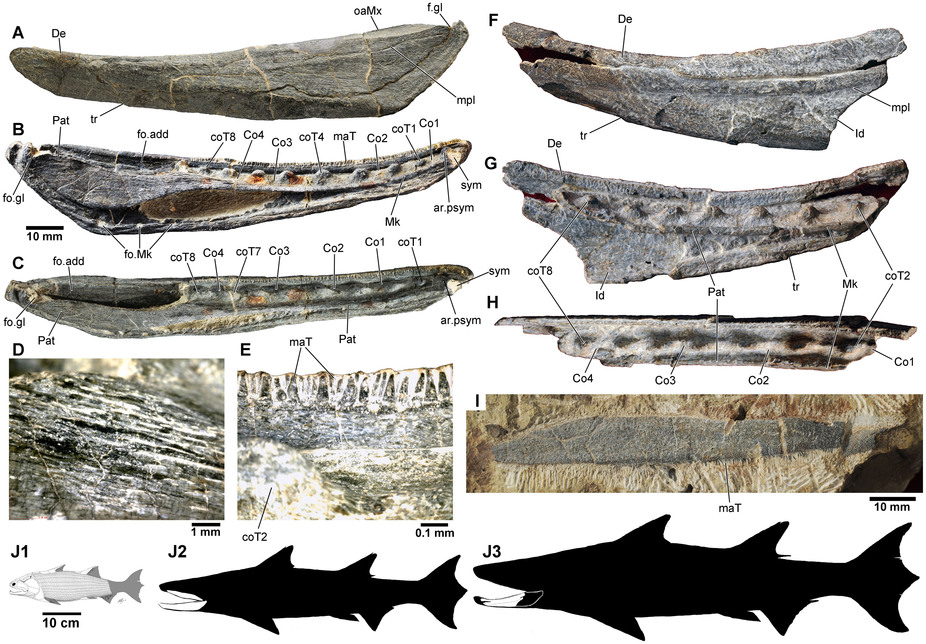
Paleontologists first encountered Megamastax in 2014 through isolated jaw bones unearthed from Yunnan’s Kuanti Formation. Those fragments featured prominent semicircular lumps along the inner jaw edge, which experts initially interpreted as oversized blunt teeth designed to pulverize armored prey. The name Megamastax amblyodus – “big mouth with blunt teeth” – reflected this view. At up to 17 centimeters long, the jaws hinted at a massive fish, the largest jawed vertebrate known from the Silurian Period.
Subsequent excavations yielded a full skull that upended prior assumptions. High-resolution scans exposed a long, narrow cranium with small eyes, a hooked snout, and a cavernous mouth. Cheeks and gill covers resembled those of early bony fishes, yet skull roof bones echoed features in the placoderm Entelognathus, an armored contemporary. The braincase extended unusually far back, while major arteries branched like those in primitive sharks. This mosaic anatomy positioned Megamastax as a pivotal stem-osteichthyan, bridging extinct armored fishes and today’s bony vertebrates.
Inside the Pincushion Maw
The skull’s interior unveiled the true nature of those enigmatic lumps: mounting bases for removable “tooth cushions.” Complementary rows studded the upper jaw, where circular pads slotted in, each crowned by a bouquet of piercing fangs. Rather than crushers, these formed a snaring array ideal for soft-bodied prey. In life, the setup created a choking thicket of spikes, perfect for an apex predator outsizing its neighbors.
Prior hints of such structures appeared in tiny, isolated cushions linked to European Silurian fishes Lophosteus and Andreolepis. Earlier views tied them to gills, though some suspected dental roles. Megamastax clarifies their function as widespread inner dental arcades at bony fishes’ base, later discarded in ray-finned and lobe-finned lineages. Marginal teeth remained sharp for slicing, enhancing the overall lethality.
Positioning the Predator in Fish Evolution
Bony fishes, or osteichthyans, comprise 98% of living vertebrates, splitting into ray-finned (like salmon) and lobe-finned (ancestors to tetrapods) lines by Silurian’s close. Stem forms predating this divergence survived mainly as scraps from Silurian and early Devonian deposits. Megamastax‘s skull fills this void, placing it nearest the pivotal split among analyzed stems.
Family tree revisions elevate it as a “great-uncle” to all modern bony vertebrates. Frontal bones sported shelves extending into the palate, a trait shared with placoderms. Such “default” traits map how osteichthyans gained specialized features, fueling their radiation into oceans, rivers, and eventually land. As the earliest clear vertebrate apex predator, it dominated Silurian food webs.
Key anatomical traits of Megamastax amblyodus include:
- Meter-long body, largest Silurian jawed fish.
- Long skull with small eyes and hooked snout.
- Removable tooth cushions with fang clusters for piercing prey.
- Mosaic features blending bony fish, placoderm, and shark-like traits.
- Inner dental arcade lost in descendant lineages.
Complementary Discoveries Enrich the Timeline
This skull pairs with another Chinese gem: Eosteus chongqingensis, a 3-centimeter fish from Chongqing’s 435-million-year-old Huixingshao Formation. That specimen preserves a full body and fins, complementing Megamastax‘s cranial detail. Over 10 million years older, Eosteus claims title as the record’s earliest osteichthyan.
Together, these fossils illuminate stem-osteichthyan diversity. Fragmentary evidence once obscured their anatomy; now, articulated skulls and bodies reveal experimentation in jaws, dentition, and skulls. Such finds from China underscore the region’s role in vertebrate origins.
| Fossil | Age (mya) | Key Preservation | Significance |
|---|---|---|---|
| Megamastax amblyodus | 425 | Complete skull | Tooth cushions, apex predator |
| Eosteus chongqingensis | 435 | Full body | Oldest osteichthyan |
| Lophosteus, Andreolepis | Silurian | Fragments | Early tooth cushions |
Key Takeaways:
- Megamastax redefines early predator dentition with fang-bearing cushions.
- Bridges placoderms and bony fishes in evolution.
- Highlights China’s fossil troves for vertebrate history.
The Megamastax skull not only demystifies a prehistoric maw but also charts the anatomical blueprint for vertebrate success. It reminds us how fragile fossils can unlock deep time’s secrets, tracing our own lineage from ancient seas. What surprises you most about this ancient hunter? Share your thoughts in the comments.