Astronomers have long puzzled over the dual behaviors of black holes, but recent observations reveal they operate like precise regulators of cosmic material.
A Surprising Trade-Off in Black Hole Activity
A Surprising Trade-Off in Black Hole Activity
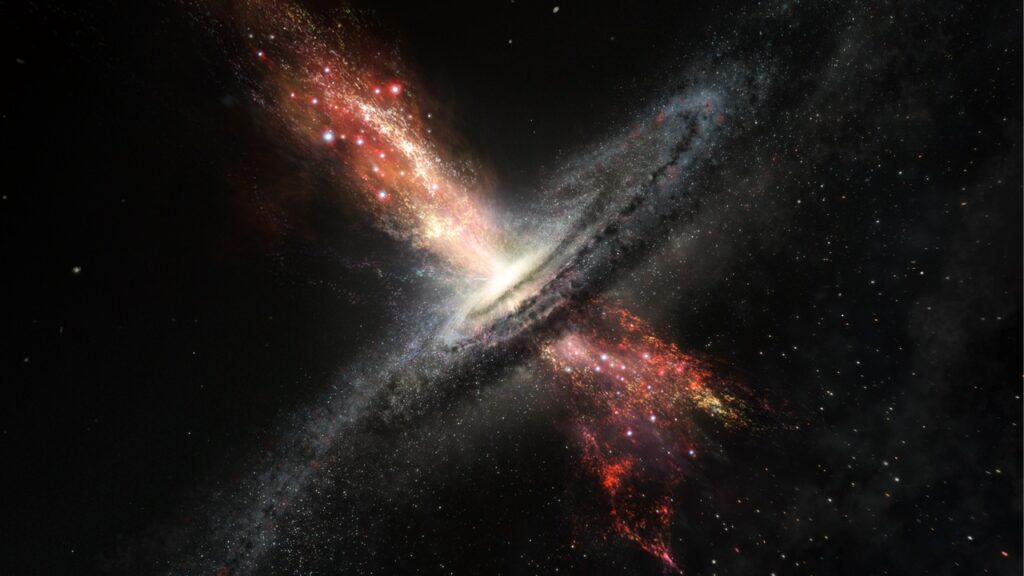
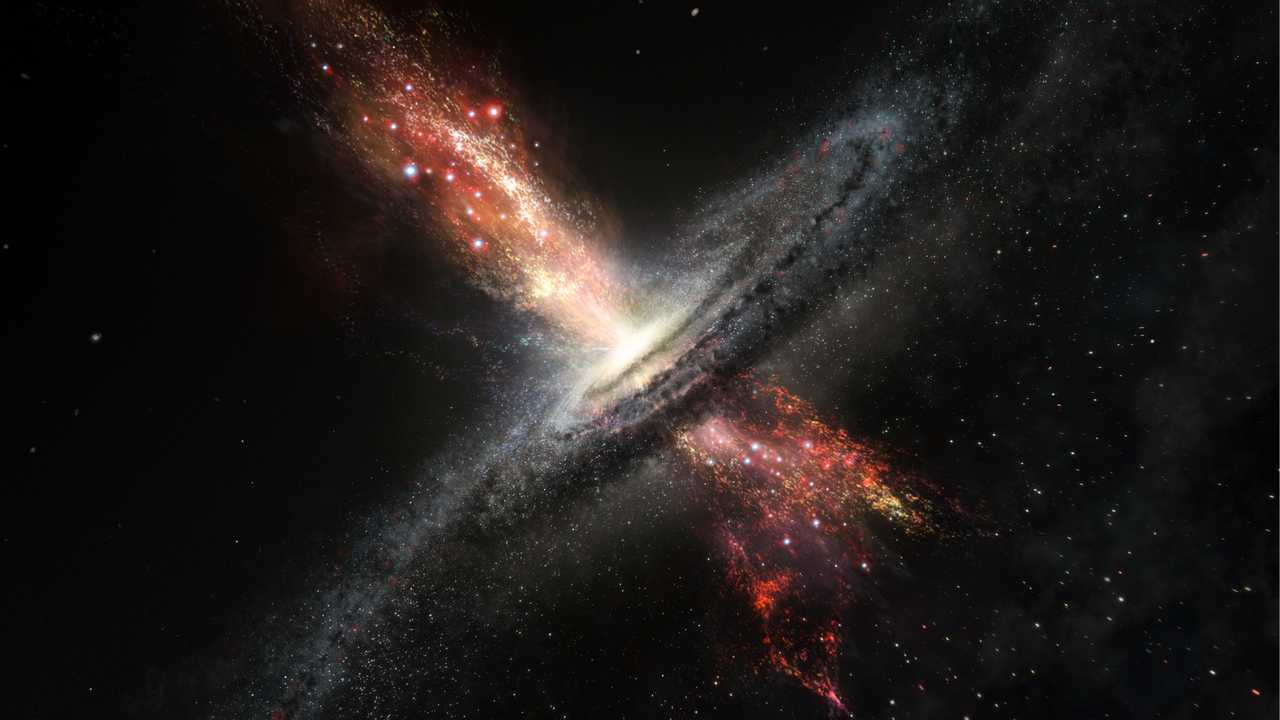
Black holes possess an extraordinary ability to influence their surroundings, yet new data shows they favor one form of outburst over another. Researchers using NASA’s Neutron star Interior Composition Explorer, or NICER, detected that these cosmic giants either unleash powerful winds or fire off high-energy jets, but rarely both simultaneously. This binary choice challenges previous assumptions about black hole dynamics.
The study, led by scientists at the University of Warwick, examined multiple active black hole systems. In cases where jets dominated, winds appeared subdued, and vice versa. Such patterns suggest an underlying mechanism that tips the balance, much like a seesaw shifting weight from one side to the other. This discovery emerged from detailed X-ray analysis, highlighting the instrument’s precision in capturing fleeting emissions from these extreme environments.
The Mechanics Behind the Cosmic Seesaw
At the heart of a black hole lies an accretion disk, a swirling ring of gas and dust drawn in by immense gravity. As material spirals inward, it heats up and generates intense radiation. Depending on the disk’s properties – such as its density or magnetic field strength – the black hole responds differently. Strong magnetic fields might channel particles into narrow jets that streak across space at near-light speeds, while weaker fields allow broader winds to sweep away matter more gently.
This seesaw effect ensures black holes do not overwhelm their host galaxies with unchecked activity. Jets, for instance, can carve through interstellar gas, triggering star formation in distant regions. Winds, on the other hand, regulate the flow of material back into the galaxy, preventing excessive buildup around the black hole. Observations from NICER confirmed this in several quasars and stellar-mass black holes, providing a clearer picture of how these processes alternate.
Broader Impacts on Galactic Evolution
Black holes play a pivotal role in the universe’s architecture, and this balancing act explains their regulatory influence. By alternating between jets and winds, they help distribute elements forged in stellar cores, enriching interstellar space. This feedback mechanism tempers galaxy growth, ensuring stars form at a sustainable rate rather than in chaotic bursts.
Galaxies like our Milky Way host supermassive black holes at their centers, and similar dynamics likely apply on vast scales. The findings imply that without this seesaw, galaxies might either starve of fresh material or become choked by it. Astronomers now see black holes not just as destructive endpoints, but as architects that fine-tune cosmic development over billions of years.
NICER’s Role in Peering into the Invisible
NICER, mounted on the International Space Station, excels at measuring X-ray timing and spectra from distant sources. Its ability to detect rapid fluctuations allowed researchers to distinguish between jet and wind signatures with unprecedented clarity. Over the past several years, the instrument has observed dozens of black hole systems, building a dataset that supports the seesaw model.
Future missions could build on this work, perhaps combining NICER’s data with other telescopes for multi-wavelength views. For more details on the study, see the report from Space.com. These insights underscore the ongoing quest to decode the universe’s most enigmatic forces.
Key Takeaways
- Black holes alternate between ejecting material as jets or winds, but not both at the same time.
- This mechanism regulates galaxy evolution by controlling matter distribution.
- NICer’s X-ray observations provided the evidence needed to confirm the seesaw-like behavior.
As telescopes like NICER continue to unveil the subtle dances of black holes, our understanding of the universe’s shaping forces deepens, reminding us of the intricate balance that governs cosmic scales. What aspects of black hole research intrigue you most? Share your thoughts in the comments.