Pau Brasil, Brazil – A fleeting glimpse of a rare black jaguar on a forest trail highlighted the resurgence of wildlife in Brazil’s Caramuru-Paraguassu Indigenous Territory under Pataxó stewardship.
Nighttime Sighting Ignites Optimism
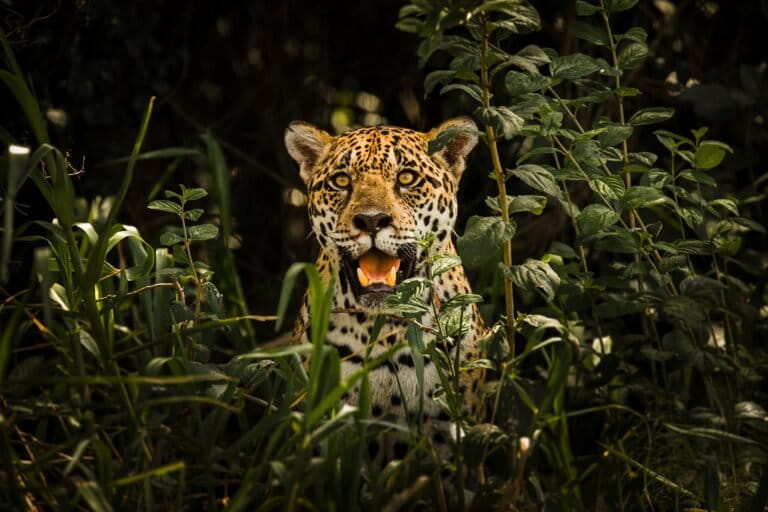
Nighttime Sighting Ignites Optimism (Image Credits: Imgs.mongabay.com)
Indigenous leader Fábio Titiah, a cacique and city councilor in Pau Brasil, described the moment a shadow burst from the undergrowth around 10 p.m. while he walked toward Água Vermelha village. The animal’s glistening, pitch-black pelt marked it as a melanistic jaguar, one of the rarest sights in Brazil’s Atlantic Forest. Titiah viewed the encounter as more than chance; it signaled nature’s recovery after decades of disruption.
The territory faced illegal occupation by cattle ranchers, which transformed forests into pastures and altered soil, climate, and vegetation. Community reclamation allowed areas to regenerate naturally. “There was a time when we started the reclamation process… and found a large part of our land transformed into cattle pasture,” Titiah recalled. “Then our people left a good part of these areas to regenerate. Some animals that hadn’t been seen here before started appearing. The jaguar started to return.” Spotted jaguars soon followed, demonstrating the impact of secure Indigenous presence.
Ywy Ipuranguete Project Bolsters Land Guardianship
Brazil’s Ministry of Indigenous Peoples launched the Ywy Ipuranguete initiative on March 18, 2025, translating to “beautiful lands” in Tupi-Guarani. This effort targets 15 territories spanning 6 million hectares across threatened biomes like the Amazon, Pantanal, Atlantic Forest, Caatinga, and Cerrado. Funded by $9 million from the Global Biodiversity Framework Fund, the project enhances self-governance, territory monitoring, restoration, sustainable income, and food security.
In Bahia’s Caramuru-Paraguassu, recognized as Indigenous land since 1926, the Pataxó Hãhãhãe community embraced the support. Leaders now plan preservation zones, reforestation, and balanced land use. The initiative unites nations including Munduruku, Kayapó, Guarani-Kaiowá, Pankararu, Tremembé, Terena, and Kadiwéu across states like Pará, Mato Grosso do Sul, Ceará, Pernambuco, and Bahia. Titiah emphasized the need to “define areas for preservation, help to reforest, and strengthen the environmental issue.”
Jaguar Populations Thrive on Indigenous Lands
The jaguar, listed as near threatened by the IUCN, lost nearly half its South American range to habitat loss, prey depletion, and poaching. Brazil hosts about half the global population, concentrated in the Amazon and Pantanal, but Atlantic Forest and Caatinga groups number only hundreds and face critical endangerment. These cats demand undisturbed habitats and connectivity corridors for genetic health.
Studies show higher jaguar densities on Indigenous territories, which boast lower deforestation and better ecological links than other protected areas. A 2023 analysis pinpointed eight top-priority Amazon sites as Indigenous lands:
- Arariboia
- Apyterewa
- Cachoeira Seca
- Kayapó
- Marãiwatsédé (estimated 16 jaguars)
- Uru-Eu-Wau-Wau
- Xingu
- Yanomami
Two others were Terra do Meio Ecological Station and Mapinguari National Park. Ywy Ipuranguete includes jaguar hotspots like Kayapó lands.
Experts Champion Indigenous-Led Protection
Ronaldo Morato, Brazil director for Panthera and IUCN Cat Specialist Group member, praised the project’s biodiversity monitoring and governance focus. “Jaguar population densities are higher in Indigenous lands,” he noted. “It will be interesting to see how protection of these areas is secured through Indigenous governance. I think it will be important for jaguar conservation and biodiversity conservation in general.”
Rafael Hoogesteijn, another IUCN expert, stressed corridor preservation amid accelerating habitat loss. “It’s very important to maintain protected areas intact without deforestation and the corridors between them,” he said. Ethnobiologist Fábio Dario highlighted the jaguar’s dual role: “The jaguar is both an ecological and cultural keystone species.” For the Pataxó, it remains sacred, embodying strength and agility.
Key Takeaways
- Indigenous territories host higher jaguar densities with less deforestation.
- Ywy Ipuranguete safeguards 6 million hectares, aiding regeneration like in Caramuru-Paraguassu.
- Early signs, such as black jaguar sightings, point to broader wildlife recovery.
Indigenous stewardship offers a proven model for jaguar survival, blending cultural reverence with practical restoration. As projects like Ywy Ipuranguete expand, researchers anticipate wider wins for Brazil’s big cats and ecosystems. What role do you see for Indigenous knowledge in global conservation? Share your thoughts in the comments.