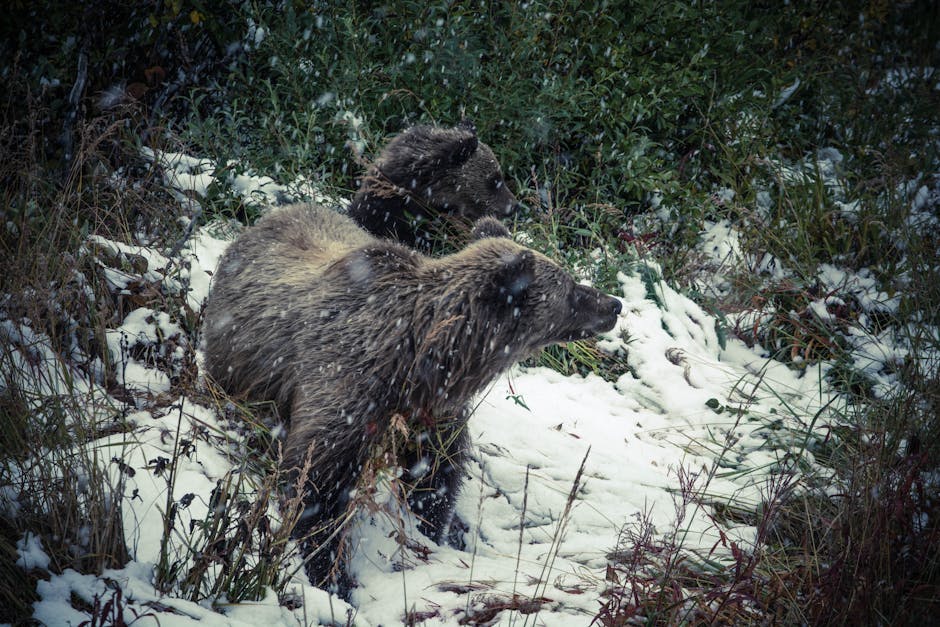
In the Blue Mountains region where Washington, Idaho, and Oregon converge, elk populations have surged onto private ranches and farmlands, creating mounting conflicts between wildlife and landowners. Ranchers report frequent intrusions by herds seeking safety, while state agencies struggle to balance conservation with agricultural protection. Recent policy shifts and environmental pressures have exacerbated the issue, raising questions about long-term habitat management.
Elk Seek Refuge Amid Unsettled Public Lands
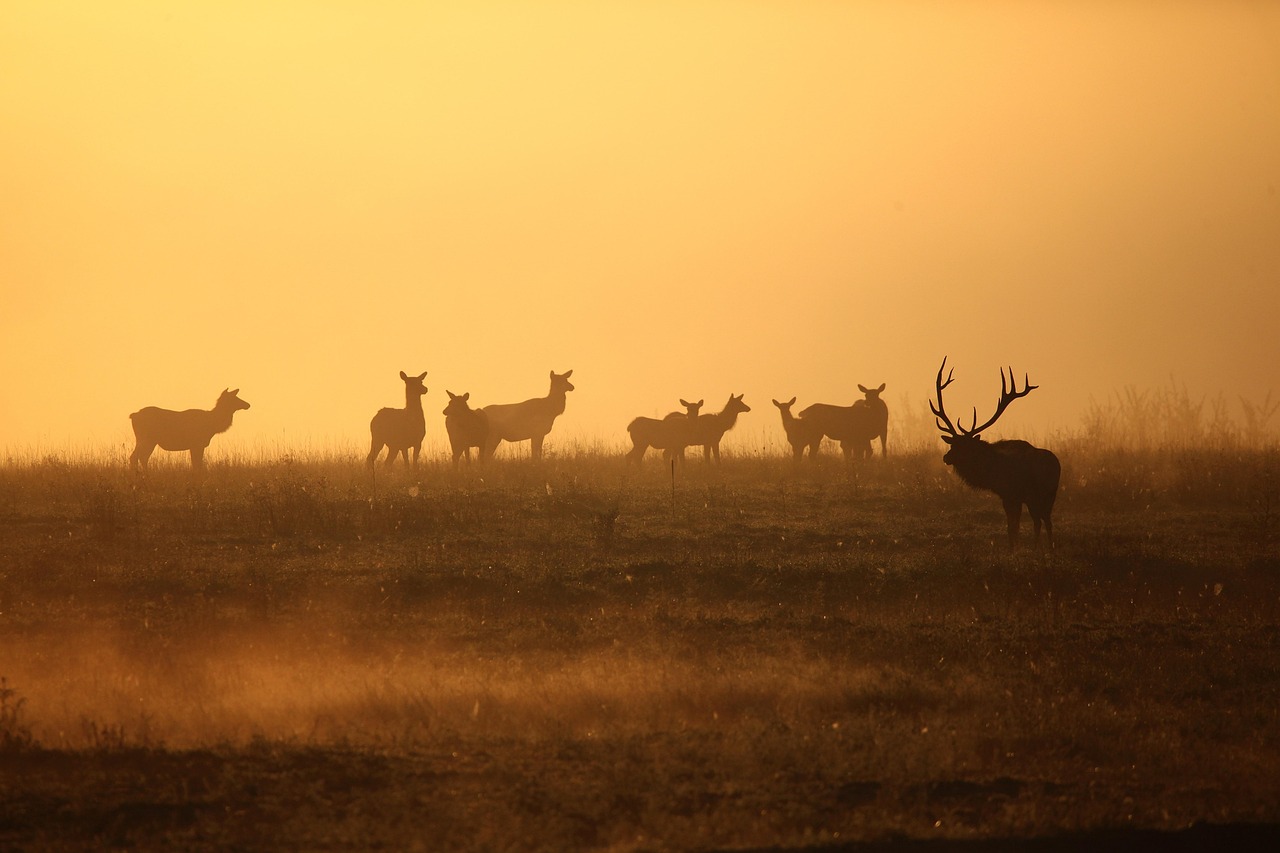
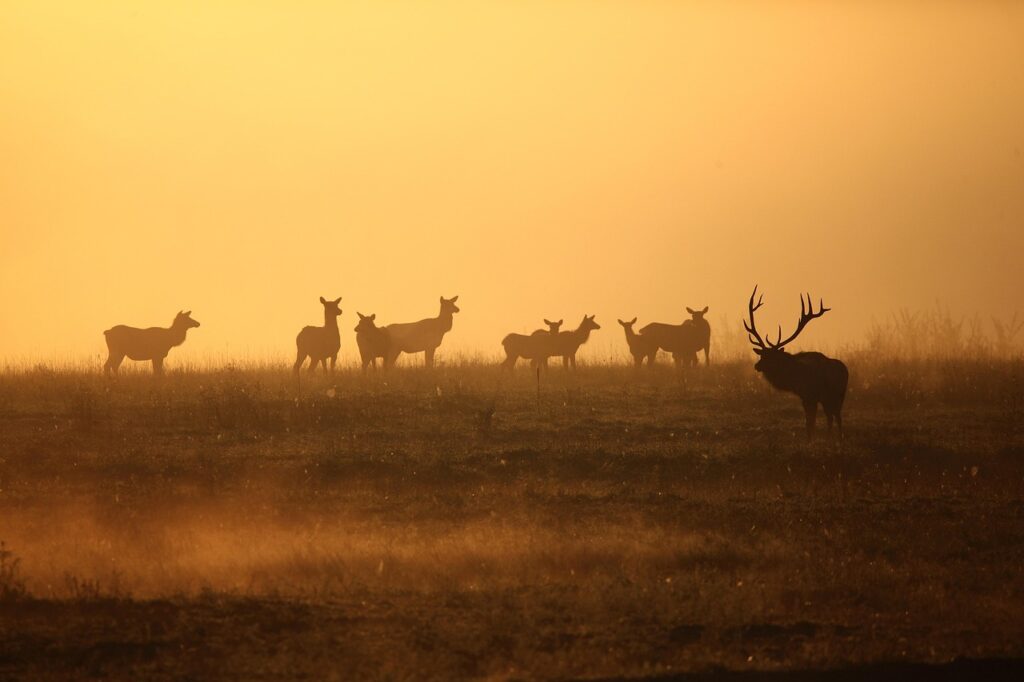
Elk Seek Refuge Amid Unsettled Public Lands (Image Credits: Pixabay)
Wildlife biologists once expected elk to remain primarily on national forests, where hunting and habitat controls maintained stable numbers. However, herds now roam freely across property lines, drawn by perceived safety on private terrain. A rancher near Mount Vernon, Oregon, observed tracks of elk, coyotes, and mountain lions along the boundary with Malheur National Forest, noting the animals’ constant movement.
Former biologist Shaun Robertson, who now manages cattle on 4,300 acres, described the pattern clearly. “These elk are just moving all the time to find someplace safe,” he said. “We’re seeing them more often because there’s nowhere they feel safe.” Predators such as mountain lions, bears, and wolves have proliferated on public lands, pushing elk toward quieter private areas.
Forest Management Swings Disrupt Habitat Balance
Federal forest policies in the Blue Mountains have oscillated dramatically over decades, altering elk preferences for open forage and protective cover. Logging in the 1970s and 1980s cleared trees excessively, reducing hiding spots. Environmental restrictions in the 1990s and 2000s then allowed overgrowth, limiting food sources amid denser brush.
Recent wildfires have intensified calls for thinning, a move supported by the U.S. Forest Service’s draft plan for prescribed burns and forest reduction. Yet the Trump administration’s emphasis on expanded logging, roads, trails, and recreational access adds uncertainty. These changes make public lands feel less secure, driving elk onto adjacent ranches. Jason Earl, a conflict supervisor for Washington’s Department of Fish and Wildlife, captured the dilemma: “It’s bad for the elk, it’s bad for the humans.”
Ranchers Bear the Brunt of Crop Damage and Costs
A few hundred elk can devastate fields by consuming crops, uprooting vegetation, and turning soil to mud. Washington state doubled its reimbursement budget to $420,000 annually for such losses, yet farmers insist it falls short. Standard barbed-wire fences prove useless against the thick hides of mature elk, which leap them effortlessly.
Landowners like Robertson invest in high-tensile steel barriers, replacing miles of fencing at significant expense. Neighbor disputes arise too, as some convert ranches into private hunting preserves, attracting herds that spill over boundaries. Urban weekend visitors on four-wheelers compound the strain, disregarding impacts on working farms.
- Crop consumption and trampling lead to thousands of dollars in annual damage per property.
- Reimbursement programs cover only a fraction of verified losses.
- Elk favor private lands for winter forage, especially rangelands comprising 27% of the herd’s range.
- Subdivision of private holdings fragments habitat, worsening access issues.
- Hunting preserves adjacent to farms draw elk, heightening conflicts.
Declining Calf Survival Signals Broader Concerns
Oregon’s elk numbers remain strong overall, but Washington’s Blue Mountains herd faces decline. Surveys peg the population at 3,600 to 4,614 animals, well below the 5,500 target, with juvenile recruitment averaging 22 per 100 adult females – 11% under the long-term norm. Predation accounts for 78% of calf deaths, led by cougars.
Researchers deploy helicopters, dart guns, and GPS collars to monitor movements and health. Factors like drought, wildfires, and hemorrhagic disease compound pressures. State agencies haze elk with noise, lights, and presence to redirect them, though biologists worry about added stress on vulnerable young.
| Factor | Impact on Elk |
|---|---|
| Predation | 77.8% of calf mortalities; cougars primary |
| Habitat Changes | Wildfires alter forage; policy shifts reduce security |
| Human Activity | Increased roads, recreation displace herds |
Cultural Roots and Path Forward
Elk hold deep significance in the Pacific Northwest, featured in tribal creation stories and early settler diets. Officials reintroduced them in the 1910s from Yellowstone after near-extinction. Today, agencies rely on hunting and harassment for control, while the Forest Service refines its 20-year management plan.
Andrew Wildbill of the Confederated Tribes of the Umatilla Indian Reservation reflected on ancestral ties: “Basically, we didn’t know how to live or take care of ourselves, so the animals took pity on us. They said, ‘We’ll be there for you, but you have to be there for us.’” Balancing these imperatives demands coordinated efforts across states and landowners.
- Policy volatility and predators drive elk from public to private lands.
- Ranchers face substantial economic losses despite aid programs.
- Targeted habitat improvements and predator management offer hope.
Restoring equilibrium in the Blue Mountains requires steady forest practices and innovative coexistence strategies. As elk adapt to a changing landscape, stakeholders must prioritize sustainable solutions. What do you think about these wildlife challenges? Tell us in the comments.