Brazil – Recent satellite monitoring revealed a sharp slowdown in Amazon rainforest clearing as 2026 began.
Alerts Signal Lowest Clearing in Over a Decade
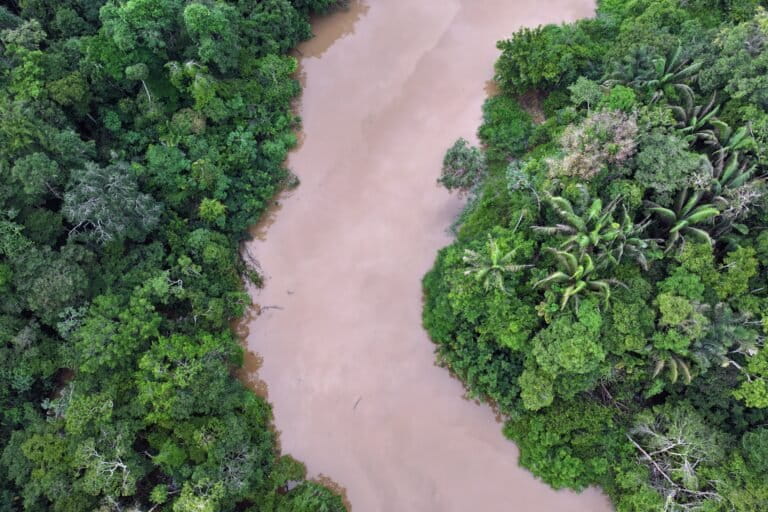
Alerts Signal Lowest Clearing in Over a Decade (Image Credits: Imgs.mongabay.com)
The National Institute for Space Research (INPE) reported just 1,325 square kilometers of deforestation alerts from August 1, 2025, to January 31, 2026.[1]
This marked a 35% decrease compared to 2,050 square kilometers detected in the same period the previous year. Such figures represented the lowest for this interval since 2014. INPE’s DETER system, which tracks near-real-time satellite imagery, guided these findings. Officials highlighted the data during a recent press conference. Over the trailing 12 months, alerts totaled 3,770 square kilometers, down from 4,245 square kilometers a year earlier and again the lowest since 2014.
Annual Data Confirms Downward Momentum
INPE’s PRODES system, which provides official yearly totals using higher-resolution images, showed deforestation fell 11% to 5,796 square kilometers in the 12 months ending July 2025. This rate stood as the lowest in 11 years. Independent group Imazon estimated forest loss near a six-year low for the period ending December 31, 2025, at 228 square kilometers.
These consistent drops across systems pointed to reliable progress after rates spiked earlier in the decade.
- DETER alerts: 35% lower for Aug-Jan period.
- Trailing 12 months: 11% reduction.
- PRODES annual: 11% decline to 11-year low.
- Imazon SAD: Near six-year low.
Government Actions Drive the Change
Environment Minister Marina Silva attributed the gains to stronger enforcement under President Luiz Inácio Lula da Silva. She noted that 70 of 81 high-deforestation municipalities committed to federal programs. “Of the 81 municipalities with the highest deforestation rates, 70 have already made this commitment,” Silva stated, referencing the Union with Municipalities initiative.
Resources from the Amazon Fund supported prevention efforts. Coordinated policies targeted illegal clearing effectively. Silva expressed optimism: “There is an expectation that we will reach, in 2026, the lowest deforestation rate in the historical series in the Amazon if we continue with these efforts.”
Neighboring Cerrado Sees Parallel Gains
Deforestation in the Cerrado savanna, adjacent to the Amazon, also declined to 1,905 square kilometers from August 2025 to January 2026, compared to 2,025 square kilometers previously. This drop underscored broader environmental improvements in Brazil’s biomes.
Challenges Ahead Despite Progress
Experts cautioned that short-term data could vary due to cloud cover during rainy seasons. Most large-scale clearing occurred in dry months anyway. Long-term success hinged on sustaining policies amid economic pressures, infrastructure growth, and climate risks like drought and fires. Records date back to 1988, making a potential historic low within reach.
Key Takeaways
- 35% drop in early-year alerts signals strong reversal.
- Multiple systems confirm 11-year lows in annual rates.
- Enforcement and commitments fuel the decline.
Sustained vigilance offers the best path to preserving the Amazon’s vital ecosystems. What do you think about these trends? Tell us in the comments.