The Congo Basin stands as one of Earth’s most vital ecosystems, spanning six Central African nations and harboring unparalleled natural wealth. This vast region, often called the planet’s second lungs, supports immense biodiversity while offering pathways to sustainable economic growth. Recent initiatives signal a shift toward a bioeconomy that leverages these resources without depletion, positioning Central Africa at the forefront of the global green transition.
Leaders and international partners increasingly recognize the basin’s role in climate stability and local development. Programs funded by organizations like the World Bank and UN agencies aim to create jobs and reduce emissions through forest-friendly enterprises. This approach promises to balance conservation with prosperity for the 60 million people who depend on the area.
The Congo Basin’s Extraordinary Natural Assets
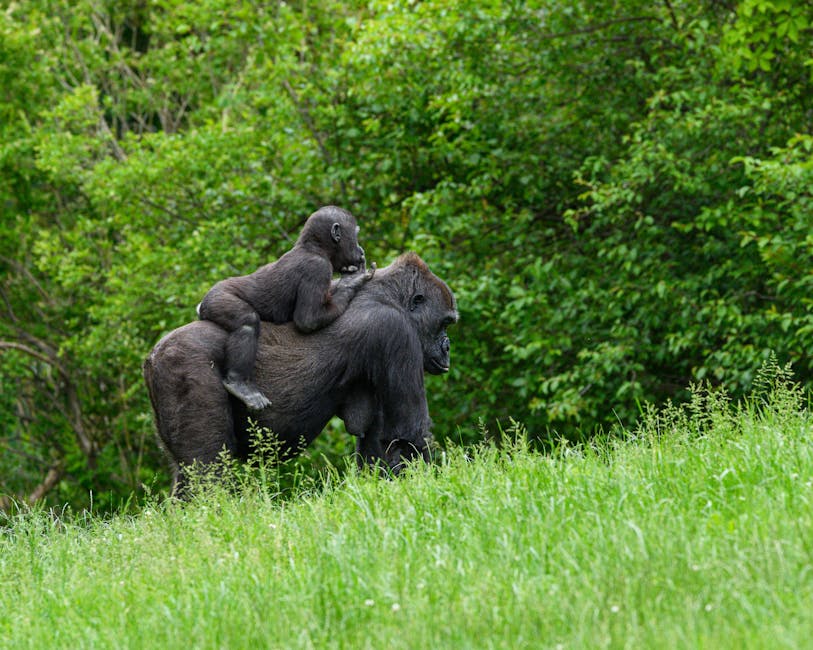
The Congo Basin’s Extraordinary Natural Assets (Image Credits: Pexels)
Forest cover in the Congo Basin exceeds that of any tropical area except the Amazon, making it the world’s second-largest rainforest. The region stretches across more than 3.7 million square kilometers, equivalent to nearly 1.5 million square miles, and stores around 30 billion metric tons of carbon. Its forests absorb carbon dioxide at rates surpassing all other regions, with annual net uptake six times that of the Amazon.
Water resources further underscore its global importance. The basin holds the second-largest reserve of drinkable water on Earth, accounting for 50% of Africa’s total. These assets not only sustain local communities but also influence rainfall patterns across the continent. Protecting them remains essential amid rising pressures from climate change and population growth.
Pioneering Initiatives Fuel Bioeconomy Growth
A $15 million Pro-Congo initiative, backed by the UN Capital Development Fund, UN Environment Programme, and Central African Forest Initiative, targets nature-positive businesses in Cameroon, Democratic Republic of Congo, Gabon, and Republic of Congo. This effort seeks to unlock investments in green sectors, demonstrating viable models for enterprises that avoid deforestation. Blended finance mechanisms aim to attract further capital from impact investors and development banks.
The World Bank approved a $394.83 million program in March 2026 to transform forest economies across Cameroon, Central African Republic, and Republic of Congo. Phase one of this multi-billion-dollar effort will place 8 million hectares under sustainable management, generate 220,000 jobs, and cut emissions by 17.6 million tons of CO2 equivalent annually. Support extends to over 500 small and medium enterprises, with training and finance for 20,000 people, including 40% women, and entrepreneurship for 7,000 youth.
Other efforts, like the Congo Basin Sustainable Landscapes Programme, promote regional collaboration on forest management and peatland preservation. These span all six basin countries – Cameroon, Central African Republic, Democratic Republic of Congo, Republic of Congo, Equatorial Guinea, and Gabon – plus expansions to Angola and São Tomé and Príncipe.
Sustainable Sectors Poised for Expansion
The bioeconomy draws from the basin’s biodiversity for industries like biopharmaceuticals and cosmetics, emphasizing local value creation over raw extraction. Forest ecosystem services alone rose from $590 billion in 2000 to $1.15 trillion in 2020, highlighting untapped potential. Programs prioritize sectors such as cocoa, coffee, non-timber forest products, and carbon credits to foster inclusive growth.
- Agroforestry and community forest enterprises to boost legal wood processing.
- Wood energy plantations and clean cookstoves to curb fuelwood demand.
- National forest monitoring systems for better governance.
- Support for SMEs in value chains that preserve ecosystems.
- Carbon market roadmaps for six countries to monetize forest wealth.
These strategies address historical imbalances where global benefits from biodiversity outpaced local gains. By focusing on sustainable processing and markets, the region can retain more economic value.
Navigating Challenges in the Green Shift
Despite progress, threats like deforestation drivers and mineral extraction persist in this fragile ecosystem. Initiatives counter these by integrating conservation with development, such as the Democratic Republic of Congo’s Kivu-Kinshasa Green Corridor for reforestation and stabilization. Regional dialogues under frameworks like the Congo Basin Forest Partnership prioritize bioeconomy in future roadmaps.
Success hinges on robust policies, including updated forestry codes that reconcile resource use with preservation. International partnerships provide critical funding and expertise, yet local leadership drives implementation. The basin’s forests regulate moisture and rainfall, amplifying the stakes for sustainable practices.
Key Takeaways
- The Congo Basin’s forests and waters offer trillion-dollar ecosystem value for a bioeconomy-led transition.
- New programs like Pro-Congo and World Bank initiatives target jobs, emissions cuts, and sustainable management.
- Prioritizing local enterprises ensures benefits reach basin communities while safeguarding global climate roles.
The Congo Basin exemplifies how natural capital can fuel equitable green growth. By embracing bioeconomy models, Central Africa charts a course where ecological health and human progress align. What steps should leaders take next to realize this vision? Share your thoughts in the comments.