Millions of years ago, expansive floodplains stretched across what is now western North America, supporting herds of formidable herbivores. Ceratopsians, a diverse group of beaked dinosaurs renowned for their horns and elaborate neck frills, thrived in these environments during the Late Cretaceous period. Fossils discovered beneath modern grasslands, such as those in the Dakota Prairie Grasslands, offer glimpses into their world, where massive creatures navigated lush vegetation just before a catastrophic extinction event reshaped life on Earth.
From Small Origins to Giant Dominance
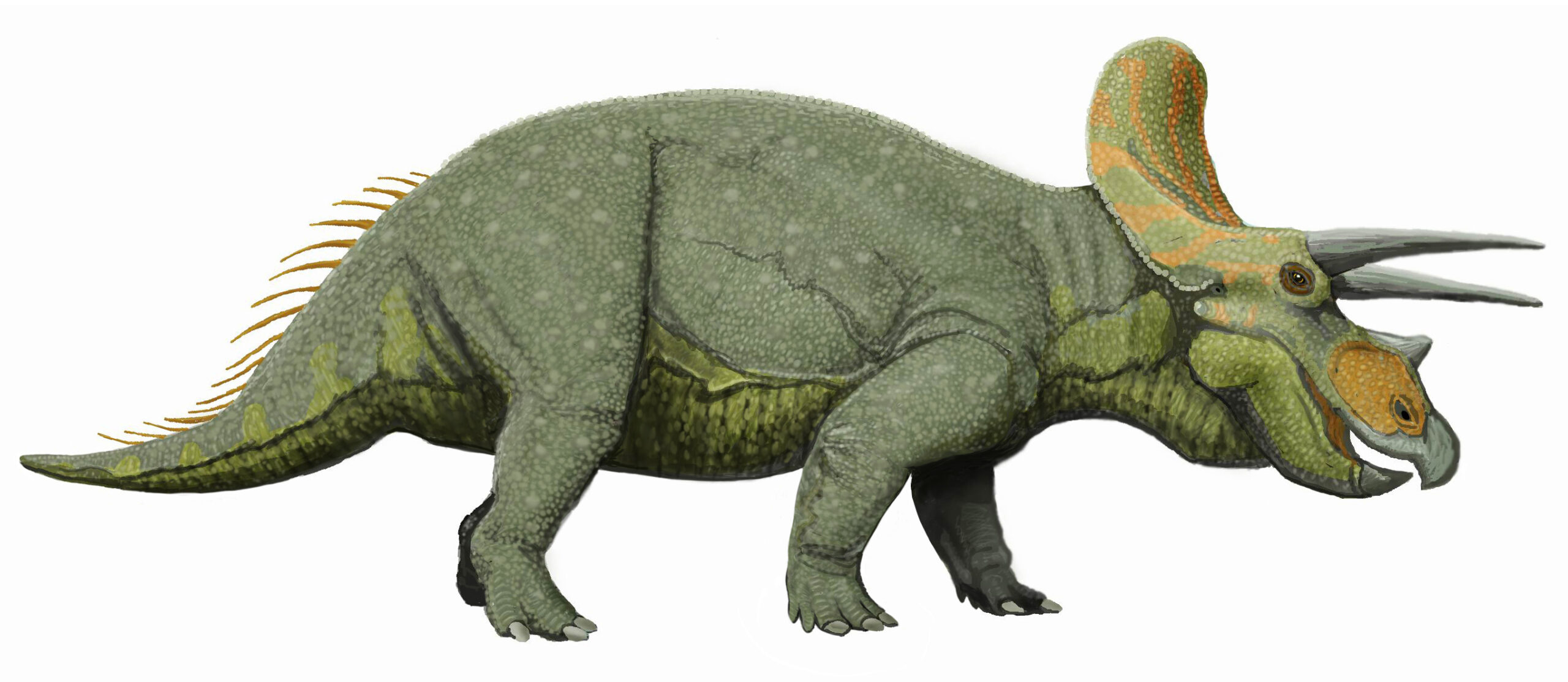
From Small Origins to Giant Dominance (Image Credits: Upload.wikimedia.org)
The story of ceratopsians began modestly in Asia during the Late Jurassic, around 161 million years ago, with small, bipedal herbivores lacking the dramatic features of their later relatives. Over tens of millions of years, these early forms evolved into quadrupedal giants, spreading to North America and even Europe by the mid-Cretaceous. Advanced species developed robust batteries of shearing teeth and powerful jaws suited for processing tough plants.
This transformation peaked in the Late Cretaceous, when ceratopsians became dominant herbivores in floodplain ecosystems. Basal members like Psittacosaurus measured just one meter long, while giants exceeded nine meters. Paleontologists trace their dispersal across ancient land bridges, marking one of the most successful radiations among ornithischian dinosaurs.
Anatomy Built for Survival
Ceratopsians stood out with their parrot-like beaks, formed by a rostral bone and predentary, ideal for cropping vegetation. Later species boasted expansive neck frills – bony shields often adorned with spikes or hooks – and an array of horns on the nose and above the eyes. These structures likely served multiple roles, from defending against predators like Tyrannosaurus rex to signaling during social displays.
Quadrupedal stance supported their massive bodies, with sizes ranging from 23 kilograms to over 9 tons. Shearing dentition allowed them to tackle fibrous ferns, cycads, palms, and conifers that other herbivores avoided. Skin impressions and bonebed evidence suggest thick hides and group living enhanced their resilience in predator-filled landscapes.
Iconic Species Across the Plains
Triceratops horridus captured imaginations as one of the largest and most abundant ceratopsians, reaching 30 feet in length and weighing 6 to 12 tons. Its three prominent horns and expansive frill made it a formidable presence in the Hell Creek Formation. Other chasmosaurines, like Torosaurus, shared similar builds but featured longer frills.
Centrosaurines offered variety, with Styracosaurus sporting a towering nasal horn and spiked frill, and Pachyrhinosaurus displaying a thickened nasal boss instead of a horn. These species roamed coastal plains and river valleys, their fossils concentrated in bonebeds indicating herd behavior.
| Species | Length (m) | Weight (tons) | Primary Location |
|---|---|---|---|
| Triceratops | 9 | 6-12 | Western North America |
| Styracosaurus | 5.5 | 3 | Canada, Montana |
| Centrosaurus | 6 | 2.5 | Alberta, Montana |
| Pachyrhinosaurus | 6 | 3 | Northern North America |
- Protoceratops: Smaller Asian protoceratopsid, known from growth series in Mongolia.
- Einiosaurus: Low-slung nasal horn curving backward, from Montana.
- Chasmosaurus: Elongated frill with spikes, from Canada.
- Psittacosaurus: Primitive bipedal form, early Cretaceous Asia.
Daily Life Amid Floodplains and Vegetation
Ceratopsians favored lowland floodplains and coastal environments, where rivers deposited sediments preserving their remains. In these open areas, now overlaid by prairies like the Dakota Grasslands, they browsed low-lying plants inaccessible to taller herbivores. Evidence from sites such as the Hell Creek Formation points to preferences for mudstone-rich coastal zones over inland forests.
Recent excavations highlight their prevalence. In 2019, the partial skeleton of a young adult Triceratops dubbed “Shady” emerged from South Dakota’s Grand River National Grassland, featuring a massive 3,000-pound skull. Meanwhile, “Triceratops Dreams,” a near-complete specimen unearthed in North Dakota’s Hell Creek in 2024-2025, stunned researchers with its preservation. Healed injuries on skulls suggest intra-species combat, while bonebeds imply protective herds traveling together.
The Final Chapter
Ceratopsians vanished 66 million years ago alongside most dinosaurs in the Cretaceous-Paleogene extinction, likely triggered by an asteroid impact. Their abundance in final Maastrichtian rocks underscores their role as ecosystem engineers, shaping vegetation through specialized feeding. Today, their fossils continue to surface, reminding us of a lost era of giants.
Key Takeaways
- Ceratopsians evolved from small Asian bipeds into North American behemoths with horns and frills for defense and display.
- They thrived on tough floodplain plants, living in herds across what became modern grasslands.
- Triceratops remains the most iconic, with recent finds like Shady and Triceratops Dreams revealing new details.
Ceratopsians embodied the raw power and diversity of Late Cretaceous life, leaving a legacy etched in stone across ancient plains. Their story prompts reflection on prehistoric resilience and sudden ends. What fascinates you most about these horned wonders? Share in the comments.