Hunan Province, China – Researchers have uncovered more than 50,000 exceptionally preserved fossils in a single quarry, offering a rare glimpse into marine life just after the planet’s initial major extinction event. These Cambrian specimens, dating back 512 million years, highlight how deep-water ecosystems endured while shallow seas suffered devastating losses. The discovery challenges previous understandings of early animal survival and diversification.
A Monumental Find in a Remote Quarry
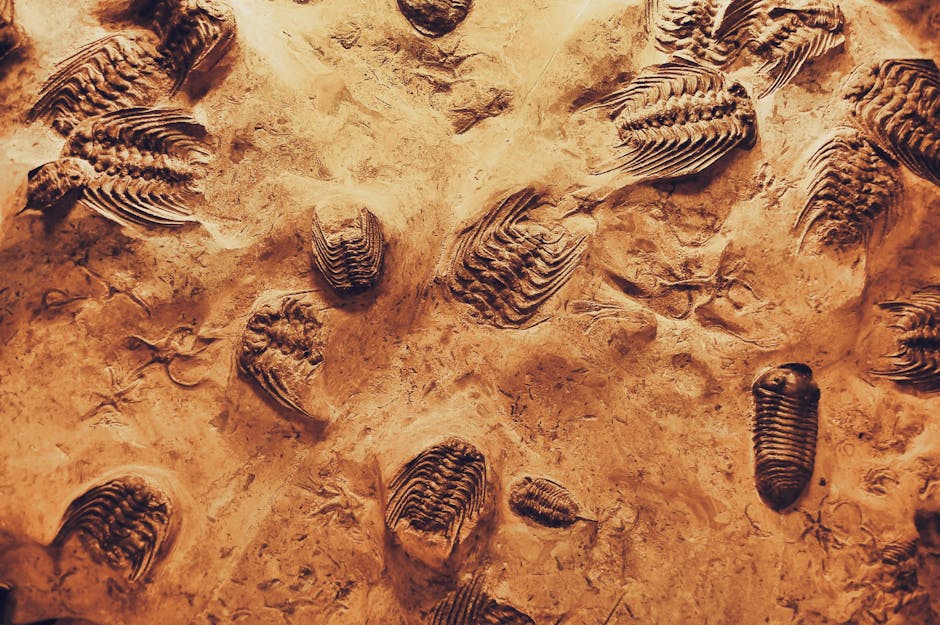
A Monumental Find in a Remote Quarry (Image Credits: Pexels)
Construction work in Huayuan County exposed layers of ancient shale in 2020, prompting paleontologists from the Nanjing Institute of Geology and Palaeontology to launch excavations. Over the next four years, the team meticulously collected specimens from a site measuring 12 meters high, 30 meters long, and 8 meters wide. This effort yielded over 50,000 fossils, with 8,681 formally studied so far.
Among these, scientists identified 153 distinct animal species, nearly 60 percent of which represented entirely new discoveries. The preservation quality stunned experts, capturing delicate features such as gills, digestive tracts, eyes, and even neural tissues. Han Zeng, a lead researcher, noted that many fossils displayed soft parts rarely seen in such abundance.
Life in the Shadow of the Sinsk Event
The Sinsk extinction struck around 513.5 million years ago, shortly after the Cambrian explosion unleashed a burst of animal diversity beginning about 540 million years ago. This event, comparable in severity to later “Big Five” die-offs, wiped out key shallow-water groups like archaeocyathid sponges, trilobites, and small shelly fossils. Low oxygen levels, possibly triggered by volcanic activity and warming oceans, disrupted circulation and starved surface habitats.
Yet the Huayuan biota tells a story of resilience. Spanning 16 phyla, it featured arthropods, mollusks, sponges, cnidarians, brachiopods, and abundant pelagic tunicates. A standout was the 80-centimeter apex predator Guanshancaris kunmingensis, alongside worm-like creatures and jellyfish relatives. These organisms formed complex food webs, complete with active hunters and biological carbon pumps that cycled nutrients through the water column.
Deep-Sea Refugia: Keys to Survival
Shallow coastal zones bore the brunt of the extinction, but deeper shelf-edge waters provided sanctuary. The Huayuan site, situated at the continental margin, preserved a thriving community largely untouched by the crisis. This selectivity explained why global biodiversity plummeted for roughly 50 million years afterward, until the Ordovician diversification.
Zeng explained, “The extinction mainly destroyed the shallow-water environment, and the deep-water environment… was less affected.” Such refugia enabled faunal migration and evolutionary innovation, reshaping marine ecosystems. The fossils also hinted at early adaptations, like efficient oxygen use in low-oxygen depths.
- Arthropods dominated, including legged walkers and swimmers with preserved antennae.
- Mollusks and brachiopods showed early shell experimentation.
- Cnidarians and tunicates indicated diverse planktonic life.
- Predators like Guanshancaris enforced trophic structure.
- Sponges and worms filled basal roles in the food chain.
Links to Global Cambrian Wonders
The Huayuan deposit rivals legendary sites like Canada’s Burgess Shale, dated to 508 million years ago, and China’s own Chengjiang biota from 518 million years ago. Shared taxa across these distant locales suggested larvae dispersed via ocean currents, fostering transoceanic exchange even in the extinction’s wake.
Joe Moysiuk, a paleontology curator unaffiliated with the study, praised the site’s diversity and detail, placing it among the elite Cambrian lagerstätten. These comparisons underscore how geography, depth, and chemistry influenced survival patterns during pivotal evolutionary junctures.
| Site | Age (mya) | Key Feature |
|---|---|---|
| Huayuan (China) | 512 | Post-extinction deep-water diversity |
| Chengjiang (China) | 518 | Early Cambrian explosion |
| Burgess Shale (Canada) | 508 | Middle Cambrian soft-bodied forms |
Broader Lessons from Ancient Recovery
This discovery fills critical gaps in the fossil record, where shelly remains once dominated narratives. It reveals how soft-bodied life reorganized after catastrophe, paving the way for Phanerozoic biodiversity. Future analyses of remaining specimens may uncover more species, including elusive early fish.
Key Takeaways:
- Deep waters served as refugia, sparing diverse soft-bodied faunas.
- Larval dispersal via currents linked distant ecosystems.
- Complex food webs reemerged swiftly post-extinction.
The Huayuan biota not only decodes a forgotten crisis but also reminds us of life’s tenacious adaptability. What insights might future digs yield about our planet’s resilient history? Share your thoughts in the comments.