Northeastern China – Researchers unveiled a juvenile dinosaur fossil that preserves skin structures at the cellular level, including unprecedented hollow spikes.
A Juvenile Marvel Preserved in Time
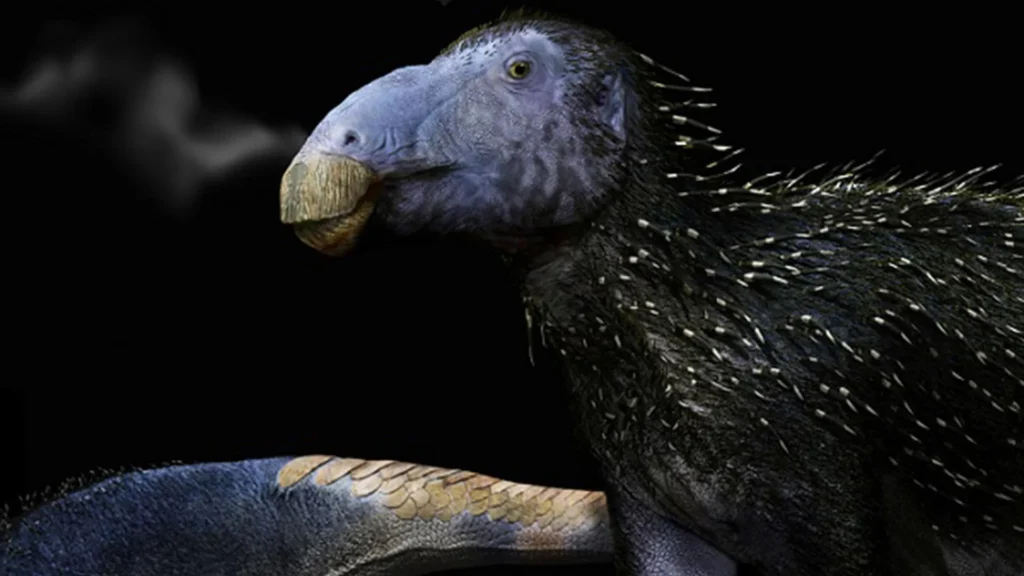
A Juvenile Marvel Preserved in Time (Image Credits: Fabio Manucci)
Paleontologists identified a new species, Haolong dongi, from the Early Cretaceous Yixian Formation. This herbivorous iguanodontian measured about 2.45 meters long and featured skin so well-preserved that individual cells remained visible after 125 million years. Scientists employed X-ray scans and high-resolution histological sections to examine ultra-thin tissue slices.
The specimen belonged to the Iguanodontia group, known for beaked mouths and powerful hind legs. It lived alongside small carnivorous dinosaurs, highlighting a predator-prey dynamic in its ancient ecosystem. This find marked the first documented case of hollow cutaneous spikes in dinosaurs.
Unprecedented Hollow Spikes Emerge
Haolong dongi sported cylindrical spikes scattered across its body, distinct from bony horns or plates. These skin-derived structures contained a porous dermal pulp at their core, surrounded by multi-layered epidermis with preserved keratinocytes down to their nuclei.
Overlapping scales covered the tail, while tuberculate scales appeared on the neck and thorax. The spikes differed from protofeathers or lizard spines, suggesting independent evolution. As a juvenile, the dinosaur raised questions about whether adults retained these features.
- Hollow interior unlike solid bone extensions.
- Porcupine-quill-like appearance for potential defense.
- Highly cornified outer layer for durability.
- Scattered among varied scale types on the body.
- Preserved cellular details unmatched in prior fossils.
Insights into Ancient Defenses and Adaptations
The spikes likely deterred predators, much like modern porcupine quills. Researchers proposed additional roles in thermoregulation, where increased surface area helped manage heat, or sensory detection of environmental cues.
Prior iguanodontian skin knowledge came from scattered scales in species like Tenontosaurus and later hadrosaurids. Haolong dongi expanded this view, showcasing greater diversity in ornithischian integuments.
The international team, including experts from CNRS in France and the Anhui Geological Museum in Hefei, published their analysis in Nature Ecology & Evolution on February 6, 2026.
Reshaping Dinosaur Skin Evolution
This discovery illuminated gaps in understanding non-avian dinosaur body coverings. It positioned Haolong dongi as a basal iguanodontian bridging early ornithopods and advanced hadrosaurs.
Advanced preservation techniques revealed microanatomy previously inaccessible, promising further revelations from similar sites.
Key Takeaways
- First hollow skin spikes documented in dinosaurs, redefining integument diversity.
- Exceptional cellular preservation offers cellular-level insights into ancient skin.
- Potential multi-role spikes: defense, thermoregulation, and sensory functions.
The unearthing of Haolong dongi underscored the Yixian Formation’s role in yielding transformative fossils. This spiny juvenile reminded scientists that dinosaur appearances held more surprises than imagined. What do you think these spikes reveal about Cretaceous life? Tell us in the comments.