Southern Province, Zambia – Deep in the Gwembe District, the Chirundu Fossil Forest emerges as a stunning relic of prehistoric times, where massive tree trunks turned to stone over 150 million years ago. This national monument preserves ancient coniferous forests that once thrived in a temperate climate far different from today’s arid landscape. Nominated to UNESCO’s World Heritage Tentative List in 2009, the site draws adventurers and scientists alike to witness nature’s time capsule.
Relics of a Lost Temperate World
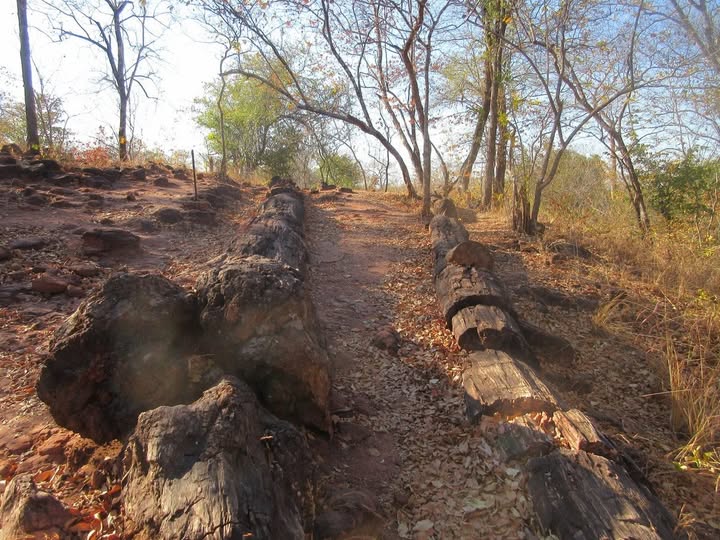
Relics of a Lost Temperate World (Image Credits: Facebook)
Picture towering coniferous trees felled by ancient floods, their remains petrified into stone while retaining intricate details like bark textures and growth rings. The Chirundu Fossil Forest features trunks assigned to Dadayoxylon sp. and Rhexoxylon africanum, some reaching diameters of 1.2 meters and lengths exceeding 10 meters. These specimens, dating to the Upper Karoo period of the Jurassic era, lie scattered across roughly 43 square kilometers, many in their original positions.
Unlike modern vegetation dominated by heat-tolerant mopane woodland, these fossils reveal a cooler, seasonal climate that supported lush forests. Well-preserved logs show alternating coarse and fine sedimentary layers in the surrounding red pebbly arkose rocks, hinting at environmental shifts over eons. Some fragments appear transported by water into streambeds, while others remain unmoved, offering a direct glimpse into the forest’s final moments.
Geological Formation and Scientific Value
The petrification process began when volcanic ash and silica-rich sediments buried the fallen trees, gradually replacing organic material with minerals. Formed within the Escarpment Grit Formation of the Karroo supergroup, the site’s rocks belong to the Mid Zambezi Valley basin and Zambezi Mobile Belt. This preserved state provides palaeontologists with key indicators of Jurassic ecology, including evidence of annual growth cycles.
Experts value the site’s integrity, particularly the in-situ fossils that maintain authenticity. Comparable petrified woods appear in Karoo formations across Zimbabwe and South Africa, as well as Arizona’s Petrified Forest National Park, yet Chirundu’s expanse and preservation set it apart. The alternating sediment bands further underscore past seasonal variations, contrasting sharply with the region’s current hot valley conditions.
Pursuit of Global Recognition
Zambia’s National Heritage Conservation Commission submitted the site to UNESCO’s Tentative List on March 10, 2009, under natural criteria (vii) and (viii) for its superlative natural phenomena and outstanding geological records. The nomination highlights its unique palaeontological resources and role in understanding climate evolution. Though not yet inscribed on the World Heritage List, it remains part of Zambia’s seven tentative properties.
Protection as a national monument ensures ongoing conservation amid local land use. The site’s location on customary lands of Chief Sikoongo emphasizes the need for community involvement in safeguarding this heritage. Efforts continue to elevate its status, potentially joining Zambia’s sole inscribed site, Victoria Falls.
Plan Your Visit to This Ancient Site
Travelers reach the forest via the Lusaka-Kariba Road, spotting a modest marker on the right side about 21 kilometers west of Chirundu town near the Zimbabwe border. Paths lead from a sample log display to prime viewing areas, though standout specimens often lie across the road. Local villagers frequently offer guidance to hidden gems, blending daily life with these giants – goats roam over logs, and some pieces adorn homesteads.
A small entry fee applies, though enforcement varies. Visitors explore freely, marveling at the deceptive freshness of the stone trunks. Respect rules by not removing fragments, as this remains illegal.
- Best access: Drive from Lusaka (about 140 km to Chirundu area) or Siavonga.
- Timing: Year-round, but dry season avoids slippery paths.
- Essentials: Comfortable shoes, water, and camera for close-ups of rings and textures.
- Combine with: Nearby Kariba Dam or Zambezi Valley adventures.
- Guided tours: Arrange via locals or Lusaka operators for context.
Key Takeaways
- 150-million-year-old petrified conifers reveal a temperate Jurassic past.
- UNESCO Tentative List site with exceptional preservation over 43 sq km.
- Easy roadside access integrates ancient wonders with village life.
The Chirundu Fossil Forest bridges Zambia’s deep geological history with accessible exploration, reminding us of Earth’s dynamic transformations. As efforts toward World Heritage status progress, this site promises enduring appeal for nature enthusiasts. What draws you to prehistoric marvels like this? Share your thoughts in the comments.