South America’s vast Amazon and Andean tropical forests harbor extraordinary biodiversity, yet recent analysis reveals that environmental pressures are prompting varied changes in tree species richness across these ecosystems.
Stability Masks Regional Upheaval
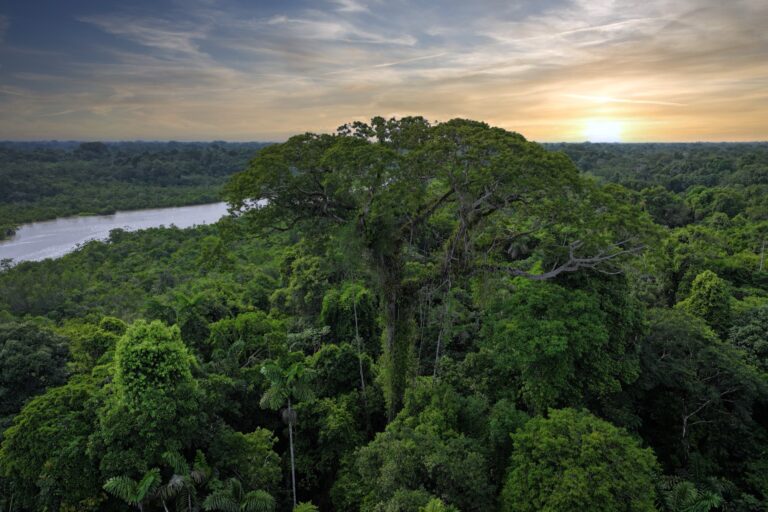
Stability Masks Regional Upheaval (Image Credits: Imgs.mongabay.com)
Researchers examined four decades of data from 406 permanent forest plots spanning 10 countries and found no overall shift in tree species richness at the continental scale. This apparent equilibrium concealed stark regional differences, with some areas gaining species while others suffered losses.
The study, published in Nature Ecology & Evolution, drew on records collected since 1971 across roughly 420 hectares of intact lowland and montane forests. Plots underwent repeated censuses, tracking trees with diameters over 10 cm. Such long-term monitoring exposed patterns invisible in shorter-term snapshots.
Gains in the North, Losses in the East
Northern Andean forests and Western Amazon plots recorded significant increases in species richness, bucking broader trends in many tropical areas. These gains averaged positive annual changes, potentially positioning the Northern Andes as a refuge for species displaced elsewhere.
In contrast, Central Andes, Guyana Shield, and Central-Eastern Amazon forests showed consistent declines, with most plots registering fewer species over time. Southern Amazon trends leaned negative but lacked statistical significance. Overall, 203 plots declined while 146 increased, highlighting a patchwork response.
| Region | Richness Trend | Key Notes |
|---|---|---|
| Northern Andes | Increase | Potential refuge |
| Western Amazon | Increase | Wetter conditions aid gains |
| Central Andes | Decline | Strongest losses |
| Guyana Shield | Decline | Drier, seasonal impacts |
| Central-Eastern Amazon | Decline | Most plots affected |
Environmental and Landscape Forces at Play
Warmer maximum temperatures, reduced precipitation, and heightened seasonality correlated strongly with species losses. Conversely, higher elevations, greater landscape connectivity via tree cover, and dynamic forest processes like rapid stem turnover supported richness gains.
Statistical models, including piecewise structural equation modeling, confirmed these links. Precipitation seasonality emerged as a pivotal modulator, with region-specific effects – for instance, negative in the Andes but varying in Amazon subregions.
- Higher temperatures: Direct negative impact on richness.
- Drier conditions: Linked to biotic attrition in lowlands.
- Fragmentation: Higher mortality rates erode diversity.
- Tree turnover: Faster recruitment boosts species counts.
- Elevation: Uphill shifts aid persistence.
Urgent Calls for Targeted Protection
Lead author Dr. Belen Fadrique noted, “Our work assessing species responses to climate change points to profound changes in forest composition and species richness at multiple scales.” Professor Flavia Costa added that the findings “underscore the uneven impacts of climate change on tree diversity across different tropical forests.”
Preserving large-scale ecosystem connectivity stands out as essential. Professor Oliver Phillips emphasized, “It is especially critical to protect remaining forests where the Amazon meets the Andes. Only if they stay standing can they offer a long-term home to species in adjacent lowlands.”
Key Takeaways
- Continental stability hides regional declines in hotter, drier eastern forests.
- Northern Andes and Western Amazon emerge as diversity hotspots.
- Protect connectivity to sustain turnover and refuges amid global change.
These forests, home to over 20,000 tree species, underpin global carbon storage and climate regulation. As shifts accelerate, safeguarding intact landscapes offers the best defense against homogenization and loss. What steps should conservationists prioritize next? Share your thoughts in the comments.