Nosara, Costa Rica – The Constitutional Court ruled that government agencies and the national electricity provider neglected to shield animals from deadly power line electrocutions, prompting orders for immediate corrective action.
A Landmark Win Against a Persistent Threat
A Landmark Win Against a Persistent Threat (Image Credits: Imgs.mongabay.com)
Costa Rica’s highest court delivered its first judgment specifically addressing wildlife electrocutions linked to electrical infrastructure. The decision stemmed from a lawsuit filed in July 2025 by the law firm Alta Legal on behalf of a coalition of NGOs, including the International Animal Rescue Center.
The case highlighted violations in the Nosara district of Guanacaste province, where bare wiring persisted despite legal requirements. Conservationists hailed the outcome as a precedent that holds electricity providers accountable.
Previously, a January 2024 decree from the Ministry of Environment and Energy had mandated risk mitigation, yet enforcement lagged in high-risk areas like Nosara.
The Deadly Toll of Exposed Wires
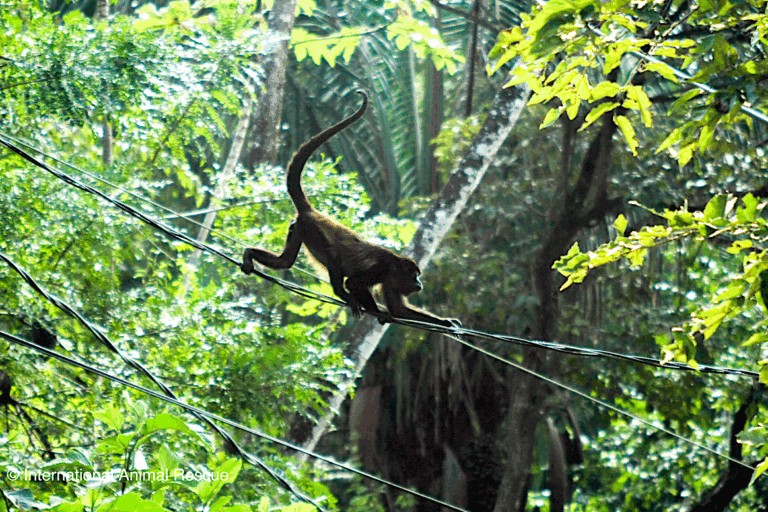
Bare electrical wiring emerged as a major hazard across rural Costa Rica, exacerbated by poor maintenance and insufficient insulation on cables and transformers. Tree-dwelling species bore the brunt, with howler monkeys and sloths frequently falling victim as they traversed lines mistaken for vines.
In Nosara, constant incidents underscored the urgency, fueled by rapid development and habitat fragmentation. National data recorded 6,262 wildlife electrocution cases between June 2022 and June 2023 alone. Veterinarian Francisco Sánchez Murillo noted, “Bare electrical wiring is a widespread problem in Costa Rica especially affecting rural areas.”
Devastating Effects on Howler Monkeys
Howler monkeys (Alouatta palliata) suffered profoundly, with mothers often electrocuted while carrying young, leading to orphans or fatalities. Male troop leaders met similar ends, triggering hierarchical violence where successors killed prior offspring to assert dominance.
Elena Kukovica of the International Animal Rescue Center explained, “That means you get a child that’s with her that becomes orphaned or dies as well.” She added that such losses ripple through troops, amplifying deaths.
Beyond immediate losses, these primates played crucial roles as seed dispersers, and their decline threatened regional flora and fauna.
Clear Directives and Strict Enforcement
The court confirmed improper use of bare wiring in Nosara and ordered the Costa Rican Institute of Electricity (ICE) and Ministry of Environment and Energy (MINAE) to implement fixes within six months. Non-compliance carried severe penalties, including fines or imprisonment.
Potential solutions encompassed insulating lines and transformers, installing rope bridges, and trimming nearby trees – measures already pursued by groups like International Animal Rescue’s Stop the Shocks program.
- Insulate power lines and transformers to prevent direct contact.
- Install wildlife rope bridges over deforested gaps.
- Conduct strategic tree trimming near infrastructure.
- Perform environmental assessments before new installations.
- Collect and act on electrocution data for hotspots.
Key Takeaways
- The ruling sets a national precedent for enforcing wildlife-safe electrical standards.
- Nosara’s case spotlights broader rural infrastructure risks.
- Coalitions of NGOs proved pivotal through data and legal advocacy.
This decision reinforces Costa Rica’s commitment to biodiversity amid development pressures, potentially inspiring similar protections elsewhere. What steps should other nations take to safeguard wildlife from human infrastructure? Tell us in the comments.