You have probably never sat down and wondered whether a group of modern-day hyenas could take on a dinosaur. Honestly, most of us haven’t. Yet this is exactly the kind of question that sits right at the exciting crossroads of paleontology, zoology, and pure, unapologetic curiosity. It sounds like something you’d debate around a campfire, but the answer is surprisingly grounded in real science.
When you start digging into what hyenas are actually capable of, and how small some dinosaurs really were, the picture gets a whole lot more interesting. This is not a simple “yes or no” scenario. It depends on the species, the numbers, the terrain, and the biological toolkit each side brings to the fight. So let’s dive in.
Hyenas Are Not the Scavengers You Think They Are
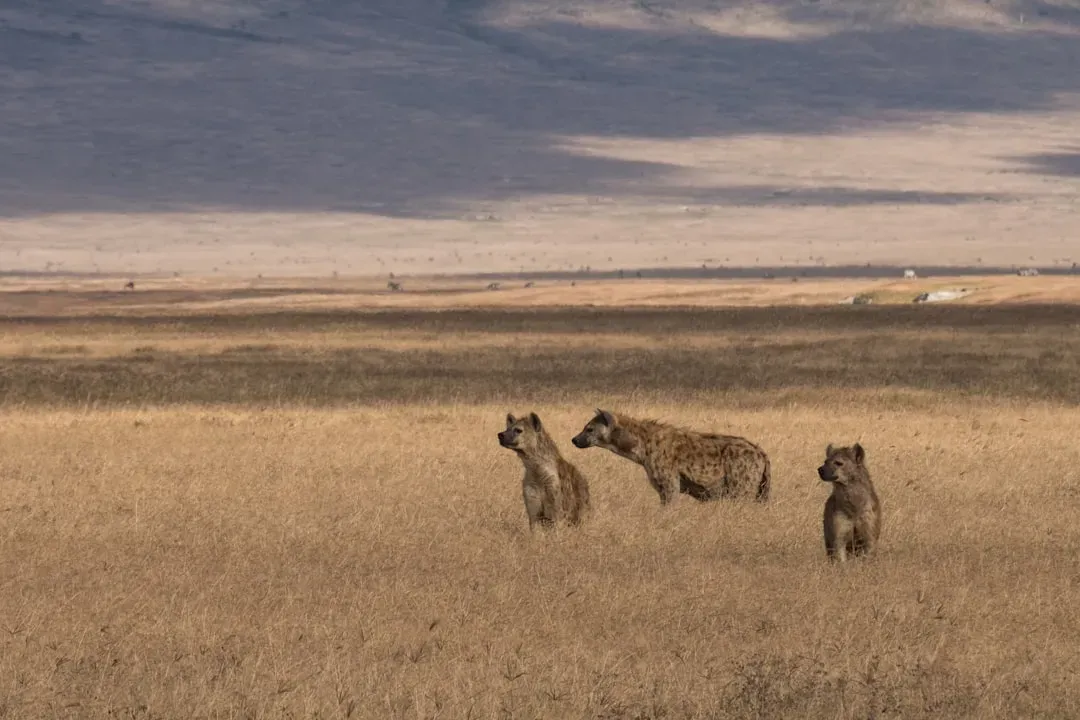
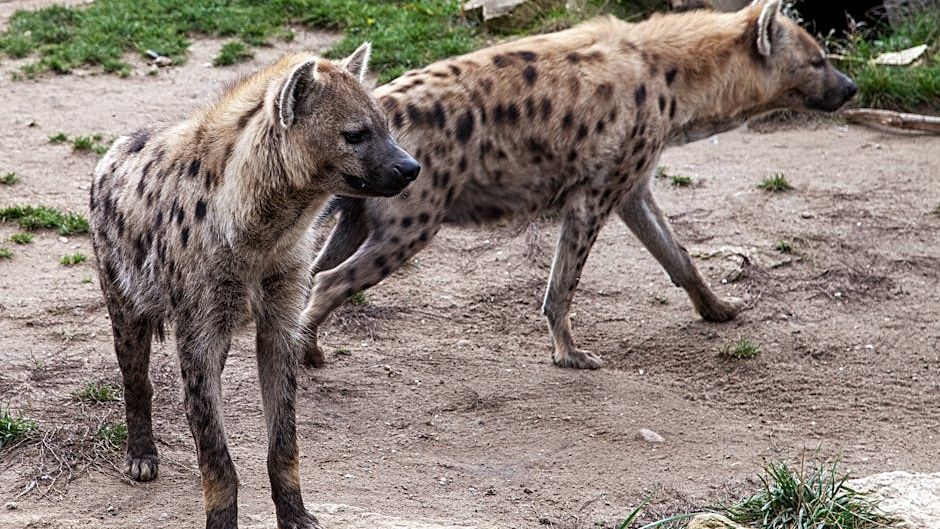
Let’s be real. Popular culture has done hyenas a massive disservice. You probably picture them lurking around after lions finish eating, cackling in the dark. That image is wildly inaccurate. While often associated with scavenging, hyenas are skilled hunters capable of capturing live prey through coordination and strategy. They are, in every sense of the word, apex predators in their own right.
They are also accomplished hunters and they get up to 75 percent of their food from their kills. They are designed with the extra stamina required for long and relentless chasing of their prey, and this is possible because they have large hearts relative to their body size. Think of it like this: they are basically nature’s marathon runners who also happen to be incredibly effective killers.
The Jaw That Could Crush Prehistoric Bone
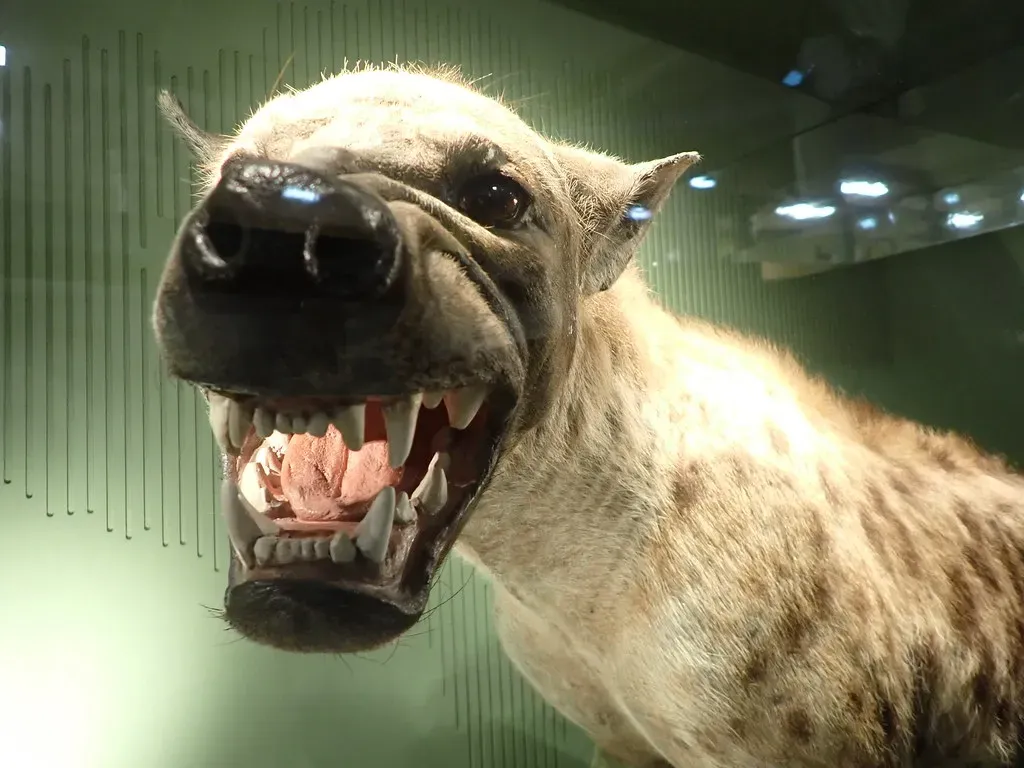
Here is where it gets genuinely jaw-dropping, pun intended. The spotted hyena is renowned for its incredible jaw strength, capable of generating approximately 1,100 pounds per square inch. This figure is remarkable considering that the average human bite is only about 162 PSI. That is not just impressive, it is almost incomprehensible when you think about it relative to body size.
While animals such as crocodiles and great white sharks have higher absolute bite forces, the spotted hyena’s 1,100 PSI is extraordinary for a carnivore of its size, and its efficiency in bone-crushing is unmatched among similar-sized predators. Their skulls are engineered for crushing bone with robust jaw muscles and specialized, pyramidal teeth designed to grind down even the toughest skeletal material. A small dinosaur with hollow or semi-hollow bones would simply not have stood a chance against those jaws if grabbed properly.
Small Dinosaurs Were Smaller Than You Imagine
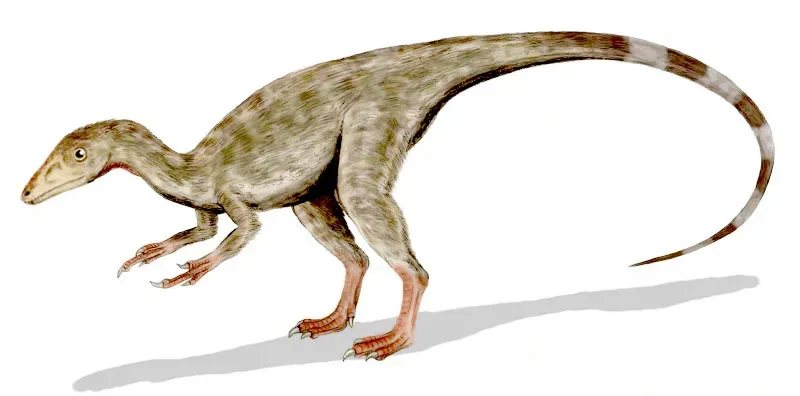
Before you picture a pack of hyenas squaring off against a T. Rex, you need to recalibrate your mental image of what a “small dinosaur” actually was. Many were genuinely tiny. Compsognathus is a genus of small, bipedal, carnivorous theropod dinosaur. Members of its single species Compsognathus longipes could grow to around the size of a chicken. A creature the size of a chicken versus a pack of hyenas is barely even a contest.
Other small species were not much larger. The smallest carnivorous dinosaur is the Hesperonychus elizabethae. This tiny creature possibly had a diet of baby dinos and small mammals. It was only as large as a house cat, ran on two legs, and had a weight of only around 2 kg. Even stepping up in scale, you have the real Velociraptor, which Hollywood famously exaggerated. In reality, Velociraptor was roughly the size of a turkey, considerably smaller than the approximately 2-meter-tall and 90 kg reptiles seen in the novels and films.
Pack Tactics Make Hyenas Devastatingly Effective
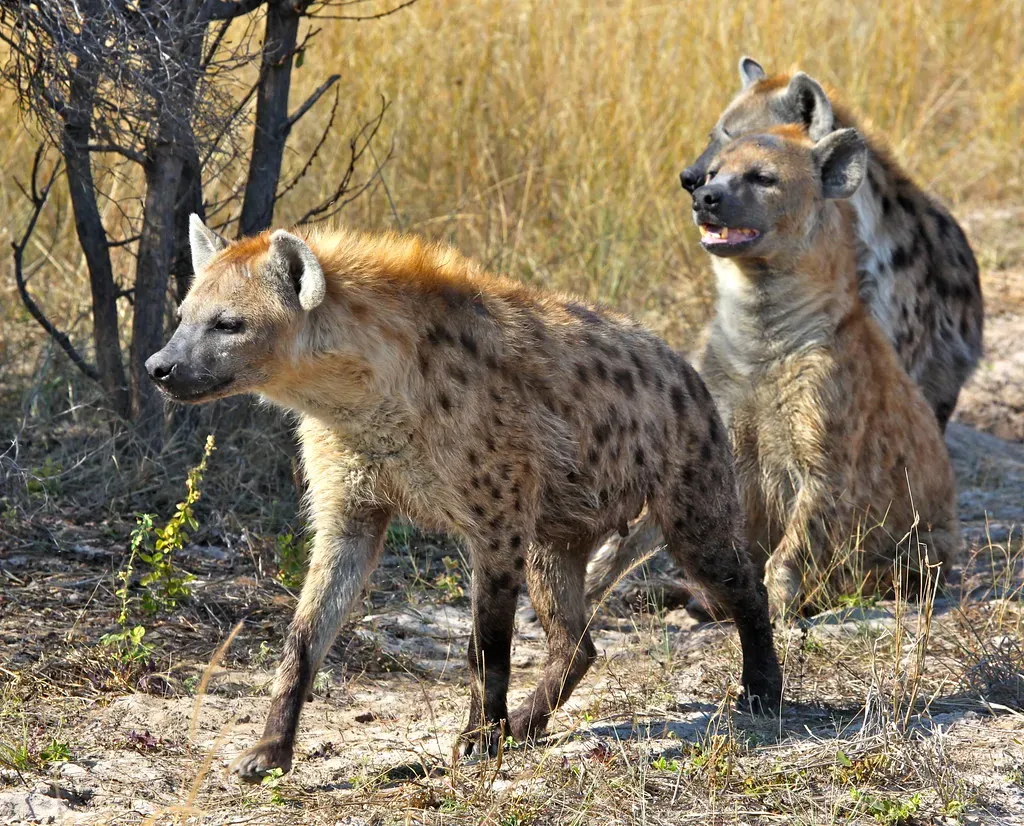
Spotted hyenas exhibit strong pack dynamics. Living in clans that typically consist of 10 to 80 members, these animals rely on teamwork for hunting and defending territory. This is not chaos. It is coordinated, almost eerily intelligent group behavior. Studies have even shown that spotted hyenas outperform chimpanzees on cooperative problem-solving tests; captive pairs were challenged to tug two ropes in unison to earn a food reward, successfully cooperating and learning the maneuvers quickly without prior training.
Their hunting success rate tells the whole story. Hyenas struggle hunting alone, as they only have a 15 percent success rate, while when they are in a group it rises up to a 74 percent hunting success rate. That is a staggering difference. Most healthy adult antelope can escape from a single hyena, but working together as a team dramatically increases their hunting success. If two of them hunt wildebeest calves they are five times as successful as one operating alone. One of the team will distract the mother while the other grabs the calf. Apply that same strategy against a small, bipedal dinosaur and the outcome becomes very predictable.
Speed, Endurance, and the Relentless Chase
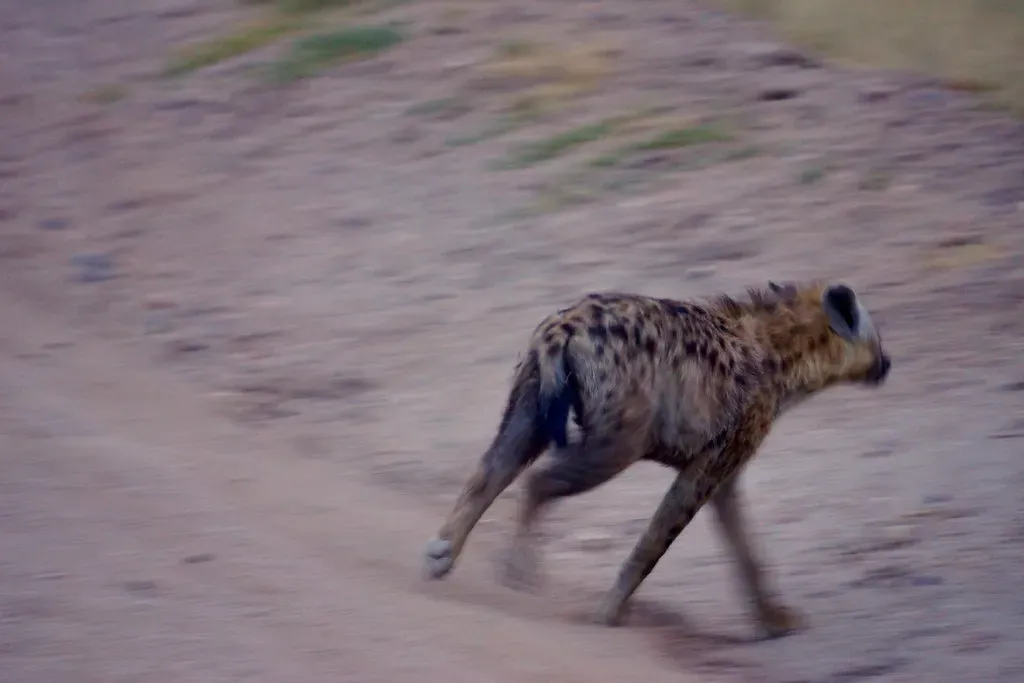
It’s hard to say for sure exactly how fast various small dinosaurs could run, but we do know how fast hyenas can move. Hyenas are capable of short charges of up to 50 km/h and can maintain a steady, fast pace in pursuing prey over several kilometres. Their prey usually succumbs to exhaustion and is pulled down and disembowelled by the pack. That combination of sprint speed and marathon endurance is genuinely terrifying.
This pursuit hunting is facilitated by the spotted hyena’s flexible spine and its specialized limbs. With hind limbs that are slightly shorter than their forelimbs, spotted hyenas have a distinctive sloping appearance. As a result, these efficient runners exhibit a “rocking-horse gallop” that allows them to cover large distances and lope for hours. Think of it like a diesel engine that never quits. A small dinosaur, even an agile one, would eventually tire. Hyenas would not.
How Would a Small Dinosaur Like a Velociraptor Actually Defend Itself?
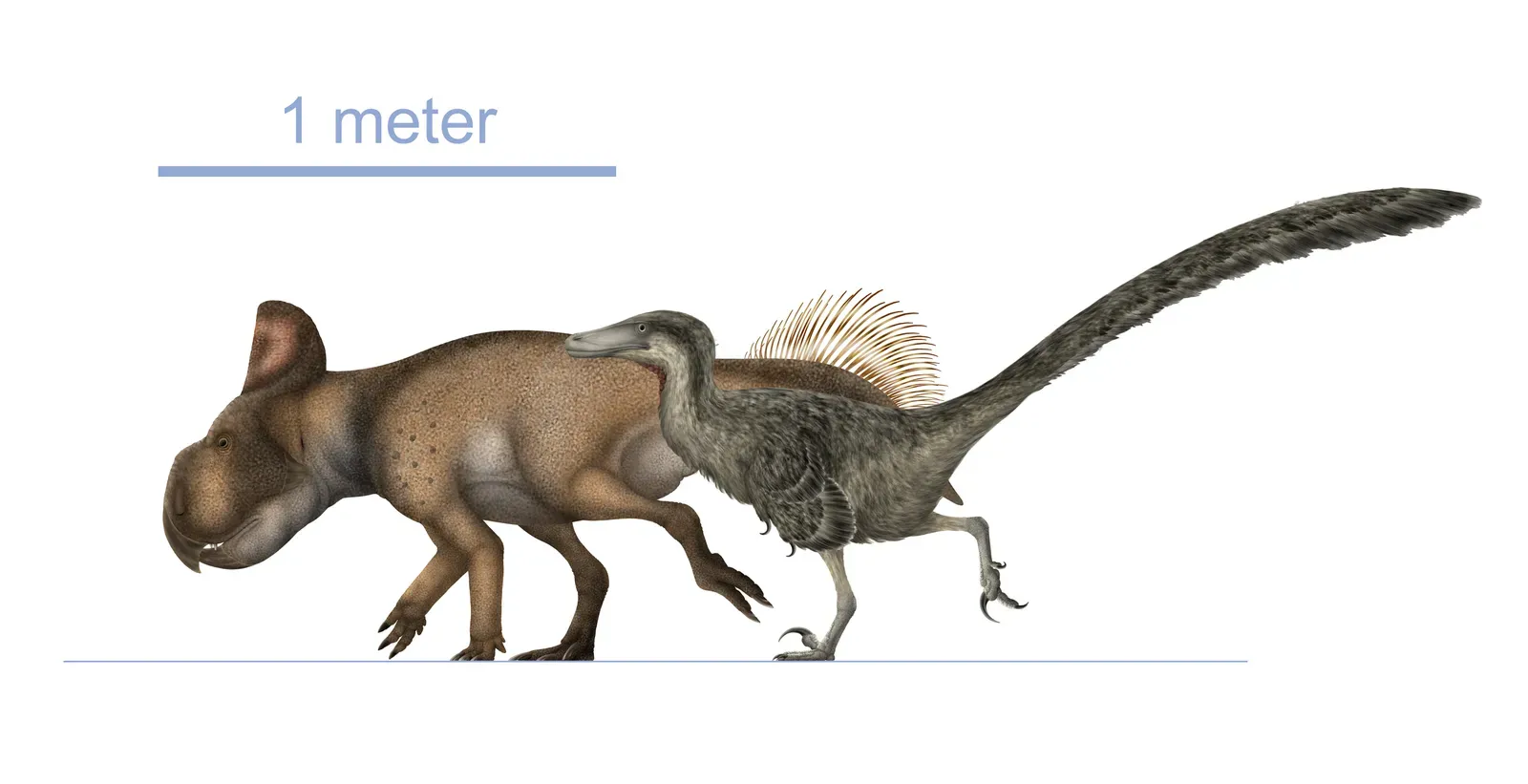
This is where it gets genuinely exciting. The real Velociraptor was not a defenceless creature. Velociraptor may have used its sickle claw to pierce vital organs of the throat, such as the jugular vein, carotid artery, or trachea, rather than slashing the abdomen. That is a precise and potentially lethal weapon. One hyena getting that claw driven into its throat would be a serious problem. Yet in a large group, the equation shifts dramatically.
Consider the famous fossil evidence of the “Fighting Dinosaurs,” a Velociraptor locked in combat with a Protoceratops. The famous “Fighting Dinosaurs” fossil provides dramatic evidence that Velociraptor preyed upon Protoceratops, though the fossil also demonstrates that capturing this ceratopsian was no easy task for the predator. Despite lacking the impressive horns of its later relatives, Protoceratops had several defensive advantages, including its powerful beak and strong jaw muscles that could deliver a crushing bite. So even small dinosaurs could fight back. Still, one Velociraptor against five or six coordinated hyenas would be overwhelming by sheer numbers alone.
The Verdict: Size, Species, and Numbers All Matter
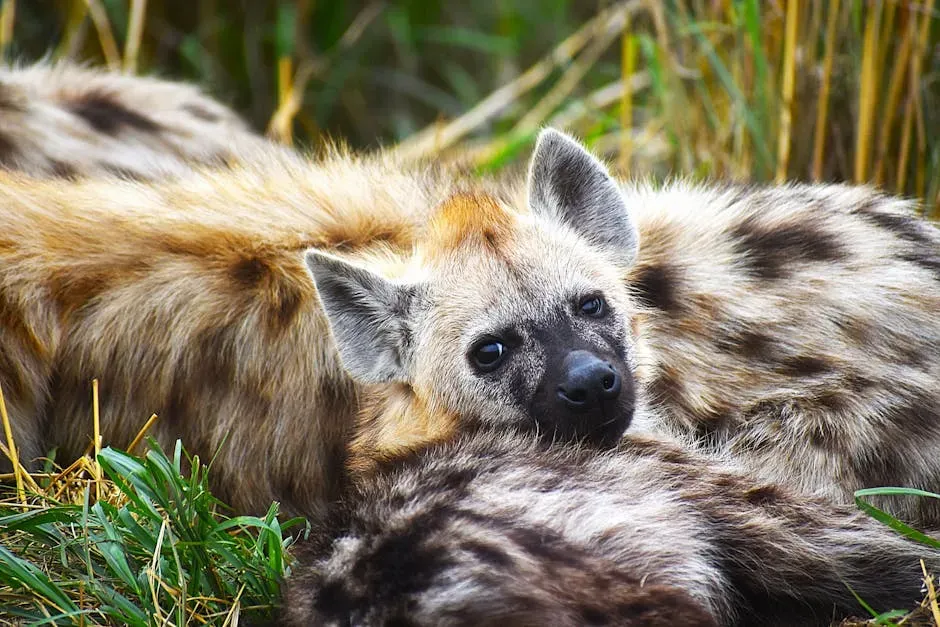
Here is the honest conclusion that science points toward. Against genuinely tiny dinosaurs like Compsognathus or Microraptor, a pack of hyenas would win without breaking a sweat. These creatures were, in biological terms, the equivalent of large birds or small reptiles. A group of spotted hyenas can overpower prey weighing over 500 lbs. A dinosaur the size of a chicken or a turkey would be dispatched in seconds.
For something closer to a Protoceratops, roughly the size of a sheep, the story is more interesting. A Protoceratops was pretty small, measuring 6 to 8 feet long and 3 feet tall, about the size of a modern sheep. This species had a small frill and no horns, which may have posed challenges for self-defense. Some scientists suspect that the Protoceratops may have used its sharp beak to bite attackers. A lone hyena would struggle. A pack of eight to ten? Almost certainly victorious. A group of three hyenas can target wildebeest and if they operate in groups of four, they can tackle eland and gemsbok. A sheep-sized dinosaur without complex armor falls within that weight and challenge range comfortably.
Conclusion
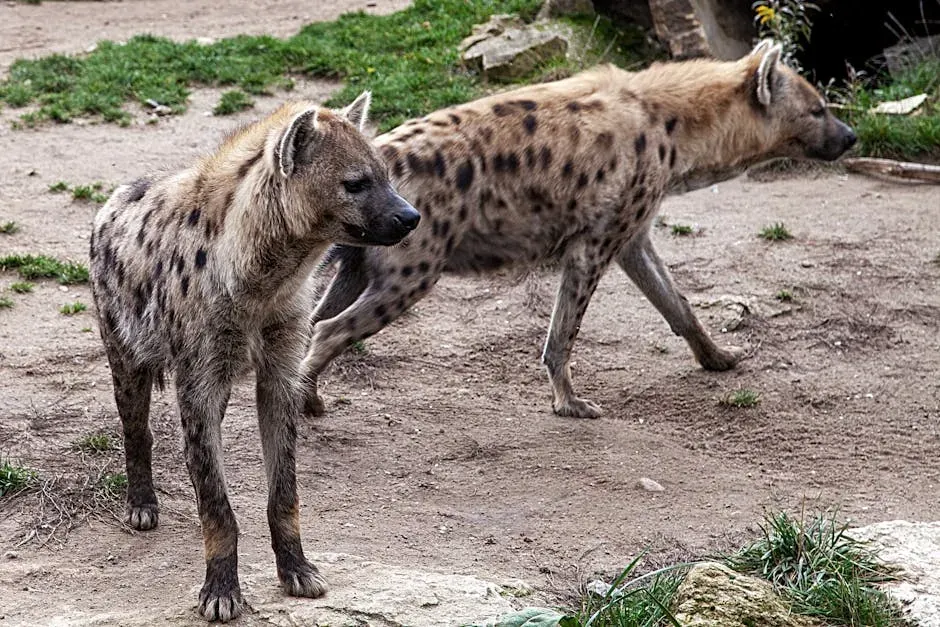
When you strip away the prehistoric mystique and Hollywood exaggeration, this thought experiment reveals something genuinely fascinating about the natural world. Hyenas are extraordinary predators, built with crushing jaws, relentless endurance, elite cooperative intelligence, and a fearless attitude that has allowed them to compete with even lions. Small dinosaurs, despite their exotic origins, were mostly animals of modest size with modest defenses.
For the vast majority of small dinosaur species, a sufficiently large pack of spotted hyenas would almost certainly win. The hyenas’ teamwork, bite force, stamina, and social coordination represent one of nature’s most refined predatory systems. The real surprise here is not the outcome, but how close the match-up actually is in some scenarios.
What do you think would have been the most evenly matched small dinosaur against a pack of hyenas? Drop your thoughts in the comments below.