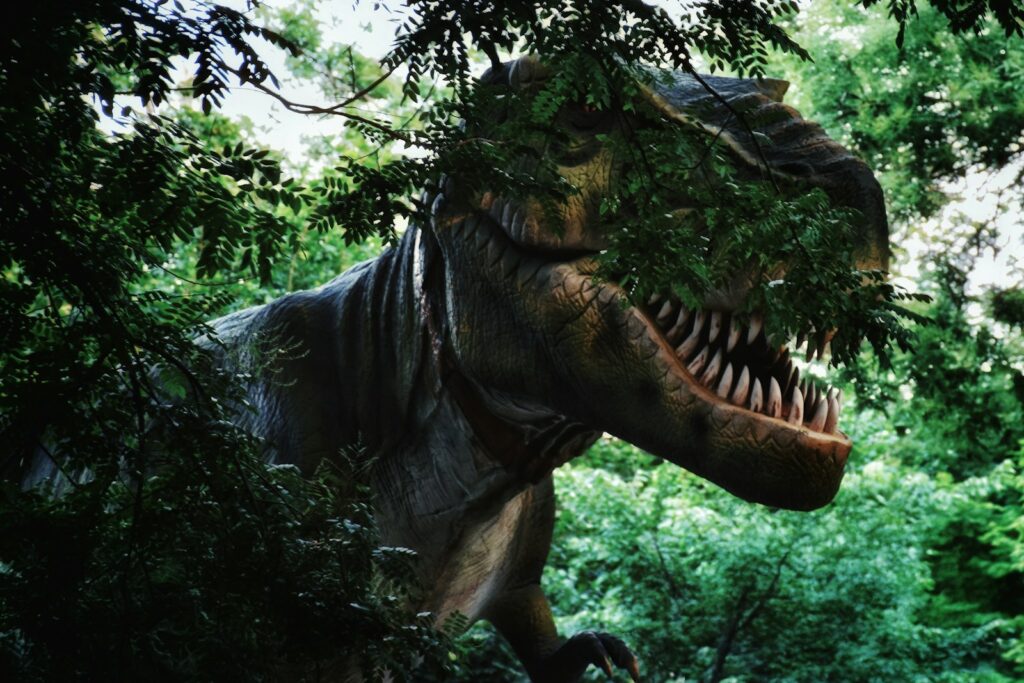
In one of cinema’s most memorable chase scenes, a Tyrannosaurus rex pursues a Jeep through the dense jungle of Isla Nublar in Steven Spielberg’s “Jurassic Park.” This thrilling sequence has left generations of viewers wondering: could this prehistoric predator really keep pace with a modern vehicle? The question touches on fascinating aspects of paleontology, biomechanics, and our enduring fascination with dinosaurs.
While Hollywood often takes creative liberties with science, examining this question allows us to explore what we actually know about T. rex’s locomotion capabilities and how they compare to modern vehicles. The answer involves more nuance than you might expect and reveals surprising insights about one of history’s most formidable predators.
The Cinematic Image vs. Scientific Reality

The iconic scene from “Jurassic Park” shows a T. rex reaching speeds that appear comparable to a Jeep, which would suggest the dinosaur could run at least 40-45 mph. This depiction was deliberately crafted for maximum dramatic effect, with director Steven Spielberg acknowledging certain scientific liberties were taken to heighten tension. The film’s special effects team created a convincing illusion of speed and power that has influenced public perception of T. rex capabilities for decades.
What many viewers don’t realize is that this scene represents one of the more significant scientific inaccuracies in a film that otherwise consulted extensively with paleontologists. The gap between cinematic representation and scientific understanding of dinosaur locomotion reflects both the challenges of accurate prehistoric reconstruction and Hollywood’s need for spectacle.
Understanding T. Rex Anatomy
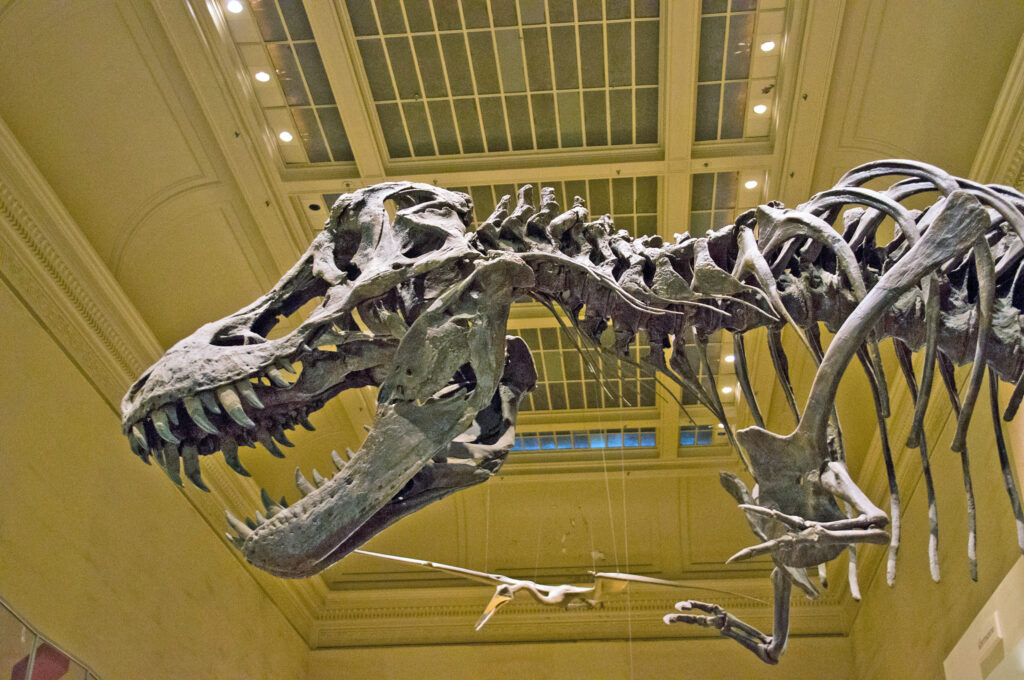
Tyrannosaurus rex was a biomechanical marvel, standing approximately 12-13 feet tall at the hips and measuring up to 40 feet from nose to tail. Its massive skull, powerful hind limbs, and relatively tiny forelimbs created a distinctive silhouette that has become emblematic of dinosaurs in popular culture. The T. rex’s skeleton reveals a creature optimized for strength rather than speed, with thick, heavy bones that would have supported tremendous muscle mass.
Its center of mass was positioned forward, balanced by the heavy tail, creating a body plan significantly different from modern fast-running animals. The leg bones, particularly the femur and tibia, were robust structures designed to support the animal’s estimated 7-9 metric tons—a weight consideration critically important when calculating potential running speeds.
The Science of Dinosaur Movement
Paleontologists use multiple lines of evidence to reconstruct dinosaur locomotion, including fossil anatomy, trackways, biomechanical modeling, and comparisons with living animals. Computer simulations have become increasingly sophisticated, allowing researchers to test hypotheses about muscle attachment, joint flexibility, and center of gravity. Modern techniques like finite element analysis enable scientists to calculate stress forces on bones during different types of movement.
These analyses consider factors such as leg length, muscle mass estimates, joint articulation, and the strength limitations of bone tissue. Additionally, preserved trackways provide direct evidence of dinosaur gaits, showing stride length and patterns that inform our understanding of how these animals moved. This multidisciplinary approach has significantly refined our understanding of dinosaur locomotion over the past few decades.
Maximum Speed Estimates for T. Rex

Current scientific consensus places the T. rex’s top speed at approximately 12-17 miles per hour (19-27 km/h), significantly slower than portrayed in “Jurassic Park.” This estimate has been revised downward over time as more sophisticated biomechanical models have been developed. A landmark 2017 study published in the journal Nature employed musculoskeletal modeling to demonstrate that T. rex’s skeleton couldn’t have withstood the forces generated by running at higher speeds.
The research suggested that running might have risked breaking the massive dinosaur’s legs, an injury that would have been fatal for a predator dependent on mobility to hunt. Some paleontologists argue the speed might have been even lower, especially for fully grown specimens, while juveniles with lighter frames might have been somewhat faster.
The Jeep’s Capabilities

The Jeep Wrangler Sahara featured in “Jurassic Park” has a top speed of approximately 110-120 mph (177-193 km/h) on paved roads under ideal conditions. Even in off-road terrain similar to the movie’s jungle setting, a Jeep could easily maintain speeds of 30-40 mph (48-64 km/h) while remaining maneuverable. The vehicle’s four-wheel drive system, designed specifically for rough terrain, would give it significant advantages over any animal when navigating uneven ground.
Modern Jeeps feature sophisticated suspension systems that can absorb impacts from uneven surfaces, allowing sustained high speeds where even the most agile animal would need to slow down. The mechanical consistency of the vehicle also means it doesn’t fatigue like a biological organism would during an extended chase.
The Physics of Body Size and Speed
The relationship between body size and maximum speed follows fundamental principles of physics and biomechanics that apply to all terrestrial animals. Very large animals face disproportionate challenges in generating speed due to the square-cube law, where mass increases with the cube of linear dimensions while strength increases only with the square. This principle creates inherent limitations for very large animals, explaining why the fastest land animals like cheetahs are medium-sized rather than massive.
The enormous mass of T. rex would have required tremendous energy expenditure to accelerate, with each running step generating forces that approached the structural limits of its skeleton. Additionally, larger animals typically have relatively longer stride lengths but lower stride frequencies, creating a natural ceiling on maximum speed that becomes more restrictive as size increases.
Comparing T. Rex to Modern Animals

Modern analogs can provide useful context for understanding T. rex’s locomotive capabilities within the spectrum of animal movement. The African elephant, weighing 5-7 tons, achieves a top speed of about 25 mph (40 km/h) but can only sustain this briefly and prefers walking at 4-5 mph. Rhinos, despite their bulk, can sprint at 30-35 mph but tire quickly. The largest land predator today, the polar bear, tops out around 25 mph in short bursts.
These comparisons must account for significant anatomical differences—T. rex had a bipedal stance unlike any living large mammal. The ostrich, while much smaller, provides a better bipedal comparison with its top speed of 45 mph, achieved through extremely lightweight construction and specialized running adaptations that T. rex lacked. These modern examples illustrate the exceptional demands that high-speed locomotion places on large-bodied animals.
Was T. Rex Built for Speed or Power?
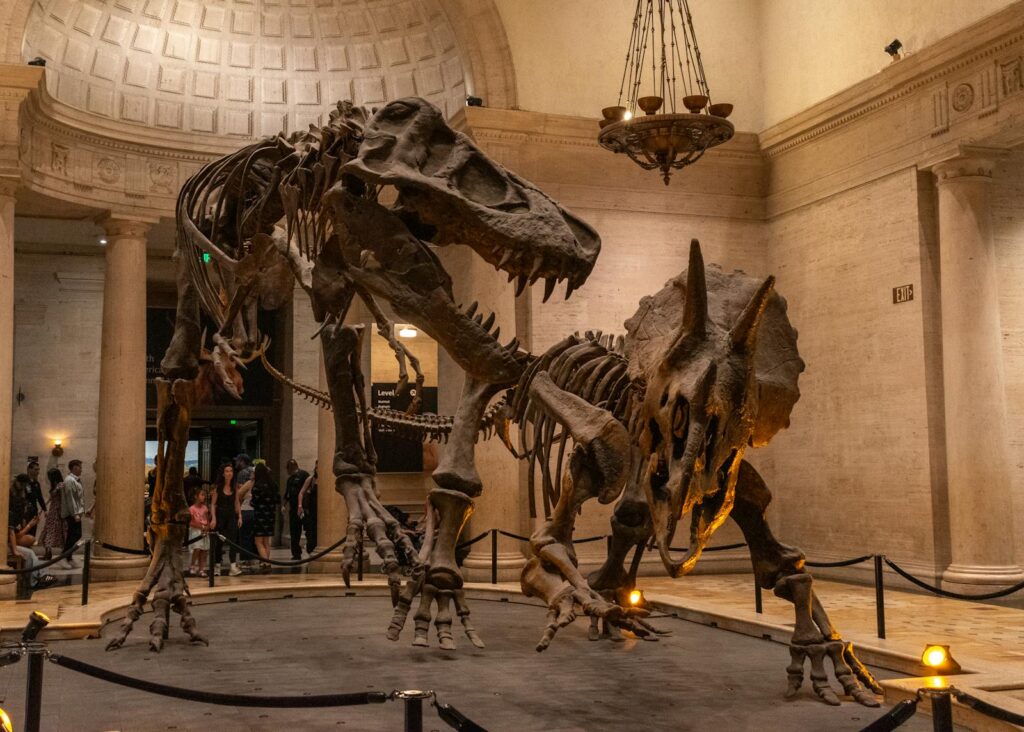
The evolutionary adaptations of T. rex suggest an animal optimized for power rather than pure speed, with a body design that prioritized strength and endurance over rapid acceleration. Its massive leg muscles would have generated tremendous force, but were likely geared toward supporting its substantial weight and providing sustained walking endurance rather than sprinting capabilities.
The relatively short, thick leg bones provided stability and could absorb the impact forces of walking but weren’t proportioned for the elastic energy storage seen in specialized runners. Fossil evidence suggests T. rex had relatively large attachment sites for leg muscles, indicating powerful but not necessarily fast locomotion. This physical profile aligns with a hunting strategy that might have relied more on ambush, intimidation, and relatively short pursuits rather than extended high-speed chases.
Hunting Strategies and the Need for Speed
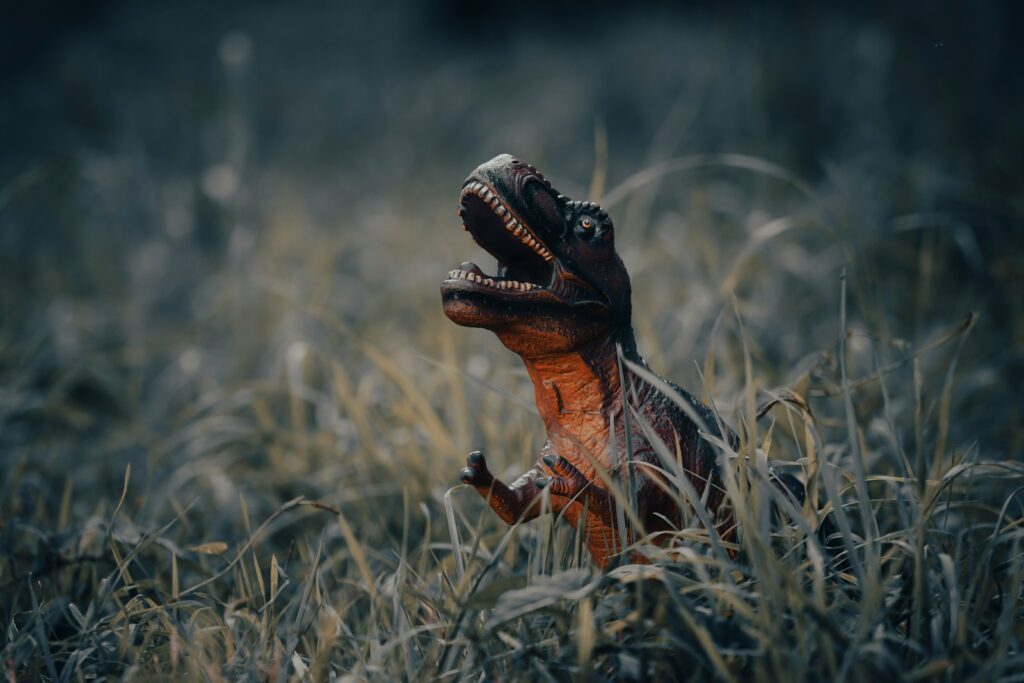
T. rex’s hunting behavior likely didn’t require extreme speed, which aligns with its physical limitations. Modern predators demonstrate that different hunting strategies demand different locomotion capabilities—ambush predators like crocodiles rely on short bursts, while pursuit predators like wolves depend on endurance. T. rex probably employed an ambush or stalking strategy, using its excellent vision and possibly camouflage to approach prey before launching a relatively short-distance attack.
Its massive jaws, capable of delivering bone-crushing bites with forces estimated at 12,800 pounds, would have made escape difficult once it caught up with prey. The dinosaur’s intimidating presence may have also allowed it to claim carrion from other predators or drive them from kills, reducing the need for high-speed pursuits entirely. This behavioral profile suggests an apex predator that could afford to move deliberately rather than rapidly.
The Role of Terrain in the Chase
The environment portrayed in “Jurassic Park”—a dense tropical forest with uneven ground—would have significantly favored the Jeep over T. rex in a real-world scenario. Vehicles can maintain relatively consistent speeds over varied terrain thanks to their suspension systems and the uniform power delivery of their engines. T. rex, conversely, would have needed to navigate around obstacles such as fallen trees and ravines, potentially slowing considerably to maintain balance.
The dinosaur’s forward-positioned center of mass would have made quick turns challenging, requiring significant deceleration before changing direction. Deep mud, common in tropical environments, would have posed another obstacle for the heavy dinosaur, potentially causing it to sink where a vehicle with proper tires could maintain traction. These environmental factors underscore how terrain complexities further diminish the plausibility of the cinematic chase sequence.
Energy Expenditure and Sustained Pursuit
Even if T. rex could attain moderate speeds, its ability to sustain pursuit would have been severely limited by energy considerations. Large predators typically cannot maintain high-speed chases for extended periods due to rapid energy depletion and heat buildup. A T. rex pursuing prey would likely have experienced significant oxygen debt after just 30-60 seconds of exertion, necessitating recovery time. This limitation reflects the fundamental constraints of biological systems compared to mechanical ones like a Jeep with its 20-gallon fuel tank.
Paleontological evidence suggests T. rex had relatively advanced lungs similar to modern birds, providing efficient oxygen uptake, but this adaptation alone couldn’t overcome the basic thermodynamic and metabolic limitations imposed by its massive size. The dinosaur’s hunting strategy would have necessarily accommodated these energy constraints, favoring efficiency over speed.
Hollywood’s Influence on Dinosaur Perception
Films like “Jurassic Park” have profoundly shaped public understanding of dinosaurs, sometimes creating perceptions that persist despite scientific advances. The portrayal of T. rex as capable of Jeep-pacing speeds has become deeply embedded in popular culture, influencing everything from children’s toys to museum exhibits. This phenomenon illustrates the tension between scientific accuracy and dramatic storytelling in educational entertainment.
Interestingly, subsequent “Jurassic” films have occasionally referenced the speed discrepancy, with characters in later installments mentioning more scientifically accurate figures. The franchise has thus participated in its own correction over time, though the original chase scene remains the dominant image in public consciousness. This cycle demonstrates how popular media can both spread scientific misconceptions and, eventually, help correct them as scientific understanding evolves.
Improvements in Scientific Understanding

Our understanding of dinosaur biomechanics has advanced significantly since “Jurassic Park” premiered in 1993, with technological developments enabling increasingly sophisticated analyses. Modern computational methods allow researchers to create detailed musculoskeletal models that can simulate range of motion, calculate stress forces, and predict maximum sustainable speeds with greater confidence. Advanced imaging techniques have revealed previously undetectable details in fossil specimens, providing new insights into muscle attachment sites and bone densities.
Paleontologists can now employ evolutionary developmental biology to understand better the relationship between dinosaur anatomy and that of their living descendants, birds. These scientific advances continually refine our understanding of prehistoric life, often in ways that make these ancient creatures more rather than less fascinating, as their real adaptations prove more nuanced than simplified movie portrayals suggest.
The Verdict: T. Rex vs. Jeep
Based on current scientific evidence, a T. rex could not have outrun or even kept pace with a Jeep as depicted in “Jurassic Park.” The speed differential would have been substantial, with the vehicle capable of at least twice the dinosaur’s maximum speed even in challenging terrain. The movie scene, while thrilling, represents a significant scientific inaccuracy that prioritized cinematic excitement over paleontological reality.
That said, T. rex remains among the most formidable land predators in Earth’s history, with adaptations perfectly suited to its actual ecological role rather than the Hollywood-enhanced version. Its relatively modest speed (still faster than a human can run) would have been more than adequate for its hunting strategy in the context of the Cretaceous ecosystem. This conclusion reminds us that nature’s actual designs, shaped by millions of years of evolution, often differ from what we might imagine as “optimal” through a modern lens.
Conclusion

While the T. rex chasing a Jeep makes for unforgettable cinema, the scientific evidence definitively settles this particular matchup in favor of modern machinery. Nevertheless, the question itself highlights our enduring fascination with these magnificent prehistoric creatures and our desire to understand how they would interact with our modern world.
Perhaps there’s something satisfying in knowing that humans, despite our relative physical fragility, have developed technologies that could outpace even the most fearsome predators of the past. At the same time, recognizing the T. rex’s actual capabilities gives us a more accurate appreciation for this remarkable animal as it really existed—not as a movie monster, but as a perfectly adapted predator that dominated its environment for millions of years without needing to chase down vehicles.