Picture this: you’re standing in the ancient wetlands of Mongolia, 70 million years ago, watching a massive creature that looks like a cross between a duck and a giant sloth wade into murky waters. Its enormous claws slice through the surface as it searches for aquatic plants and fish. This isn’t science fiction—this is Deinocheirus, one of the most mysterious dinosaurs ever discovered, and scientists are still debating whether it could actually swim.
For decades, paleontologists have been fascinated by the question of whether certain dinosaurs were capable swimmers. The discovery of Deinocheirus has added fuel to this debate, presenting us with a creature so unusual that it challenges everything we thought we knew about dinosaur behavior and habitat preferences.
The Beast with Giant Claws: Meet Deinocheirus
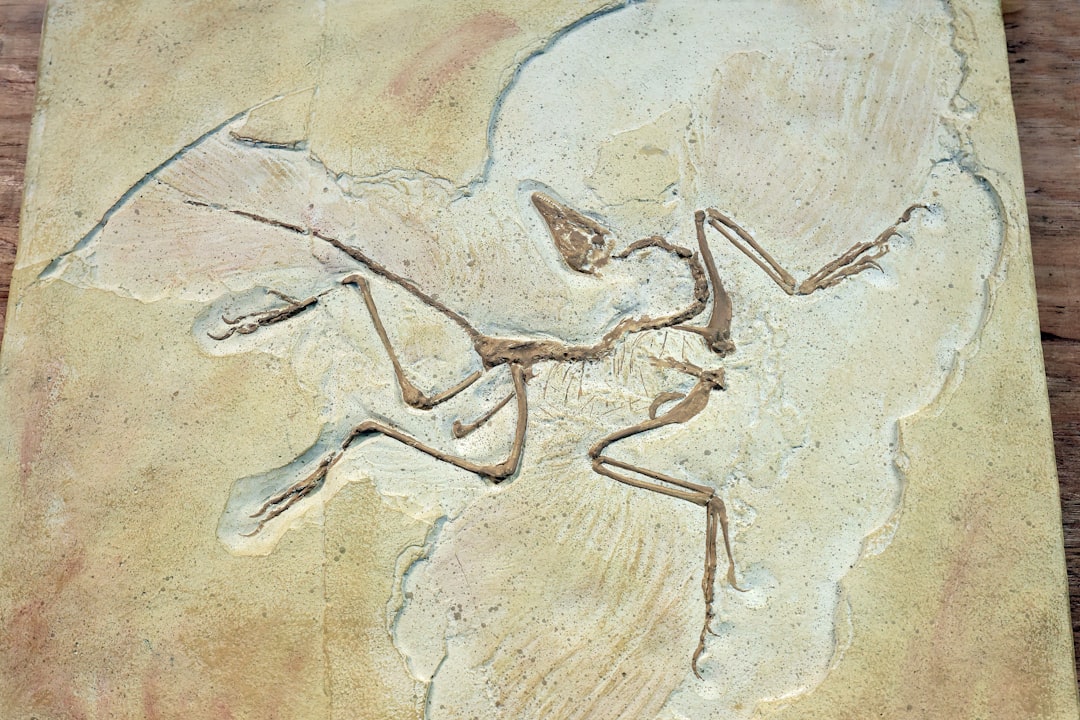
Deinocheirus mirificus, whose name literally means “terrible hand,” was first discovered in 1965 when paleontologists found just a pair of massive arms with claws measuring over 8 feet long. For nearly 50 years, these arms remained one of paleontology’s greatest mysteries. The creature they belonged to was completely unknown, leading to wild speculation about what kind of monster could possess such enormous appendages.
It wasn’t until 2013 and 2014 that nearly complete skeletons were finally discovered in the Gobi Desert. These finds revealed a dinosaur unlike anything scientists had imagined. Standing about 16 feet tall and stretching 36 feet in length, Deinocheirus was massive yet surprisingly graceful.
What made this discovery even more shocking was that despite its fearsome claws, Deinocheirus wasn’t the apex predator many had expected. Instead, it appeared to be an omnivore with a duck-like bill, suggesting it spent considerable time near water sources feeding on aquatic vegetation and small fish.
Anatomical Evidence: Built for Water?
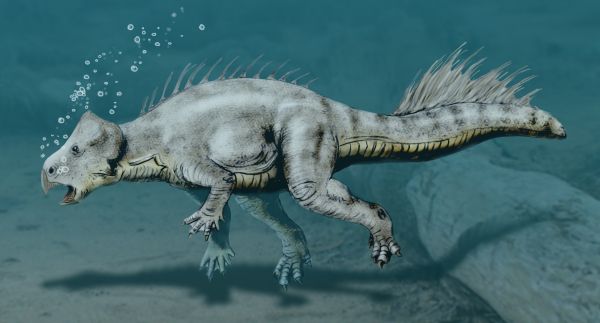
The skeleton of Deinocheirus tells a fascinating story about its potential aquatic abilities. Its long, powerful legs suggest it could wade through deep water with ease, while its broad, flattened feet might have provided stability on muddy lake bottoms. The creature’s center of gravity was positioned in a way that would have made it naturally buoyant in water.
Perhaps most intriguingly, the dinosaur’s spine shows adaptations that are commonly seen in semi-aquatic animals. The vertebrae are robust and designed to support the creature’s weight while moving through water resistance. Its tail, though not as obviously paddle-like as some marine reptiles, was muscular and could have provided propulsion.
The creature’s arms, despite their intimidating appearance, were positioned in a way that suggests they could have been used for swimming strokes. The large claws might have served as paddles, helping to propel the massive body through water while also being useful for digging up aquatic plants and catching fish.
The Duck-Bill Connection: Feeding in Aquatic Environments
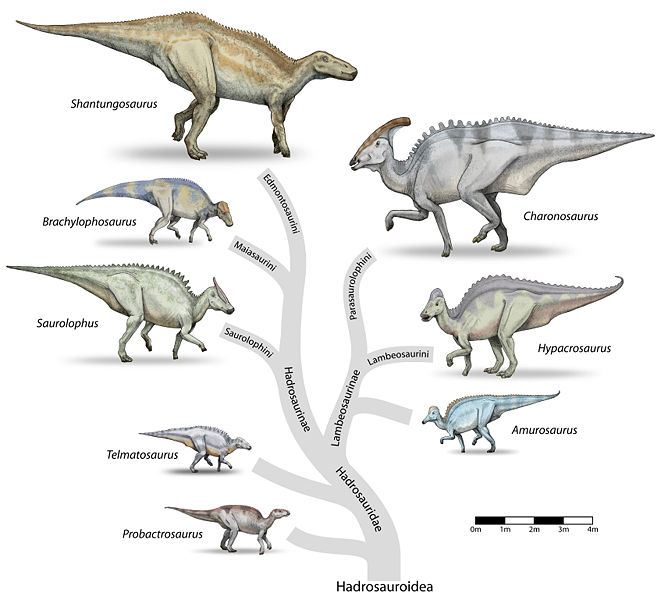
One of the most compelling pieces of evidence for Deinocheirus’ aquatic lifestyle comes from its skull. The dinosaur possessed a broad, flattened snout remarkably similar to that of a duck. This isn’t just a superficial resemblance—the internal structure of the bill suggests it was designed for filter-feeding in water.
Modern ducks use their bills to strain small organisms, plants, and nutrients from water, and Deinocheirus appears to have had similar capabilities. Microscopic analysis of the bill’s surface reveals tiny pores and channels that would have been perfect for filtering food from muddy water. This adaptation strongly suggests the creature spent significant time with its head submerged.
The positioning of the nostrils also supports this theory. Located high on the skull, they would have allowed Deinocheirus to breathe while keeping most of its head underwater during feeding. This is a classic adaptation seen in many aquatic and semi-aquatic animals throughout evolutionary history.
Geological Context: Ancient Lake Systems
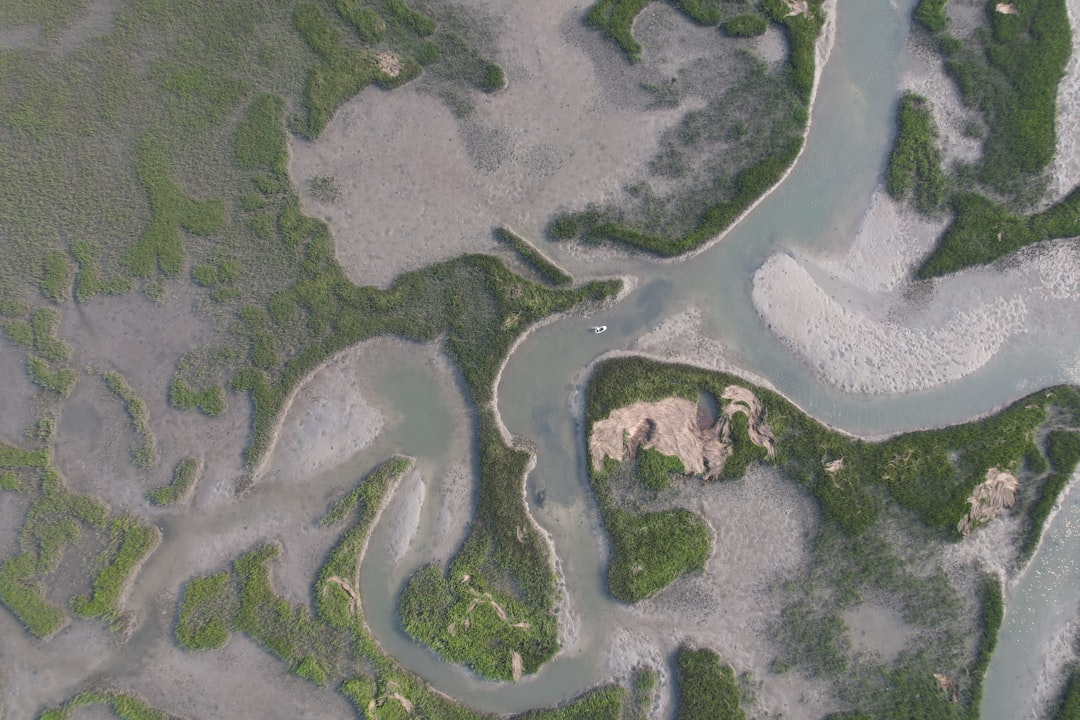
The rock formations where Deinocheirus fossils were discovered paint a picture of ancient Mongolia very different from today’s desert landscape. During the Late Cretaceous period, this region was home to vast lake systems, meandering rivers, and extensive wetlands. The sedimentary layers tell us that water levels fluctuated regularly, creating perfect conditions for semi-aquatic creatures.
These ancient water bodies were teeming with life. Fossil evidence shows abundant fish, freshwater mollusks, and aquatic plants—exactly the kind of ecosystem that would have supported a large omnivorous dinosaur like Deinocheirus. The presence of other water-loving dinosaurs in the same formations suggests this was a thriving aquatic ecosystem.
The fine-grained sediments also preserved incredible detail in the fossils, allowing scientists to study not just bones but also evidence of soft tissues and stomach contents. This preservation quality has been crucial in understanding how these creatures lived and what they ate.
Comparative Analysis: Learning from Modern Semi-Aquatic Giants
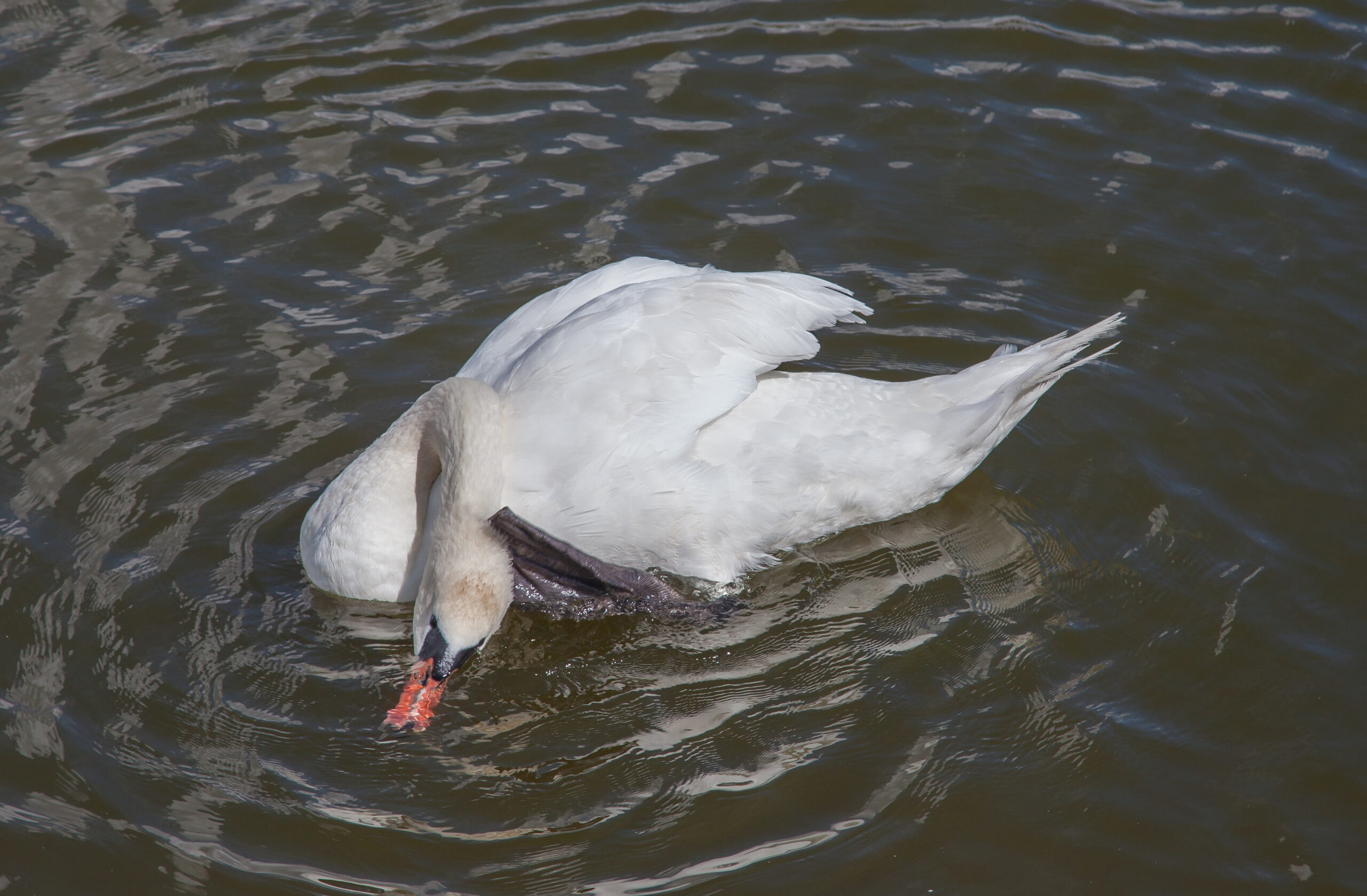
To understand whether Deinocheirus could swim, scientists often compare it to modern semi-aquatic animals. Hippos, despite their bulk, are surprisingly graceful swimmers who can hold their breath for up to five minutes. Similarly, moose regularly swim across lakes and rivers, using their long legs and broad hooves to navigate aquatic environments.
The comparison becomes even more interesting when we look at large flightless birds like ostriches and emus. These creatures, while primarily terrestrial, are capable swimmers when necessary. Their body proportions and movement patterns share some similarities with what we might expect from Deinocheirus.
Bears provide another useful comparison. Many bear species are excellent swimmers, using their powerful limbs and claws not just for propulsion but also for catching fish. The way Deinocheirus’ arms were positioned suggests it might have used similar techniques for aquatic foraging.
Fossil Stomach Contents: The Smoking Gun
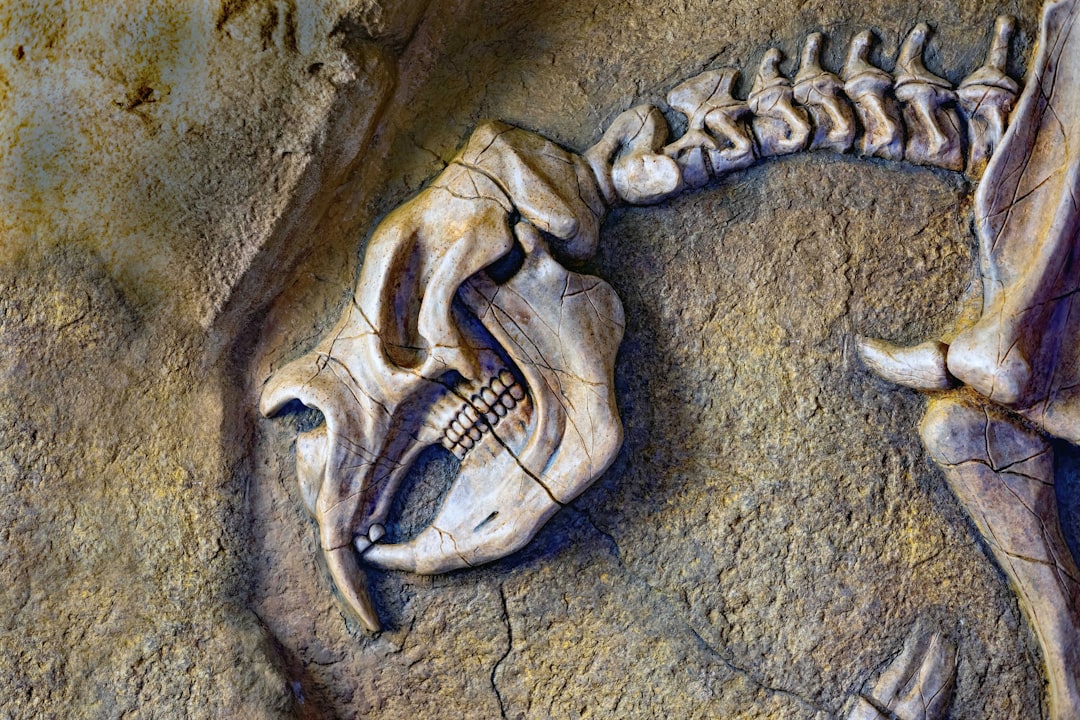
Perhaps the most direct evidence of Deinocheirus’ aquatic lifestyle comes from preserved stomach contents found within the fossil. These remains include fish bones, aquatic plant material, and even small stones that the dinosaur likely swallowed to help digest tough vegetation—a behavior called gastroliths commonly seen in both aquatic birds and herbivorous dinosaurs.
The fish remains are particularly telling. They belong to species that lived in shallow, slow-moving waters—exactly the kind of environment where a large, semi-aquatic dinosaur would be most successful. The size and variety of fish suggest that Deinocheirus was an opportunistic feeder, taking advantage of whatever aquatic prey was available.
Plant material in the stomach contents includes species that grew underwater or in marshy conditions. This evidence strongly suggests that Deinocheirus was actively feeding in aquatic environments, not just occasionally drinking at water’s edge.
Swim Stroke Analysis: How Would It Move?
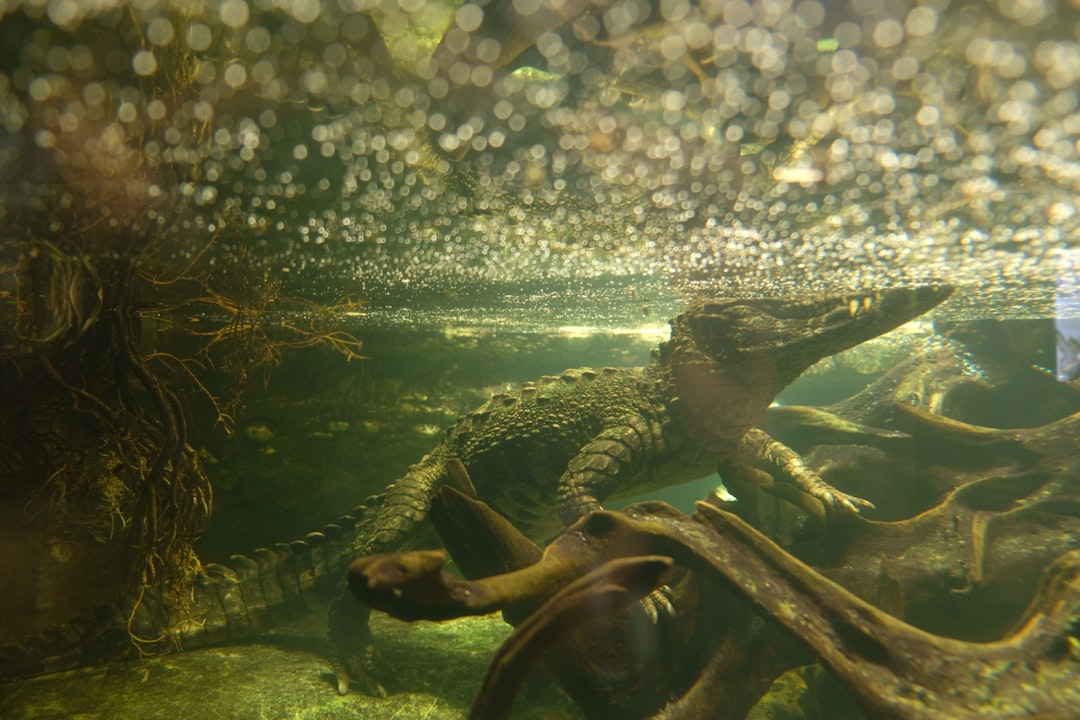
Reconstructing how Deinocheirus might have swum requires understanding its unique anatomy. Unlike marine reptiles with flippers, or modern aquatic mammals with streamlined bodies, Deinocheirus would have relied on its powerful legs and arms for propulsion. The most likely swimming style would have been similar to a dog paddle, but on a massive scale.
The creature’s long legs would have provided the primary thrust, while its arms helped with steering and balance. The massive claws, rather than being hindrances, might have acted like natural paddles, increasing the surface area for each stroke. This would have been especially useful in shallow water where the dinosaur could touch bottom with its feet while using its arms for additional propulsion.
Buoyancy calculations suggest that Deinocheirus would have floated quite well, with its large body cavity providing natural buoyancy. This would have reduced the energy required to stay afloat, making longer swimming sessions possible.
Trackway Evidence: Footprints in Ancient Mud
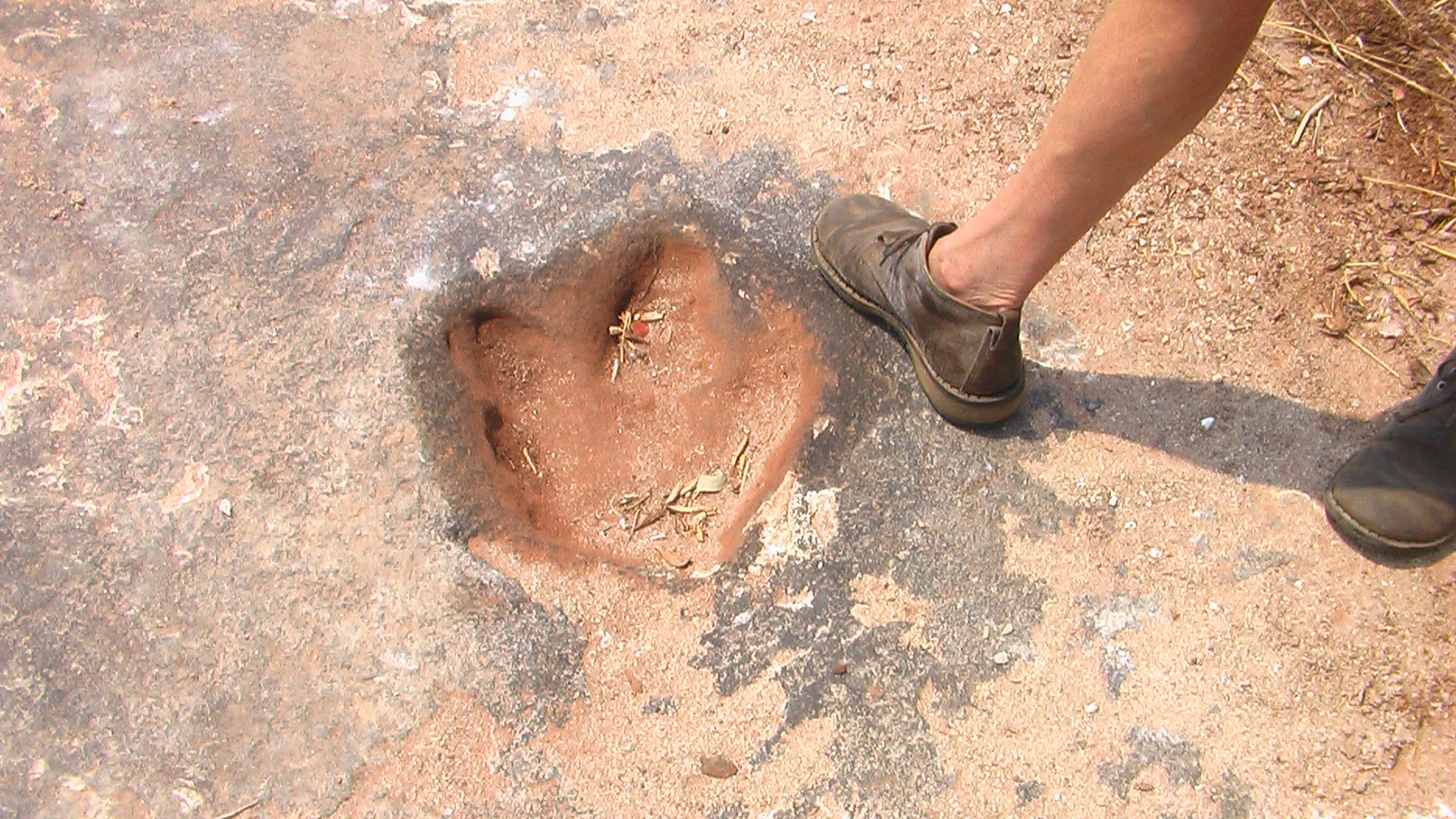
Fossil trackways provide another crucial piece of the puzzle. While no definitive Deinocheirus tracks have been identified, similar large theropod tracks have been found in ancient lakebeds and river channels. These trackways show evidence of dinosaurs moving through water, with deeper heel impressions and signs of underwater walking.
Some tracks show the characteristic pattern of semi-aquatic movement, where the animal alternates between walking on the bottom and swimming. The spacing between footprints changes dramatically in these sequences, suggesting the creature was buoyant and pushing off the bottom rather than walking normally.
The preservation of these tracks in underwater sediments tells us that large dinosaurs regularly entered water deep enough to require swimming. This behavioral evidence, combined with anatomical features, builds a compelling case for dinosaur swimming abilities.
Bone Density and Buoyancy: The Physics of Floating Giants
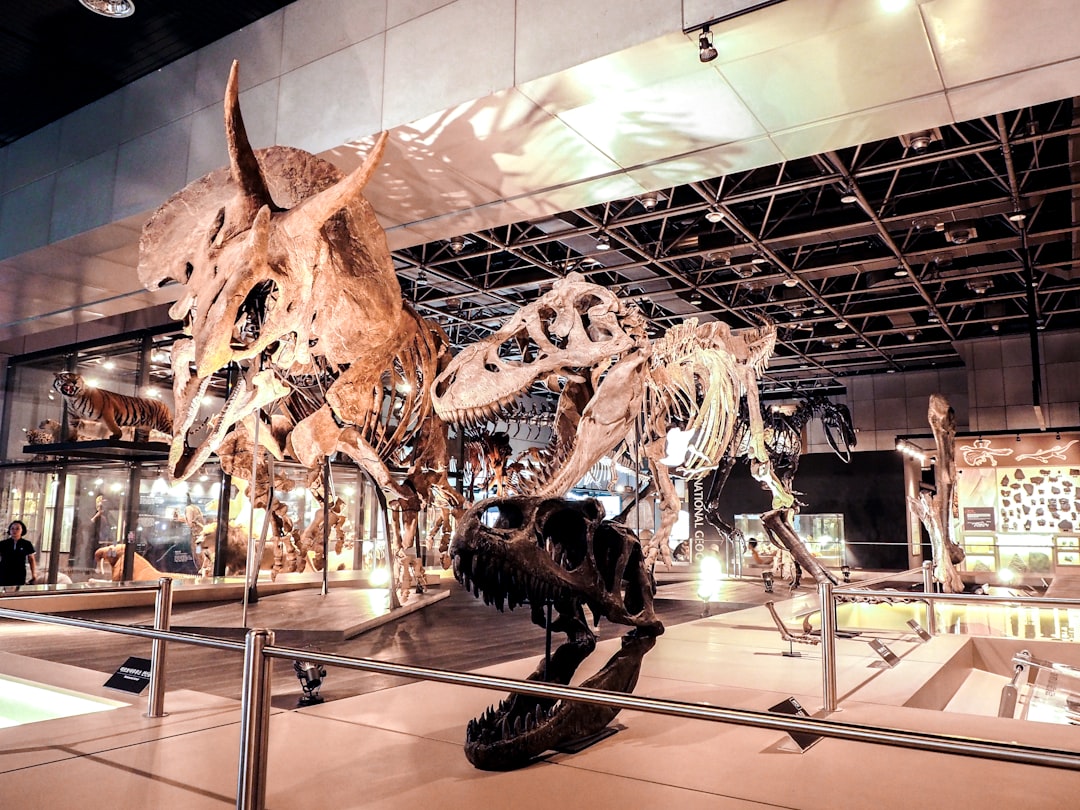
The density of dinosaur bones provides important clues about their relationship with water. Deinocheirus bones show a pattern of density that suggests the creature was well-adapted for an aquatic lifestyle. Unlike purely terrestrial dinosaurs, whose bones are solid and heavy, Deinocheirus bones have areas of reduced density that would have improved buoyancy.
This bone structure is similar to what we see in modern semi-aquatic animals like hippos and water buffalo. The bones are strong enough to support the creature’s weight on land but light enough to make swimming efficient. This represents a perfect evolutionary compromise between terrestrial and aquatic lifestyles.
The distribution of bone density throughout the skeleton also tells us about swimming behavior. Areas that would have been most important for swimming show specific adaptations, while purely terrestrial features are less pronounced.
Predator-Prey Relationships in Aquatic Environments
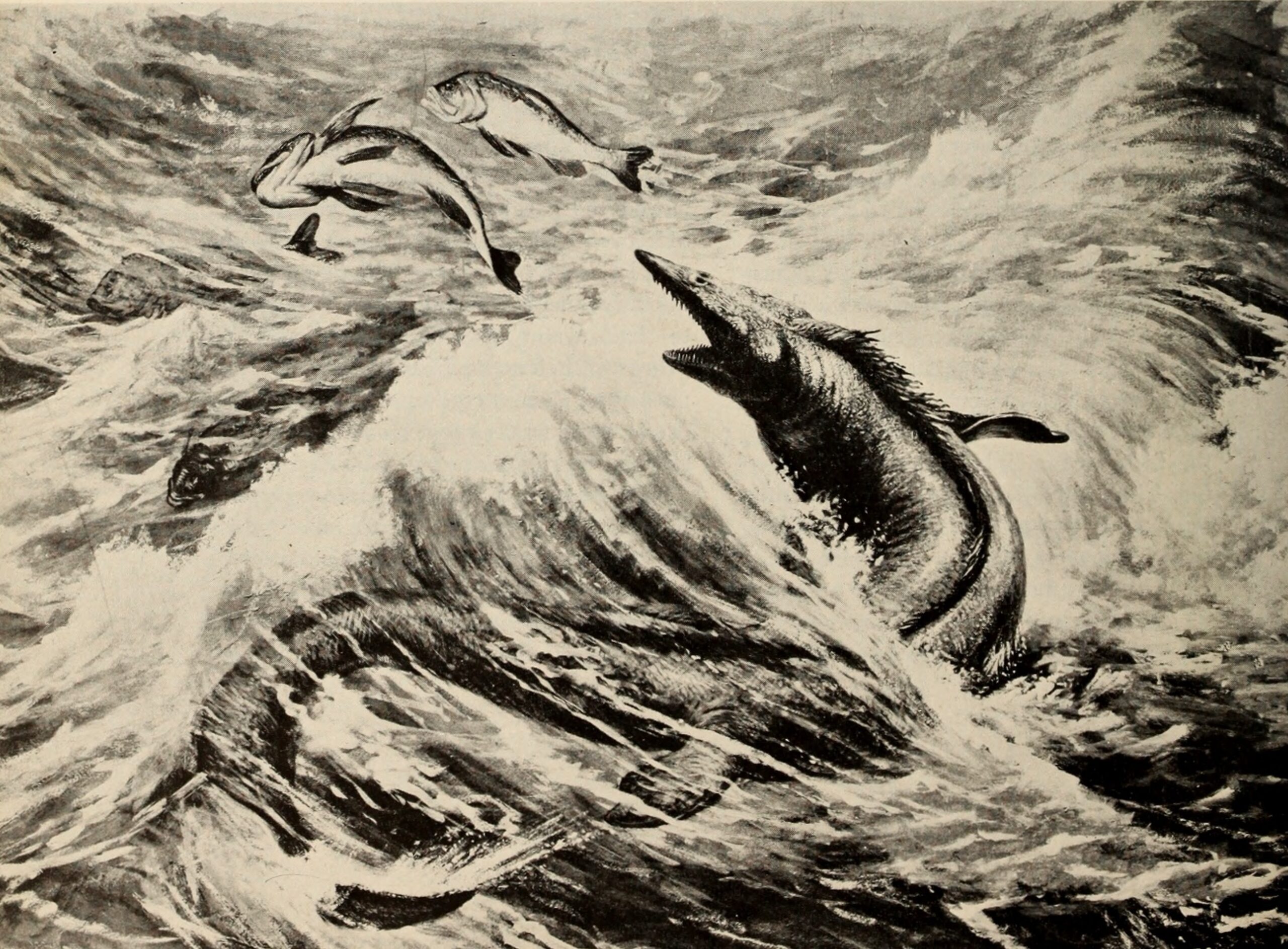
The aquatic habits of Deinocheirus would have had significant implications for its interactions with other dinosaurs. Water provided both opportunities and challenges for such a large creature. On one hand, aquatic environments offered abundant food sources that terrestrial predators couldn’t access. On the other hand, water movement would have been slower and potentially more vulnerable.
Evidence suggests that Deinocheirus shared its aquatic habitats with various predators, including smaller theropods and even early crocodilians. The creature’s massive size and formidable claws would have provided excellent defense, even in water. Its ability to retreat to deeper water might have been a crucial survival strategy.
The presence of fish and aquatic plants in its diet suggests that Deinocheirus occupied a unique ecological niche. It was likely one of the few large dinosaurs capable of exploiting aquatic food sources, giving it a competitive advantage in environments where purely terrestrial herbivores might struggle.
Seasonal Migration Patterns: Following the Water
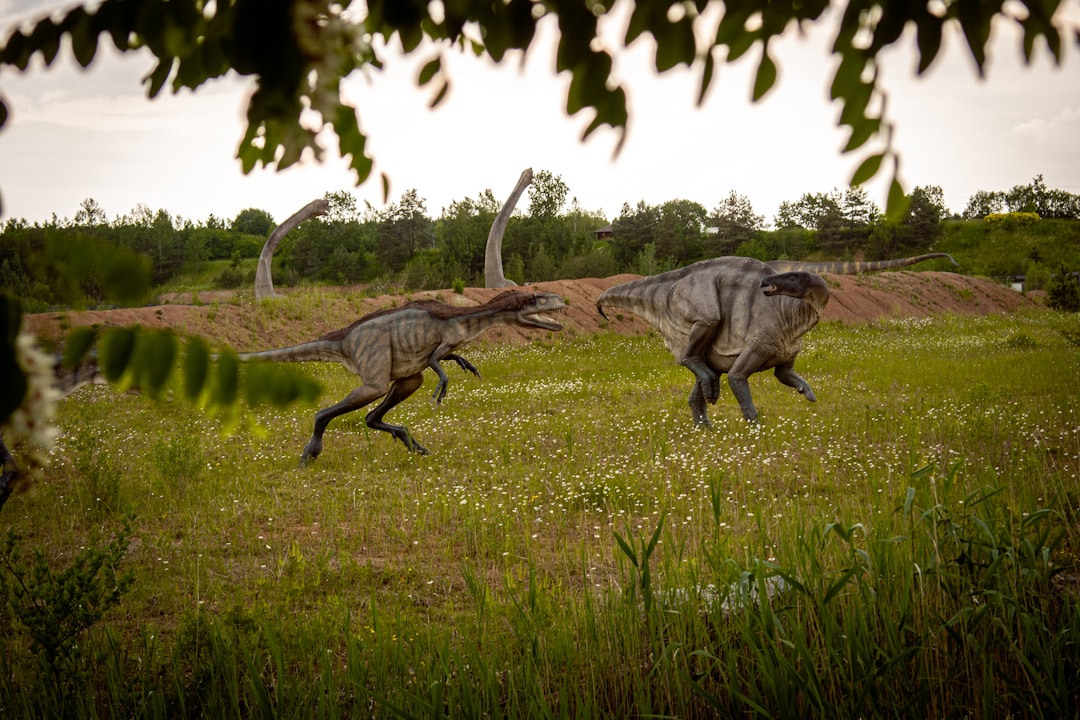
The geological evidence suggests that ancient Mongolia experienced seasonal variations in water levels and climate. This would have created migration patterns for large dinosaurs like Deinocheirus, who needed to follow water sources throughout the year. The creature’s swimming ability would have been crucial during these migrations, allowing it to cross rivers and lakes that might have blocked purely terrestrial dinosaurs.
Modern semi-aquatic animals often show similar migration patterns. Hippos travel considerable distances between water sources during dry seasons, while various waterfowl follow seasonal water patterns. Deinocheirus might have exhibited similar behaviors, using its swimming ability to access new feeding areas.
The wear patterns on Deinocheirus fossils suggest extensive travel and varied environments. This supports the idea that these creatures were highly mobile and capable of adapting to different aquatic conditions throughout their range.
Paleoenvironmental Reconstruction: A Water World
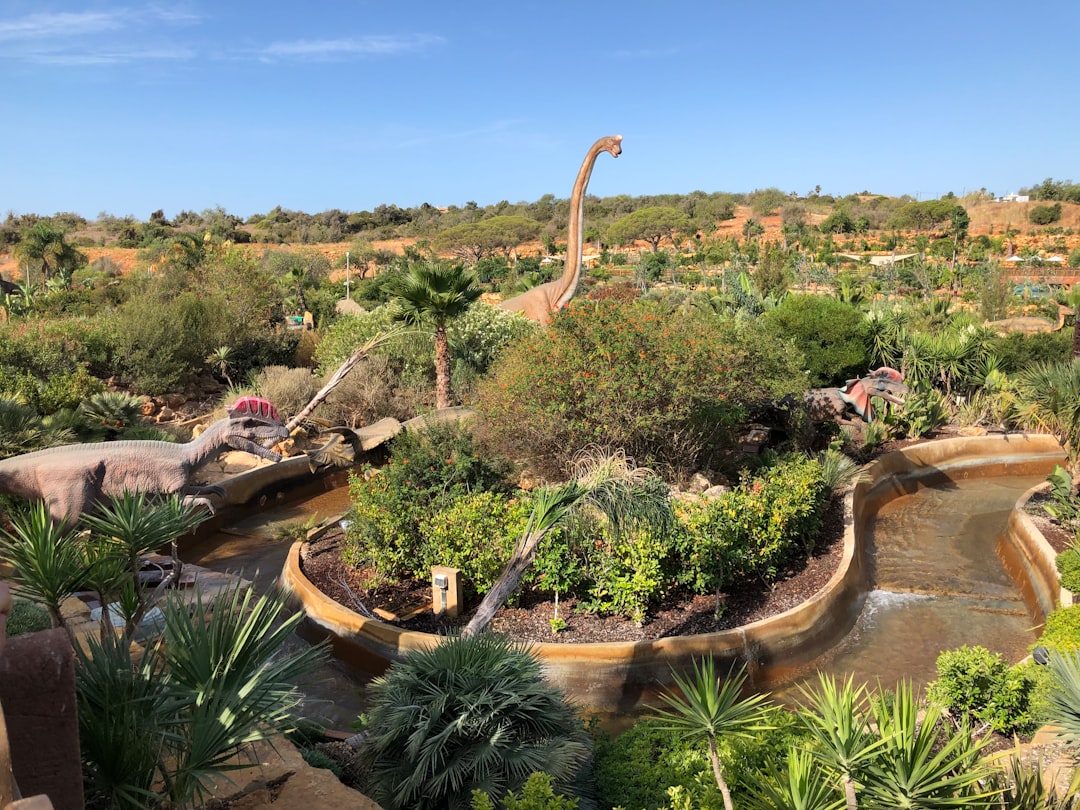
The Late Cretaceous environment of Mongolia was dramatically different from today’s arid landscape. Extensive research has revealed a world of interconnected lakes, rivers, and wetlands that would have been perfect for large semi-aquatic dinosaurs. The climate was warmer and more humid, supporting lush vegetation both on land and in aquatic environments.
These ancient water systems were incredibly productive, supporting diverse ecosystems that included everything from microscopic algae to massive dinosaurs. The stable food webs would have provided consistent resources for creatures like Deinocheirus, making an aquatic lifestyle both possible and advantageous.
The seasonal nature of these water systems would have created a dynamic environment where swimming ability was essential for survival. Creatures that could navigate between different water bodies would have had access to the richest feeding grounds and the best breeding sites.
Modern Technology Reveals Ancient Secrets
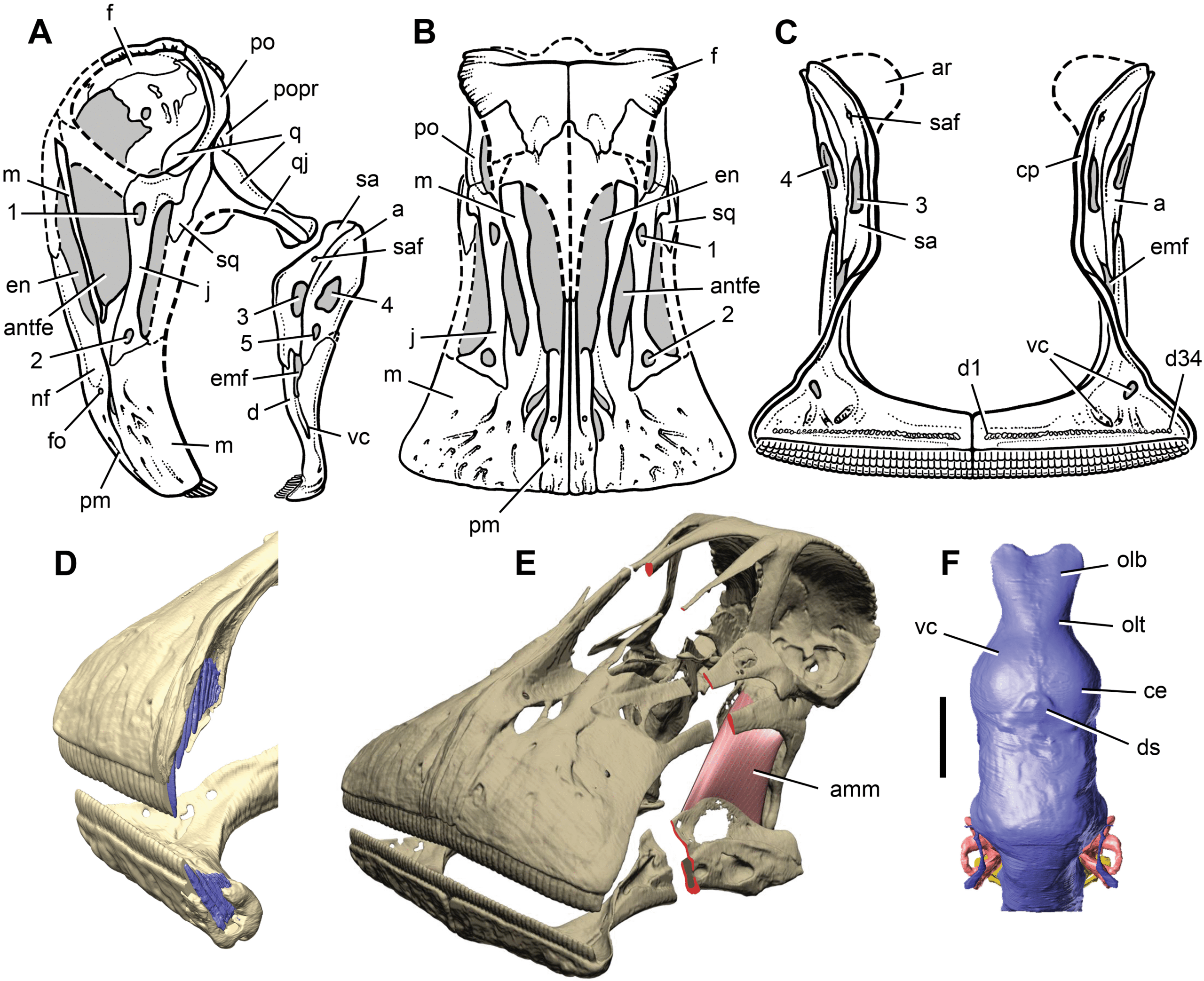
Recent advances in paleontological techniques have revolutionized our understanding of dinosaur swimming abilities. CT scanning of Deinocheirus bones has revealed internal structures that were previously invisible, showing adaptations that strongly suggest aquatic behavior. These scans can identify air spaces, bone density patterns, and muscle attachment points that are diagnostic of swimming animals.
Chemical analysis of the fossils has also provided new insights. Isotope ratios in the bones can tell us about diet and environment, while trace element analysis reveals information about water chemistry and seasonal changes. These techniques have confirmed that Deinocheirus spent significant time in aquatic environments.
Three-dimensional modeling allows scientists to test swimming hypotheses digitally. Computer simulations can predict how efficiently Deinocheirus would have moved through water, what swimming strokes would have been most effective, and how much energy would have been required for aquatic locomotion.
The Debate Continues: Challenging Traditional Views
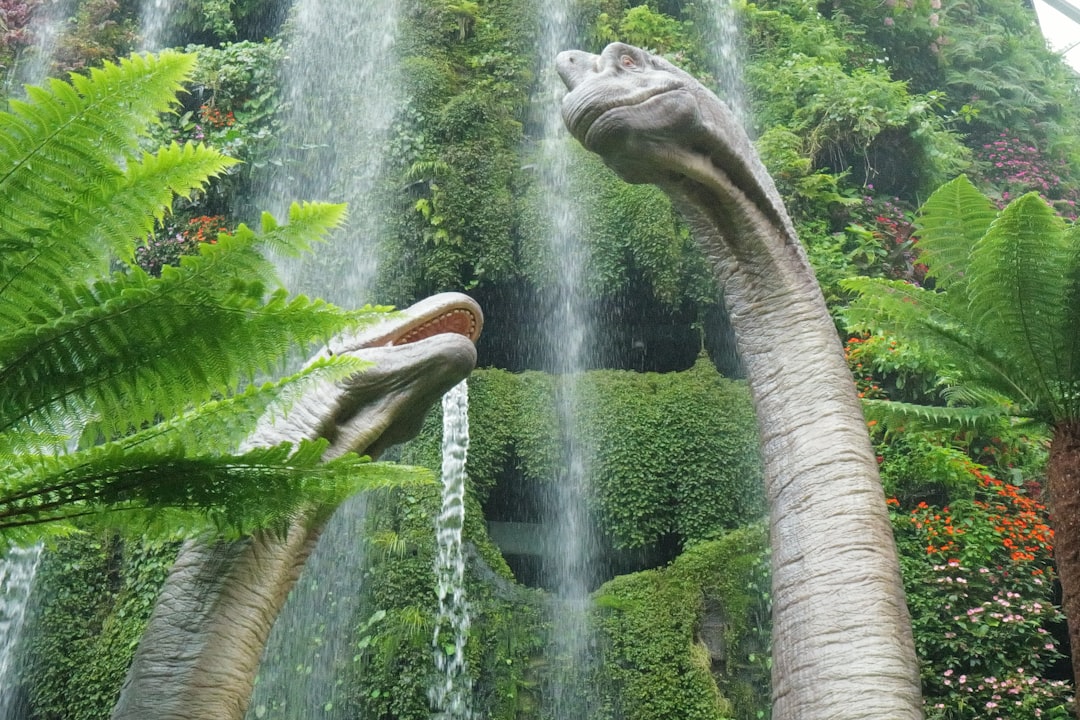
Despite mounting evidence, the question of dinosaur swimming abilities remains controversial in paleontological circles. Traditional views of dinosaurs as purely terrestrial creatures are deeply entrenched, and challenging these assumptions requires extraordinary evidence. The case of Deinocheirus represents a significant shift in thinking about dinosaur behavior and ecology.
Some scientists argue that the evidence for swimming is circumstantial and that large dinosaurs would have been physically incapable of effective aquatic locomotion. They point to the massive size and weight of creatures like Deinocheirus as barriers to swimming, suggesting that any aquatic behavior would have been limited to wading in shallow water.
However, the accumulating evidence from multiple sources—anatomical, geological, and behavioral—continues to build a compelling case for dinosaur swimming abilities. The debate itself is driving new research and discoveries that are expanding our understanding of these ancient creatures.
The story of Deinocheirus and its potential swimming abilities represents more than just an academic curiosity. It challenges us to reconsider our assumptions about prehistoric life and opens new avenues for understanding how these magnificent creatures lived, fed, and survived in their ancient world. The fossil clues continue to emerge from Mongolia’s ancient lake beds, each discovery adding another piece to the puzzle of whether these giants of the past could truly master both land and water. What other secrets might these ancient sediments still hold about the hidden aquatic lives of dinosaurs?