
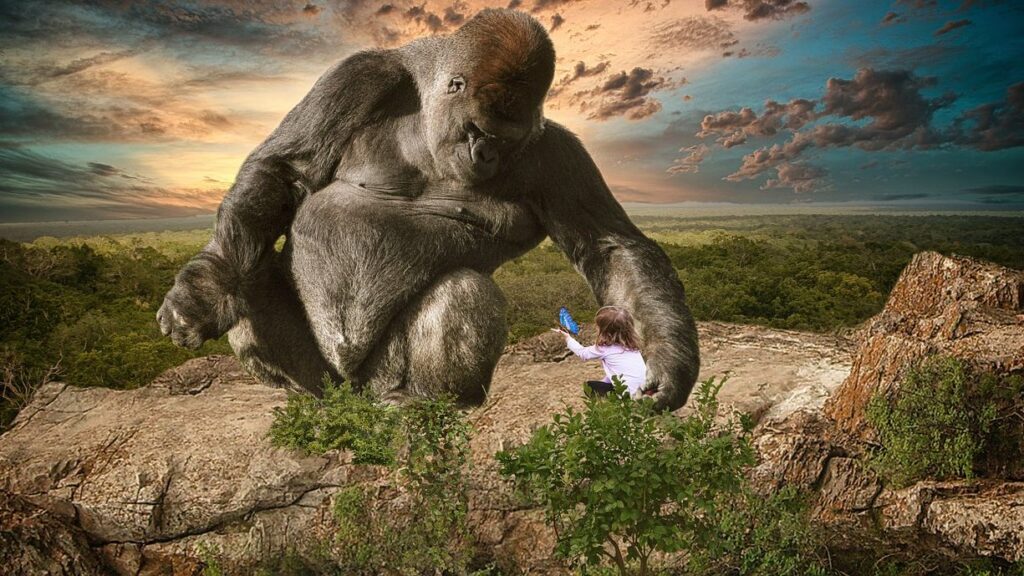
Picture standing at the edge of a city street and watching a living skyscraper of muscle and fur step around a building. Your gut says it would be terrifying but also strangely awe-inspiring, like seeing a mountain come to life. The idea of a real King Kong presses every one of our buttons at once: fear of huge predators, fascination with lost worlds, and the quiet, unnerving question of whether nature has ever come close to something like this.
But once the movie lights fade, the scientific questions hang in the air. Could evolution, physics, and biology actually allow a gorilla-sized monster to grow to the height of a high-rise and still function? Or are our giant-ape fantasies fundamentally at war with the rules of real-world anatomy? Let’s walk through the evidence, from fossil apes to bone-crushing physics, and see how close reality ever got to our favorite cinematic giant.
The Largest Real Apes We Know: Meet Gigantopithecus
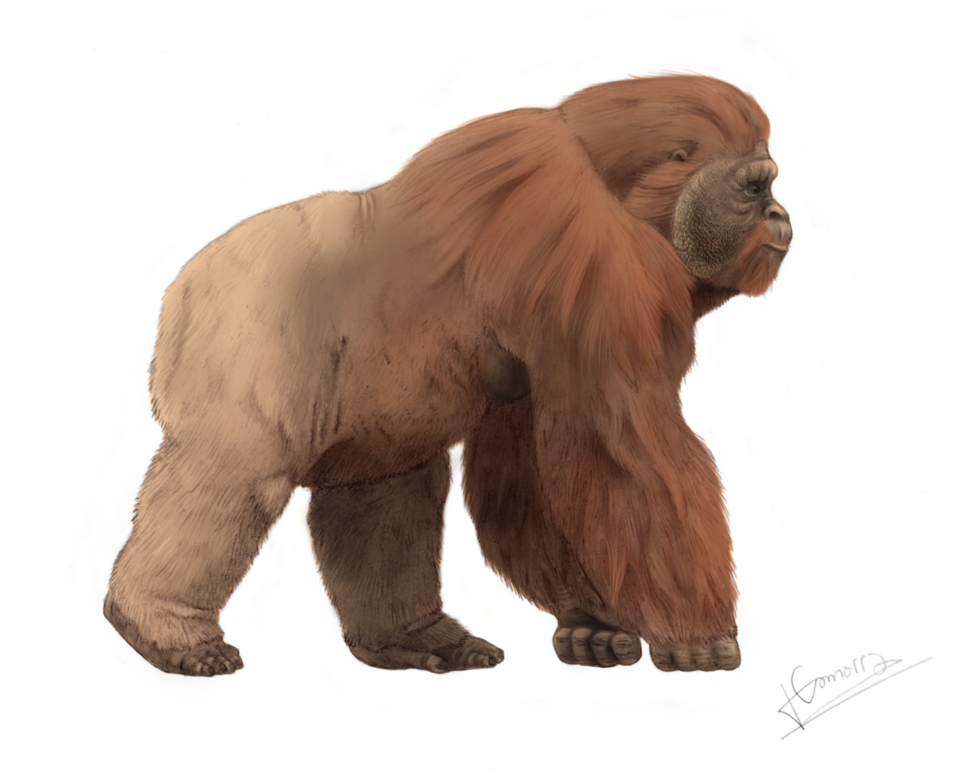
The closest reality ever came to a “King Kong” was an extinct ape called Gigantopithecus, which lived in parts of Asia during the Pleistocene. Fossil evidence suggests it may have stood around three meters tall when upright and weighed several hundred kilograms, roughly in the same mass range as a large polar bear or a very big male gorilla scaled up. That’s impressive by any standard, but still nowhere near the tens-of-meters heights of movie monsters stomping through cities.
What’s striking is how incomplete our picture of Gigantopithecus really is. Most of what we know comes from teeth and jaw fragments, not full skeletons, so scientists have to reconstruct its body size using comparisons with living apes. The safest conclusion is that it was huge, probably the largest known primate ever, but still clearly within the limits of what terrestrial bones, muscles, and joints can realistically support. Even at that size, it likely faced serious challenges in finding enough food and moving efficiently in its habitat.
Scaling Up: Why Physics Is the Real Villain of Giant Ape Dreams
The brutal truth is that as animals get bigger, physics stops being polite and starts being relentlessly unforgiving. When you double an animal’s height, its volume and mass grow by roughly eight times, but the strength of its bones and muscles only grows by about four times. In other words, weight increases faster than the ability to support that weight. At some point, legs would snap or joints would grind themselves apart under the sheer load.
This is why real-world land animals have an upper size limit, and why the biggest terrestrial animals ever were dinosaurs with very different body plans than apes. A King Kong dozens of meters tall would need absurdly thick legs, massive feet, and bones far beyond what normal biological materials can handle. Instead of a heroic chest-thumping ape, you’d end up with a short, stump-legged creature waddling carefully to avoid breaking itself – more like a furry walking storage tank than a nimble skyscraper climber.
Bone, Blood, and Breath: The Hidden Costs of Being Huge
Size is not just about bones holding up mass; the entire internal plumbing system has to scale with it. A giant ape would need to pump blood up a long vertical distance to the brain, similar to what giraffes and very large dinosaurs had to deal with. That means an enormous heart, extremely high blood pressure, and thick, reinforced arteries. Even with those, the risk of circulatory failure, strokes, or fainting would skyrocket as height increased.
Then there’s oxygen and heat. A truly colossal primate sprinting through a city, fighting military hardware, and climbing buildings would generate intense heat and demand incredible amounts of oxygen. Lungs and airways would have to be huge, and the skin would need efficient ways to shed heat without cooking the body from the inside. Real animals already push these limits – large mammals tire quickly and have to rest often. A movie-style King Kong that can fight, run, and climb for long periods is basically an athletic fantasy stacked on top of a biological fantasy.
Food, Habitat, and the Ecological Bill for a Giant Ape
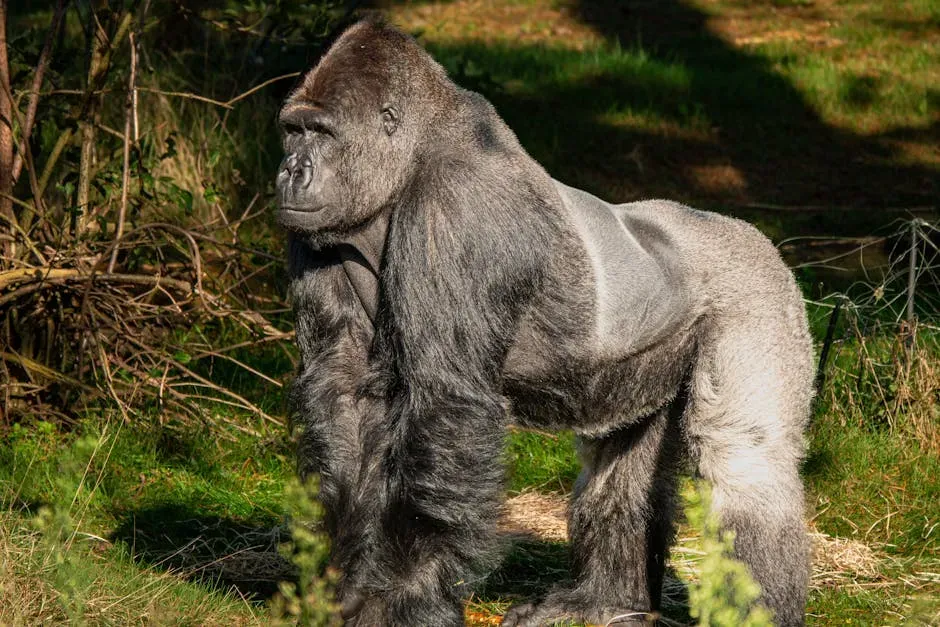
Even if we imagine that the skeleton and internal organs somehow work, the next harsh question is: what does such a creature eat, and where does it live? Large animals need a staggering amount of calories every day just to stay alive. A real ape even somewhat close to Kong’s size would have to consume vast amounts of vegetation or meat. That kind of diet would strip local resources quickly unless it lived in an extremely rich, untouched environment – and even then, it would be living on the edge.
We can see this pressure in the largest animals we know today. Big predators are rare and require large territories. Big herbivores must spend most of their waking hours just feeding. A city-smashing ape would be like running several herds of elephants inside a single body, nutritionally speaking. Ecologically, that is a nightmare: it would either be constantly roaming huge distances in search of food or rapidly collapsing its own habitat. The quiet reality is that ecosystems strongly resist letting one animal get too big and too hungry.
Why Dinosaurs and Whales Can Be Giant, but Apes Cannot
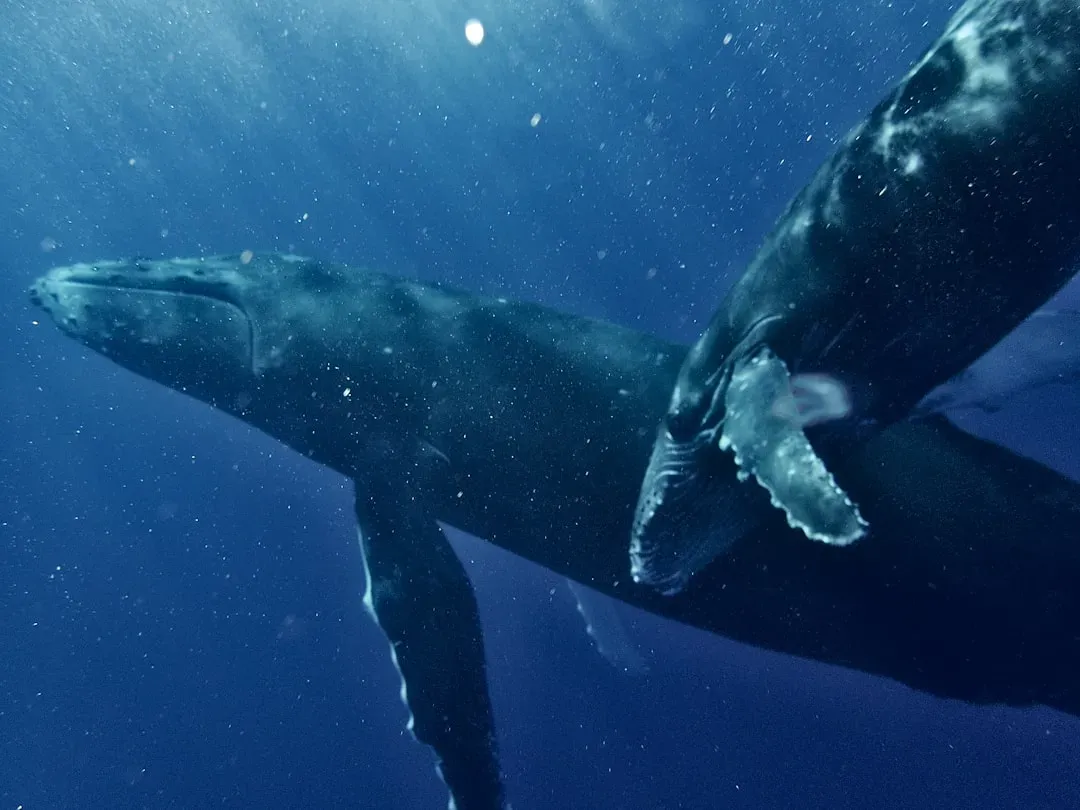
When people imagine giant animals, they often point to sauropod dinosaurs or modern whales and ask why a giant ape is any more unrealistic. The key is that those animals solved the size problem with very different strategies and body designs. Long-necked dinosaurs had column-like legs, lightweight but strong vertebrae, and probably spent a lot of time moving slowly, not wrestling aircraft or leaping between structures. Their entire anatomy was optimized around being big and mostly horizontal, not vertical climbers or fighters.
Whales dodge many land-based limits altogether by living in water, where buoyancy supports most of their weight. A blue whale could never lumber around on land; its skeleton simply is not built for that. Apes are built as relatively agile, tree-capable mammals with flexible joints and grasping limbs, not as slow-moving walking towers or swimming behemoths. Trying to stretch an ape body plan to match a dinosaur or whale in size is like trying to turn a sports car into an ocean liner: you are starting from the wrong blueprint.
So How Much Bigger Than a Gorilla Could an Ape Really Get?
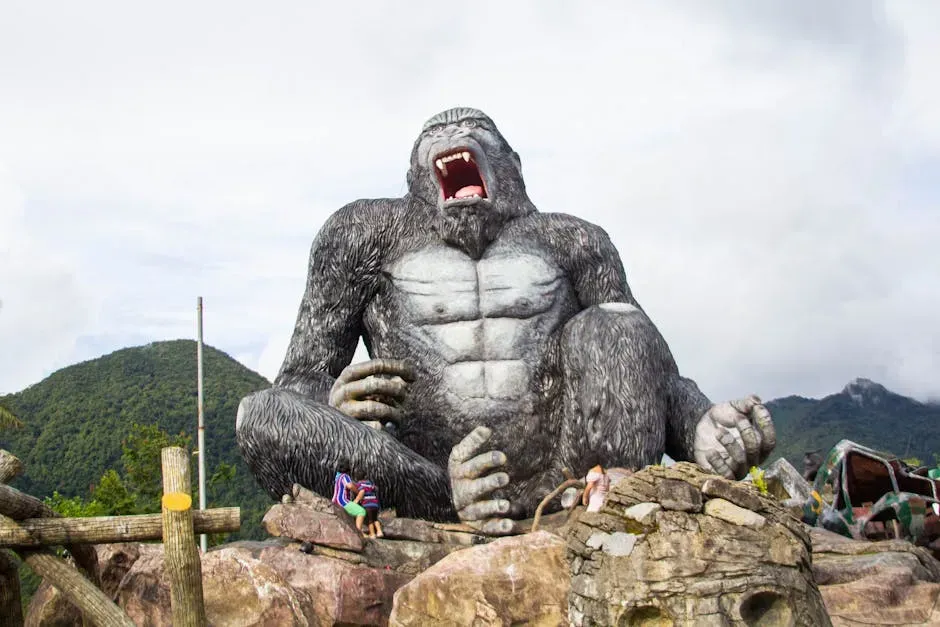
If we stay honest about physics and biology, the most realistic path to a “giant” ape is much more modest than the movies suggest. Evolution could probably push an ape somewhat larger than today’s gorillas or even near the estimated upper range of Gigantopithecus, maybe edging into the territory of the biggest land mammals like large rhinoceroses. That would already be intimidating: picture a gorilla scaled up enough that you’d feel like a child standing next to a two-story house made of muscle.
But once you start talking about apes the size of office buildings, you are well past what natural bone, muscle, and metabolism can handle without constant collapse. Even with hypothetical genetic tweaking, you would soon be fighting the same basic scaling problems. You might engineer an overgrown, slow, heavily supported primate that can shuffle around a bit, but it would not sprint, climb skyscrapers, or survive real-world injuries the way a movie monster does. At best, you would get something huge but fragile, like a living engineering prototype that nature itself would probably reject in a few generations.
What King Kong Really Tells Us About Ourselves
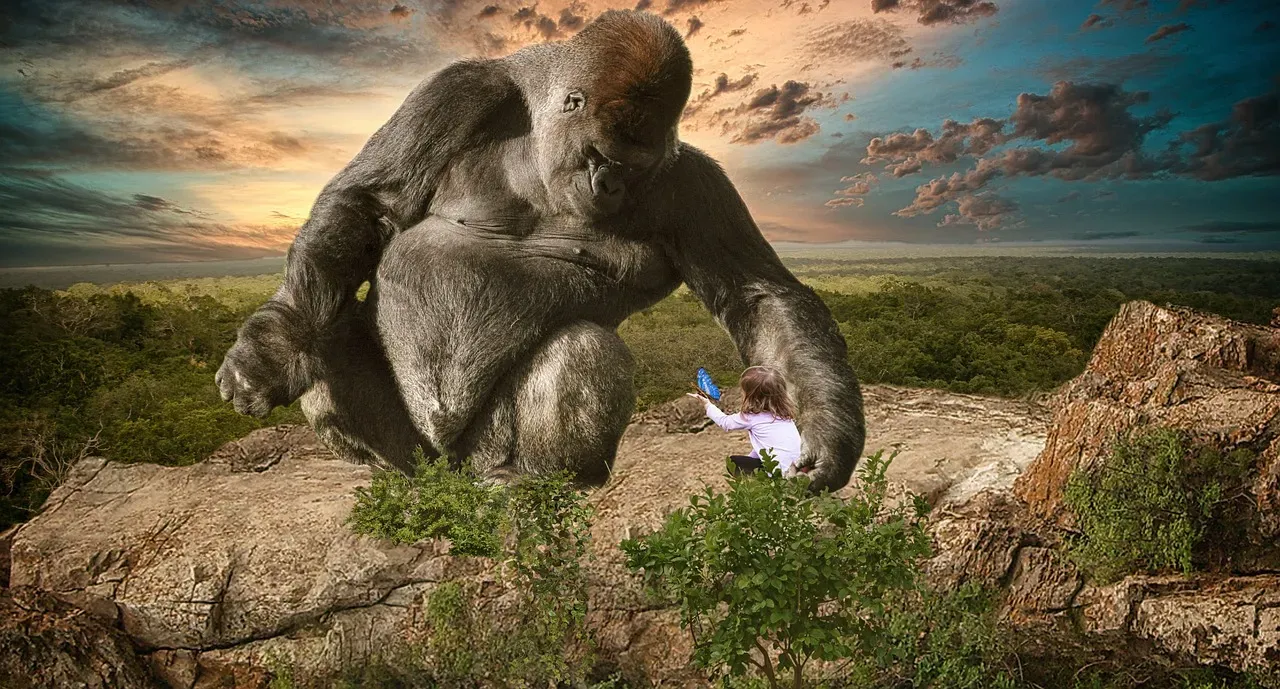
In my view, the most interesting thing about King Kong is not what it says about biology, but what it reveals about us. We keep returning to the image of a colossal ape because it sits right at the intersection of familiar and impossible. Apes are close enough to humans that we see ourselves in them, yet wild enough that we can project all our fears and fantasies onto their bodies. Turning that into a towering giant is like turning up the volume on our own anxieties about nature, power, and control.
Scientifically, a real King Kong is not just unlikely – it is effectively ruled out by the very rules that allow any complex life to exist at all. And oddly, I find that comforting. The same physics that limits our monsters also quietly protects our world from them. We are stuck with much smaller, much more plausible creatures – and with our own imaginations, which, frankly, are the real giants in this story. When you think about it that way, which is more astonishing: a skyscraper-sized ape, or the human brain that dreamed it up so convincingly in the first place?