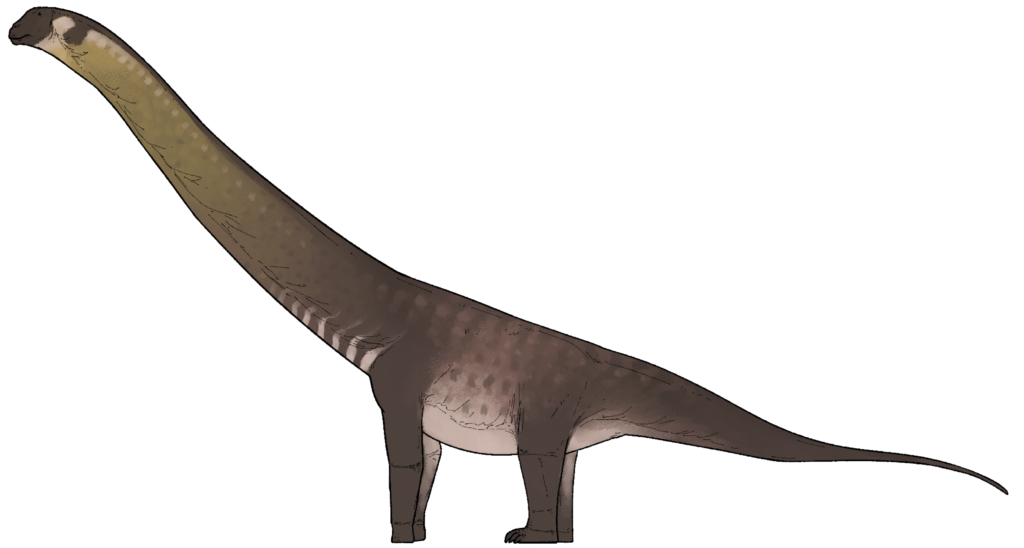
Northeastern Brazil – A partial skeleton unearthed from ancient rock layers has unveiled a long-necked giant that roamed the landscape 120 million years ago.
Giant Among Early Cretaceous Beasts
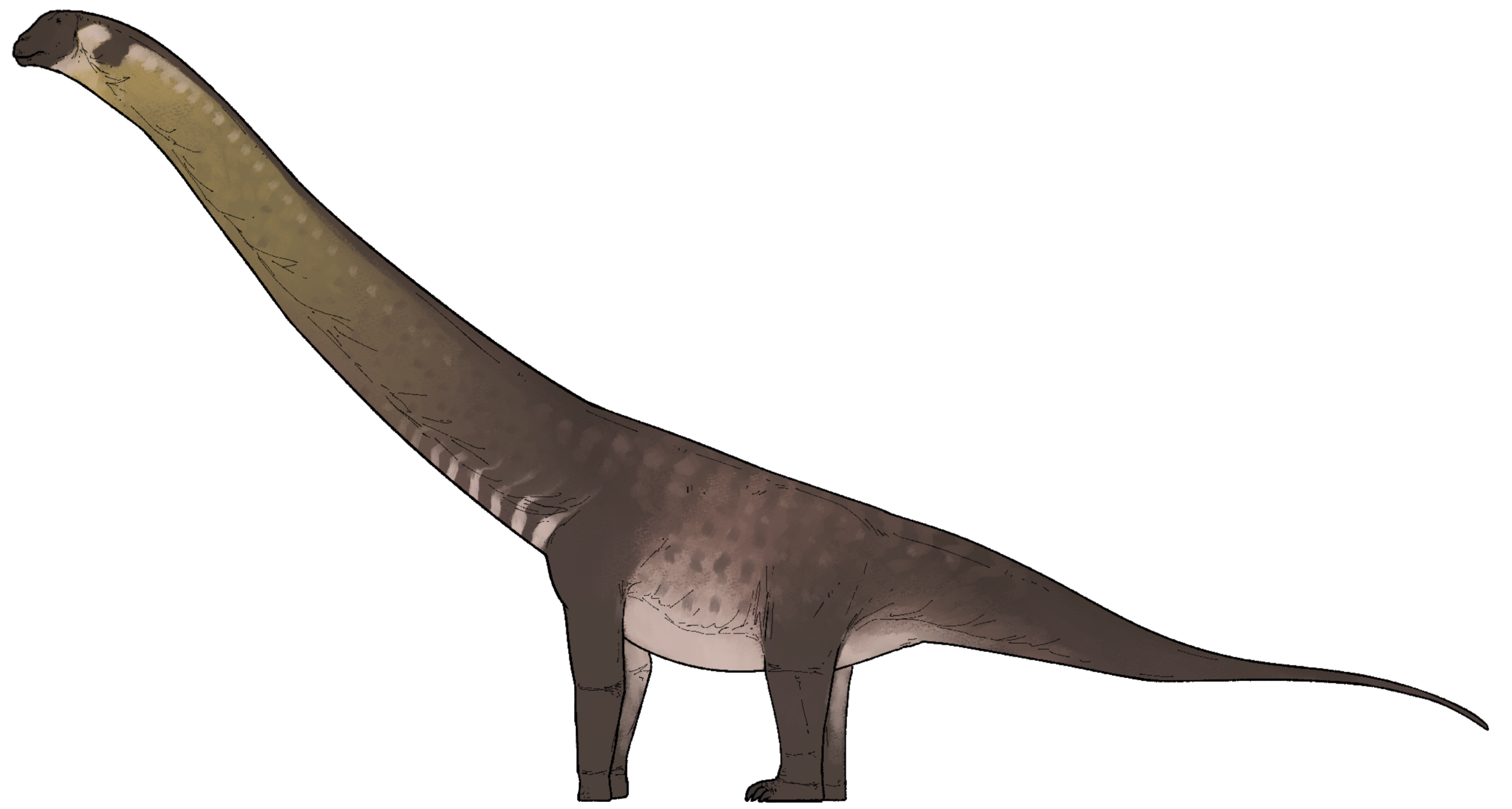
Giant Among Early Cretaceous Beasts (Image Credits: Upload.wikimedia.org)
Paleontologists identified Dasosaurus tocantinensis as a new species of somphospondylan sauropod, a titanosauriform dinosaur that thrived from the Late Jurassic through the end of the Cretaceous.
The specimen came from the Itapecuru Formation in the state of Maranhão, within the Grajaú Basin near Davinópolis. This site yielded bones dispersed across about six square meters in friable siltstones and sandstones.
Researchers estimated the animal reached around 20 meters in length, placing it among the substantial herbivores of its time. Unlike the titanosaurs that later dominated southern continents, this one stood outside that lineage.
The Early Cretaceous Aptian stage marked a period when Gondwana’s lands remained partially connected, setting the stage for surprising faunal exchanges.
Distinctive Bones Tell the Tale
Middle and posterior tail vertebrae featured a unique complex of three anteroposteriorly elongated ridges, including a groove above the ventral one. No prior species combined these traits exactly.
The femur displayed a well-developed lateral bulge, another hallmark that aided classification. Osteohistological analysis revealed a blend of traits: an external fundamental system, primary laminar tissue, and extensive secondary remodeling akin to later titanosaurs.
These features confirmed Dasosaurus tocantinensis as a non-titanosaur somphospondylian, expanding the known diversity of Early Cretaceous sauropods in northern South America.
- Tail vertebrae: Three ridges with specific grooving.
- Femur: Pronounced lateral bulge.
- Bone tissue: High remodeling rates bridging early and advanced forms.
- Overall size: Approximately 20 meters long.
- Preservation: From clay-rich sediments prone to contraction.
Closest Kin Across the Future Atlantic
Phylogenetic studies positioned Dasosaurus tocantinensis as the sister taxon to Garumbatitan morellensis, a sauropod from Spain’s Barremian deposits about 122 million years old.
Shared synapomorphies linked these two, suggesting the clade originated in Europe. The Brazilian lineage likely dispersed southward via northern Africa sometime between the Valanginian and Aptian stages.
Dr. Max C. Langer of the Universidade de São Paulo and colleagues noted, “Apart from expanding the known diversity of Early Cretaceous sauropods in the northern part of South America, this discovery highlights biogeographical connections with more northern Gondwanan areas, as well as Europe.”
Rewriting Ancient Migration Routes
Numerical biogeographical analyses supported an European cradle for the Dasosaurus-Garumbatitan group. Dispersal occurred before the Atlantic Ocean widened fully, through land bridges involving northern Africa.
This find challenges views of isolated South American evolution during the Early Cretaceous. Instead, it portrays a connected network fostering dinosaur exchanges across what became distant shores.
The work appeared in the Journal of Systematic Palaeontology on February 12, led by Elver L. Mayer and a team including Julian C. G. Silva Junior, Leonardo R. Kerber, and others.
Key Takeaways
- Dasosaurus tocantinensis expands northern South American sauropod records.
- Links to European Garumbatitan suggest pre-Atlantic migrations.
- Osteohistology bridges evolutionary gaps in titanosauriforms.
This discovery underscores how fossils continue to map the dynamic world of the Mesozoic. What paths might future digs reveal? Tell us in the comments.