Kleinfeltersville, Pa. – Thousands of snow geese recently transformed a quiet reservoir at Middle Creek Wildlife Management Area into a whirlwind of motion and sound during their brief spring stopover.
The Explosive Sunrise Lift-Off
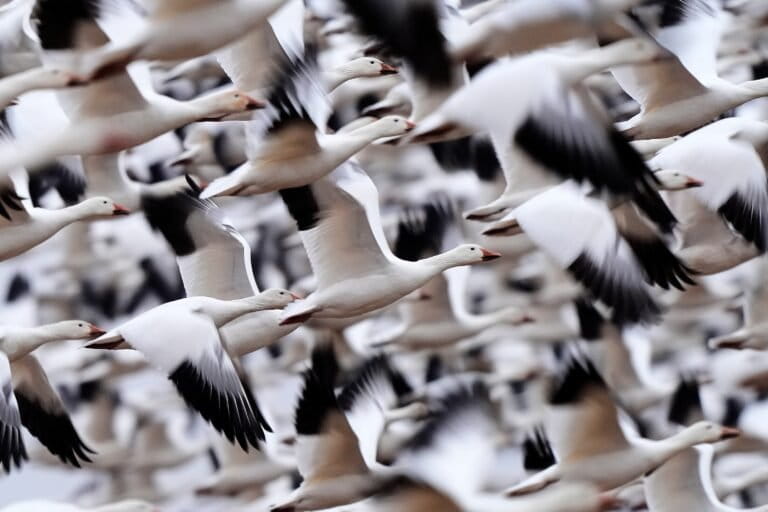
The Explosive Sunrise Lift-Off (Image Credits: Imgs.mongabay.com)
Picture the predawn hush broken by a sudden roar of wings. Birdwatchers gathered in the chill awaited the moment when the geese abandoned their roosting on the water. About an hour after sunrise, the flock exploded upward in a raucous tornado of white feathers, circling briefly before dispersing to nearby farm fields for grains.
Pennsylvania Game Commission environmental education specialist Payton Miller captured the awe: “All it takes is for me to come out here on a really nice morning where there’s a huge morning flight and I’m kind of reminded how awesome it is to see such a large number of such a beautiful bird.” The display lasted only minutes, leaving observers breathless.
This fleeting event drew dozens to prime viewing spots like Willow Point. The geese’s serrated bills, adapted for gripping plants, underscored their foraging prowess as they headed out.
Journey Through a Key Way Station
Middle Creek, a 6,300-acre haven built in the 1970s, serves as a critical rest during the snow geese’s northward push from Atlantic Coast wintering grounds like the Delmarva Peninsula to Arctic breeding areas in Canada and Greenland.
Snow geese first trickled in during the late 1970s, but numbers surged in the 1990s, reaching peaks of 200,000 in 2018. In 2026, counts hit 65,000 on March 6 before tapering, accompanied by tundra swans and Canada geese.
Habitat enhancements like impoundments and managed fields made the site irresistible. The area now hosts over 280 bird species annually.
Balancing Abundance and Ecology
While the spectacle thrills 150,000 visitors yearly, snow geese’s boom – from 3,000 in the early 1900s to millions today – poses challenges. Overgrazing ravages Arctic tundra, uprooting plants and harming other wildlife.
McGill University professor David M. Bird called it “probably one of the biggest conservation problems facing wildlife biologists in North America today.” Officials manage through hunting seasons, crop protection, and avian flu monitoring, with recent reports of dead birds prompting vigilance.
Middle Creek’s designation as a Globally Significant Important Bird Area highlights its role in sustaining migrations amid development pressures.
Essential Viewing Guide
Enthusiasts like safari guide Adrian Binns seek “the whole enjoyment of seeing something you don’t see every day.” To join them:
- Arrive before dawn at Willow Point or Stop #1 for lift-off and return flights.
- Check the Pennsylvania Game Commission livestream for real-time counts.
- Bring binoculars, warm layers, and a field guide; dress for cold mornings.
- Report sick birds to 1-833-PGC-WILD.
- Visit the Visitor Center at 100 Museum Road, Stevens, for exhibits.
Tour Road opens March 1, weather permitting. Late February to early March offers peak chances, though 2026’s season waned by mid-March.
- Middle Creek hosts up to 200,000 snow geese during peaks, drawing massive crowds.
- Dawn and dusk flights provide the most dramatic views of this migration marvel.
- Conservation focuses on curbing overabundance to protect Arctic habitats.
Middle Creek stands as a testament to successful wildlife management, blending spectacle with stewardship. As these resilient birds vanish northward, they leave a reminder of nature’s grandeur and fragility. What wildlife wonder have you witnessed lately? Tell us in the comments.