Ho Chi Minh City, Vietnam – Markets catering to international tourists display taxidermied painted woolly bats in shadowbox frames, fueling a trade that endangers this vibrant species amid surging U.S. demand for seasonal decorations.
A Striking Species Under Siege
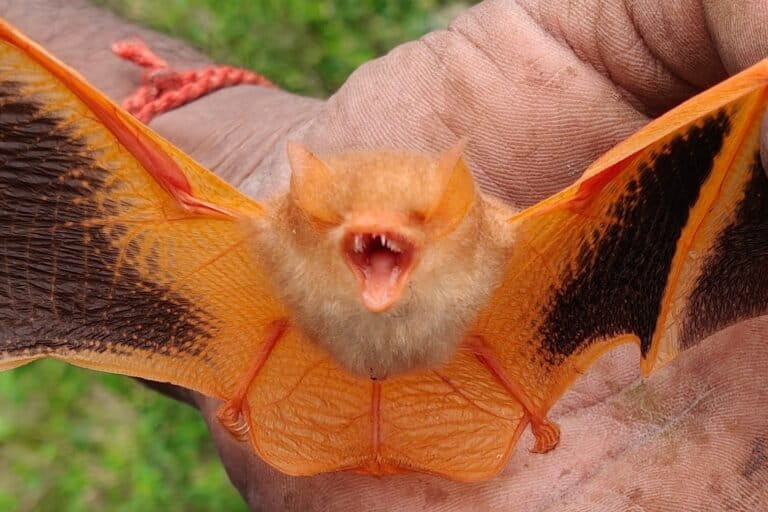
A Striking Species Under Siege (Image Credits: Imgs.mongabay.com)
The painted woolly bat, or Kerivoula picta, captivates with its bright orange fur, black wings streaked in orange, and fluffy facial features that earned it the nickname butterfly bat. This tiny creature weighs just 5 grams and measures about 2 inches long, roosting in small groups under dried banana leaves in forests and agricultural areas across South and Southeast Asia, including Vietnam. Insectivorous by nature, it plays a key role in pest control. Yet its Halloween-like coloration has made it a prime target for collectors.
Researchers classify the bat as near threatened on the IUCN Red List, noting a 25% population decline over the past 15 years. Slow reproduction – one pup per year – leaves it vulnerable to harvesting pressures. Surveys in Vietnam’s Mekong Delta yielded just one specimen after extensive efforts, signaling local rarity.
Thriving Trade in Tourist Hotspots
Two 2024 surveys across 85 shops in Ho Chi Minh City’s tourist districts uncovered more than 50 taxidermied painted woolly bats for sale, often framed alongside insects and lizards. At Ben Thanh Market alone, investigators counted 41 individuals in one visit, with prices ranging from $10 to $35. Vendors sourced them from wild harvests via wholesalers, including vulnerable pups.
Online platforms amplified the issue, with nearly 800 bats listed on sites like Amazon, eBay, and Etsy in 2024, a quarter being painted woolly bats. Though eBay and Etsy imposed bans in 2025 following campaigns, enforcement lagged. The U.S. imported over 1,000 dead specimens annually, underscoring cross-border demand.
Holiday Trinkets Fuel the Crisis
America’s appetite for orange-and-black Halloween decor, along with unusual Christmas ornaments, drives much of the trade. Framed bats adorn walls, while others appear in jewelry, hair clips, and collectibles shipped to the U.S., Europe, and Canada. “Painted woolly bats are one of the most beautiful bats there is,” said Chris Shepherd, a senior conservation advocate at the Center for Biological Diversity.
Hunting remains illegal in Vietnam and other range countries, yet loopholes persist without CITES regulation. No captive-breeding facilities exist, confirming wild origins. Conservationists warn that even modest offtake could decimate populations given the bat’s solitary habits and sparse distribution.
Urgent Calls for Global Action
Experts urge Vietnam to classify the bat as nationally endangered, imposing year-round hunting bans and stiffer penalties. Listing under CITES Appendix III would enable trade monitoring, a step toward full protection. A 2024 U.S. petition seeks Endangered Species Act coverage, with review underway since August 2025.
Joanna Coleman, a biology professor and IUCN Bat Specialist Group member, highlighted the peril: “When you remove adult females and their young from wild populations, you are even likelier to cause population declines.” Platforms must enforce bans rigorously, while consumers shun these items.
- Avoid purchasing framed bats, jewelry, or decor featuring real specimens.
- Report suspicious listings to e-commerce sites and authorities.
- Support petitions and habitat restoration efforts.
- Educate others on the bats’ ecological value in pest control.
- Advocate for CITES listing through wildlife organizations.
Key Takeaways
As these colorful guardians of ecosystems hang in the balance, stronger enforcement and consumer awareness offer the best hope. Opt for synthetic alternatives this Halloween – what steps will you take to protect wildlife? Tell us in the comments.