Bangladesh – A recent study tracked nine rescued Bengal slow lorises released into a national park and found that territorial disputes with wild counterparts claimed most of their lives.
Big Eyes Mask a Venomous Reality
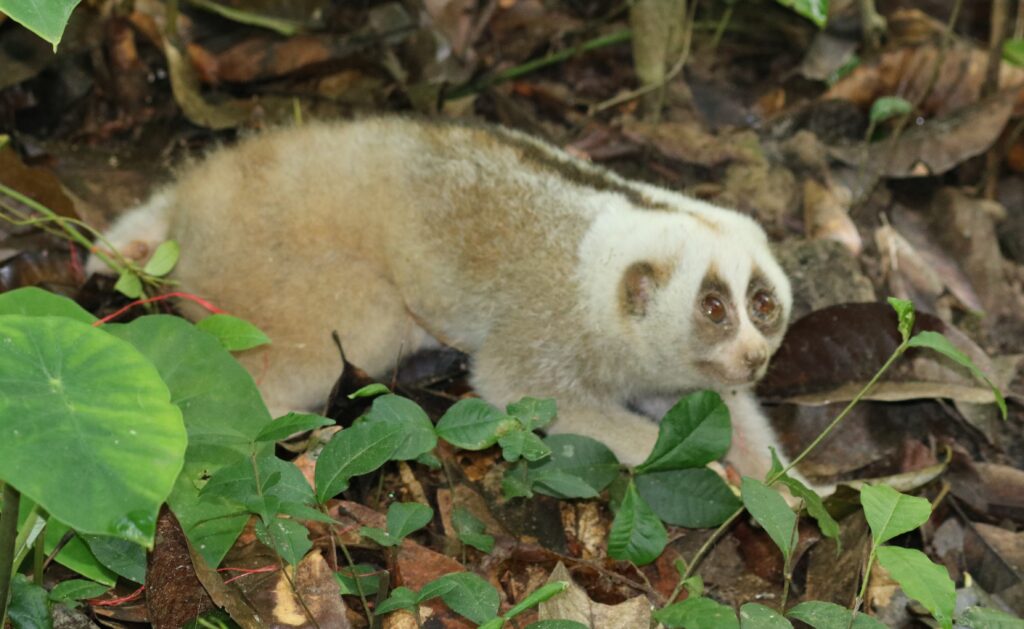
Big Eyes Mask a Venomous Reality (Image Credits: Wikimedia)
These nocturnal primates draw admiration for their wide, staring eyes and compact form, but such appeal has cursed them with intense poaching pressure. Traffickers target Bengal slow lorises for the illegal pet trade, exploiting their docile appearance in captivity. In reality, the species packs a unique defense: they represent the only known venomous primates, mixing saliva with armpit secretions to deliver painful bites.
All nine slow loris species face threats, classified by the International Union for Conservation of Nature as endangered or vulnerable. Rescue operations pull many from markets and homes, yet reintegration poses steep hurdles. “Many rescued endangered species are often released because the public expects it, but for animals such as the Bengal slow loris, this is not always the best course of action,” said Anna Nekaris, a researcher at Anglia Ruskin University in Cambridge, England.
Tracking Reveals a Harsh Homecoming
Researchers fitted radio collars on the nine lorises before release and monitored their movements closely. Of the seven that provided usable data, four turned up dead within months. Autopsies confirmed the killers: fellow slow lorises, who attacked intruders in fierce territorial battles.
Only two lorises survived the observation period, underscoring the risks of abrupt returns to the wild. The study, detailed in Global Ecology and Conservation, highlighted how captivity disrupts natural behaviors essential for survival. Released animals wandered into established territories, triggering lethal responses from residents.
Root Causes of Reintroduction Failures
Territorial instincts run deep in slow lorises, who maintain exclusive ranges and defend them aggressively. Rescued individuals, often habituated to humans, lack the skills to navigate these boundaries. Poor site selection compounds the issue, as protected areas may already hold saturated populations.
Public sentiment often pushes for releases, viewing them as triumphant happy endings. Conservationists face pressure to comply, even without thorough assessments. The Bangladesh case illustrates broader pitfalls in wildlife rehabilitation worldwide.
- High trafficking volumes overwhelm rescue capacities.
- Captivity alters foraging and social cues.
- Venomous traits escalate conflicts with wild kin.
- Limited tracking data hides true failure rates.
- Endangered status demands precise interventions.
Charting Smarter Conservation Paths
Experts urge behavioral evaluations and ecological matching before any release. Suitable sites must offer low-density populations and ample resources. Soft releases, with pre-release enclosures, could acclimate animals gradually.
Long-term sanctuaries emerge as viable alternatives for non-releasable cases. Partnerships between researchers and agencies can refine protocols. The Wildlife Society detailed these insights in a recent report.
Key Takeaways
- Only two of nine released Bengal slow lorises survived due to territorial attacks.
- Public expectations drive risky releases without scientific backing.
- Prioritize assessments for better outcomes in primate conservation.
Rescue efforts save lives from traffickers, but survival demands more than open forests. Conservation must blend compassion with science to protect species like the Bengal slow loris. What strategies would you prioritize for rescued wildlife? Tell us in the comments.