There is something quietly astonishing about the idea that a creature we picture as a thundering, scale-covered predator might have also been a tender, devoted parent. For most of modern history, dinosaurs were written off as cold-blooded loners, indifferent to their offspring the moment the eggs hit the ground. Honestly, that image has been crumbling for decades, one fossilized nest at a time.
What paleontologists have uncovered across Montana, Mongolia, China, Argentina, and beyond paints a far more nuanced portrait of prehistoric family life. You might be surprised just how much these ancient giants have in common with the birds singing outside your window right now. Let’s dive in.
The Fossil Record Speaks: What Nests Actually Tell You
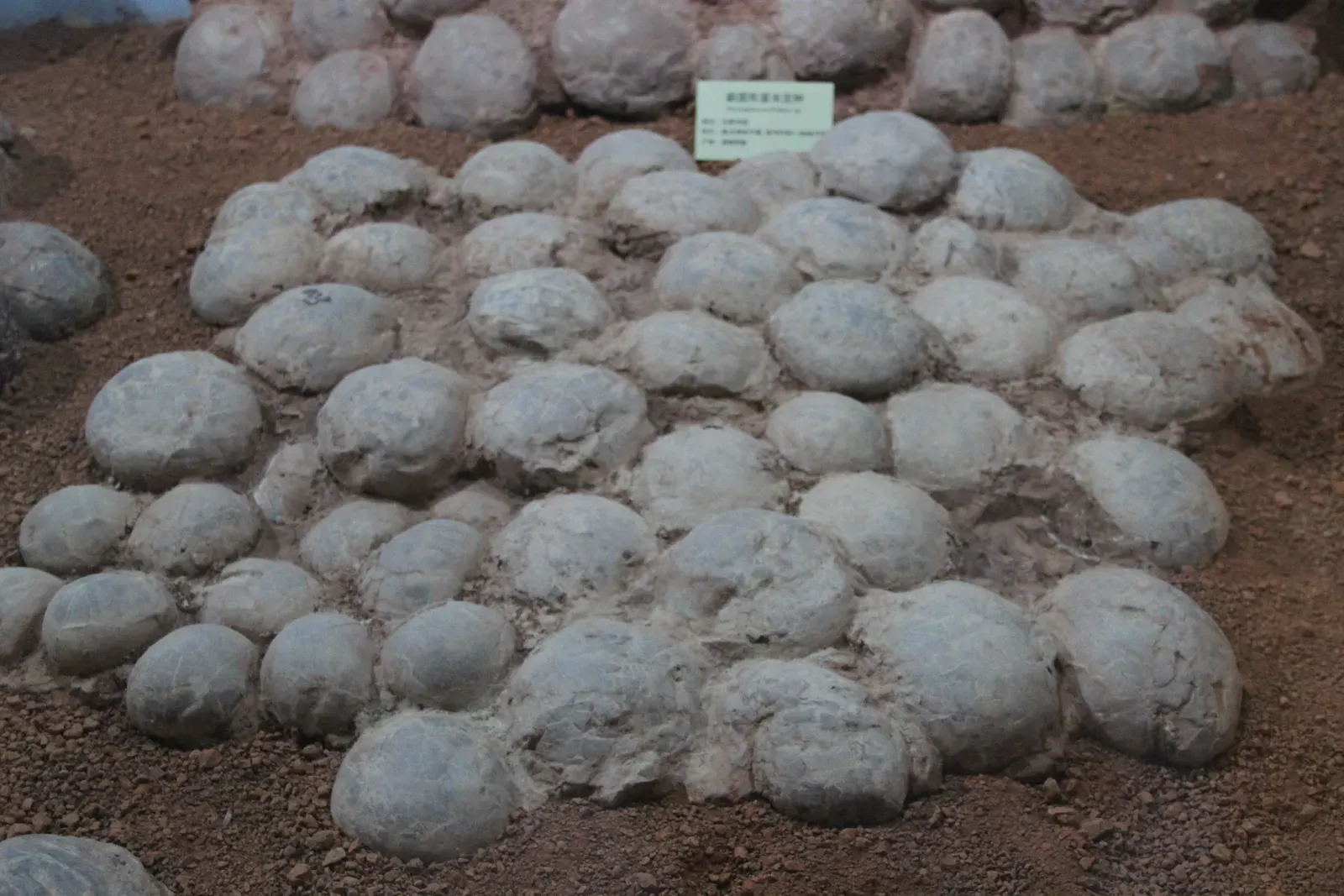
Fossil eggs and nests are the only direct evidence we have about the reproductive biology of dinosaurs. Think of them like time capsules, buried under layers of sediment for tens of millions of years, waiting to reveal secrets about ancient family life. It is extraordinary, when you stop to really think about it, that something as fragile as an eggshell can survive at all.
A nest is the trace fossil that provides evidence of a deliberate construction made by adult dinosaurs to provide a site for incubation. This distinction matters enormously. A scattered cluster of eggs might just be coincidence, but a deliberately built nest structure tells you something intentional was happening. Patterns of eggshell preservation in a nest have also been linked to nesting behavior and parental care, with lots of broken eggshell in a nest interpreted as evidence that hatchling dinosaurs remained in the nest for extended periods, possibly trampled by nest-bound hatchlings.
Maiasaura and Egg Mountain: The Discovery That Changed Everything
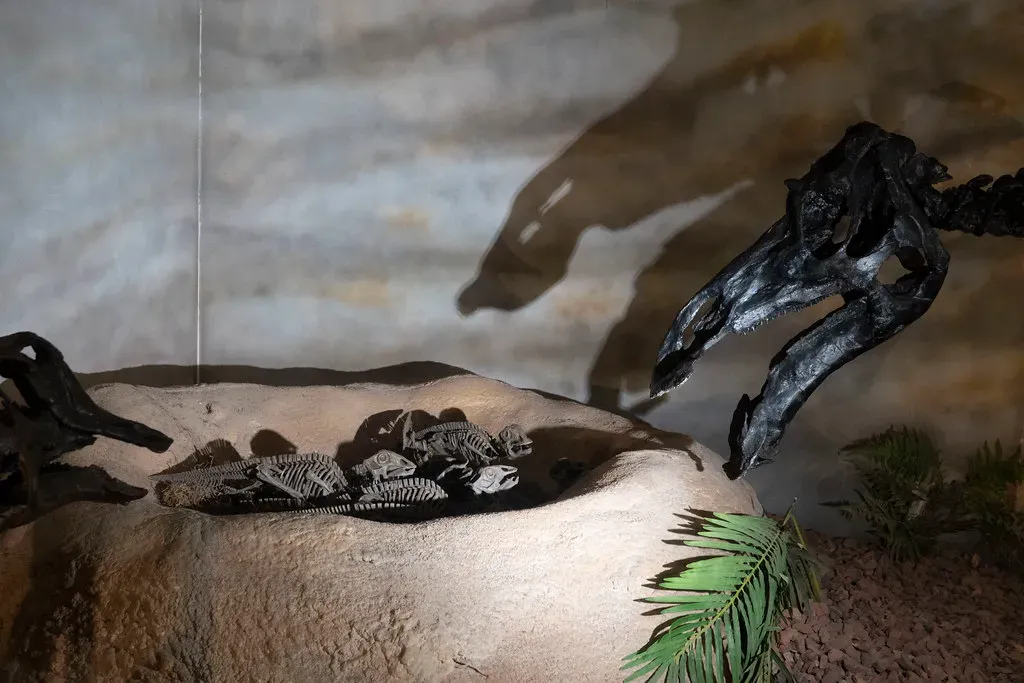
In the 1970s, paleontologist Jack Horner discovered what was later dubbed “Egg Mountain” in Montana, a gigantic fossilized nesting site of hundreds of specimens of duck-billed Maiasaura dinosaurs from up to 80 million years ago, one of the first findings that helped researchers learn more about how much some dinosaurs parented even after their babies hatched. It was a watershed moment for the entire field. Before this, the dominant narrative was still firmly in the “lay and leave” camp.
At Egg Mountain, evidence of trampled eggshells suggests that the hatchlings were in the nest for a while, and along with the shells, there was plant matter in the nests, suggesting parents may have fed the young before they ventured out into the world. Examination of the fossils suggested this dinosaur cared for its young after they hatched and inspired its name: Maiasaura, meaning “the good mother reptile.” That name alone tells you how much this discovery shifted scientific thinking.
Oviraptor: From Accused Egg Thief to Devoted Parent
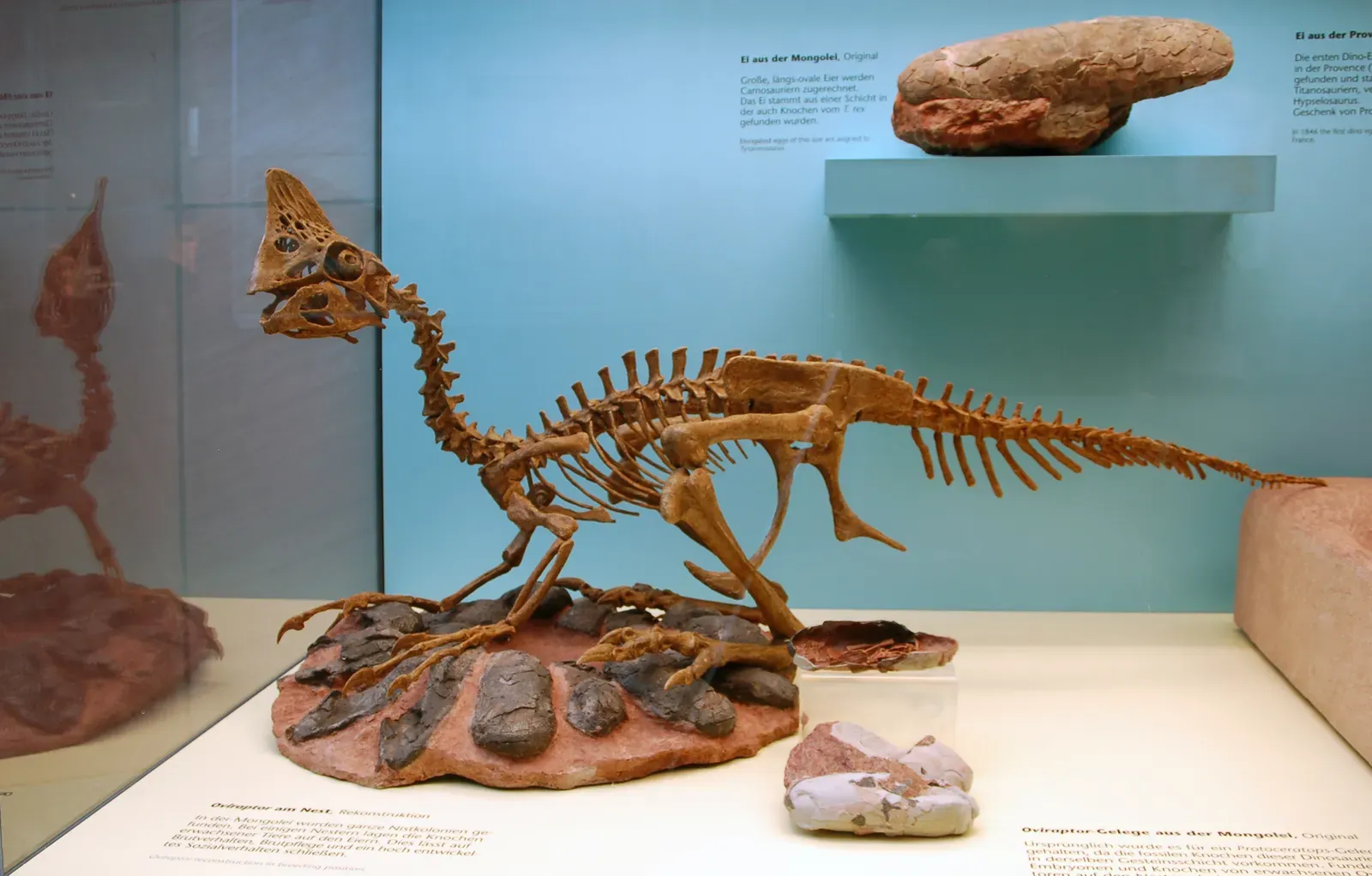
Oviraptor, whose name is derived from the Latin for “egg thief,” was first discovered in the 1920s in association with eggs thought to belong to the small ceratopsian dinosaur Protoceratops. Based on this find, scientists thought Oviraptor may have stolen and eaten other dinosaurs’ eggs. It has now been confirmed, however, that the eggs actually belonged to Oviraptor itself. Few cases in paleontology rival this dramatic reversal of reputation. For about 70 years, this dinosaur carried an utterly false criminal record.
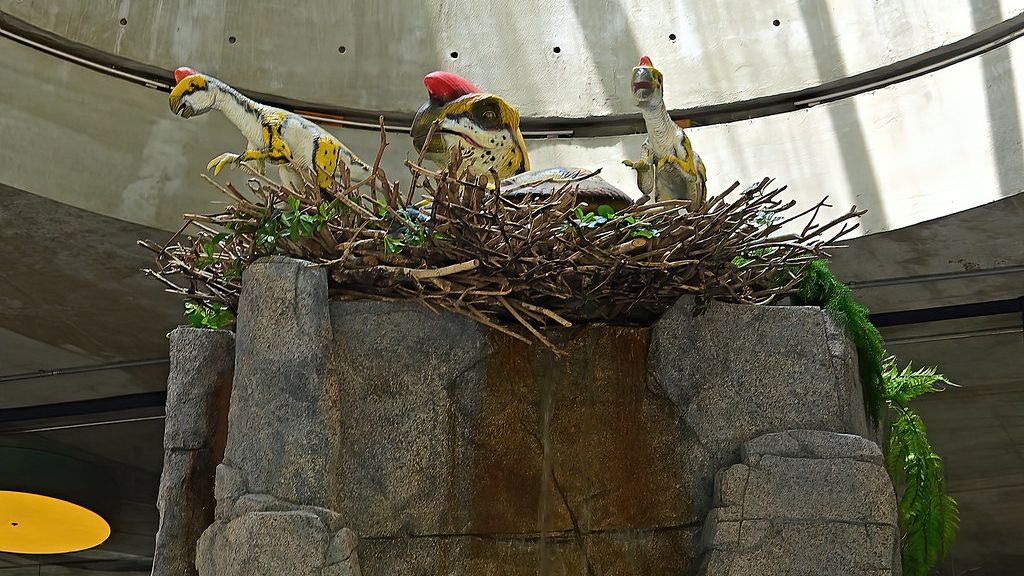
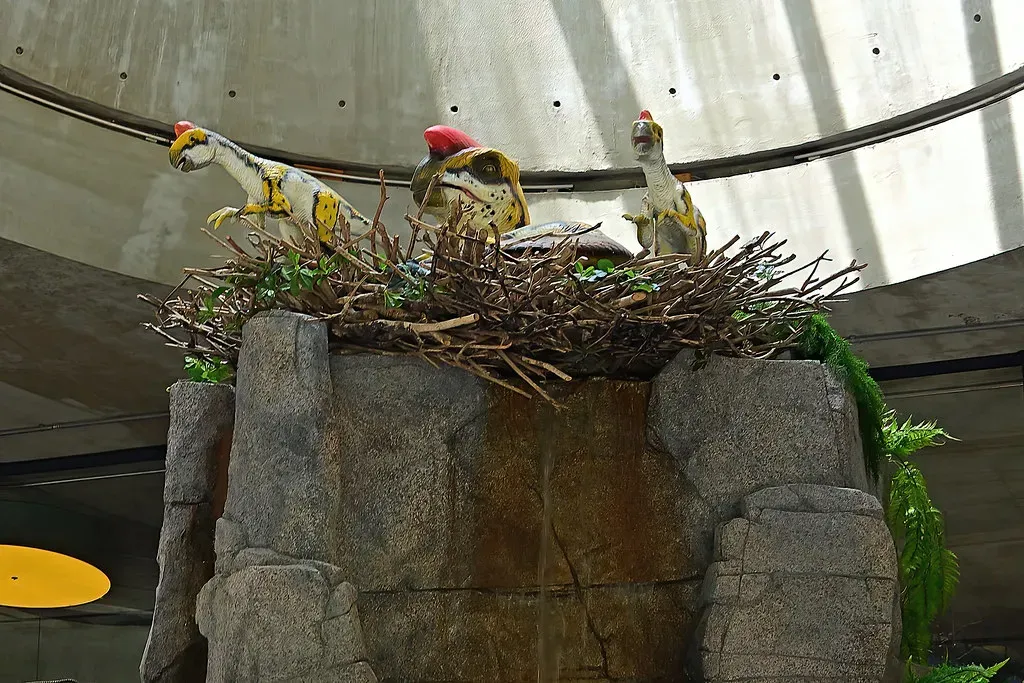
The fossil record has yielded extraordinary direct evidence of dinosaur parental care, dramatically changing our perception of these ancient reptiles. Perhaps most compelling are specimens where adults were fossilized in brooding positions directly atop nests, such as the small theropod Oviraptor, initially misinterpreted as an egg thief but later recognized as a devoted parent. There is no other evidence that it stole eggs; in fact, oviraptorids show substantial evidence of putting their lives on the line for their young. You could argue that Oviraptor deserves a formal apology from the scientific community.
Brooding Behavior: Sitting on Eggs Like a Giant Feathered Bird
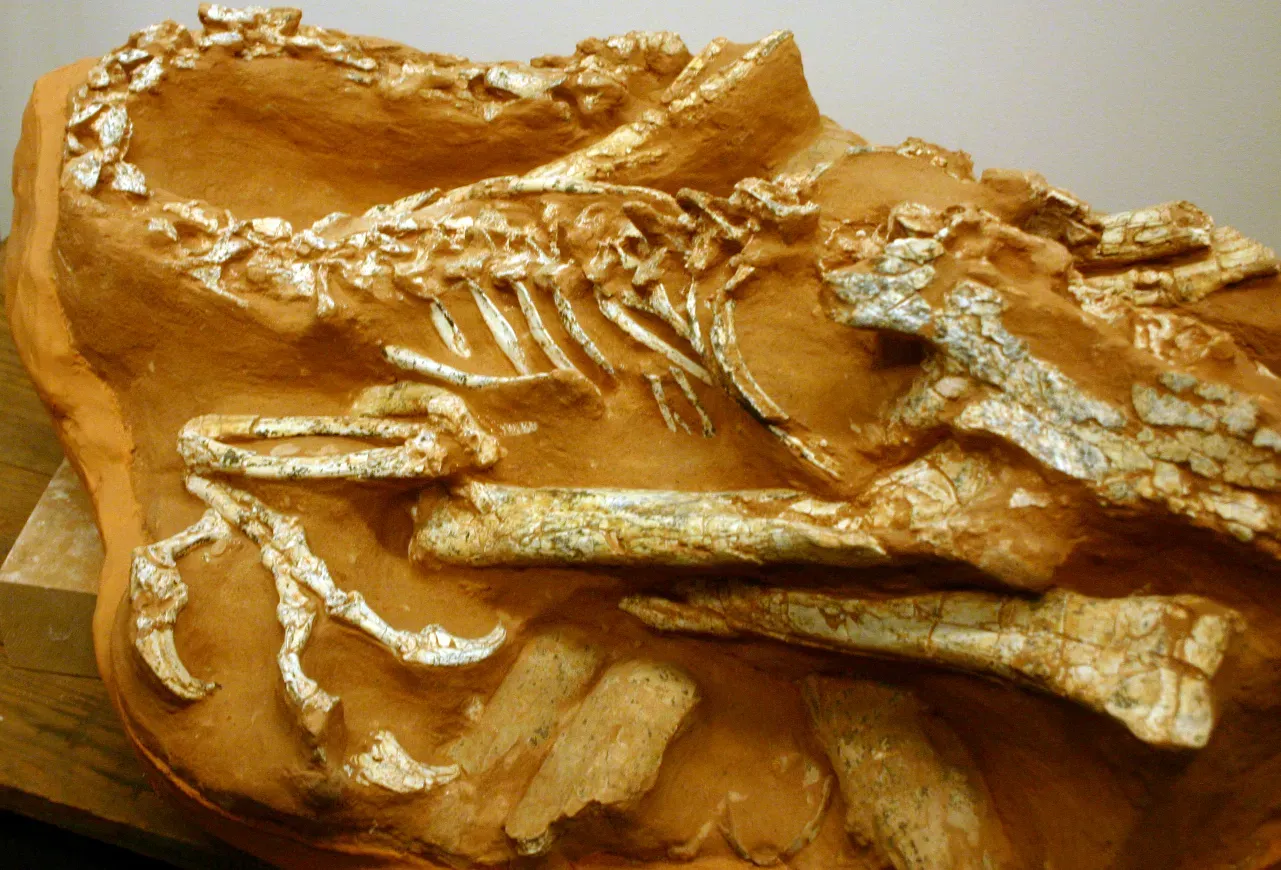
The spectacular nesting Citipati fossil provides some of the most remarkable evidence of how these dinosaurs incubated their eggs. The large adult skeleton is preserved at the center of a ring of eggs, with its arms wrapped around the precious clutch, and this Citipati parent was shielding the eggs when it perished in a sandstorm. That image, a parent dying rather than abandoning its nest, is deeply moving. It is the kind of behavior you would expect from a bird, not from what most people still picture as a cold-blooded reptile.
Paleontologist Darla Zelenitsky’s team studied 40 nests built by oviraptorosaurs, birdlike dinosaurs that lived more than 65 million years ago. These animals ranged in weight from a few pounds to about 4,000 pounds, with the largest similar in bulk to a modern hippopotamus, and their nests could be anywhere from about a foot wide to a colossal 10 feet. Oviraptorids like Citipati seem to have covered their nests with their feathered arms to insulate them, but avoided direct body contact. The engineering logic there is surprisingly sophisticated, more finesse than brute force.
What Embryos and Juvenile Bones Reveal About Dinosaur Development
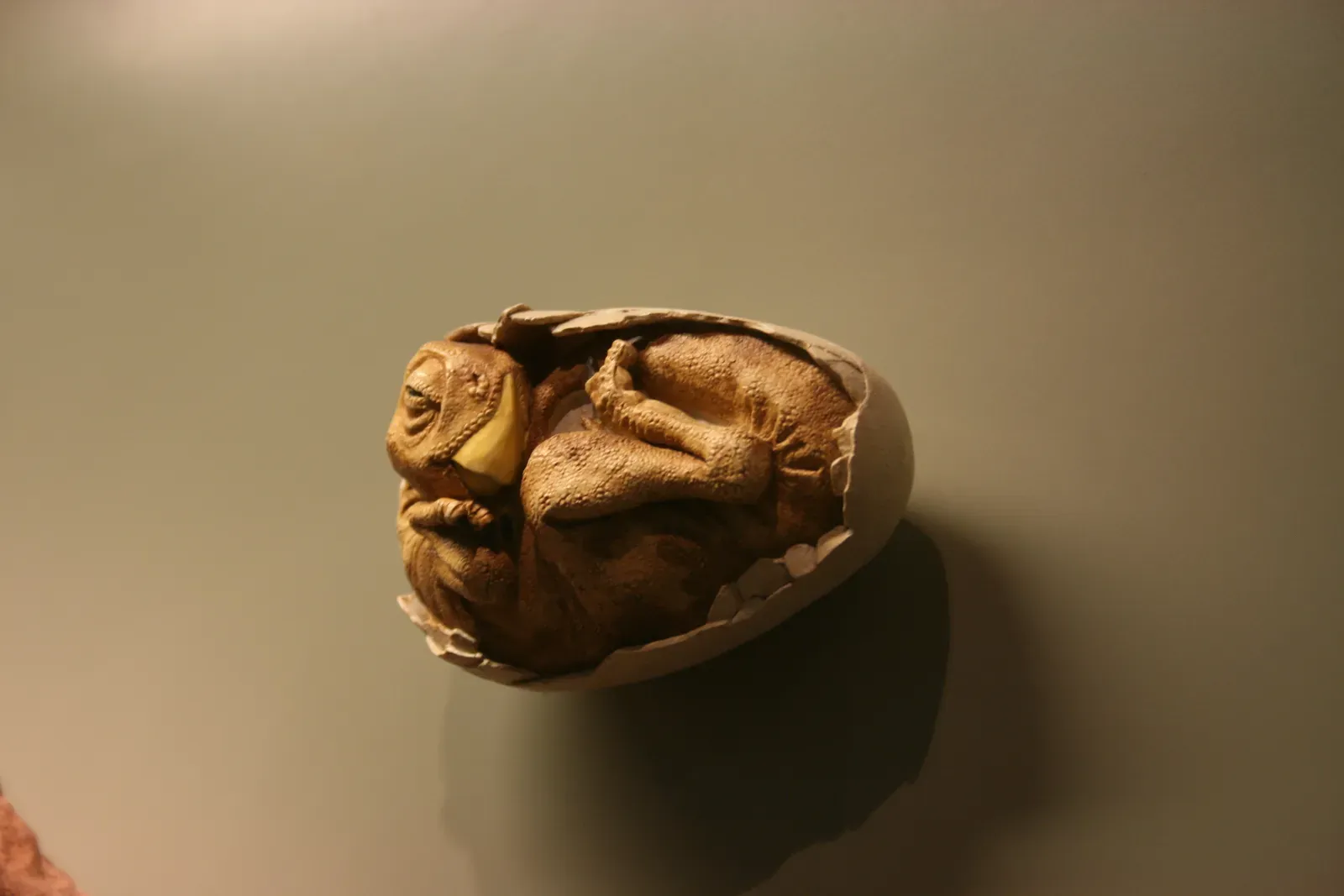
The degree of ossification, meaning bone formation, at hatching has been used to interpret dinosaur parental behavior. If a hatchling had poorly developed bones that prevented it from immediately leaving the nest, the adults would have had to provide for the newly hatched young. This is the same reasoning scientists apply when studying modern birds, comparing the development of bones at hatching to determine how dependent the newborn was on its parents. It is a surprisingly clever approach to reading ancient biology.
One remarkable fossil consists of an incomplete skeleton of a large, presumably adult oviraptorid crouched in a bird-like brooding posture over a clutch of at least 24 eggs, with at least seven of these eggs preserving bones or partial skeletons of unhatched oviraptorid embryos inside. Oxygen isotope analyses indicated that the eggs were incubated at high, bird-like temperatures, adding further support to the hypothesis that the adult perished in the act of brooding its nest. Science, at its best, can read a story of love and sacrifice in the chemistry of ancient stone.
Colonial Nesting, Site Fidelity, and Ancient Dinosaur Communities
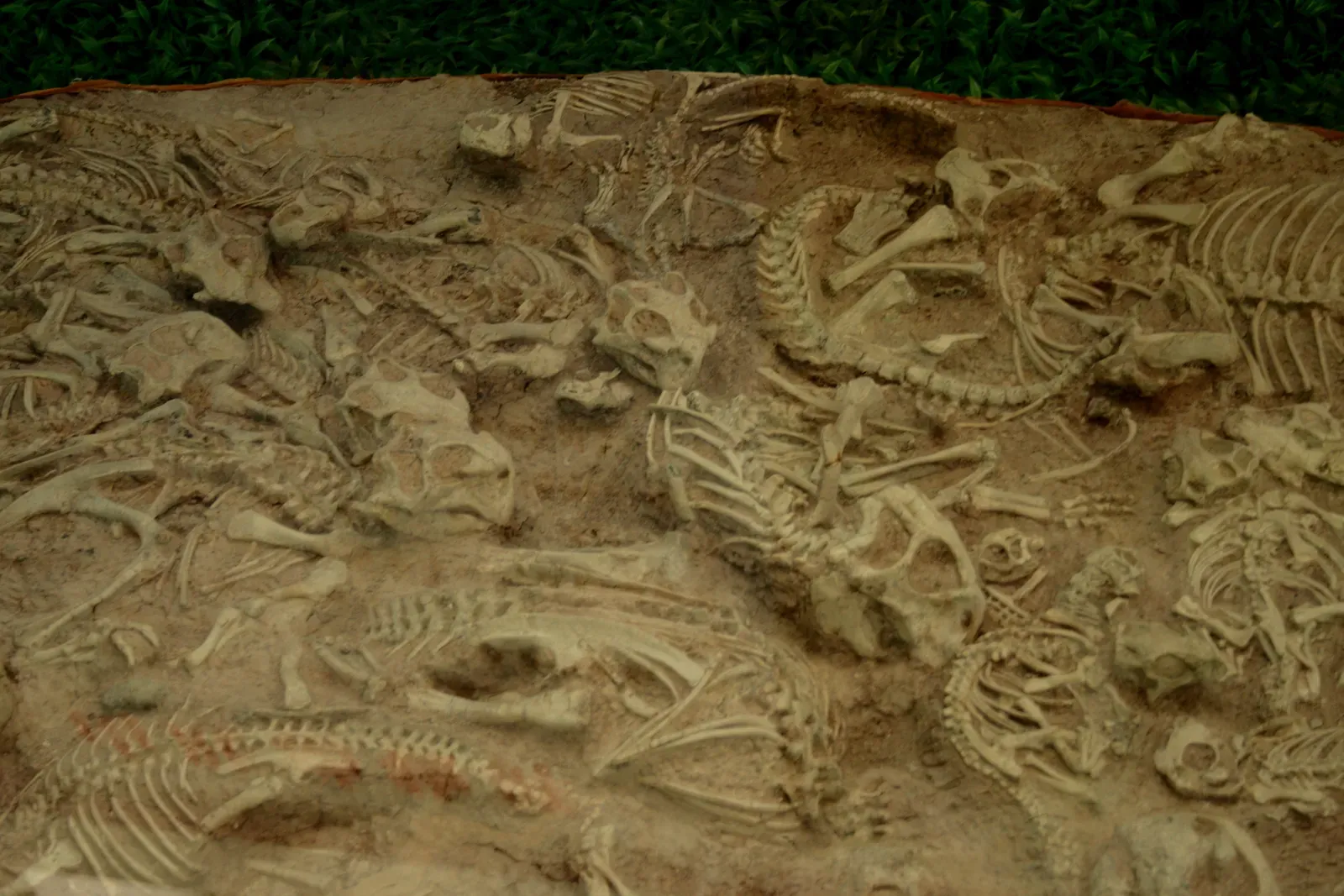
An excavation program that started in 2006 in southern Africa yielded multiple in-situ egg clutches, documenting the oldest known dinosaurian nesting site, predating other similar sites by more than 100 million years. The presence of numerous clutches of eggs, some of which contain embryonic remains, in at least four distinct horizons within a small area provides the earliest known evidence of complex reproductive behavior including site fidelity and colonial nesting in a terrestrial vertebrate.
At well-preserved sites, paleontologists have unearthed nests containing both eggs and hatchlings, findings that suggest some species nested in colonies similar to certain modern birds. Such behavior may have provided increased protection against predators. As recently as 2021, a new study on the finding of an exceptional nesting site in Patagonia, with over 100 eggs and more than 80 skeletal specimens of Mussaurus patagonicus, serves as one of the most convincing examples that some dinosaurs traveled in age-segregated herds. There is something almost neighborhood-like about that. Dinosaur communities raising their young together, side by side.
Parenting in Extreme Environments: Arctic Dinosaurs and Their Young
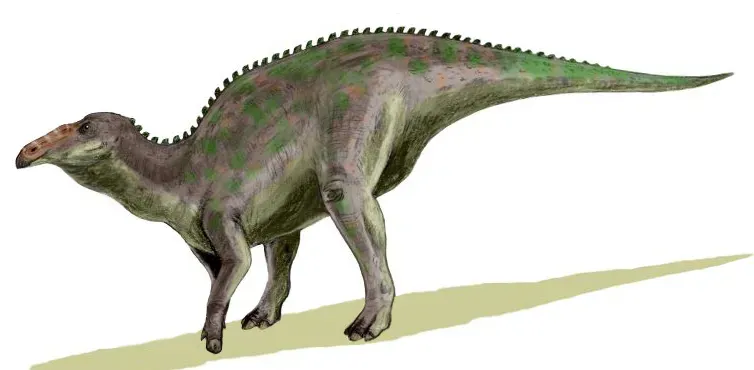
Dinosaurs ranged into the northernmost reaches of present-day Alaska, reaching latitudes far above the Arctic Circle. Since 2009, field teams led by Patrick Druckenmiller of the University of Alaska, Fairbanks, have collected a treasure trove of High Arctic fossils including hadrosaurs, ceratopsians, and troodontids. Even more remarkably, the team discovered bones of juveniles from each of these groups, with tiny teeth and bones fitting on the head of a pin, indicating the dinosaurs were truly recent hatchlings, some no bigger than a guinea pig.
The discovery of juvenile fossils in Alaska suggests that many species stayed put for the polar winter. Druckenmiller and Erickson combined polar daylight models and incubation estimates and concluded there simply was not enough time for the polar dinosaurs to undertake a major migration. The Alaskan hadrosaur Ugrunaaluk needed to incubate its eggs for nearly six months, and even if this species began nesting at the very start of spring, the calendar left almost no time between hatching and the onset of winter darkness. Combined with evidence from other hadrosaur species that parents tended to their hatchlings, a remarkable picture emerges: Ugrunaaluk herds may have carefully tended their babies through many weeks of polar darkness. That is not just parenting, that is survival against extraordinary odds.
Conclusion: Ancient Parents, Modern Reflections
If you walked away from the old image of dinosaurs as solitary, unfeeling creatures, good. The fossils buried across every continent except Antarctica have been quietly arguing against that view for decades. Recent paleontological discoveries have dramatically transformed our understanding of dinosaur parenting behaviors, revealing sophisticated nesting strategies, complex familial structures, and nurturing behaviors that challenge our preconceptions.
Modern birds, as direct descendants of theropod dinosaurs, preserve many parenting behaviors that likely originated in their dinosaur ancestors. The brooding posture of a chicken sitting atop its eggs mirrors the position in which numerous oviraptorid dinosaurs have been discovered fossilized, suggesting a continuous evolutionary inheritance of this behavior across more than 100 million years. There is a kind of quiet poetry in that, the same instinct, the same warmth, crossing a hundred million years of time to land in a barnyard.
What is perhaps most humbling is that we are still only reading fragments of the story. It is just a matter of finding the right fossil, or re-examining old evidence with new eyes. Every new discovery has the potential to rewrite what you thought you knew. So the next time you watch a bird tending its nest with patient, unwavering dedication, consider this: you might be watching an ancient behavior, one that began long before humans ever set foot on this planet. What does it say about life itself that the instinct to protect your young has survived virtually unchanged for over 100 million years?