Evolutionary biologist Toby Kiers has spent nearly three decades peering into the soil to reveal the dynamic fungal partnerships that underpin global ecosystems.
A Calling from the Shadows of Panama
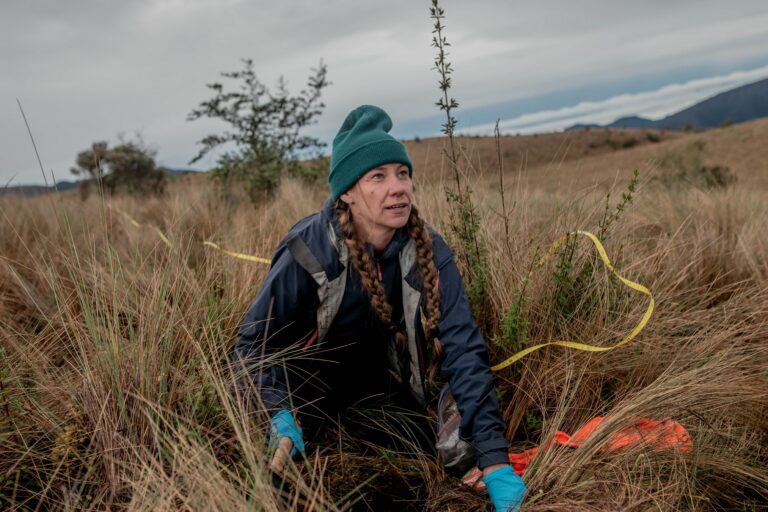
A Calling from the Shadows of Panama (Image Credits: Imgs.mongabay.com)
Researchers around Toby Kiers concentrated on the vibrant life aboveground during her early career. She chose instead to investigate the hidden biodiversity underground. At age 19, Kiers arrived at Barro Colorado Island in the Panama Canal. There, amid tropical rainforests teeming with diversity, she conducted her first experiment on fungal influences on tree seedlings.
That work led to a publication around 2000, marking the start of her focus on mycorrhizal networks. Funding shortages and the invisibility of fungi posed persistent hurdles. Mycology lagged behind other fields in support. Yet emerging tools like remote sensing and robotics now enable deeper exploration. Kiers described these networks as “so alive, but humble and quiet.”
The Barter Economy Beneath Our Feet
Mycorrhizal fungi colonize roots of over 80% of plant species worldwide. They deliver nitrogen, phosphorus, and water from soil in exchange for plant carbon from photosynthesis. This trade exceeds 13 billion metric tons of CO2 annually, positioning fungi as vital carbon sinks.
Fungi allocate resources strategically, favoring generous plant partners much like shrewd traders. Kiers likened the process to “the best poker players in the world.” Early studies involved simple soil transfers and microscope exams. Later experiments used labeled isotopes to track exchanges. These revelations shifted views of fungi from passive aides to active market players. Soil holds 75% of terrestrial carbon, much thanks to these networks.
High-Tech Tools Illuminate the Dark
Quantum dots now tag phosphorus in vivid colors for real-time tracking. Collaborations produced imaging robots that scan fungal growth hourly. These devices monitor half a million nodes, revealing lace-like structures and bidirectional flows of carbon and nutrients.
SPUN’s Underground Atlas maps arbuscular and ectomycorrhizal fungi using billions of DNA sequences from global soil samples. It highlights biodiversity hotspots often lacking protection. Remote sensing and machine learning enhance predictions of richness and endemism.
| Mycorrhizal Type | Key Features | Global Distribution |
|---|---|---|
| Arbuscular (AM) | Forms intracellular structures in roots | Widespread in herbs, crops |
| Ectomycorrhizal (EcM) | Sheathes roots externally | Dominant in trees like pines |
SPUN’s Push for Protection and Action
Kiers co-founded the Society for the Protection of Underground Networks in 2021 to bridge research and impact. SPUN funds 137 explorers mapping local networks. The new Underground Advocates program pairs scientists with legal experts for conservation and climate policies.
Recent honors affirm her influence: the 2025 MacArthur Fellowship, Climate Breakthrough Award, and 2026 Tyler Prize for Environmental Achievement. These networks regulate climate and host most terrestrial biodiversity. Protecting them demands urgent attention amid rising CO2 levels.
Key Takeaways:
- Mycorrhizal fungi drive nutrient-carbon trades essential for plant growth and carbon sequestration.
- Advanced imaging reveals dynamic fungal strategies akin to economic markets.
- SPUN’s atlas identifies unprotected hotspots, fueling global advocacy.
Toby Kiers’ work reframes soil not as inert dirt, but as life’s foundational engine. As fungal networks face threats from disturbance, safeguarding them offers a pathway to resilient ecosystems. What steps should we take next to protect these underground allies? Share your thoughts in the comments.