The 19th century was a pivotal period in the history of science, witnessing the collision between traditional biblical interpretations and emerging geological discoveries. As paleontologists unearthed increasingly numerous dinosaur fossils across Europe and North America, a fascinating intellectual battle ensued. Religious scholars, naturalists, and early geologists engaged in heated debates about whether these prehistoric remains could be explained by Noah’s Flood as described in Genesis, or if they required a radical rethinking of Earth’s timeline. This controversy fundamentally shaped both modern geology and religious thought, establishing intellectual positions that continue to influence discussions about science and faith today.
The Biblical Flood Narrative and Early Fossil Discoveries
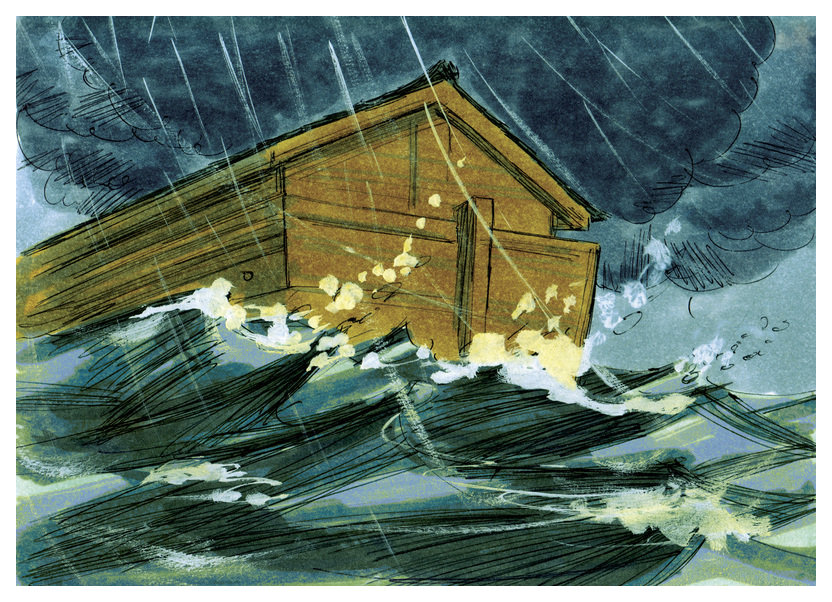
The Book of Genesis describes a catastrophic global flood sent by God to cleanse a sinful world, with only Noah, his family, and selected animals surviving aboard an ark. For centuries, this account served as the primary framework for understanding Earth’s geological features. When unusual bones and shells began appearing in rock formations during the 17th and 18th centuries, many scholars naturally interpreted them as remnants of creatures drowned during this biblical deluge. These early fossil discoveries, though not yet identified as dinosaurs, were often labeled as antediluvian (pre-flood) creatures or the remains of “giants” mentioned in biblical texts. The flood narrative provided a convenient explanation for why sea creatures might be found on mountaintops or deep within the earth, as sedimentary layers were understood as flood deposits that had entombed the animals.
The Rise of Catastrophism in Geological Thought

By the early 19th century, a geological theory known as catastrophism gained prominence, particularly through the work of French naturalist Georges Cuvier. Catastrophists proposed that Earth’s history was marked by a series of violent, worldwide catastrophes that had dramatically reshaped the planet’s surface and caused mass extinctions. Many religious catastrophists identified Noah’s Flood as the most recent of these events, explaining various geological features as evidence of this biblical cataclysm. William Buckland, an English theologian and geologist, became one of the most prominent advocates for harmonizing biblical accounts with geological evidence. In his 1823 work “Reliquiae Diluvianae” (Relics of the Flood), Buckland attempted to demonstrate how fossil-bearing strata and geological formations across Europe provided physical evidence supporting the biblical flood narrative. For these early 19th-century thinkers, dinosaur fossils, though still poorly understood, represented creatures that had perished during this worldwide catastrophe.
The Naming of “Dinosauria” and Public Imagination
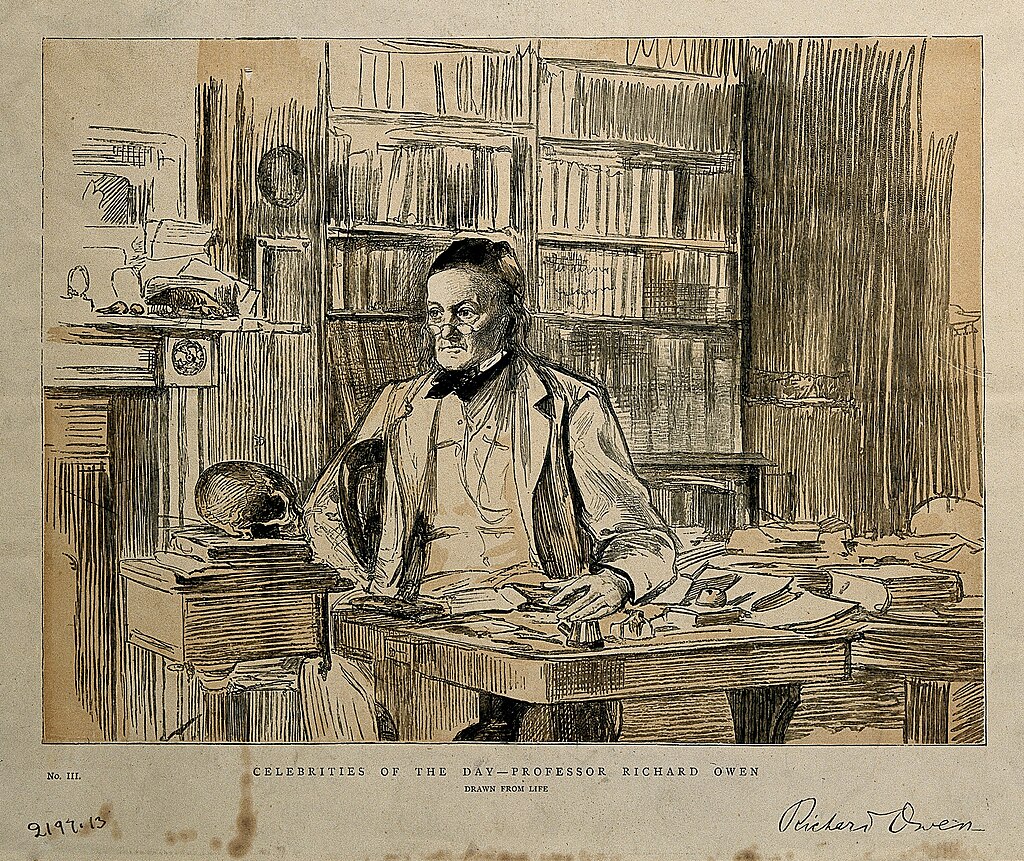
The scientific concept of dinosaurs as a distinct group of ancient reptiles emerged in 1842 when British anatomist Richard Owen coined the term “Dinosauria,” meaning “terrible lizards.” Owen’s classification came after studying fossils of three genera: Megalosaurus, Iguanodon, and Hylaeosaurus. This taxonomic innovation captured the public imagination and gradually transformed how these creatures were understood. The Crystal Palace dinosaur sculptures, unveiled in London in 1854, brought Owen’s reconstructions to life and fueled popular fascination with these prehistoric beasts. As dinosaurs entered public consciousness, the question of how they related to biblical chronology became increasingly pressing. For many Christians, reconciling these enormous reptiles with the flood narrative required creative interpretations—perhaps dinosaurs had been too large to fit on Noah’s ark, or perhaps they represented the “dragons” and “behemoths” mentioned in various biblical passages.
William Buckland: Bridging Theology and Geology

William Buckland stands as one of the most fascinating figures in this 19th-century debate. As both an Anglican priest and the first professor of geology at Oxford University, Buckland epitomized the attempt to harmonize biblical accounts with emerging geological science. In the 1820s, Buckland was initially convinced that geological evidence supported a universal flood, and he interpreted many fossil beds as flood deposits. His excavation of “Kirkdale Cave” in Yorkshire, containing remains of hyenas, elephants, and other animals not native to England, initially seemed to provide evidence for the biblical deluge transporting exotic creatures. However, Buckland’s position evolved as he continued his scientific investigations. By the 1830s, he had modified his views significantly, recognizing that the geological record indicated a much longer and more complex Earth history than a literal reading of Genesis suggested. Buckland eventually reinterpreted the biblical flood as a more regional event rather than a global catastrophe, illustrating how scientific evidence gradually reshaped religious interpretations even among devout believers.
Charles Lyell and the Challenge of Uniformitarianism
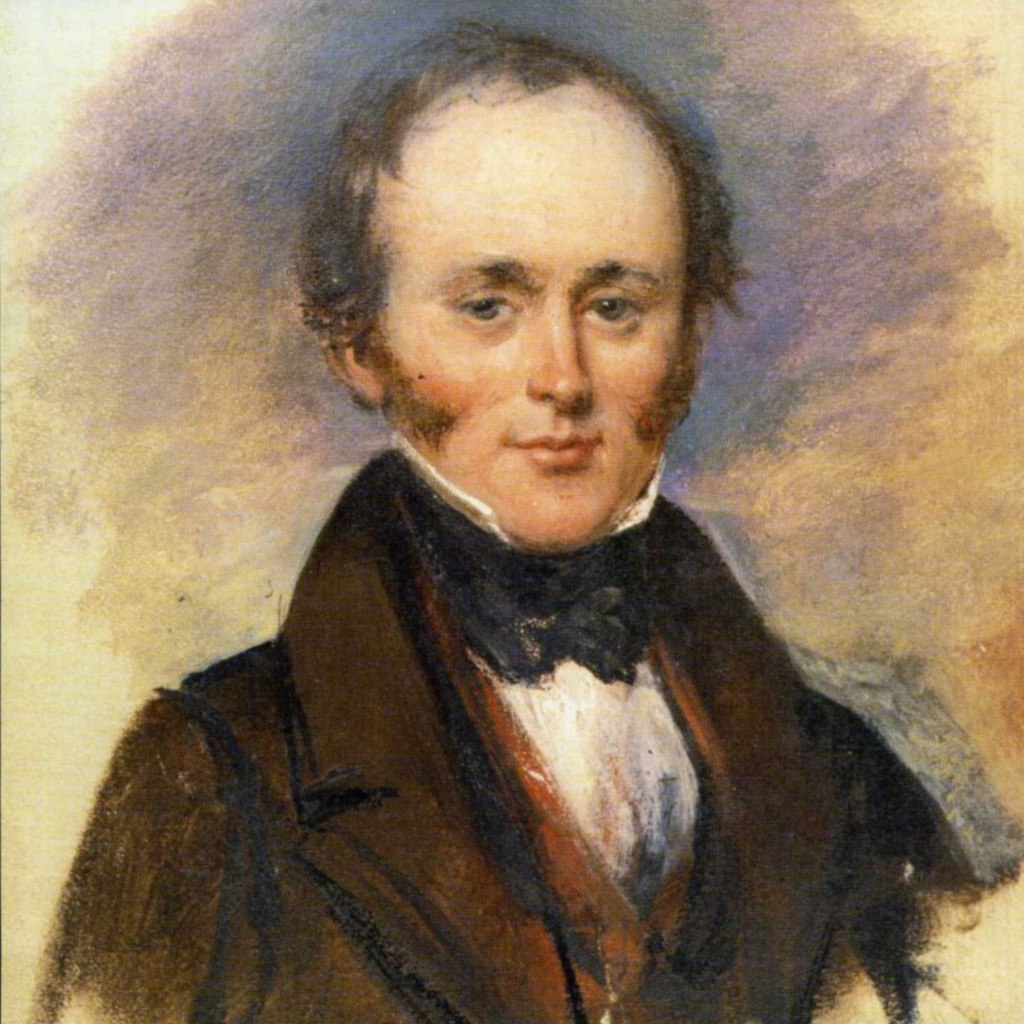
The flood-based explanation for dinosaur fossils faced its most serious challenge from Charles Lyell’s theory of uniformitarianism. In his influential “Principles of Geology” (1830-1833), Lyell argued that Earth’s features formed through slow, gradual processes that continue to operate today, rather than through catastrophic events. This “uniformitarian” approach directly contradicted catastrophist interpretations of geological formations as evidence of Noah’s Flood. Lyell’s work suggested that geological processes required vastly more time than the traditional biblical chronology allowed, establishing the groundwork for an “old Earth” perspective that measured time in millions rather than thousands of years. By demonstrating how modern river deltas and sedimentary deposits formed gradually, Lyell undermined the notion that a single year-long flood could have created the complex layers of sedimentary rock containing dinosaur fossils. His work forced religious thinkers to reconsider whether dinosaur fossils represented flood victims or creatures from a much earlier epoch of Earth’s history.
The Discovery of Extinction and Its Theological Implications
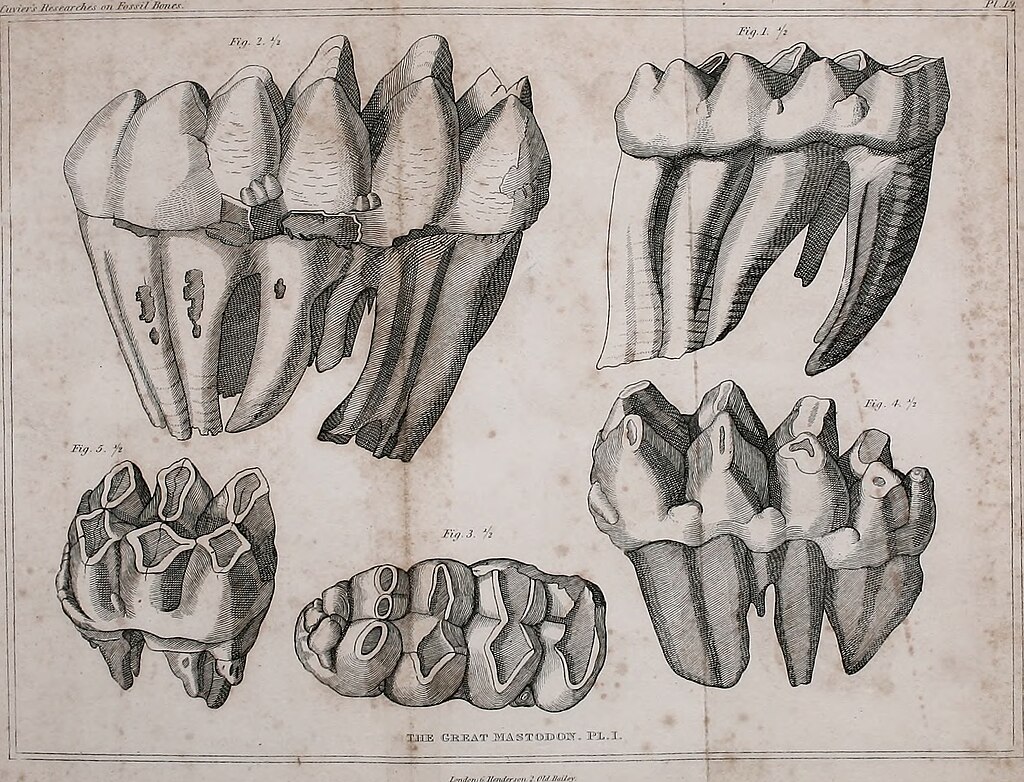
The realization that dinosaurs represented entirely extinct species posed significant theological challenges in the 19th century. The concept of extinction itself was relatively new, having been established by Georges Cuvier through his studies of mammoth and mastodon fossils. For many religious thinkers, extinction seemed to conflict with the idea of a perfect divine creation—why would God create species only to let them disappear? The flood narrative initially offered a convenient explanation: these creatures had simply failed to survive the deluge. However, as evidence mounted that dinosaurs had vanished long before humans appeared, this explanation became increasingly strained. Some theologians suggested that God had used multiple creation events throughout Earth’s history, with dinosaurs belonging to an earlier creative period. Others proposed that extinction was actually part of God’s plan, preparing Earth for human habitation by removing creatures unsuitable for coexistence with mankind. These theological adaptations represented attempts to preserve biblical authority while accommodating the growing fossil evidence.
Ussher’s Chronology Versus Geological Time
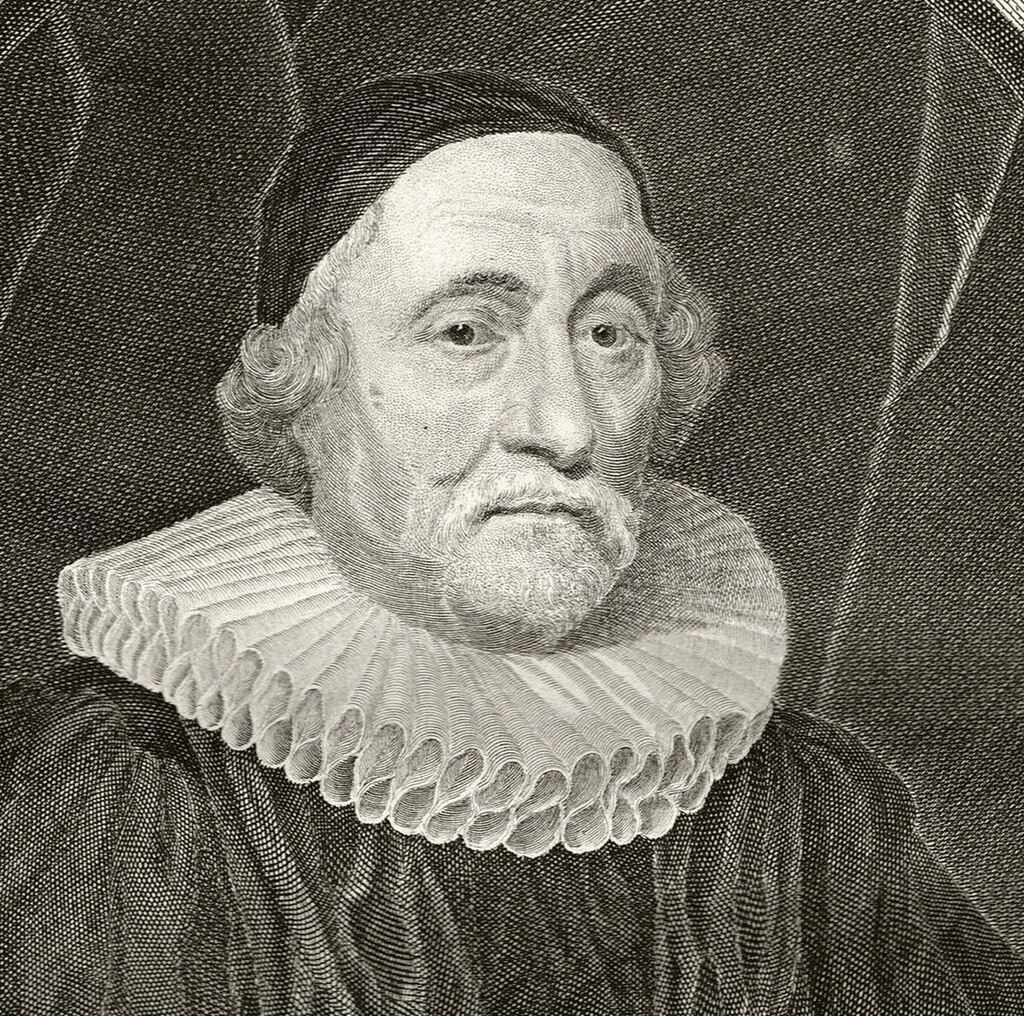
A central point of contention in the dinosaur-flood debate was the conflict between traditional biblical chronology and the emerging geological timescale. Archbishop James Ussher’s 17th-century calculation, which dated creation to 4004 BCE, remained influential among many religious authorities in the 19th century. This timeline, which allowed roughly 6,000 years for all of Earth’s history, created an extremely compressed chronology in which dinosaurs, if they existed, must have lived alongside humans before perishing in the flood. However, stratigraphic evidence increasingly demonstrated that dinosaur fossils occurred in distinct, deep layers of rock that appeared to have formed long before human existence. Geologists began to develop a more expansive timeline, eventually establishing the Triassic, Jurassic, and Cretaceous periods as the “Age of Reptiles.” This expanding geological timescale forced religious thinkers to reconsider whether Genesis should be interpreted literally regarding chronology or whether its “days” of creation might represent longer epochs.
Philip Henry Gosse and the Appearance of Age Theory

Some Victorian religious thinkers proposed creative solutions to reconcile dinosaur fossils with a young Earth perspective. Among the most ingenious was Philip Henry Gosse’s theory presented in his 1857 book “Omphalos” (Greek for “navel,” referencing Adam’s navel as evidence of apparent history). Gosse, a respected naturalist and devout Plymouth Brethren member, suggested that God had created the Earth with an “appearance of age”—complete with fossil records, geological formations, and other evidence suggesting a long history that never actually occurred. Under this theory, dinosaur fossils were created in place by God as part of a fully-formed, mature creation, similar to how Adam was created as an adult rather than an infant. Gosse believed this resolved the tension between scientific evidence and biblical literalism. However, his theory satisfied neither religious nor scientific communities. Scientists dismissed it as unfalsifiable, while many religious thinkers found it portrayed God as deliberately misleading humans through false evidence of events that never happened.
Hugh Miller: A Christian Geologist’s Perspective
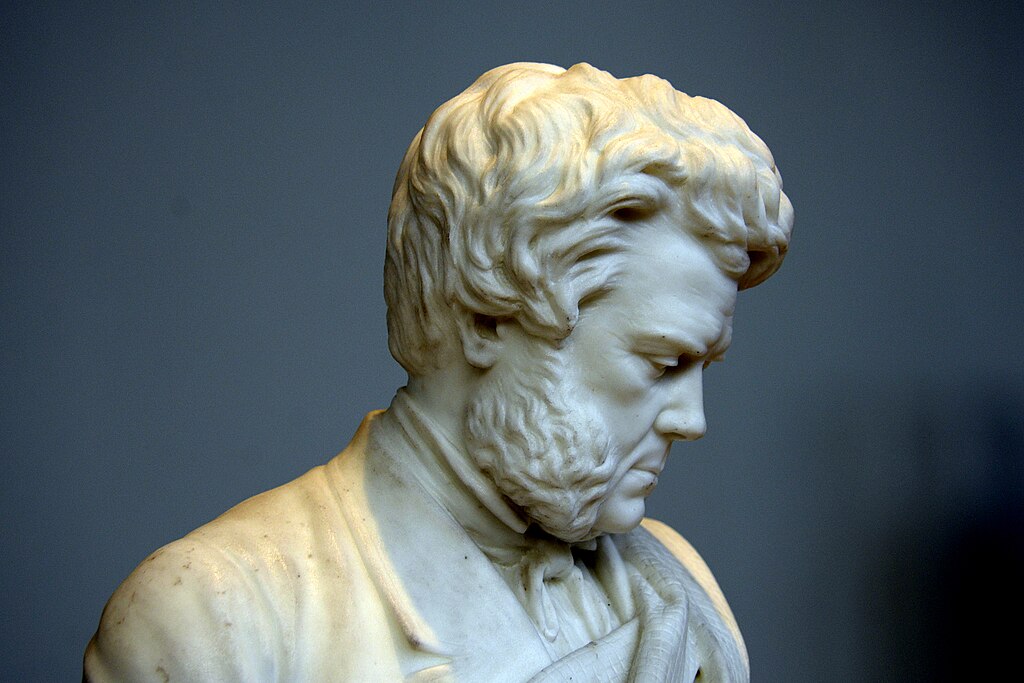
Scottish stonemason-turned-geologist Hugh Miller represents another fascinating voice in the 19th-century flood-dinosaur debate. As a devout member of the Free Church of Scotland and self-taught geologist, Miller sought harmony between his faith and geological discoveries. In works such as “The Testimony of the Rocks” (1857), Miller argued that dinosaur fossils and geological evidence clearly indicated Earth’s great antiquity. After extensive study of Old Red Sandstone formations and their fossils, Miller concluded that Noah’s Flood could not explain these complex geological features. Instead, he proposed that the “days” described in Genesis represented vast geological epochs rather than literal 24-hour periods. This “day-age” interpretation allowed Miller to maintain biblical authority while accommodating scientific evidence. Tragically, Miller took his own life shortly before “The Testimony of the Rocks” was published, potentially due to mental health issues exacerbated by the cognitive dissonance between his religious beliefs and scientific discoveries, though the exact reasons remain debated by historians.
The American Perspective: Edward Hitchcock and Dinosaur Tracks
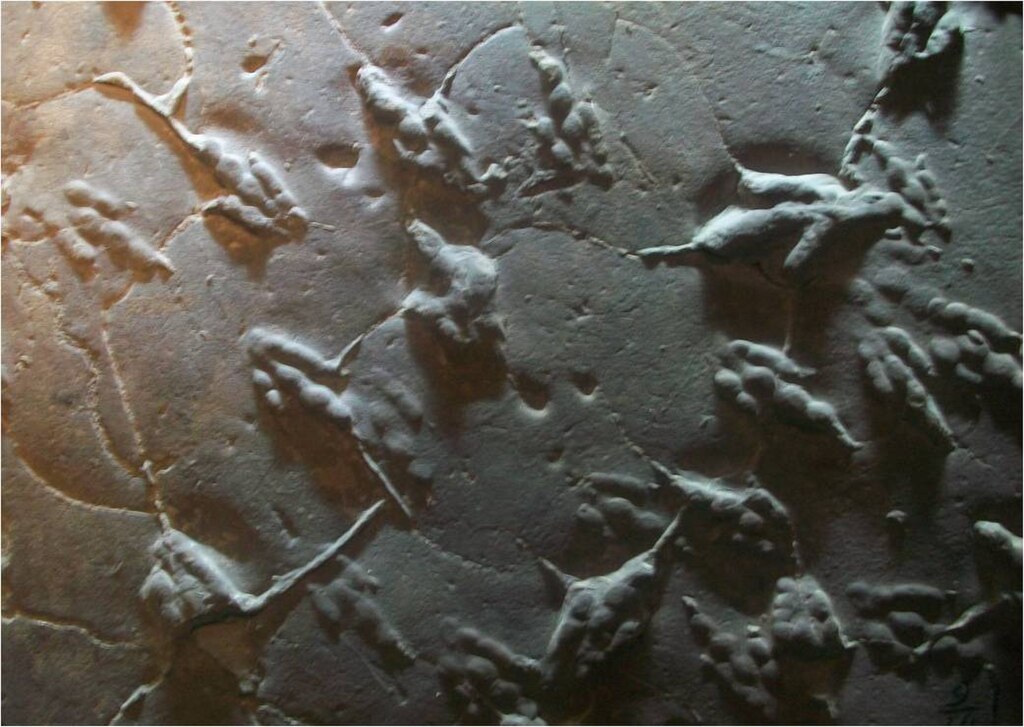
The flood-dinosaur debate took on distinctive characteristics in America, particularly through the work of Edward Hitchcock, a Congregationalist minister who became professor of geology at Amherst College. Hitchcock gained fame for his extensive study of dinosaur footprints in the Connecticut River Valley, though he initially interpreted them as tracks of giant extinct birds rather than reptiles. As a religious man with scientific training, Hitchcock attempted to navigate between biblical authority and geological evidence. In his 1851 book “The Religion of Geology and Its Connected Sciences,” Hitchcock rejected the idea that Noah’s Flood could explain all geological phenomena, including dinosaur remains. Instead, he proposed that Genesis and geology could be reconciled by understanding the biblical “beginning” as allowing for an indefinite period before the six days of creation. Hitchcock’s approach exemplified the “gap theory” popular among some American religious thinkers, which placed dinosaurs and other extinct creatures in a vast time period between Genesis 1:1 and 1:2, before the creation of humans and modern animals that would later board Noah’s ark.
The Impact of Darwin’s Theory on the Debate

Charles Darwin’s “On the Origin of Species,” published in 1859, fundamentally transformed the flood-dinosaur debate by introducing another contentious element: evolution through natural selection. Darwin’s theory not only extended Earth’s timeline but suggested that all species, including dinosaurs, were related through common ancestry rather than separately created. This evolutionary perspective rendered flood explanations for dinosaur fossils even less tenable, as it placed dinosaurs within a long chain of evolutionary development and extinction that occurred millions of years before human existence. Religious responses to Darwin varied widely. Some rejected evolution entirely and doubled down on flood geology. Others, like American botanist Asa Gray, attempted to integrate divine purpose with evolutionary mechanisms, suggesting God might work through natural selection. By the late 19th century, the debate had largely shifted from whether dinosaur fossils could be explained by Noah’s Flood to whether evolution could be reconciled with religious faith. This shift marked a significant transformation in how both scientists and religious thinkers approached questions of Earth’s history.
Legacy: The Birth of “Flood Geology” and Modern Creationism
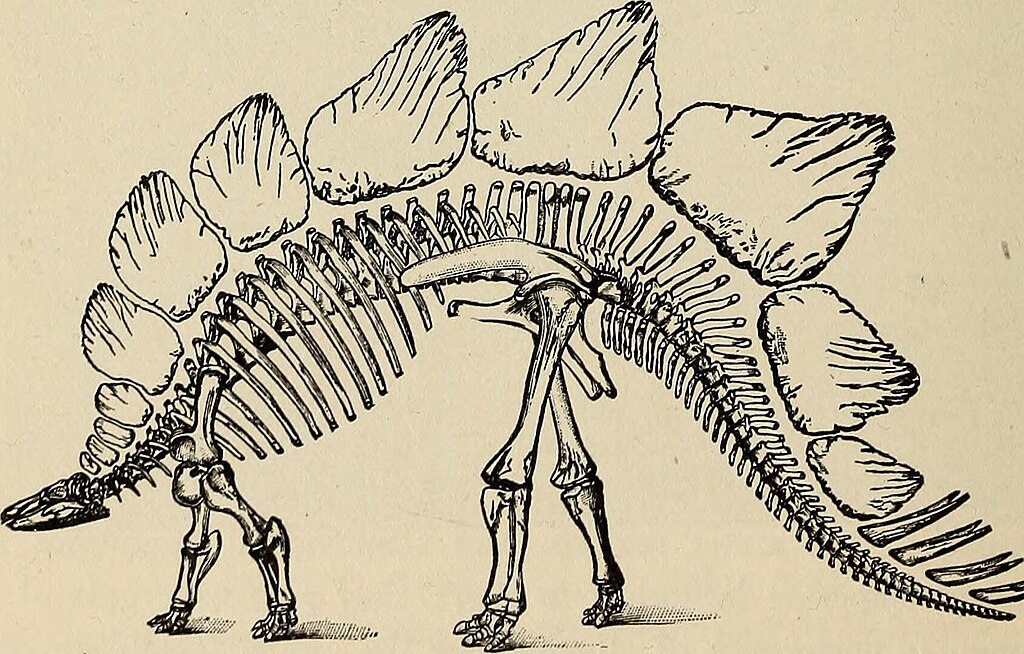
While mainstream geology had largely abandoned flood-based explanations for dinosaur fossils by the late 19th century, the concept found new life in the early 20th century through the rise of “flood geology.” George McCready Price, a Seventh-day Adventist educator with no formal geological training, became influential through works like “The New Geology” (1923), which attempted to reinterpret all geological evidence through the lens of Noah’s Flood. Price’s ideas later influenced Henry Morris and John Whitcomb’s “The Genesis Flood” (1961), which became foundational to the modern young-Earth creationist movement. This movement continues to argue that dinosaur fossils were primarily formed during Noah’s Flood, offering an alternative to mainstream geological and paleontological timelines. The 19th-century debate thus helped establish two distinct intellectual traditions that persist today: mainstream scientific geology, which places dinosaurs in the Mesozoic Era millions of years before humans, and young-Earth creationism, which maintains that dinosaur fossils resulted from a global flood occurring within human history.
Conclusion: The Enduring Impact of the 19th-Century Debate

The 19th-century debate over whether Noah’s Flood could explain dinosaur fossils represents a crucial chapter in the relationship between science and religion. This controversy helped define modern geology by pushing naturalists to develop more rigorous methods for interpreting Earth’s physical features and fossil record. It also forced religious communities to reconsider how biblical texts should be interpreted in light of scientific discoveries. The various positions developed during this period—from Lyell’s uniformitarianism to Buckland’s evolving catastrophism to Gosse’s appearance of age theory—established intellectual frameworks that continue to influence discussions about science and faith today. While mainstream science has conclusively determined that dinosaurs lived and went extinct millions of years before humans appeared, the questions raised during this pivotal 19th-century debate about how to integrate new knowledge with traditional beliefs remain relevant. The story of this controversy reminds us that scientific progress often occurs through challenging established ideas, and that societies continually negotiate the relationship between empirical evidence and deeply-held cultural narratives.