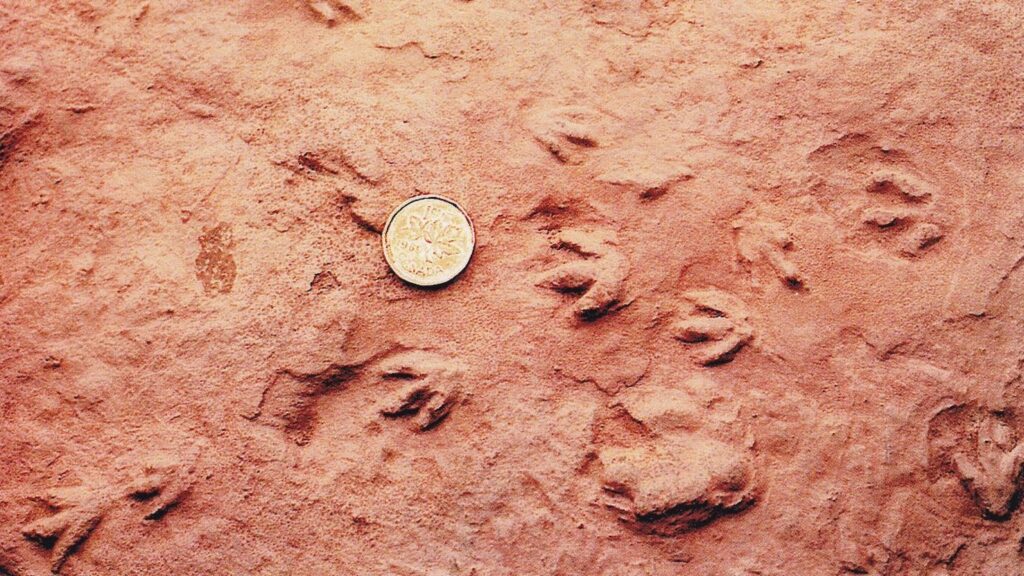
Imagine standing in front of a giant three-toed impression pressed deep into ancient rock, knowing it was made by a living creature over 70 million years ago. Not a fragment of bone, not a tooth. Just a moment. A single step, frozen in time. That thought alone is enough to send a shiver down your spine.
Dinosaur footprints are among the most underappreciated treasures in all of paleontology. You might assume that bones tell the whole story, but they actually don’t. Tracks reveal something bones never can: behavior. Motion. Life in action. So get ready, because what you’re about to discover is far more revealing, dramatic, and frankly mind-blowing than anything you’d find in a display case. Let’s dive in.
The Science of Tracks: What Ichnology Really Means for You
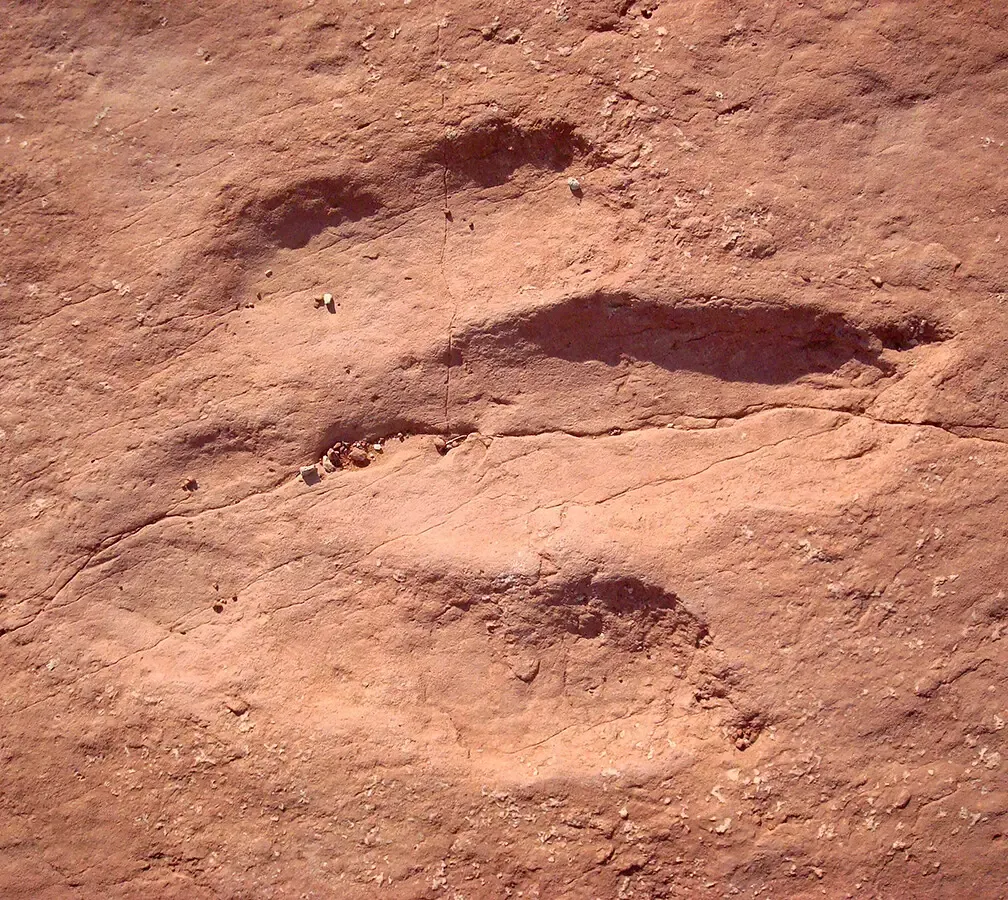
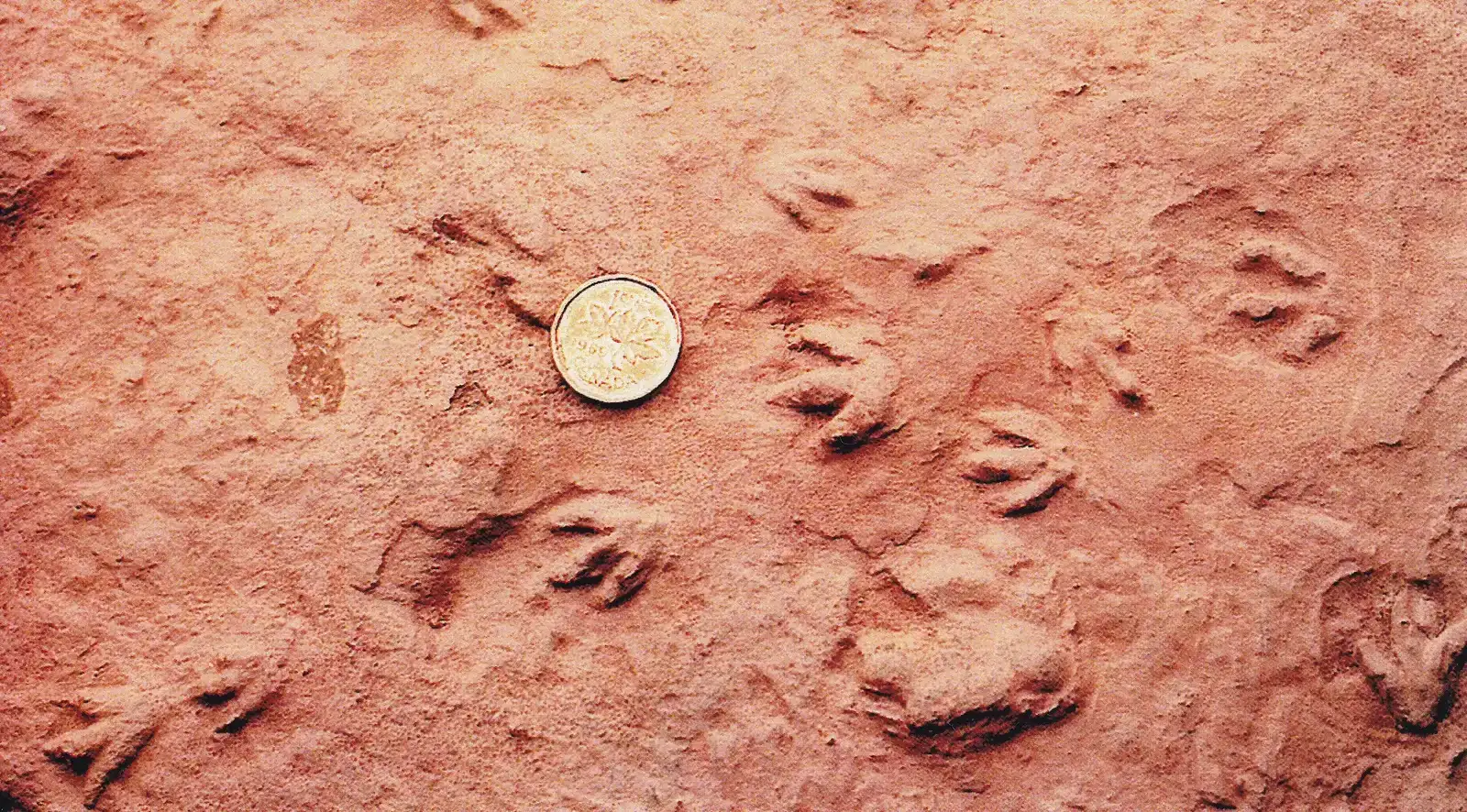
The study and interpretation of dinosaur tracks forms the basis of dinosaur ichnology, a subscience of paleontology that provides an unprecedented understanding of the behavior of dinosaurs and the environment in which they lived. The word “ichnology” itself stems from the Greek “ichnos,” meaning “footprint” or “track.” Think of it like forensic science, except your crime scene is 100 million years old and your suspect weighed as much as a city bus.
Ichnology is, in fact, the single greatest evidence for the behavior of extinct animals. Unlike bone fossils, trace fossils are records of the movement and behavior of ancient animals. Along with tracks, trace fossils include the remains of burrows, dens, feeding tunnels, nests, tooth and claw marks, tail-drag marks, and other features formed by living animals. Honestly, when you look at it that way, footprints start to feel less like geology and more like biography.
Footprints vs. Bones: Why Tracks Tell You More Than Skeletons
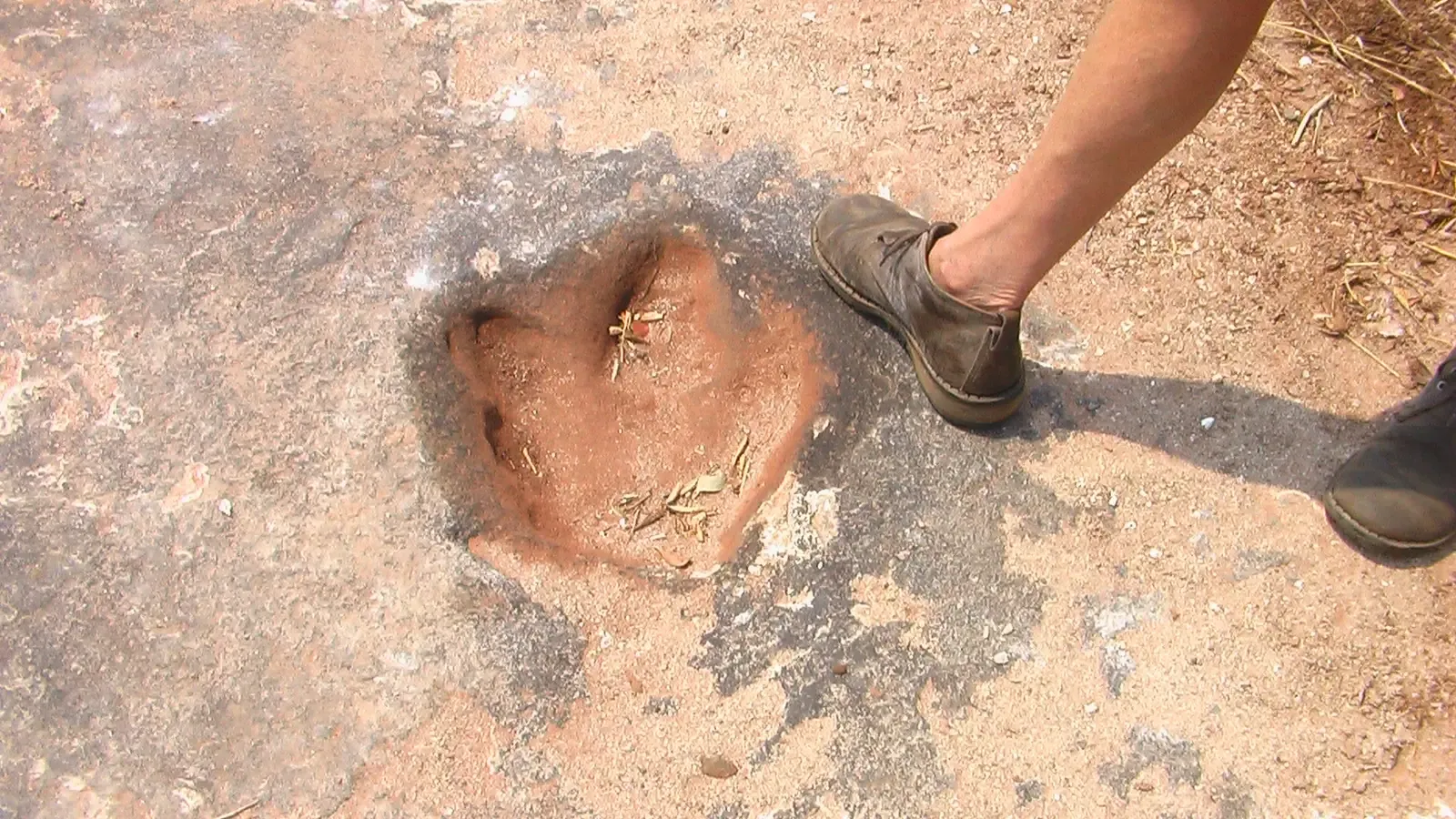
Unlike bones or teeth, footprints capture a moment in time, an action, a decision, even a struggle for survival. These tracks preserve behaviors that skeletal fossils alone cannot reveal, such as migration, hunting strategies, parental care, and social interactions. Here’s a useful way to think about it: a skeleton is like a resume, but a trackway is the security camera footage of the dinosaur’s actual life.
Unlike bones, which can be transported to different areas by wind, water, or scavengers, footprints remain in the exact locations where they were made. Tracks not only indicate the size of the dinosaurs but also provide clues about their behavior, such as group dynamics and predator-prey interactions. If well-preserved, the impressions can also shed light on how these creatures reacted to environmental changes. So when researchers find a trackway, they’re not just looking at geology. They’re reading a diary.
Speed, Gait, and Locomotion: Decoding How Fast Dinosaurs Really Moved
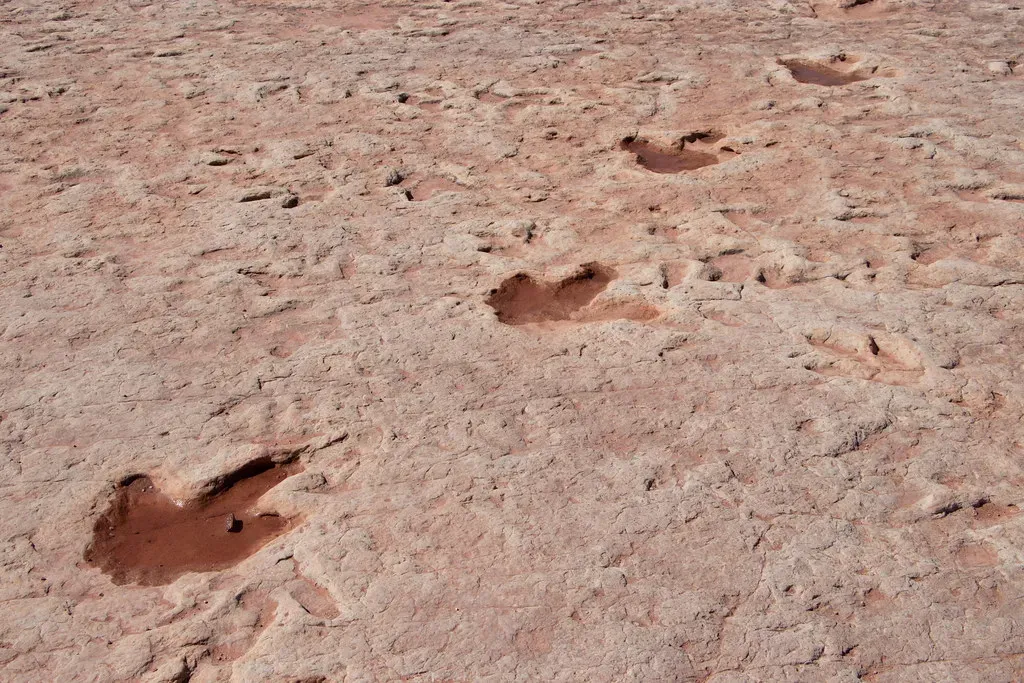
Fossilized footprints are our only direct record of motion and can provide important snapshots of extinct animals, shedding light on speed, gait, and posture. Track spacing and depth can reveal whether an animal was walking, running, or suddenly accelerating. Recent discoveries in China show dinosaur trackways where the animal changed its speed, possibly to pursue prey or avoid danger. It’s like watching a speed camera replay, except it’s pressed into stone.
As one researcher explained, “The general rule of locomotion is that the faster the animal is moving, the farther apart the footprints will be.” From the footprints at the Oxfordshire site, researchers were able to determine the direction and speed at which the dinosaurs were moving. Most of the giants were moving northeast at an average speed of around 5 kilometers per hour, comparable to the pace of a human walking. So, yes. Those colossal sauropods were basically strolling. Like tourists.
The Dinosaur Highway: Britain’s Remarkable 166-Million-Year-Old Discovery
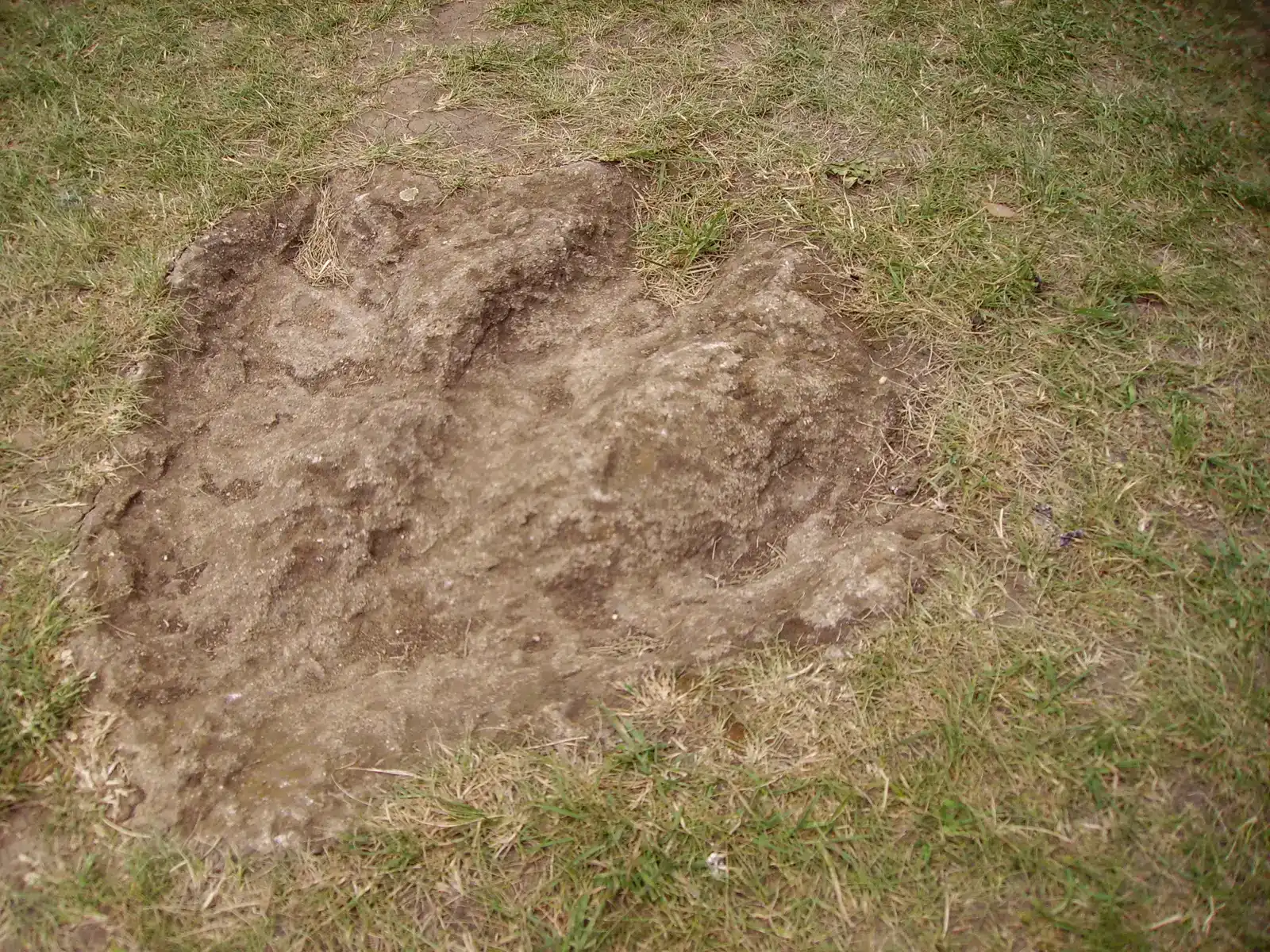
Scientists unearthed nearly 200 dinosaur footprints, dating back 166 million years to the Middle Jurassic Period, at Dewars Farm Quarry in Oxfordshire, England. The remarkable find was first spotted when quarry worker Gary Johnson sensed “unusual bumps” on the ground while extracting limestone for road construction, and has been nicknamed the “dinosaur highway.” One person’s odd ground texture turned out to be one of science’s greatest track sites. You genuinely cannot make this stuff up.
Researchers from the Universities of Oxford and Birmingham uncovered a huge expanse of quarry floor filled with hundreds of different dinosaur footprints, creating multiple enormous trackways. Dating back to the Middle Jurassic Period, the trackways include footprints from the 9-metre ferocious predator Megalosaurus, and herbivorous dinosaurs up to twice that size. During the excavation, scientists uncovered five extensive trackways, with the longest continuous pathway measuring more than 150 meters in length. That’s roughly the length of half a football field, carved in ancient mud.
Mixed-Species Herding: The Groundbreaking Canadian Discovery
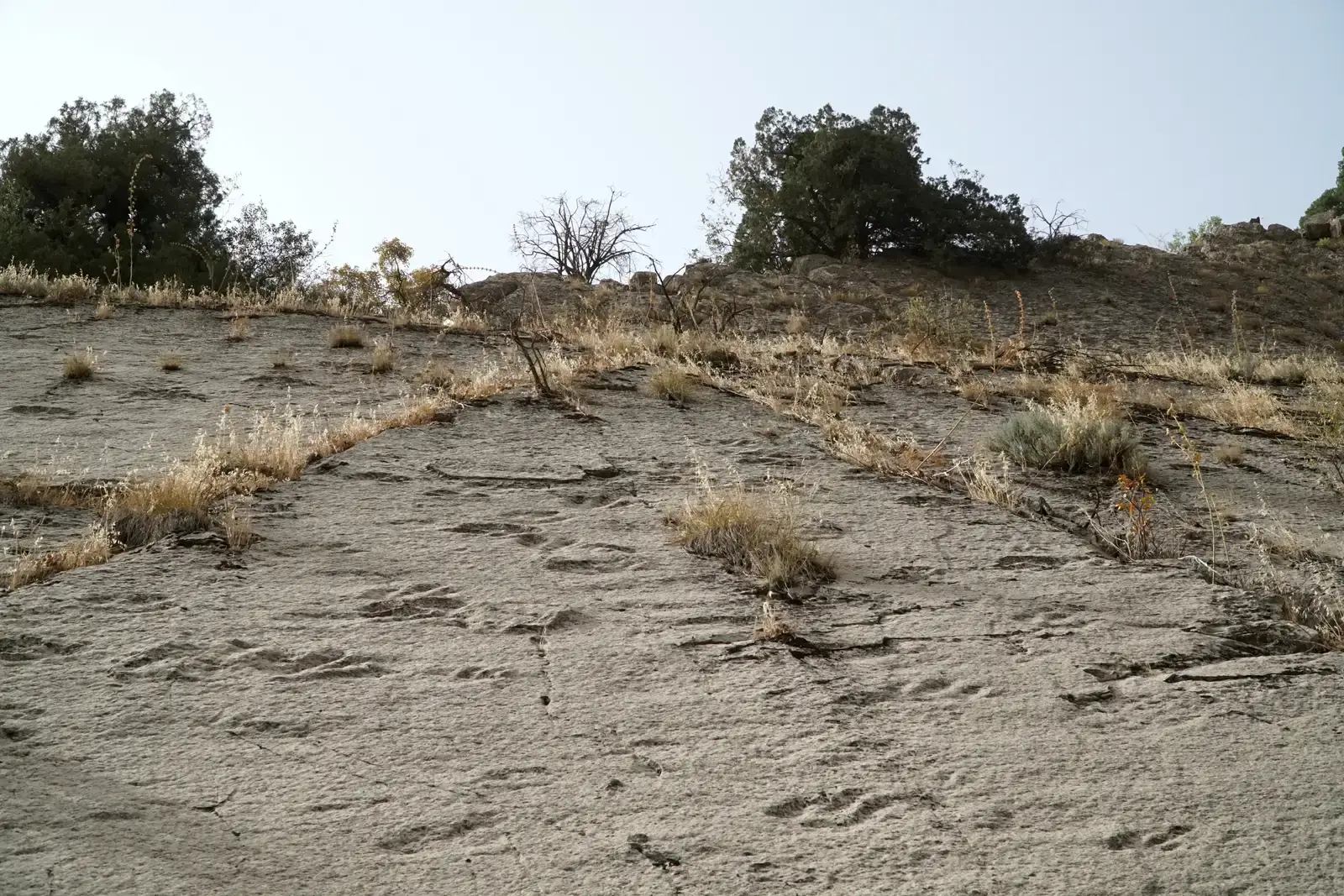
A collection of footprints made by multiple species of dinosaur has been uncovered in Canada. These 76-million-year-old trackways could provide scientists with a rare glimpse into the social lives of these ancient reptiles. Footprints uncovered in the Canadian province of Alberta could be evidence that some dinosaurs moved in herds comprising multiple different species. Many of the newly described footprints were made by ceratopsians, the group of horned dinosaurs that includes Triceratops. The 13 ceratopsian tracks are thought to belong to at least five individuals walking together.
Additionally, two large Tyrannosaurus rex trackways were also discovered walking side-by-side and perpendicular to the herd, which has raised questions about whether these huge predators were stalking the group. The presence of two T. rex footprints raises the prospect that multispecies herding may have been a defense strategy against common apex predators, although the research team admits that more evidence is needed to confirm this. A mixed herd of herbivores being shadowed by two T. rex is the kind of scene that would make any nature documentary director weep with joy.
Bolivia’s Record-Breaking Shoreline: Over 16,000 Footprints
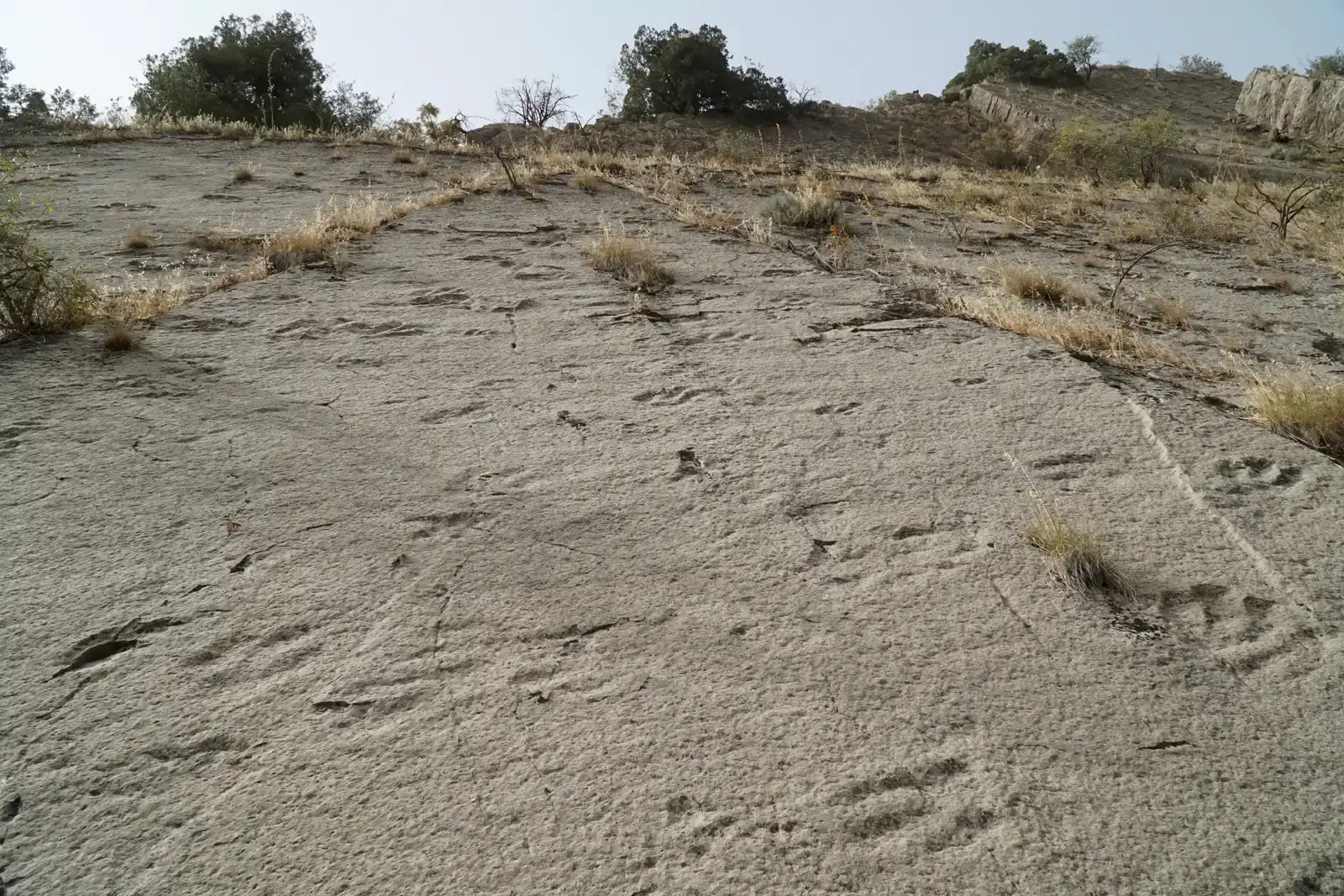
A team of paleontologists, mostly from California’s Loma Linda University, discovered and meticulously documented 16,600 footprints left by theropods, the dinosaur group that includes the Tyrannosaurus rex. Across nine study sites, the authors documented more than 16,000 tracks left by three-toed theropod dinosaurs at the end of the Cretaceous Period. These tracks range in size from tiny to large and record a variety of dinosaur behaviors, including running, swimming, tail dragging, and even sharp turns. Most of these tracks are oriented roughly northwest-southeast, with ripple marks preserved in the sediment, suggesting these dinosaurs were roaming alongside an ancient shoreline.
The range in footprint sizes indicated that giant creatures roughly 10 meters tall moved in a herd with tiny theropods the size of a chicken. In presenting a snapshot of everyday behavior, footprints “reveal what skeletons cannot.” Just from footprints, researchers can tell when dinosaurs strolled or sped up, stopped, or turned around. The sheer variety captured in Bolivia’s Toro Toro site is, I think, one of the most compelling arguments for how much we still have left to learn from the ground beneath our feet.
Social Structures and Parental Behavior Hidden in the Mud
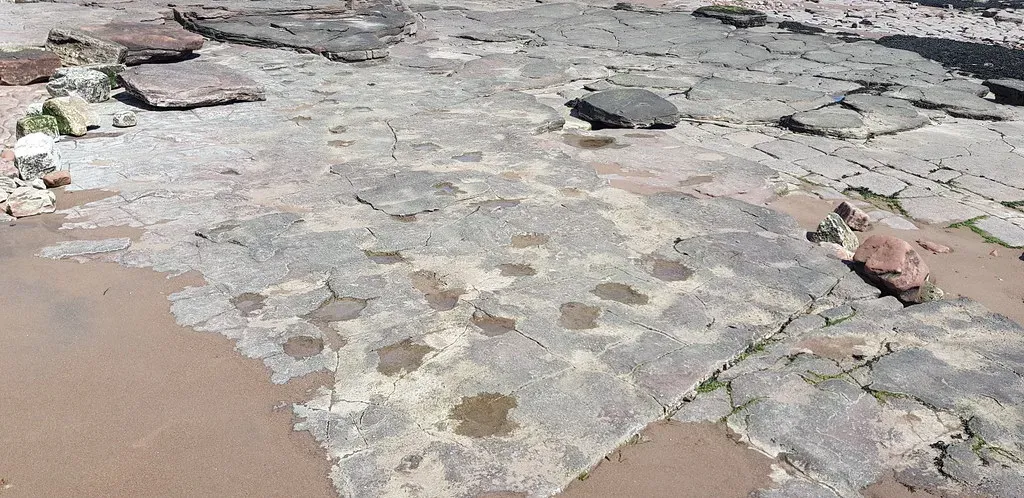
Age segregation is also evident in some trackways, with footprints of different sizes indicating that adults and juveniles traveled together, with smaller individuals often protected in the middle of the group. This behavior, similar to that observed in modern elephants and other herd animals, suggests sophisticated social structures and possibly parental care. Such evidence challenges earlier views of dinosaurs as solitary, primitive reptiles and instead portrays them as socially complex creatures with organized community behaviors.
Trackways that show multiple individuals moving together in the same direction suggest group behavior, which can indicate social structures similar to those seen in modern herd animals. The discovery of parallel trackways of sauropods and ornithopods has led to the hypothesis that these dinosaurs traveled in herds, possibly for protection against predators or to facilitate migration to new feeding grounds. It’s hard to say for sure how emotionally bonded these animals were, but the tracks alone suggest cooperation that goes far beyond what we once gave them credit for.
Technology and the Future of Reading Prehistoric Footprints
During the Oxfordshire excavation, researchers captured more than 20,000 images of the footprints with aerial drone photography. The team will use these images to create detailed 3D models to further investigate the interactions and biomechanics of the dinosaurs. Even though the discoveries are separated by just thirty years, modern techniques and technology mean the prints can now be recorded much more comprehensively than ever before. We’ve gone from sketching tracks by hand to building full digital reconstructions. The pace of progress is genuinely exciting.
Machine learning has been heralded as a tool for classifying and identifying tracks. Researchers recently used an unsupervised neural network to process a dataset of nearly 2,000 dinosaur tracks, which recognized eight ways in which they most vary and found that problematic bird-like tracks are more similar to modern and fossil birds than any other dinosaur. By comparing footprints from different geological periods, scientists can also track evolutionary changes over time, revealing patterns of diversification, extinction, and adaptation across various groups of organisms. The humble footprint, it turns out, is a data goldmine that we are only just beginning to fully excavate.
Conclusion: The Ground Beneath You Remembers Everything
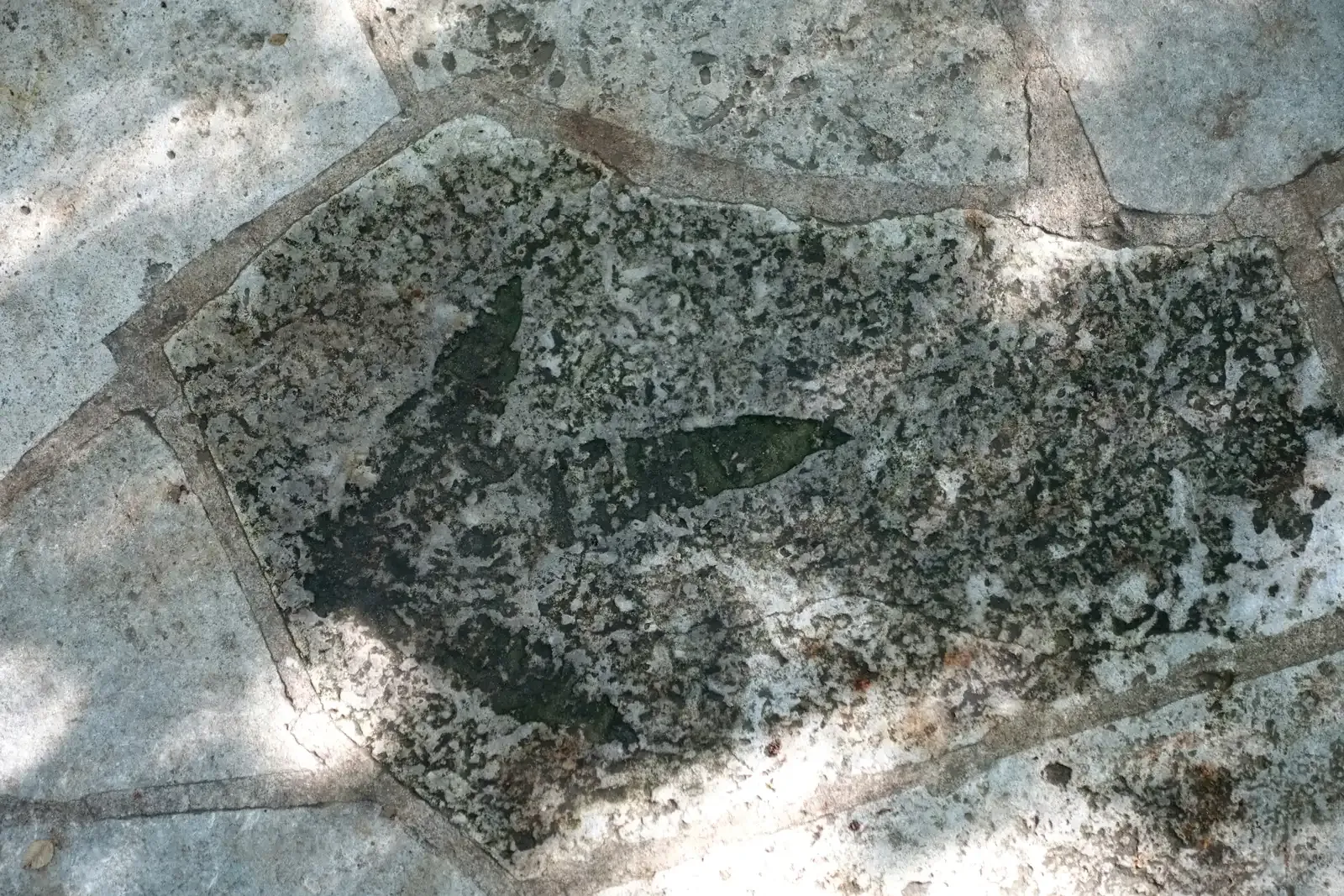
Here’s the thing about dinosaur footprints. They aren’t relics. They are records. Every impression left in ancient mud carries information about an animal that was alive, moving, breathing, and interacting with its world in real time. That’s extraordinary. What started as strange bumps noticed by a quarry worker in England or legends of monster claws in Bolivia’s highlands turns into a full behavioral portrait of life on Earth tens of millions of years ago.
The field of ichnology has transformed from a niche curiosity into one of paleontology’s most powerful tools. You don’t need a complete skeleton to understand how a dinosaur lived. Sometimes all you need is the shape of its step. So the next time you step into soft ground and leave a print behind, consider: someone, somewhere, might read your footstep the same way scientists today read those of Triceratops and T. rex. What story would yours tell? Let us know your thoughts in the comments.