Most people picture dinosaurs as solitary, ferocious beasts. They stomp, they roar, they terrorize. But what if I told you that some of those very same creatures were also tender, devoted, protective parents – capable of nurturing their young in ways that genuinely parallel the behavior of modern birds and even some mammals today?
Prehistoric parenting is one of the most fascinating – and honestly, most underrated – frontiers in paleontology. Every fossil discovery peels back another layer of what was once considered impossibly unknowable. Recent paleontological discoveries have dramatically transformed our understanding of dinosaur parenting behaviors, revealing sophisticated nesting strategies, complex familial structures, and nurturing behaviors that challenge our preconceptions. So, buckle up and let’s dive into what science has uncovered about life in a dinosaur family.
The Fossil Revolution That Changed Everything We Thought We Knew
For most of the history of paleontology, the assumption was pretty simple: dinosaurs laid eggs and walked away. Think sea turtles. Lay them, leave them, forget them. Early paleontologists had limited evidence to work with when considering dinosaur reproduction, often assuming these animals simply laid eggs and abandoned them, similar to modern reptiles like sea turtles. It was a logical but ultimately incomplete assumption.
This view began to shift dramatically in the 1970s and 1980s with groundbreaking discoveries in Montana’s Two Medicine Formation by paleontologist Jack Horner, who uncovered Maiasaura nesting grounds with evidence of parental care. That single discovery did not just add a new species to the record – it rewrote the entire story of what dinosaurs were capable of feeling and doing for their offspring.
Subsequent discoveries in Mongolia’s Gobi Desert, Argentina’s Patagonia region, and China’s fossil beds have provided extraordinary glimpses into dinosaur family life. Today, researchers employ advanced technologies such as CT scanning, chemical analysis of fossils, and comparative studies with modern birds to reconstruct these ancient parenting behaviors. Honestly, it’s nothing short of remarkable how much a pile of 75-million-year-old bones can tell us about love and family.
Maiasaura: The Good Mother Lizard Who Proved Everyone Wrong
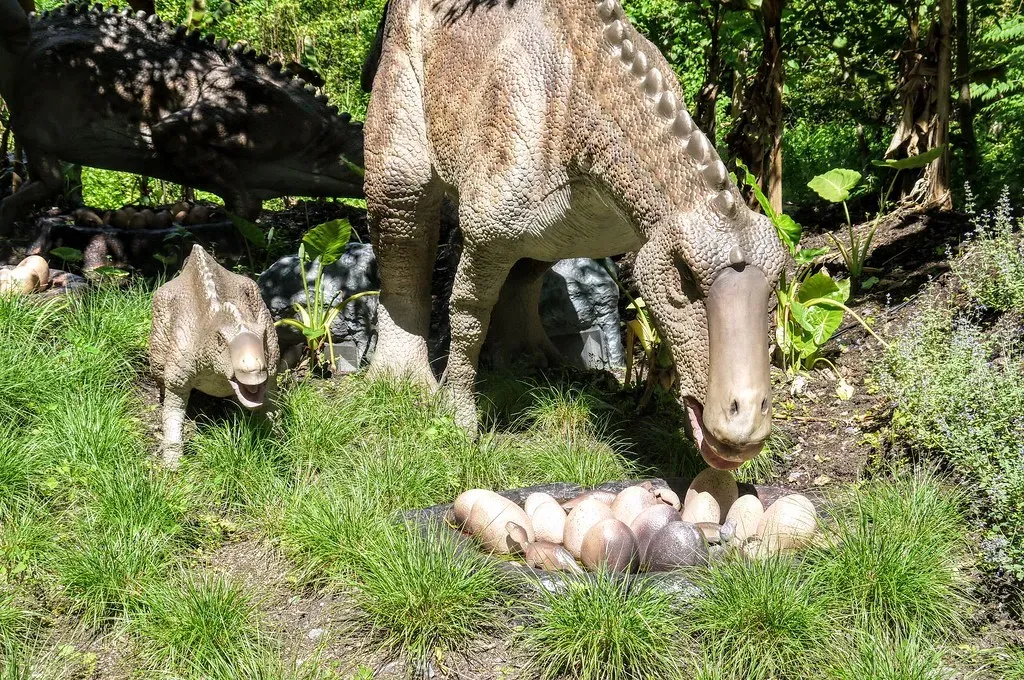
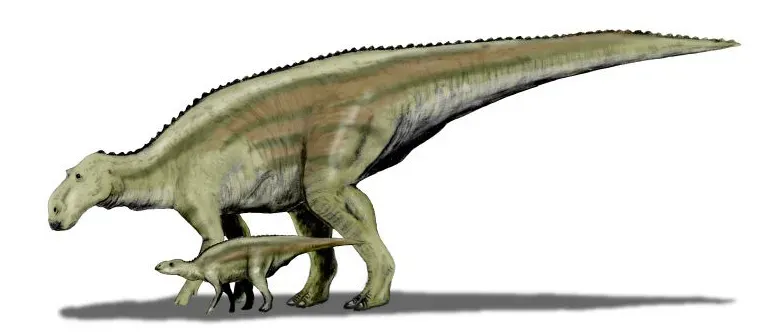
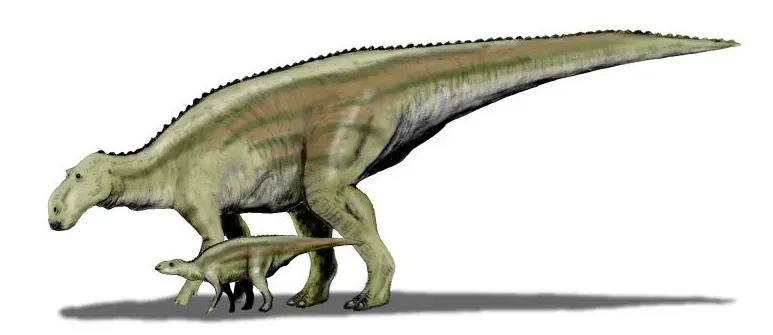
Maiasaura peeblesorum, known as the “good mother lizard,” lived during the Late Cretaceous period, approximately 76.7 million years ago. You don’t earn a name like that without putting in the work. The discovery of fifteen juvenile dinosaurs in close proximity to an adult showed the first instance of parental and social behavior in dinosaurs. It allowed for interpretations such as that Maiasaura fed its young while they were in the nest.
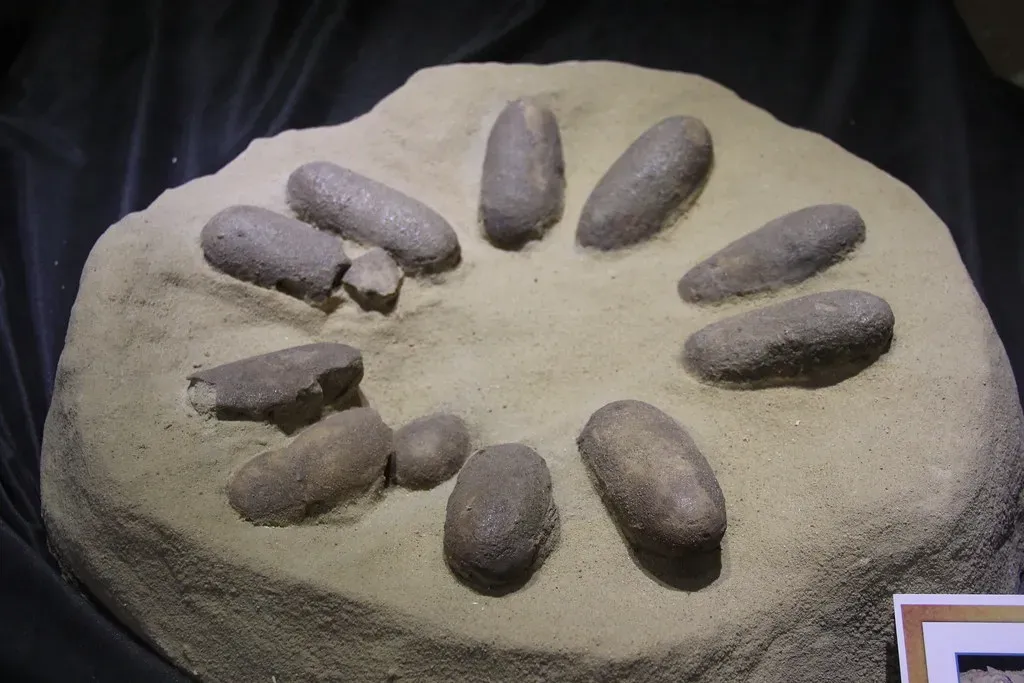
The nests in the colonies were packed closely together, like those of modern seabirds, with the gap between the nests being around 7 metres, less than the length of the adult animal. The nests were made of earth and contained 30 to 40 eggs laid in a circular or spiral pattern. Here’s the thing that really gets you: fossils of baby Maiasaura show that, when they hatched, their legs were not fully developed and thus they could not leave the nest. Fossils also show that their teeth were partly worn, which means that the adults brought food to the nest. That’s not abandonment – that’s active, deliberate parenting.
Big Mama and the Oviraptorids: The Parents Who Died for Their Young
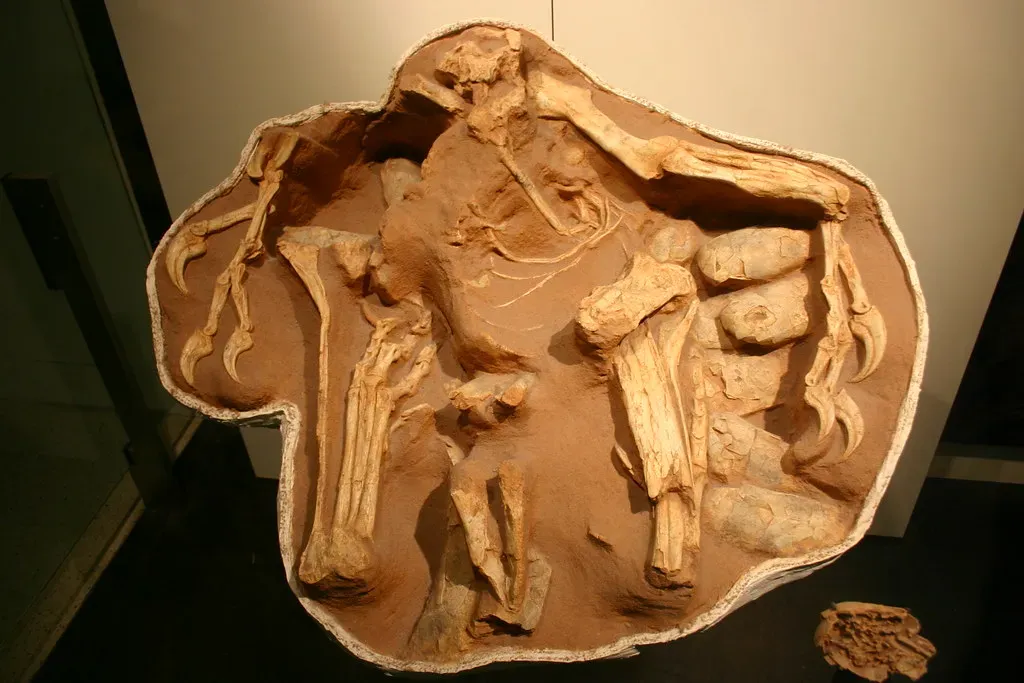
Few stories in all of paleontology are as emotionally striking as that of “Big Mama.” Big Mama is a 75-million-year-old oviraptorid that was uncovered brooding on, meaning sitting on top of, a nest of eggs. The Mongolian dinosaur was revealed to the world in 1995 and named as Citipati in 2001. The image of that creature curled around its eggs – frozen in time by a mudslide or sandstorm – is one of the most haunting snapshots of prehistoric parenthood you can imagine.
Oviraptor, whose name is derived from the Latin for “egg thieves,” was first discovered in the 1920s in association with eggs that were thought to belong to the ceratopsian dinosaur Protoceratops. Based on this find, scientists thought that Oviraptor may have stolen and eaten other dinosaurs’ eggs. But it has now been confirmed that the eggs actually belonged to Oviraptor. There is no other evidence that it stole eggs – in fact, oviraptorids show substantial evidence of putting their lives on the line for their young. What a redemption arc for a species that spent nearly a century wrongly named “egg thief.”
Fossilized Behavior: The Rarest Discovery in Dinosaur Science
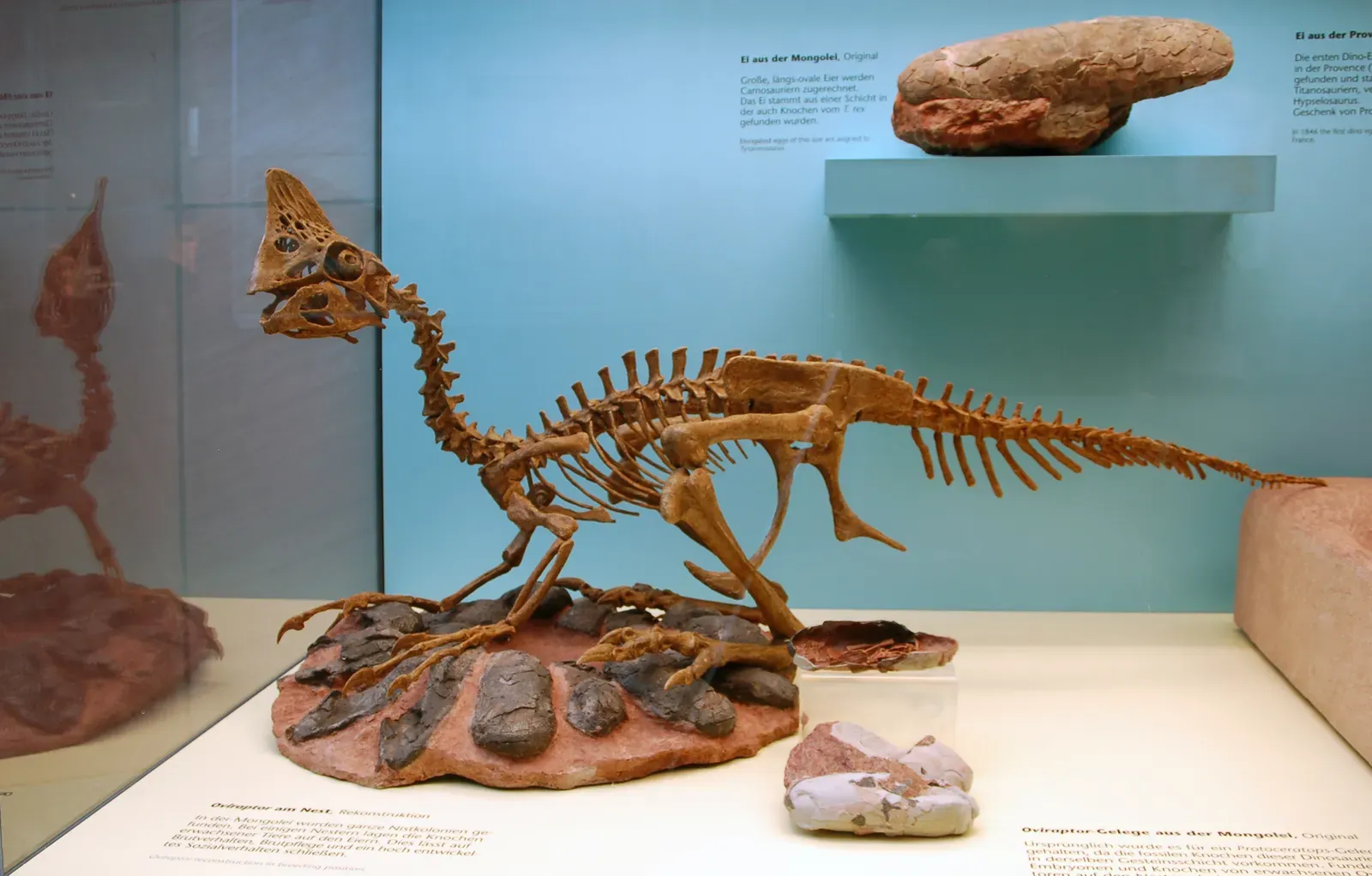
In 2021, scientists announced something that genuinely stunned the paleontology world. An international team of scientists announced the discovery of an extraordinary fossilized nest in China, preserving at least eight separate dinosaurs from 70 million years ago. The clutch of ancient eggs belongs to a medium-sized adult oviraptor, and the parent is actually part of the fossil. The skeleton of this ostrich-like theropod is positioned in a crouch over two dozen eggs, at least seven of which were on the brink of hatching and still contain embryos inside.
Analyzing the oxygen isotopes of these embryos, researchers found the estimated incubation temperature was consistent with the body temperature of the parent, sitting somewhere between 30 to 38 degrees Celsius. That’s direct scientific proof of body warmth being transferred to eggs – parental incubation, plain and simple. The sex of the fossilized parent may have been male, which suggests the father might have also taken part in brooding, similar to ostrich mothers and fathers, who take turns incubating their young. The sex of the adult oviraptor is still under debate, but the idea matches other analyses of theropod nests, which suggest some level of paternal care. So yes, dads were potentially in the picture too.
Soft Shells, Hard Truths: The Surprising Secret of Dinosaur Eggs
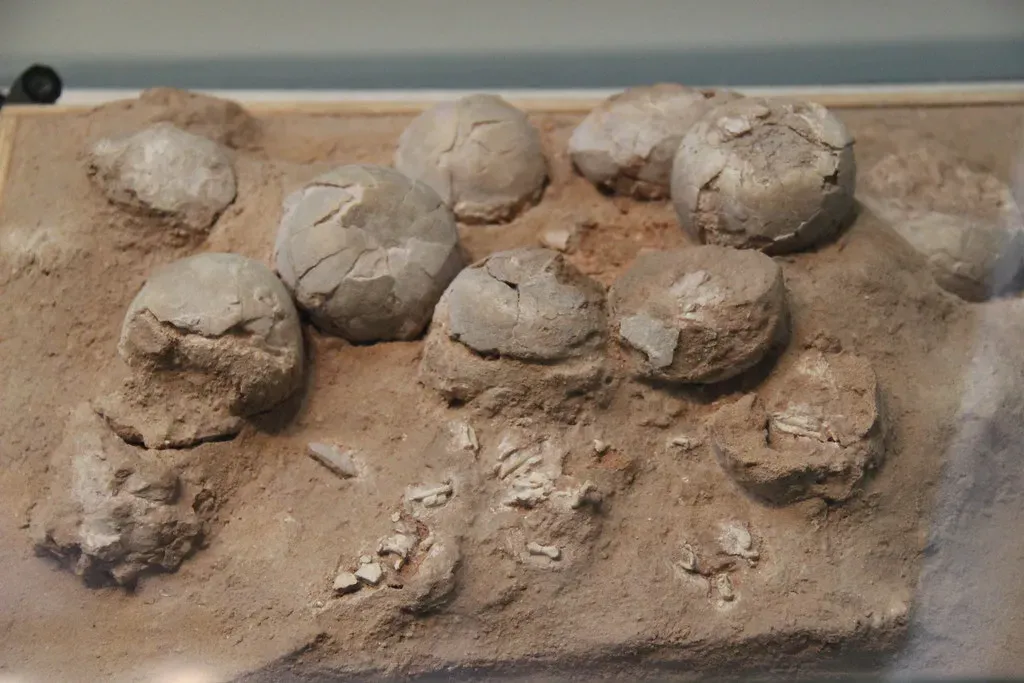
For most of the history of dinosaur research, everyone assumed all dinosaur eggs had hard shells. It seemed logical – both birds and crocodilians, the closest living relatives, lay hard-shelled eggs. A study by University of Calgary paleontologist Darla Zelenitsky and colleagues found that some dinosaurs, like the 73 million-year-old horned dinosaur Protoceratops and the 215 million-year-old, long-necked dinosaur Mussaurus, laid soft-shelled eggs similar to the leathery eggs of some modern reptiles. That was a major shock to the scientific community.
By mapping out these findings onto the dinosaur family tree, the paper proposes the unexpected idea that all dinosaurs originally laid soft-shelled eggs. Over time, at least three different lineages independently evolved hard-shelled eggs. This research could also help explain why dinosaur eggs are harder to find than many paleontologists would expect, because softer eggs would be less likely to fossilize. Think about it like this: we may have only been finding a fraction of the real story, simply because the softer chapters decomposed before we could read them. Soft-shelled eggs are more sensitive to the environment, because they lose moisture easily in dry conditions. In addition, parents could not sit directly on top of them without risking a crushed shell. Given these limitations, Protoceratops likely buried its eggs in moist sediment and left them to be incubated by external heat sources such as decaying plants or sunlight.
Dinosaur Daycare: Communal Parenting and the Prehistoric Village
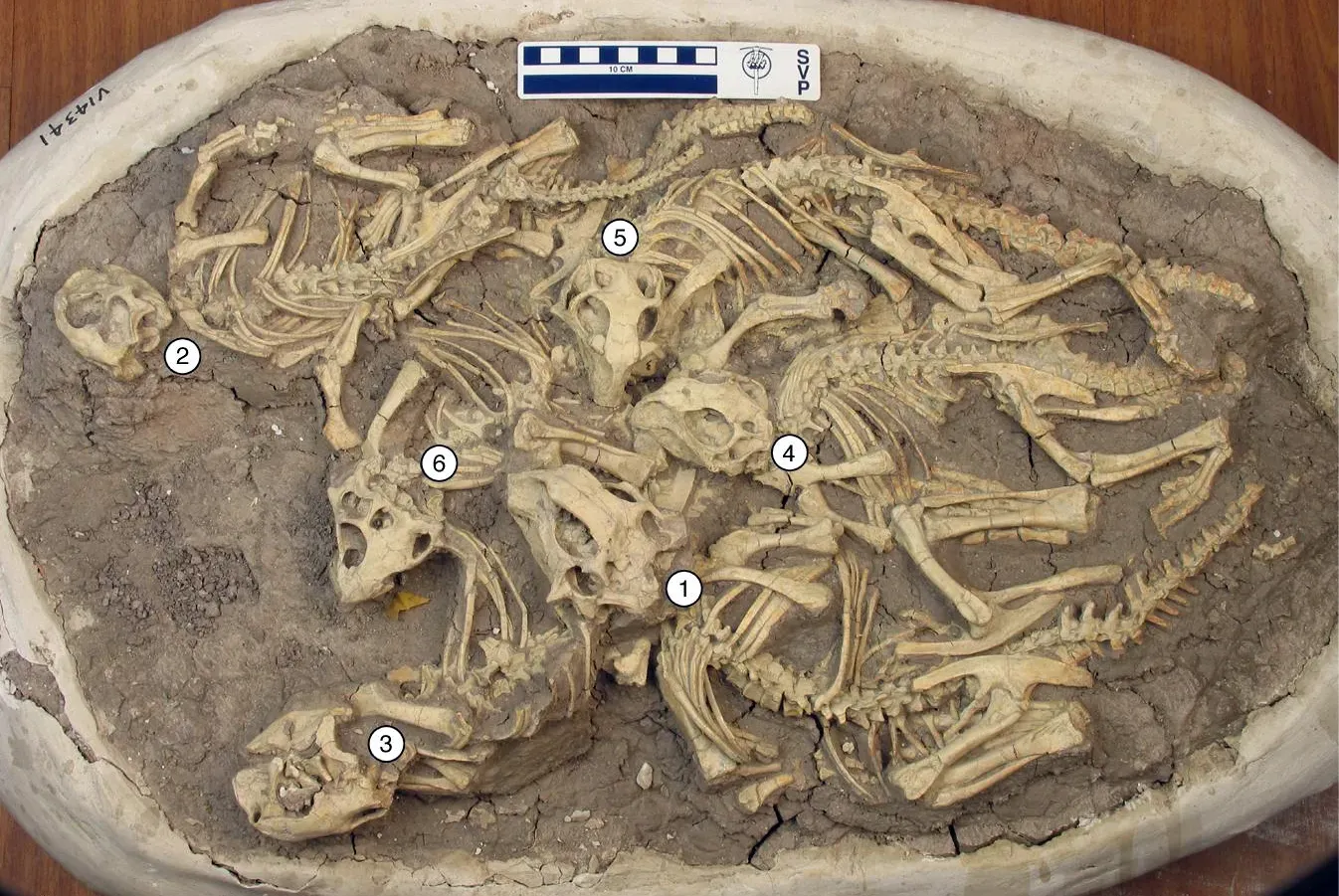
I know it sounds almost too modern to be true, but hear me out: there is solid fossil evidence suggesting some dinosaurs practiced something that looks almost exactly like communal childcare. In the fossilized group of horned dinosaurs called Psittacosaurus, a fully grown individual is surrounded by 34 youngsters, all huddled within an area of 0.5 square metres. It is almost certainly a family group rather than a happenstance collection of dead dinosaurs.
Particularly intriguing are discoveries of adult Psittacosaurus specimens surrounded by multiple juveniles of similar development stages but not necessarily direct offspring, hinting at possible “daycare” arrangements where adults watched over young from multiple families, a behavior observed in some modern birds like ostriches. The arrangement of nests in dense colonies, observed in various species from Argentina to Montana, implies coordinated breeding and potential cooperative defense against predators. The ancient village, it seems, really did raise the child.
The Giants Who Walked Away: Sauropod Parenting and the Opposite Extreme
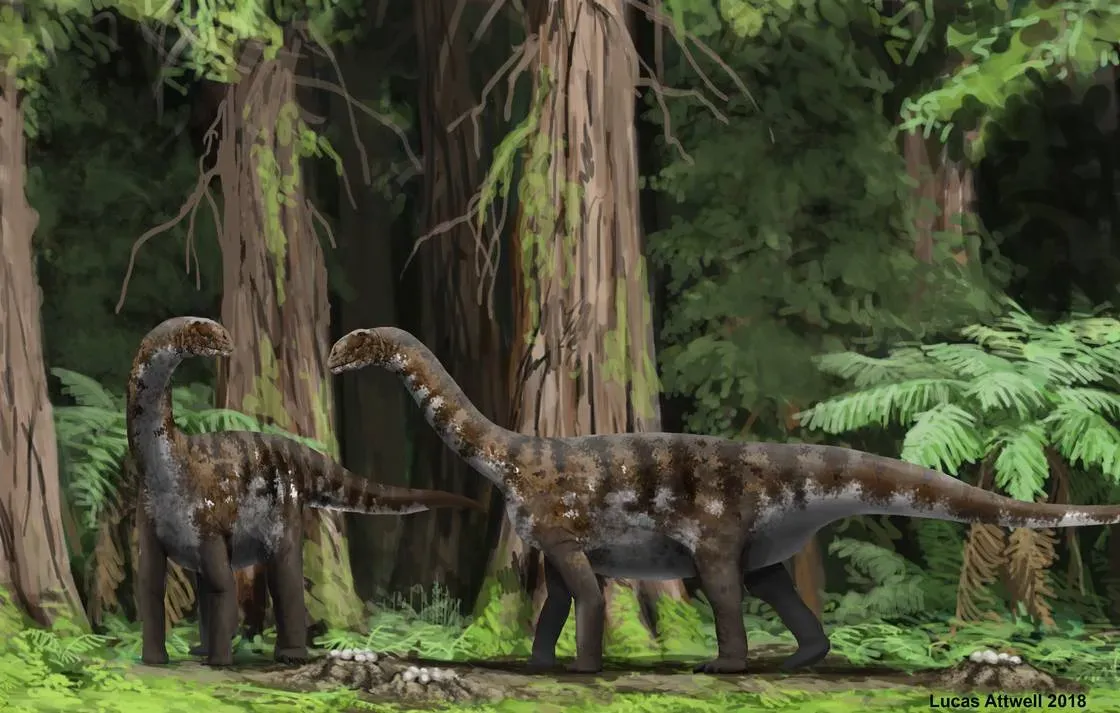
Not every dinosaur earned the title of devoted parent. In fact, it’s important to balance the picture: parenting strategies varied enormously across species, and the giants of the dinosaur world – the long-necked sauropods like Brachiosaurus and Apatosaurus – appear to have taken a dramatically different approach. Some dinosaur groups, such as the long-necked sauropods, laid small eggs en masse and buried them, leaving them behind like sea turtles.
We have shown parental care in distantly-related dinosaurs, but for some groups like sauropods, there is no evidence of post-laying care. It was essentially a numbers game – lay as many eggs as possible, bury them, and let statistical survival do the rest. Titanosaurs weren’t particularly bothered about looking after their young. Sauropods living in what we now know as Argentina appear to have borrowed heat from the Earth. Fossilized remains of their nests have been found near thermal springs, and the same volcanic activity that keeps them hot may have been acting like a free incubator for dinosaurs. Clever? Absolutely. Emotionally fulfilling? Maybe not so much.
Conclusion: A Family Portrait Millions of Years in the Making
What strikes me most about all of this research is how it forces us to rethink the very nature of dinosaurs. They were not mindless killing machines or primitive reptiles operating purely on instinct. Many of them built nests with care, kept their eggs warm through their own body heat, brought food to helpless hatchlings, and in at least some cases, may have even watched over each other’s young. From the brooding behaviors of oviraptorids like “Big Mama” to the nesting colonies of the Maiasaura, dinosaurs displayed a range of social and parental dynamics. These discoveries challenge the popular perception of dinosaurs as ferocious and uncaring creatures, emphasizing their capacity for nurturing and protective behaviors.
The unique discoveries show that at least some dinosaurs cared for their young after they hatched out, and suggest that the parental instincts of present-day birds and reptiles such as crocodiles may have a common evolutionary precursor. Every time a new fossil is pulled from the earth, there’s a chance it will rewrite the story again. Science is still in its early chapters here, and there are almost certainly more discoveries waiting in the rock layers of Mongolia, Patagonia, and Montana.
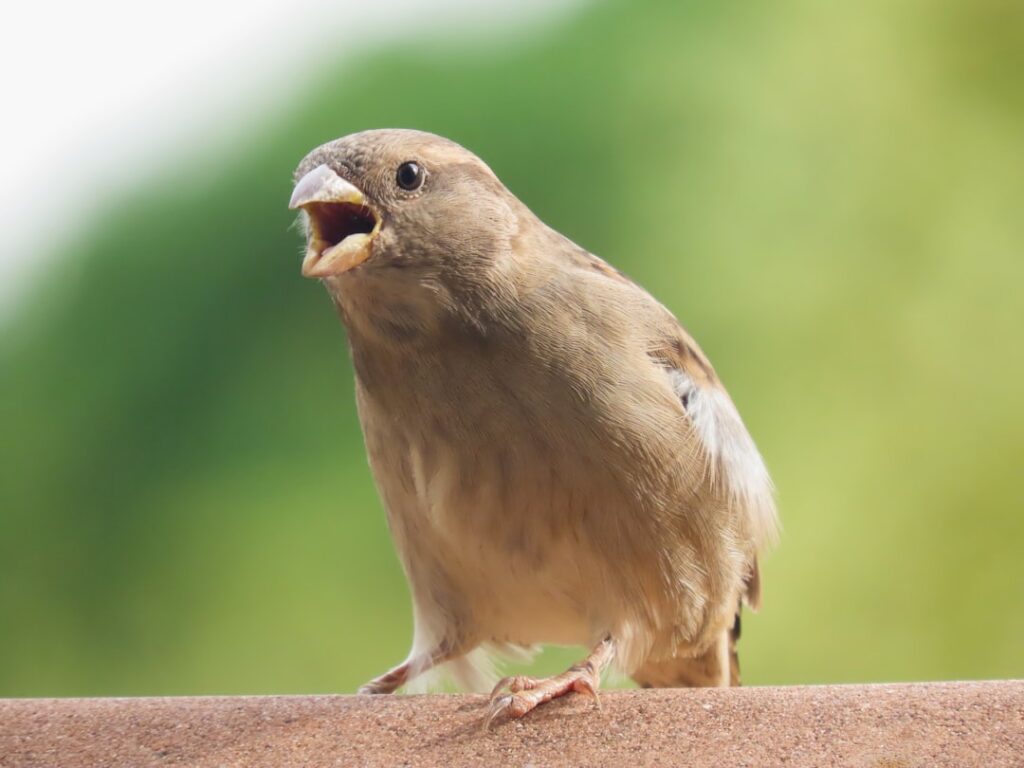
The next time you look at a bird perched on a nest, you’re witnessing the living echo of something 230 million years old. Does it change how you see the ancient world? What would you have expected from a Cretaceous family reunion?