Picture standing in front of a fossilized skeleton and realizing, almost with a shiver, that you are not just looking at bones. You are staring at a crime scene. A battle scene. A moment in time when two creatures, each built by millions of years of evolution, collided with violent, primal force and left their scars encoded in stone for the ages.
Prehistoric combat is not a Hollywood invention. It is backed by real science, real fossils, and a growing body of research that tells us dinosaurs were not just massive, they were dangerous to each other in ways that still surprise paleontologists today. From embedded teeth to healed fractures to two animals locked forever in a death grip, the evidence is extraordinary. Buckle up, because the story of dinosaur wars is wilder than you might expect.
The Fighting Dinosaurs: A Death Match Frozen in Time
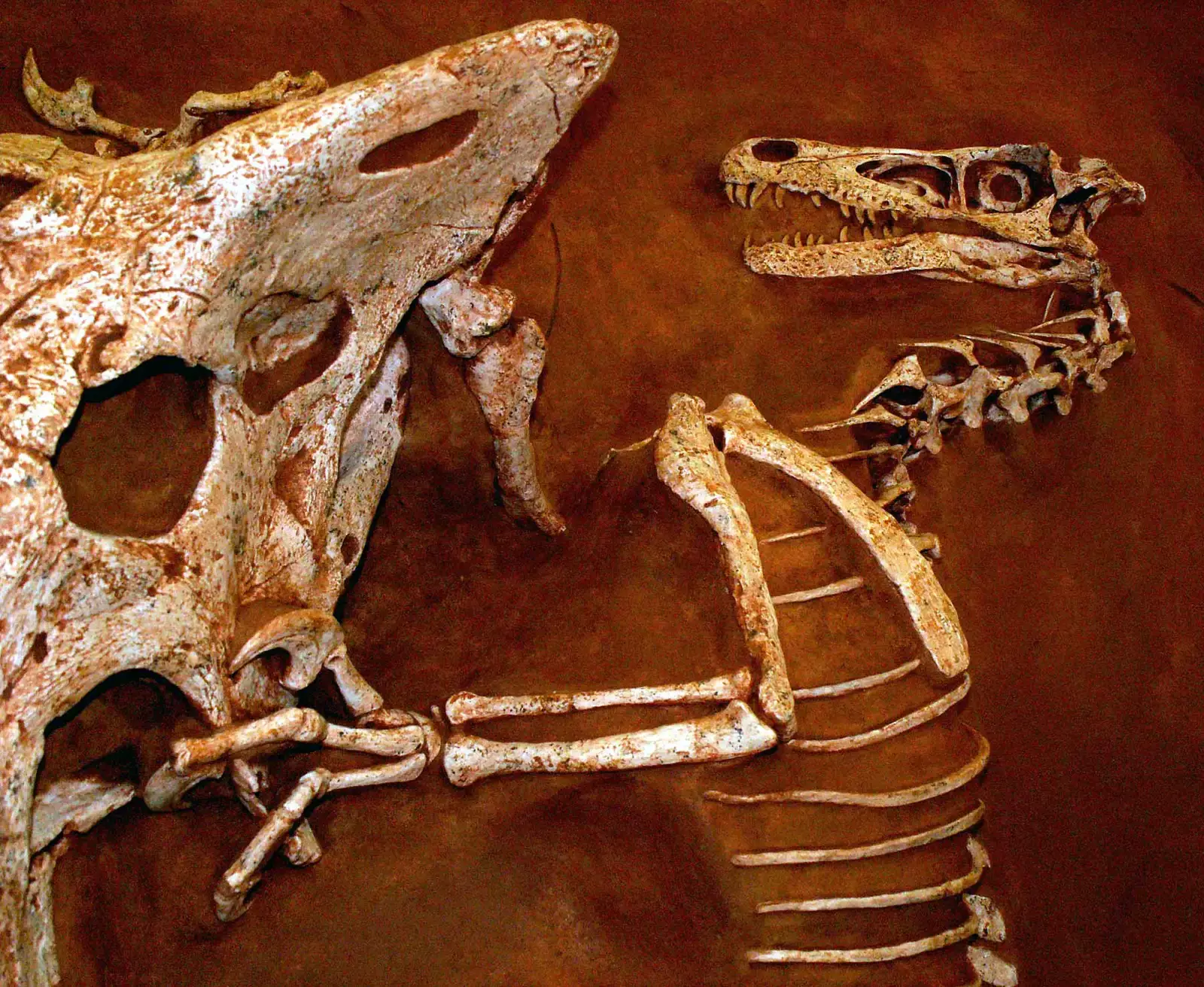
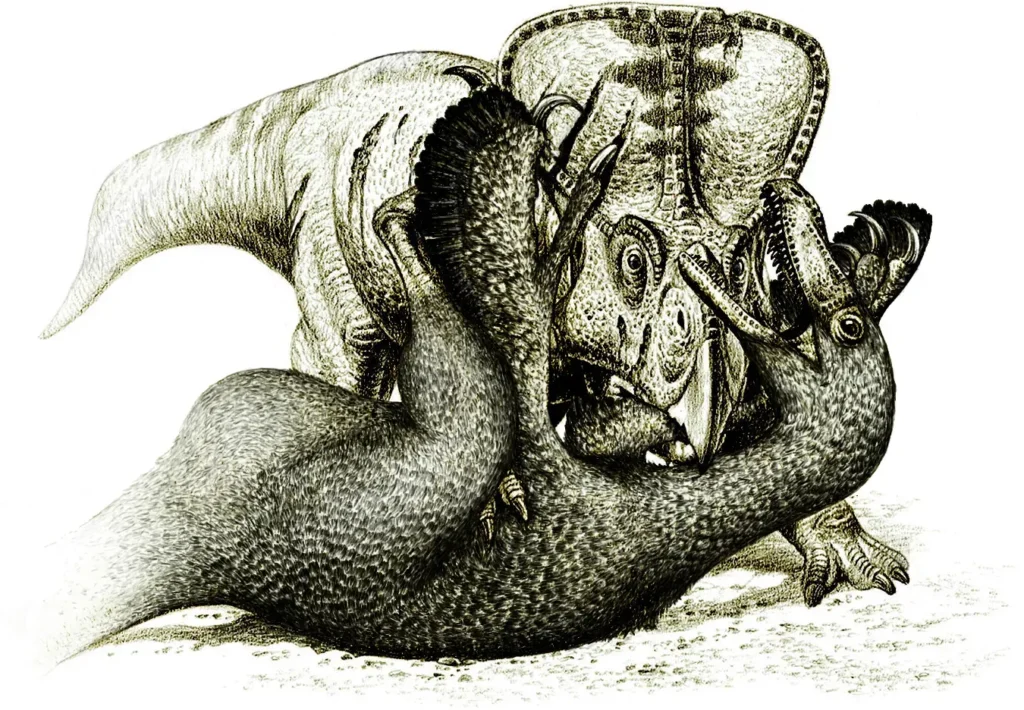
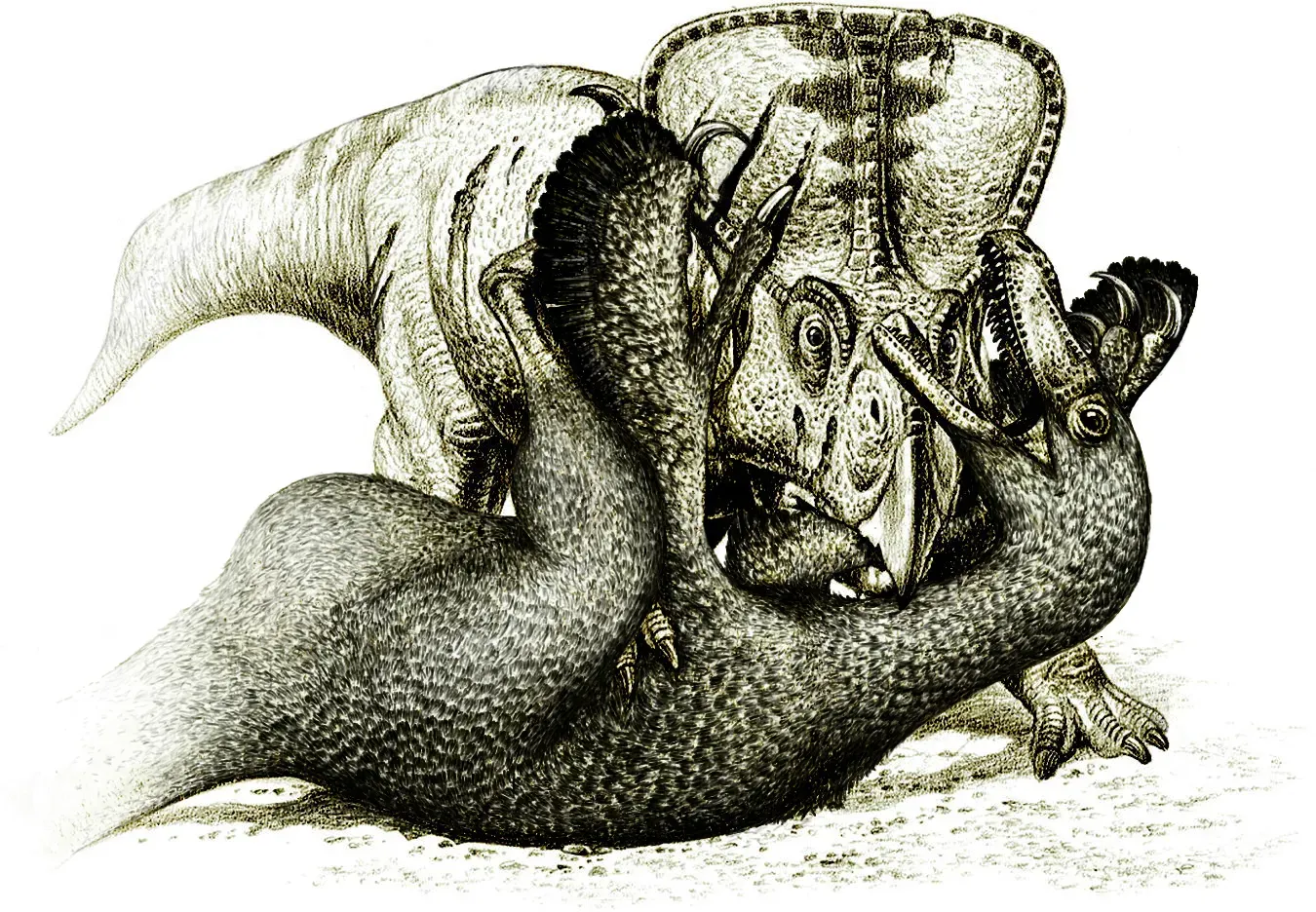
Imagine if a photograph could capture not just a moment, but a murder. That is essentially what happened in Mongolia’s Gobi Desert in 1971, when a joint Polish-Mongolian paleontological expedition made one of the most astonishing fossil discoveries in history. The “Fighting Dinosaurs” fossil, found in the Late Cretaceous Djadokhta Formation of Mongolia, preserves a Protoceratops andrewsi and a Velociraptor mongoliensis locked in combat between 75 and 71 million years ago, providing direct evidence of predatory or agonistic behavior in non-avian dinosaurs. The sheer impossibility of what you are seeing in that fossil is staggering.
About 80 million years ago during the Cretaceous Period in the Gobi Desert, two dinosaurs were locked in deadly combat: a hungry Velociraptor dug its sharp toe-claw into the neck of a Protoceratops, while the Protoceratops bit the Velociraptor’s arm with its sharp beak. Polish paleontologist Halszka Osmólska proposed that during the death struggle a large dune may have collapsed, simultaneously burying both animals. That is the prevailing theory today, and honestly, it makes this fossil feel even more dramatic. Two creatures, mid-fight, swallowed whole by the desert itself.
Reading the Scars: How Fossils Reveal Ancient Violence
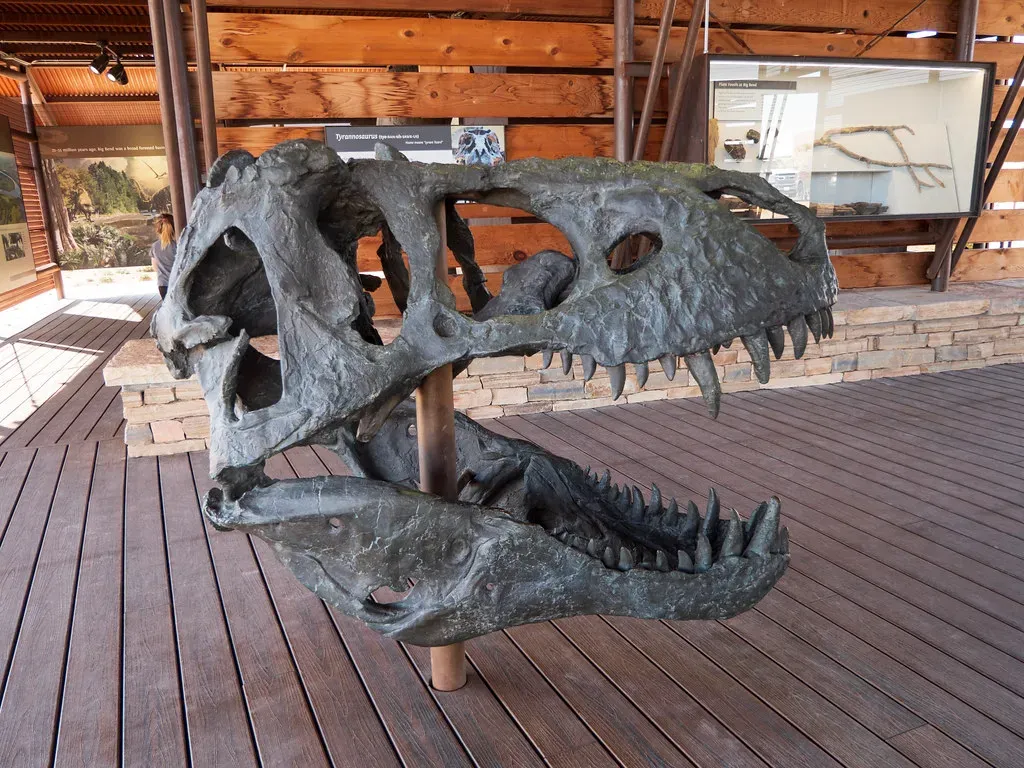
You might wonder how scientists can possibly know if an injury came from a fight and not just, say, a bad fall or a disease. Here is the thing: bones talk. When animals get injured and their wounds become infected, the injuries can leave tell-tale signs in bones, and dinosaurs were no different. Fossils show that dinosaurs were regular animals that got hurt, healed, and went on with their lives, rather than being the invulnerable monsters that many people may imagine.
A partially or fully healed injury, such as a bite mark, is the gold standard for paleontologists wishing to study dinosaur combat. Think of it like forensic pathology, just with rock instead of flesh. Careful taphonomic analysis helps scientists differentiate damage occurring during life from post-mortem processes like weathering, trampling, or transportation by water. It is painstaking work, but when the evidence lines up, it is absolutely conclusive. You end up with a clearer picture of ancient life than most people would ever expect from a pile of old bones.
T. Rex vs. Triceratops: The Ultimate Showdown
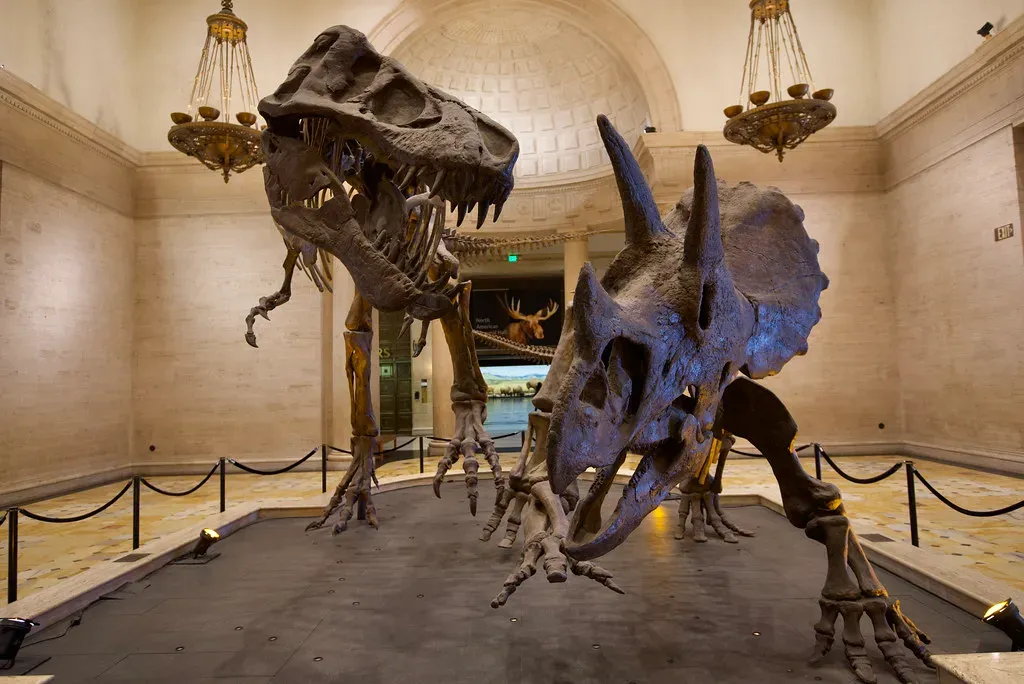
Let’s be real: this is the matchup everyone thinks about when they hear “dinosaur battle.” The good news is that the fossil record actually has something to say about it. Although Tyrannosaurus rex has a reputation as a fierce predator, the evidence to back up that notoriety has been both rare and debatable. A fossil Triceratops skull with healed bone scars may compel paleontologists to give T. rex its due. The key word there is “healed.” That Triceratops survived the attack. It walked away.
The partial skull of a large adult Triceratops unearthed in Montana in 1997 has several wounds that probably were inflicted by a T. rex, and all of the wounds show signs of infection and healing, an indication that the Triceratops lived for several years after the attack. Paleontologists have found Triceratops bones with healed bite wounds, evidence that some victims survived attacks, offering a rare glimpse into real predator-prey struggles from deep time. That is not just science. That is a survival story 67 million years old.
T. Rex vs. T. Rex: When the King Fights Itself
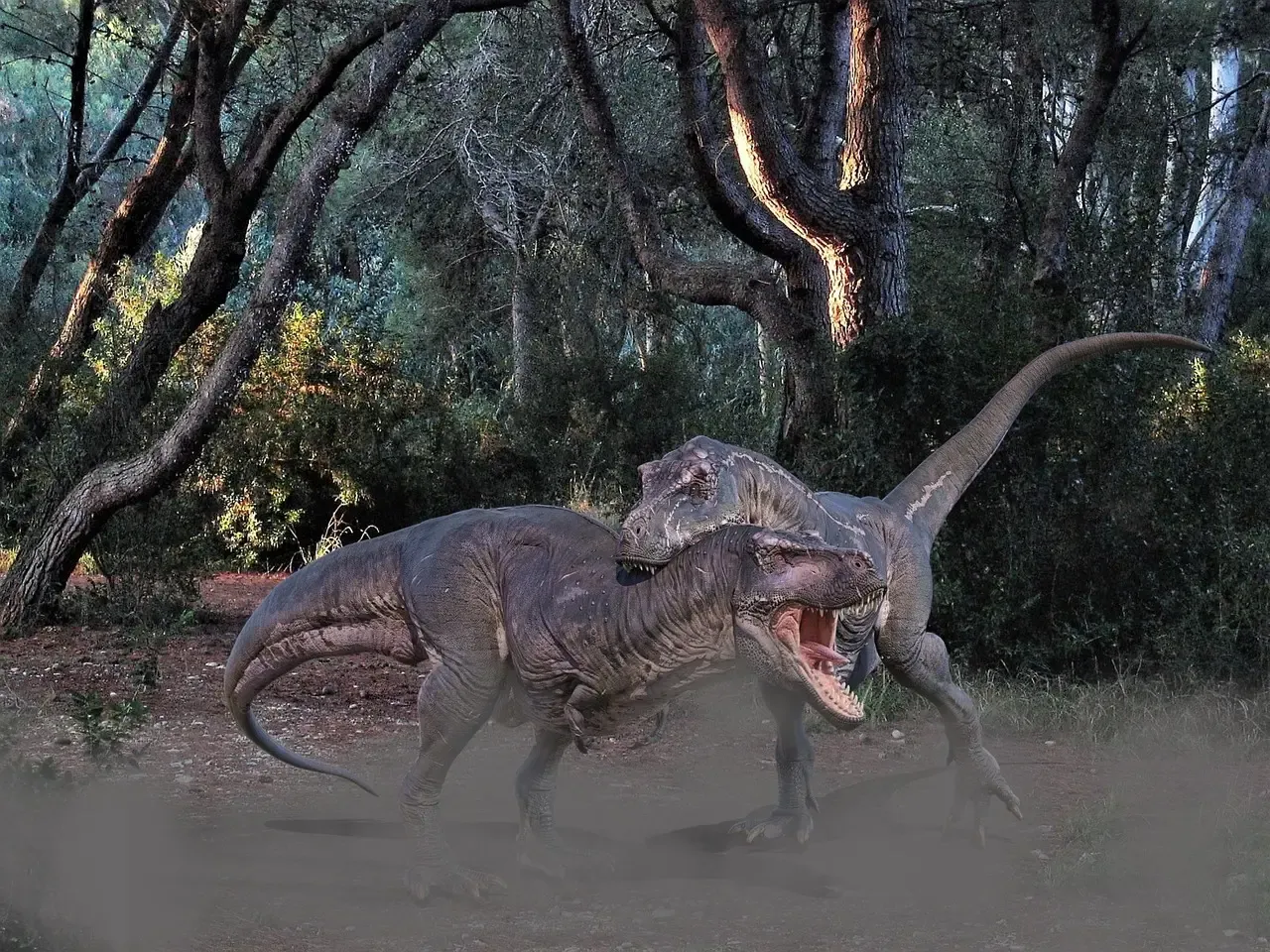
You might not have expected this one. It turns out Tyrannosaurus rex was not just a danger to other species. It was a danger to its own kind. Fossils reveal that tyrannosaurs lived violently, even among themselves. Many skulls preserve deep bite marks, punctures, and healed fractures that match the teeth of other tyrannosaurs, not the weapons of their prey. These injuries suggest fierce confrontations, possibly over territory, mates, or access to food.
Theropods show evidence of one of the most remarkable behaviors we see in dinosaurs: facial biting. Tanke and Currie described healed puncture and scrape wounds on the faces of the carnosaur Sinraptor and the tyrannosaurs Gorgosaurus and Daspletosaurus. Even more unsettling, there is also the possibility that Tyrannosaurus engaged in cannibalism. Bite marks on tyrannosaur bones themselves indicate that individuals sometimes fed on the bodies of their own species. In a harsh and competitive ecosystem, even the tyrant king could become food. Honestly, that changes the whole image of T. rex, doesn’t it?
Triceratops Horn Duels: Prehistoric Jousting
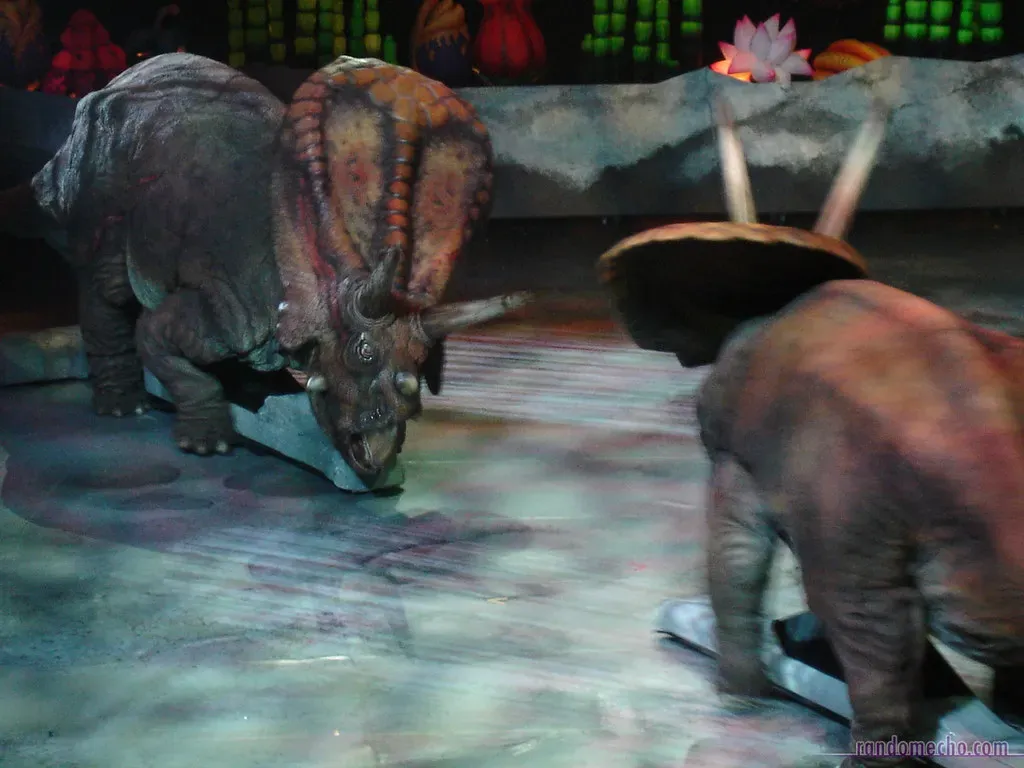
When you picture Triceratops, you probably imagine those three magnificent horns as weapons against predators. You would be only partially right. The horns and frills of ceratopsids may have played a role in defense against predators, but in Triceratops at least, they were also used in combat against other Triceratops. Researchers described healed puncture wounds near the eyes, ears, and base of the frill. This is exactly where the tips of an opponent’s horn would hit when locked in horn-to-horn combat. It is basically prehistoric jousting, minus the armor and the horses.
A new study included over 400 observations, which were analyzed statistically to detect differences between Centrosaurus and Triceratops. The scale of that analysis matters. This was not one fluke injury on one unlucky animal. The findings provide some of the best evidence to date that Triceratops might have locked horns with each other, wrestling like modern antelope and deer. You can almost picture two massive, three-horned giants lowering their heads and colliding in a crash that would have shaken the ground for hundreds of meters around.
Ankylosaur Battles: The Tank That Fought Back
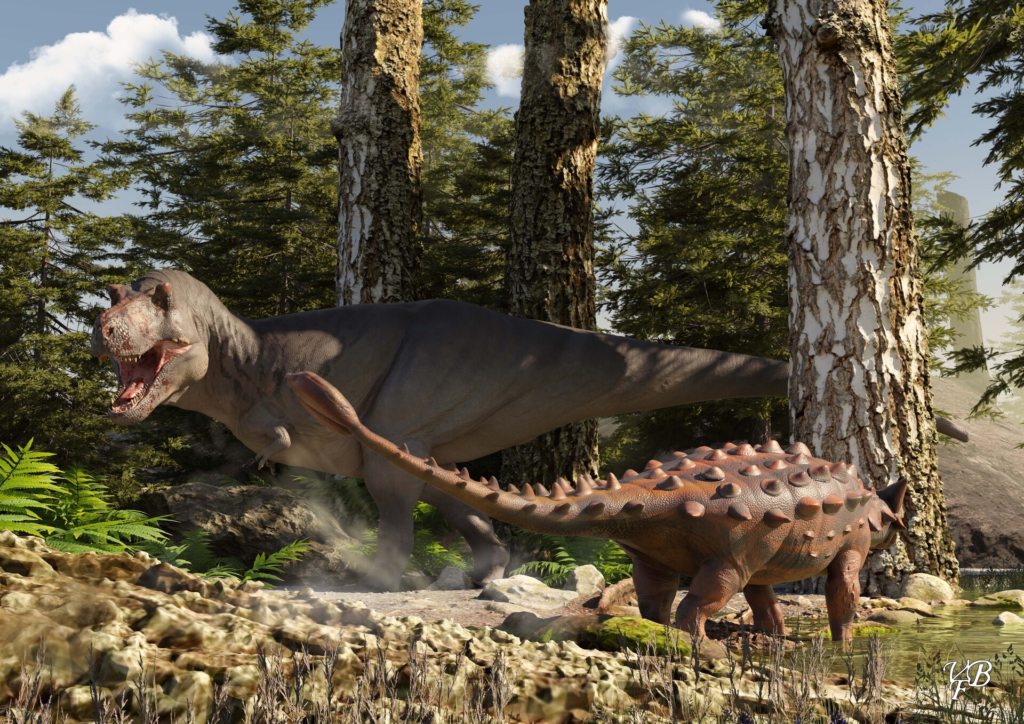
If Triceratops was the jousting champion of the Cretaceous, the ankylosaur was its armored tank. Ankylosaurus was a large, heavy, and armored dinosaur. This herbivore existed 66 million years ago and is most famous due to its heavy armor, specifically bony plates embedded in its skin, acting as a natural shield. Its chief method of defense was using the tail club, which turned to stop predator attacks. But here is where it gets surprising: that tail club was not just for predators.
While such structures could have been used to ward off the likes of Daspletosaurus, a carnivorous relative of the famous T. rex, a study in Biology Letters found that Zuul must have fought each other. Though only one Zuul fossil specimen has yet been found, the armor along the dinosaur’s hip shows damage from a blunt object swung at the side, and the tail of another Zuul would be a perfect fit. Royal BC Museum paleontologist Victoria Arbour and colleagues also propose that ankylosaur species developed unique armor for communication and combat with fellow ankylosaurs. So the armor was not just defensive gear. It was also a badge of identity in battle.
Pachycephalosaurs, T. Rex Embedded Teeth, and the Mammal That Won
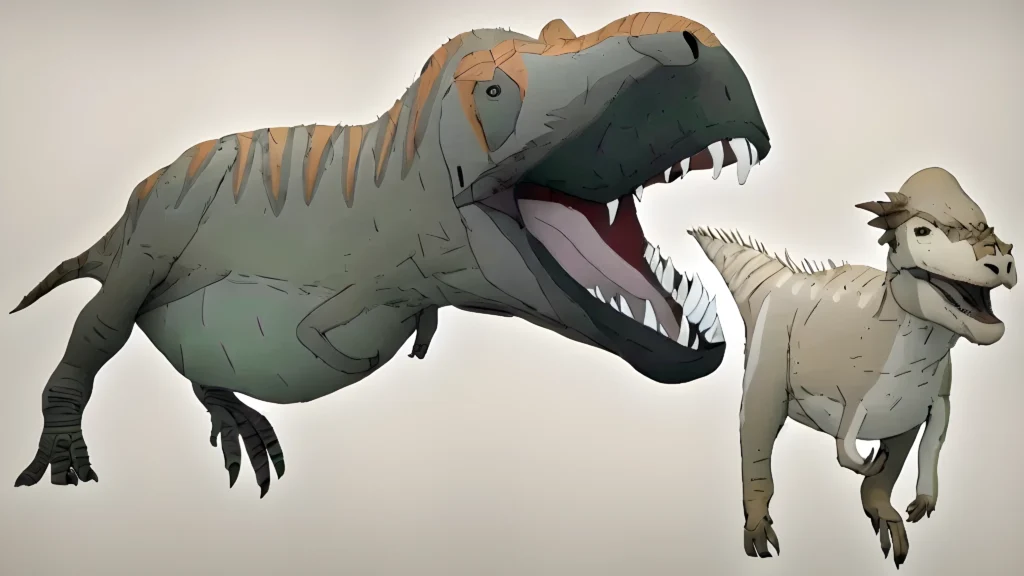
The pachycephalosaurs are among the most fascinating combatants in the prehistoric arena. Those bowling-ball-thick domes on their skulls were not decorative. Different groups of paleontologists have found evidence that some pachycephalosaur skulls have healed injuries caused by some sort of blunt-force trauma. Such injuries, as well as biomechanical studies of the forces the multi-inch layers of pachycephalosaur skulls could withstand, hint that these dinosaurs used their heads as weapons. Think of it like a battering ram made of living bone.
Beyond the head-butters, one of the most dramatic pieces of evidence for prehistoric combat comes from an embedded tooth. Researchers reported definitive evidence of predation by T. rex: a tooth crown embedded in a hadrosaurid caudal centrum, surrounded by healed bone growth. This indicates that the prey escaped and lived for some time after the injury, providing direct evidence of predatory behavior by T. rex. And for a truly mind-bending twist, consider what was discovered in China: a small badger-like mammal and a young bipedal dinosaur were locked in “mortal combat” around 125 million years ago before being entombed by a sudden volcanic eruption, creating a stunning fossil that perfectly preserves their fight to the death. The mammal, it seems, likely won. I know it sounds crazy, but it happened.
Conclusion: The Bones Never Lie
Every time you look at a dinosaur skeleton in a museum, you are looking at a survivor’s story or a fatality report. The fossil record of dinosaur combat provides a remarkable window into the selective pressures that shaped these magnificent creatures over millions of years. Each bite mark, broken horn, and healed fracture tells a story of survival, competition, and adaptation. These were not mindless monsters. They were complex animals, shaped by the same evolutionary pressures that drive competition in every corner of the animal kingdom today.
Fossil evidence of combat injuries tends to cluster on presumed male specimens, paralleling patterns seen in modern sexually dimorphic species like elephant seals or deer. These observations suggest that sexual selection through combat may have driven the evolution of elaborate structures in many dinosaur lineages. In other words, the horns, the domes, the clubs and the armored flanks were not accidents. They were weapons and shields, forged across deep time by the brutal logic of survival. The prehistoric world was not just a place of wonder. It was a war zone, and the fossils carry the proof in every scar and splinter of ancient bone.
Next time you stand before a dinosaur exhibit, take a closer look at those bones. You might just be looking at the world’s oldest battle scars. What do you think? Would you have guessed that the fossil record is this violent? Tell us in the comments.