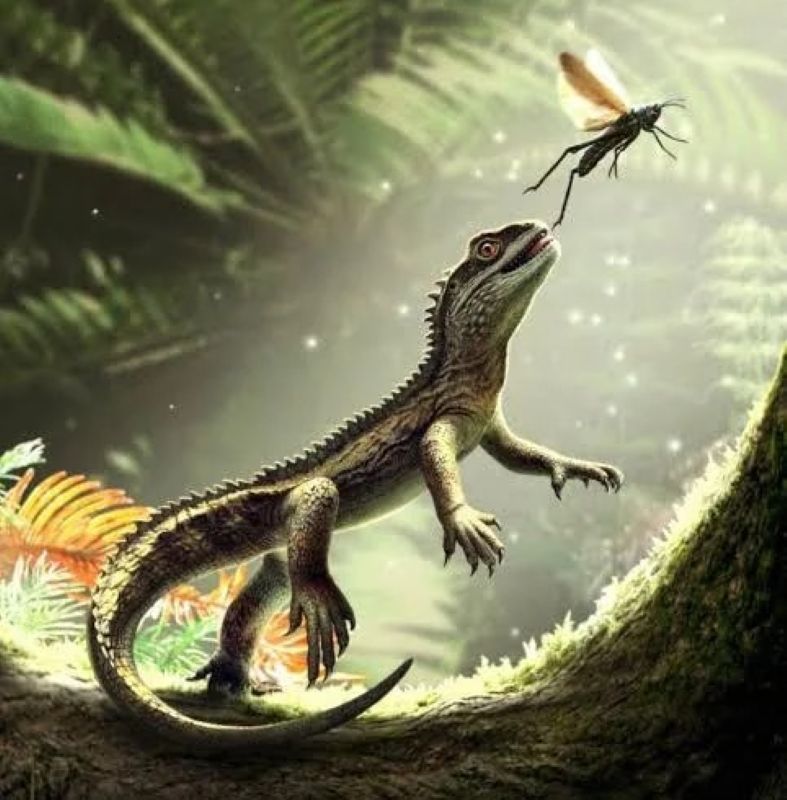
When most people picture a dinosaur, they imagine something cold, scaly, slow-moving, and reptilian. A creature that drags its tail along the ground and waits lazily in the sun for a meal to wander by. Honestly, that image couldn’t be further from the truth.
Science has spent decades dismantling that familiar picture, and what’s emerged in its place is nothing short of extraordinary. Dinosaurs, it turns out, were dynamic, warm-blooded, socially complex creatures. They brooded their eggs. They cared for their young. They moved with speed and agility. In almost every behavioral sense, they looked far less like the cold-blooded reptiles of our imagination and far more like the birds perched outside your window right now.
The Dinosaur Renaissance That Changed Everything
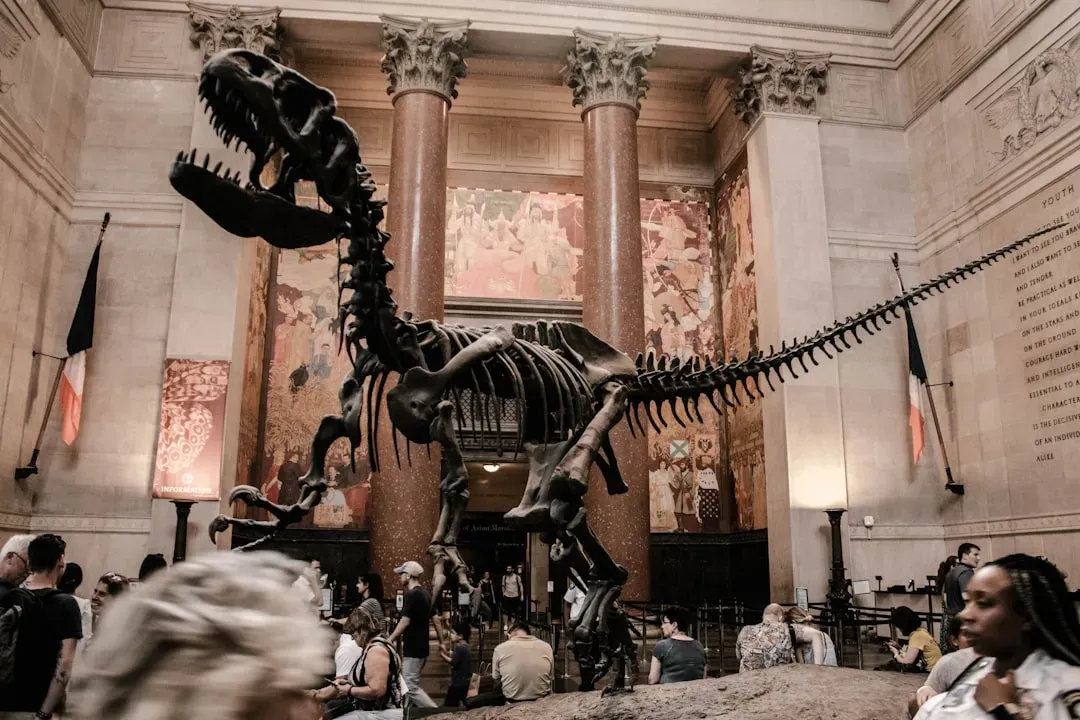
For most of the twentieth century, scientists treated dinosaurs as giant, lumbering reptiles. Cold-blooded. Slow. Solitary. The kind of creatures you’d expect to be outrun by a determined jogger. Through most of the twentieth century, before birds were recognized as dinosaurs, most of the scientific community believed dinosaurs to have been sluggish and cold-blooded. That was the accepted story for decades.
Then came a shift that paleontologists now call the “Dinosaur Renaissance.” Most research conducted since the 1970s has indicated that dinosaurs were active animals with elevated metabolisms and numerous adaptations for social interaction. Think of it as the moment the scientific world essentially looked at the fossil record and said: we’ve had this completely backwards.
During this “Dinosaur Renaissance,” researchers began moving away from the idea of dinosaurs as sluggish, cold-blooded animals. Some dinosaurs, it appeared, were intelligent and warm-blooded, like today’s birds. That realization didn’t just change how we look at dinosaurs. It changed how we understand life itself.
Warm Blood, Fast Lives: The Metabolism Evidence
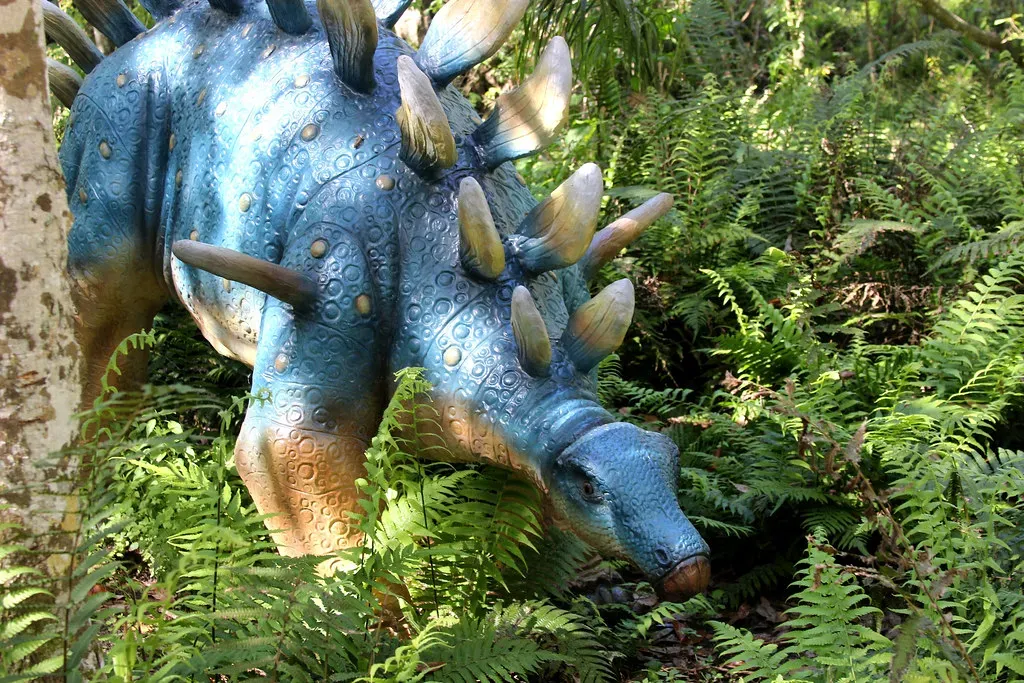
Here’s the thing about cold-blooded animals: they are fundamentally limited. A lizard basking in the morning sun is not plotting its next strategic move. It’s just trying to get warm enough to function. Dinosaurs, it seems, were not living that kind of life at all. Analysing oxidative stress compounds in fossilised bones has revealed that most dinosaurs, including giant sauropods and theropods like Tyrannosaurus rex, were warm-blooded like modern birds.
For dinosaurs closest to birds, we have so much evidence that suggests they were warm-blooded, short of actually sticking a thermometer in one. Growth rates and insulation are the smoking gun. They grow fast – we know from cutting up bones – faster than reptiles (including those from the same period), but not quite as fast as modern birds or mammals.
Like mammals, dinosaurs stopped growing when they reached the typical adult size of their species, while mature reptiles continued to grow slowly if they had enough food. That’s a remarkably bird-like trait, and it speaks volumes about the metabolic machinery running beneath those ancient bones.
Feathers Were Not Just for Flying
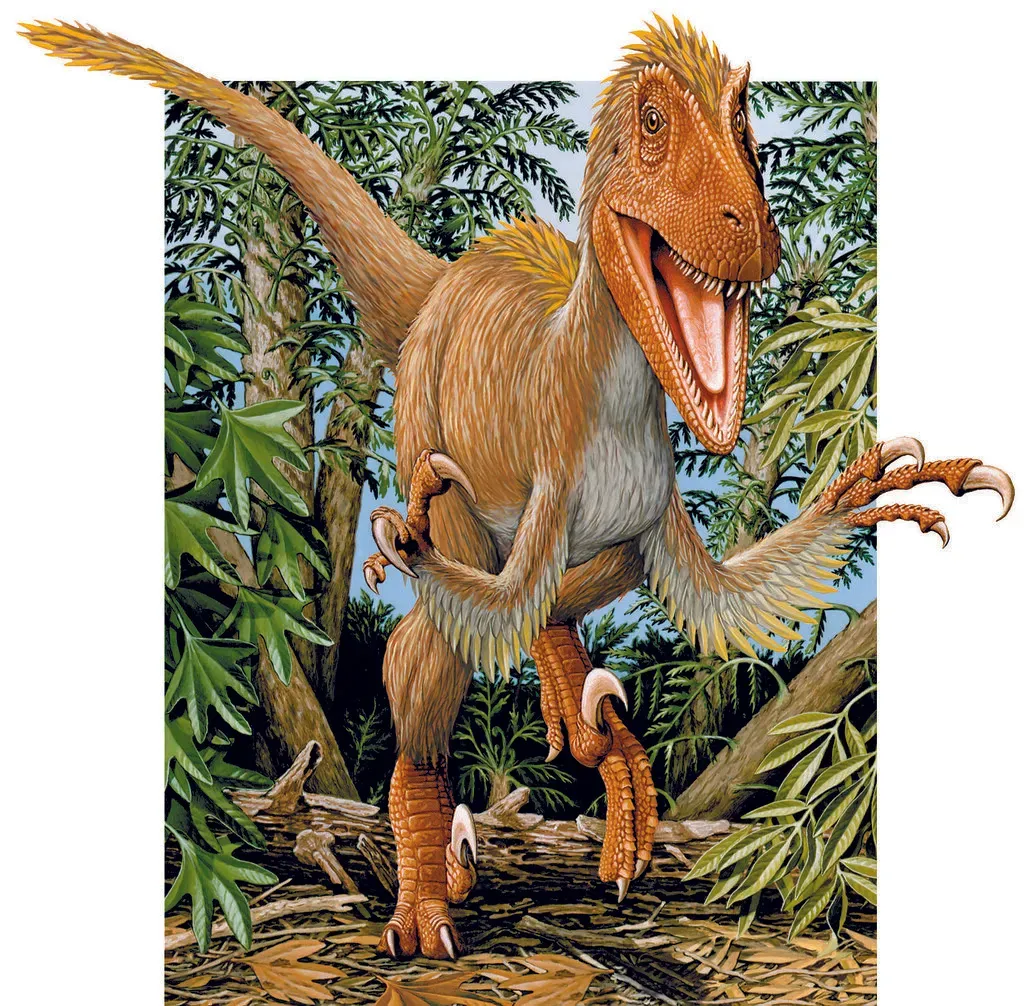
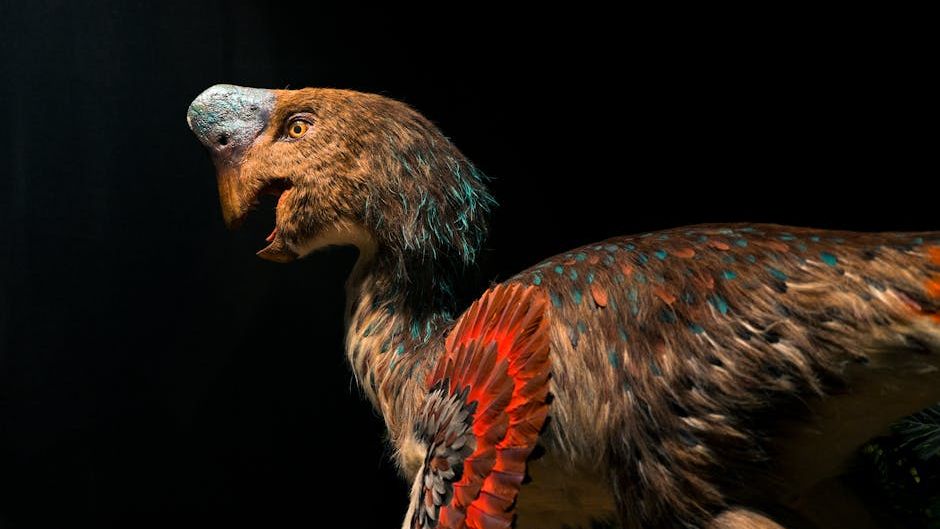
Let’s be real: the discovery of feathered dinosaurs was probably the single most dramatic development in paleontology in the last century. It completely rewired public perception. Perhaps most surprising of all was the discovery of dinosaurs with feathers. It completely changed the scientific community’s perception of their appearance and behaviour.
The Sinosauropteryx is one of the most groundbreaking dinosaur discoveries in paleontology. Found in China in 1996, it was the first non-avian dinosaur discovered with evidence of feathers, revolutionizing our understanding of the connection between dinosaurs and modern birds. Importantly, these feathers were not for flying. It was covered in primitive, hair-like feathers, not for flight but for insulation.
Birds and extinct non-avian dinosaurs share many unique skeletal traits. Moreover, fossils of more than thirty species of non-avian dinosaur with preserved feathers have been collected. You can think of feathers less like wings and more like a really advanced jacket. They were versatile, multi-purpose structures that evolved long before any dinosaur ever left the ground.
Brooding and Nesting: Parental Care That Looks Familiar
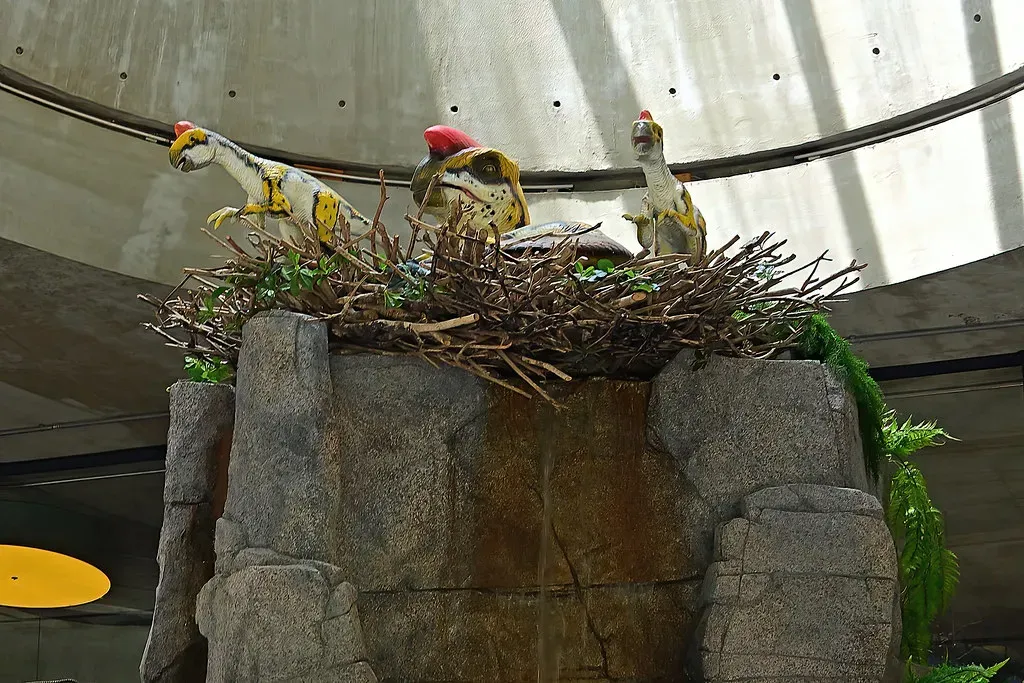
If you’ve ever watched a bird sit protectively on a nest, refusing to budge even as you approach, you’ve witnessed a behavior that has roots stretching back more than 150 million years. Some findings suggest that some non-bird dinosaurs used their body heat to keep eggs warm. Such parental care is something that is seen in modern birds but not in other modern reptiles.
The evidence is striking and surprisingly specific. Fossils of Oviraptor found sitting atop nests in a bird-like posture provide direct evidence of parental care, once considered uniquely avian. For a long time, scientists actually misidentified this dinosaur as an egg thief. In the 1990s, researchers began finding related dinosaurs in similar positions, which led scientists to assert that these were probably mother dinos brooding over their eggs.
Unlike other dinosaurs’ eggs, eumaniraptoran eggs didn’t have that many pores, a sign that the eggs were kept in open, more birdlike nests. Perhaps, like many birds, the animals brooded their eggs to keep them warm; some fossilized egg clusters even preserve adult dinosaurs sitting atop them. The posture. The position. The care. All of it unmistakably bird-like.
Sleeping Postures and Daily Habits
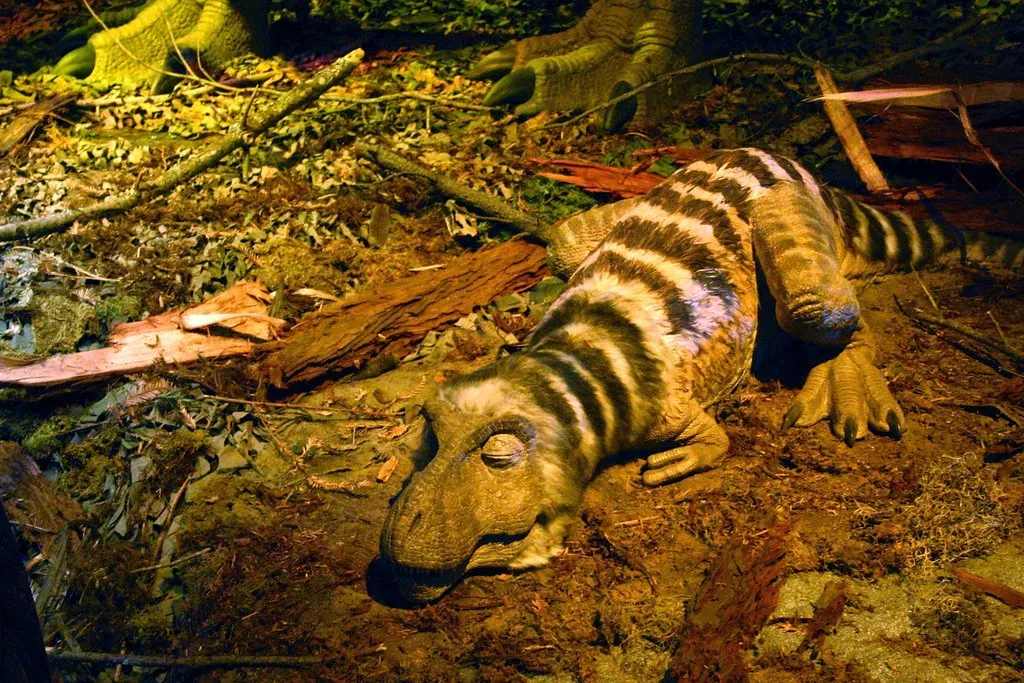
This one genuinely surprises people. We’re used to thinking of dinosaur behavior in terms of hunting and fighting. But what about sleeping? How did they rest? The answer, it turns out, is profoundly familiar. Fossils of the troodonts Mei and Sinornithoides demonstrate that the dinosaurs slept like certain modern birds, with their heads tucked under their arms.
Rare fossils also give us glimpses of the behaviour of bird-like dinosaurs, such as Mei long, a small, duck-sized bipedal dinosaur from the Cretaceous era. It was found preserved in volcanic ash falls, captured curled up in a sleeping position very similar to how a lot of birds roost today. It’s like finding a photograph of your prehistoric great-great-grandparent and noticing they sleep in exactly the same position you do.
Paleontologists now interpret dinosaur behavior through the lens of bird biology: nesting, flocking, vocalizations, and even sleep postures. Every new fossil find seems to confirm the same thing, again and again: the birds in your backyard are not just distantly related to dinosaurs. In a very real sense, they are dinosaurs.
Social Behavior and Herd Dynamics
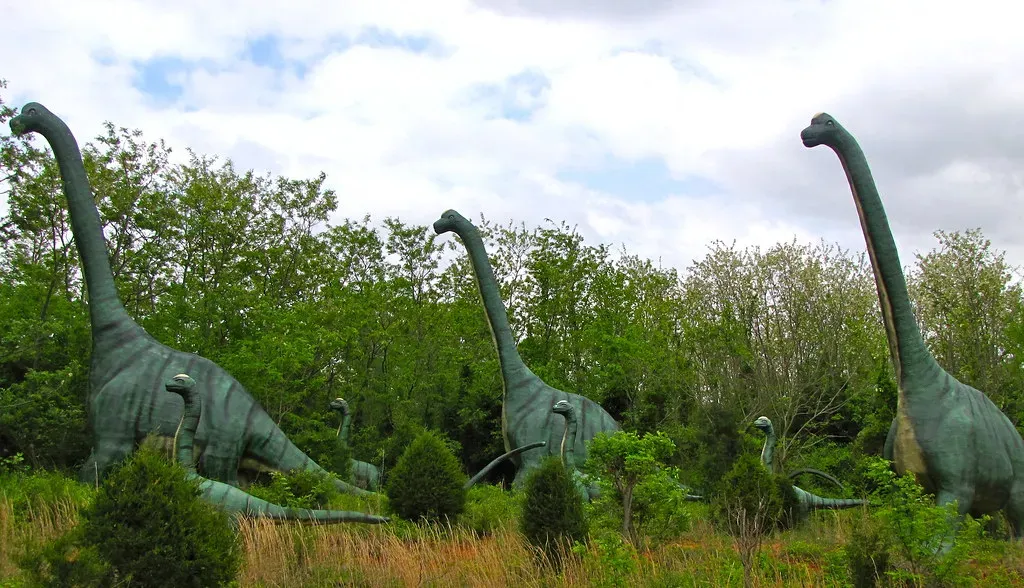
The old image of dinosaurs as solitary predators is giving way to something far more nuanced and, honestly, far more interesting. Evidence suggests that some dinosaurs exhibited social behaviour similar to birds, such as flocking and nesting in groups. We’re talking about creatures with complex social worlds, not just mindless killing machines.
Numerous dinosaur species, for example Maiasaura, have been found in herds mixing both very young and adult individuals, suggesting rich interactions between them. Think of it like a flock of geese, where adults and juveniles travel together, with older individuals guiding and protecting younger ones. After baby dinosaurs left the nest, at least some seem to have travelled together. Packs and herds of baby ankylosaurids, ceratopsians, and ornithomimosaurs are known; in at least the case of the ceratopsian Psittacosaurus and the ornithomimosaur Sinornithomimus these herds can include individuals of different ages, including adults.
Skeletal Similarities That Cannot Be Ignored
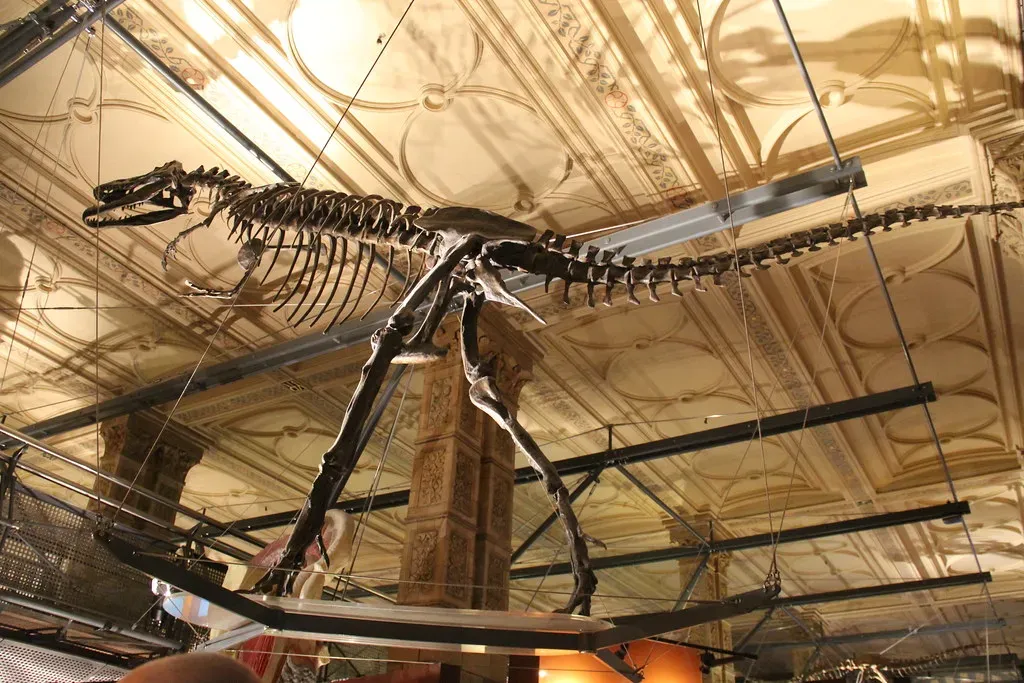
When you place the skeleton of a modern hawk next to certain theropod dinosaurs, the structural similarities are nothing short of jaw-dropping. Theropod dinosaurs such as Velociraptor, Deinonychus, and Troodon share numerous skeletal features with modern birds: hollow bones, wishbones (furcula), three-toed limbs, and even brooding behaviors seen in fossilized nests.
Fossil evidence also demonstrates that birds and dinosaurs shared features such as hollow, pneumatized bones, gastroliths in the digestive system, nest-building, and brooding behaviors. It’s hard to say for sure exactly at what point evolution crossed the line from “dinosaur” to “bird,” but the skeletal blueprint was clearly established long before the first bird ever appeared. We can confidently think of Velociraptor as having a bird-like feather covering, even though its fossils only preserve the bones. The skeleton has quill knobs on the ulna, a wing bone also found on today’s birds.
Even brain structure supports the dinosaur-bird link. CT scans show that bird brains, particularly in regions controlling vision and coordination, closely resemble those of small predatory dinosaurs. Layer by layer, bone by bone, the evidence for behavioral and biological overlap just keeps stacking up.
Molecular Evidence: When Proteins Tell the Ancient Story
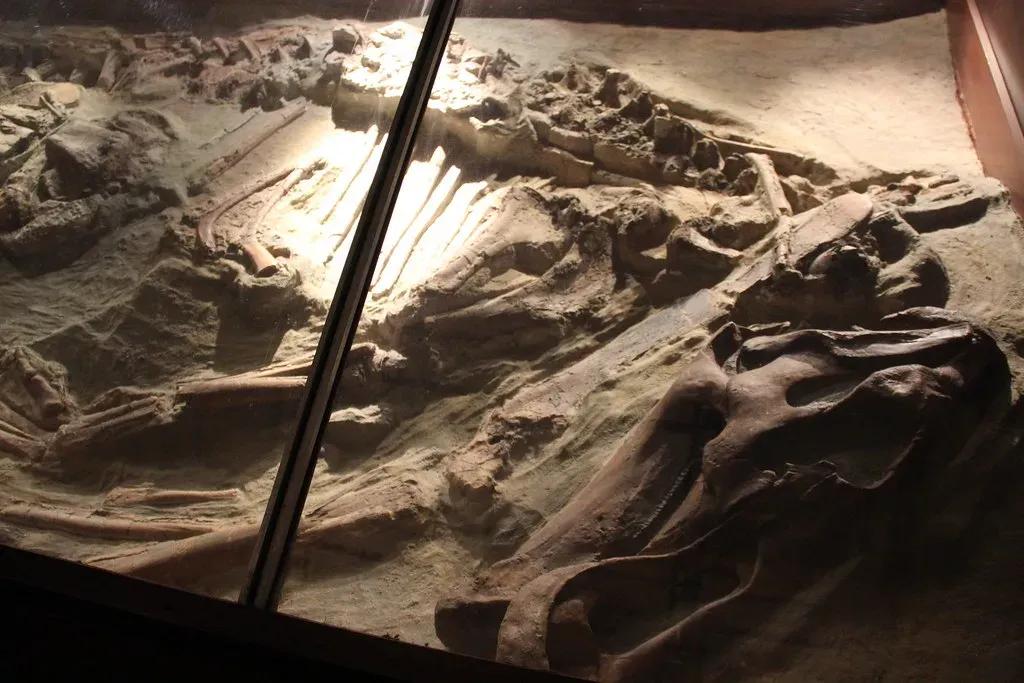
Sometimes the most powerful evidence comes not from bones or feathers, but from chemistry. And what molecular science has revealed about dinosaurs is perhaps the most astonishing part of this entire story. While we cannot extract DNA from 66-million-year-old fossils, scientists have studied proteins preserved in dinosaur bones. In 2007, collagen sequences from a T. rex femur were compared to living species and showed the closest match to chickens and ostriches – modern birds.
I know that sounds crazy, but consider what that means. The closest living biochemical relatives of Tyrannosaurus rex are the chickens most of us have eaten at some point this week. Even at the cellular level, recent studies analyzing proteins preserved in T. rex fossils showed collagen sequences more similar to chickens than to reptiles like alligators, further confirming the close evolutionary relationship.
In 2023, beta-protein structures were reported from the feathers of the dinosaur Sinornithosaurus and the early bird Confuciusornis. This confirms that ancient feathers had a composition similar to that of modern birds. The chemistry of life connects these animals across a gulf of more than 65 million years. That’s not a metaphor. That’s molecular biology speaking directly to the deep kinship between dinosaurs and birds.
Conclusion: The Birds Outside Your Window Are Living Proof
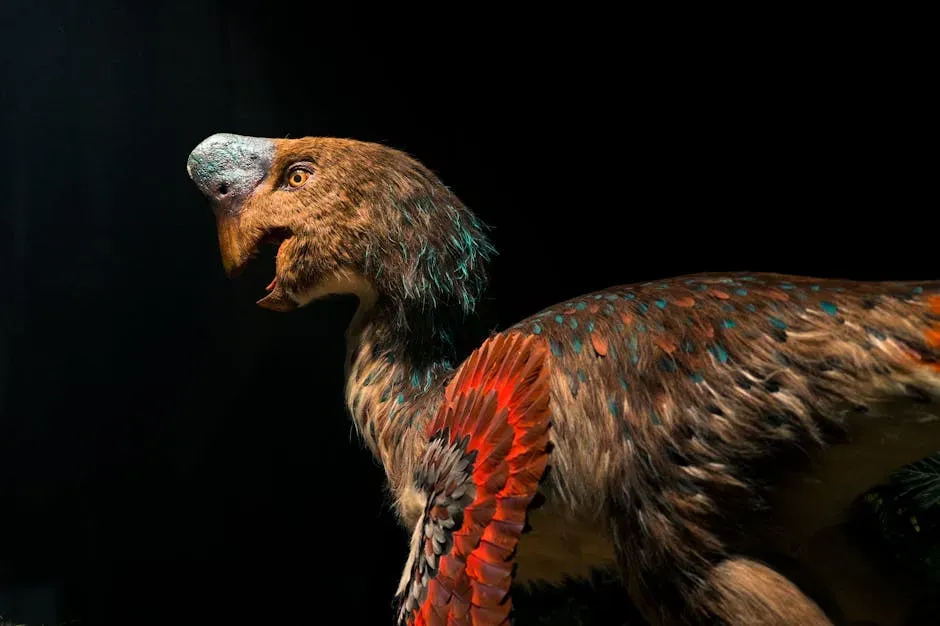
The old picture of dinosaurs as cold, slow, reptilian giants has been replaced by something richer, stranger, and far more wonderful. These were warm-blooded, feathered, socially active animals that brooded their eggs, cared for their young, slept with their heads tucked in, and moved through the world with speed and purpose. We can think of dinosaurs as more bird-like than reptile-like.
The discoveries of dinosaur and early bird species in the field have supported the idea that dinosaurs were the direct ancestors of birds. Many features and behaviours that characterise living birds were also found in their dinosaur ancestors. Every crow calling from a telephone wire, every heron standing motionless at the water’s edge, every sparrow defending its territory – these are all living echoes of behaviors that first appeared in the Mesozoic Era.
The next time you watch a bird tend its nest or tuck its head beneath a wing to sleep, you’re not just watching a bird. You’re watching the behavioral legacy of creatures that walked the Earth for over 150 million years. The dinosaurs didn’t disappear entirely. They just got smaller, grew wings, and learned to fly. What would you have guessed?