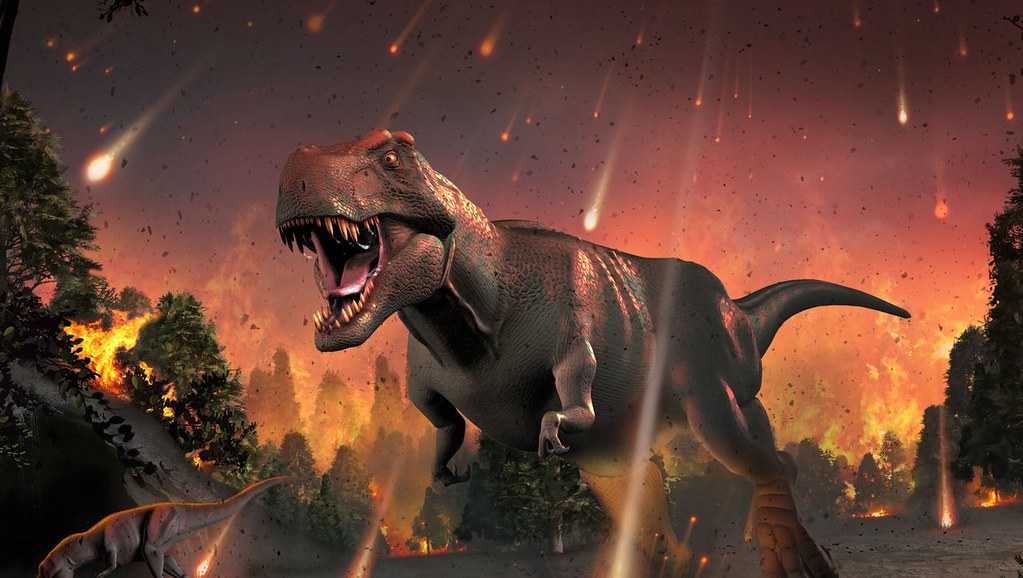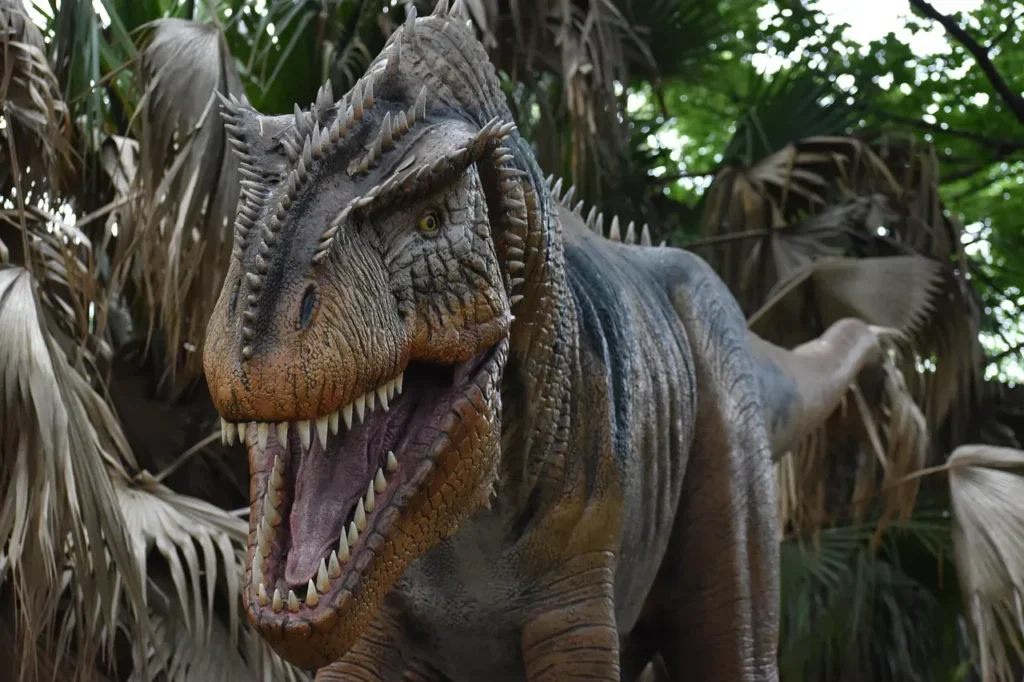
Close your eyes and picture a dinosaur. Chances are you imagined a giant scaly beast, something like a hulking lizard with teeth the size of steak knives. That image was everywhere in textbooks, museums, and blockbuster movies for generations. Honestly, it made sense at the time. Science seemed to back it up, and nobody was challenging it very loudly.
Then everything changed. Over the past few decades, paleontologists have been quietly pulling back the curtain on one of the most stunning reversals in the history of natural science. The ancient creatures we once imagined as cold, scaly, slow, and dull-witted were something far more complex, far more colorful, and far more bird-like than anyone dared to believe. Prepare to have your mental picture of dinosaurs completely rewritten. Let’s dive in.
The Moment Science Flipped the Script
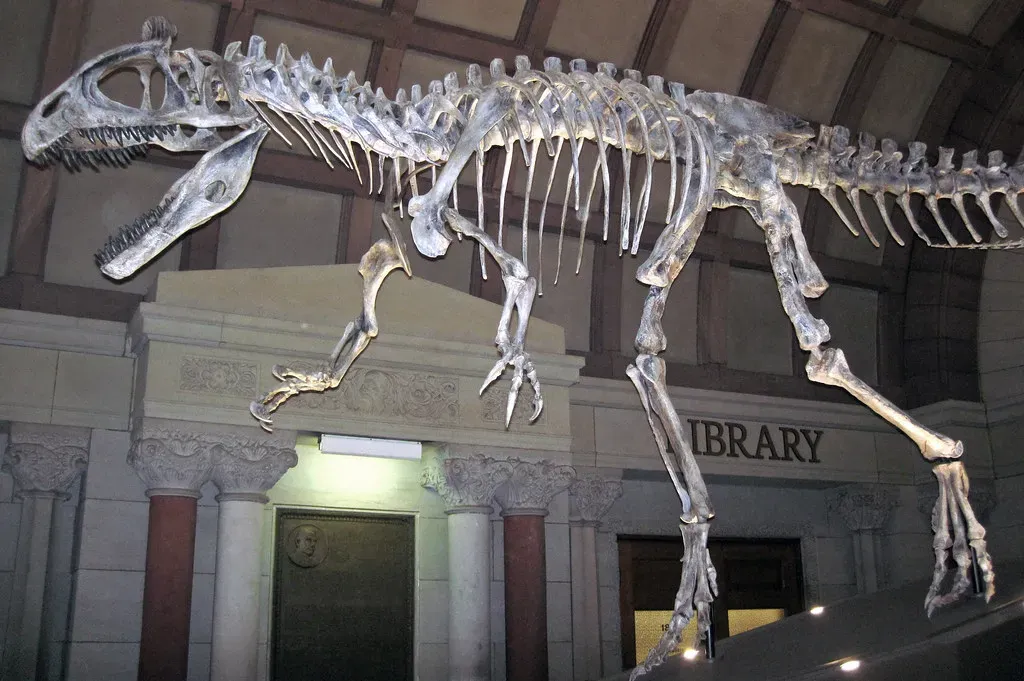
Since scientific research began on dinosaurs in the early 1800s, these creatures were generally believed to be closely related to modern reptiles such as lizards. The very word “dinosaur,” coined in 1842 by paleontologist Richard Owen, comes from the Greek for “terrible lizard.” That reptilian identity stuck around for over a century, almost as if no one dared question it.
That view began to shift during the so-called dinosaur renaissance in scientific research in the late 1960s, and by the mid-1990s, significant evidence had emerged that dinosaurs were much more closely related to birds, which descended directly from an earlier group of theropod dinosaurs. The revolution did not happen overnight, but when it came, it arrived with a vengeance. Science rarely admits it was this wrong about something so iconic, and yet here we are.
China’s Fossil Beds Changed the Entire Game
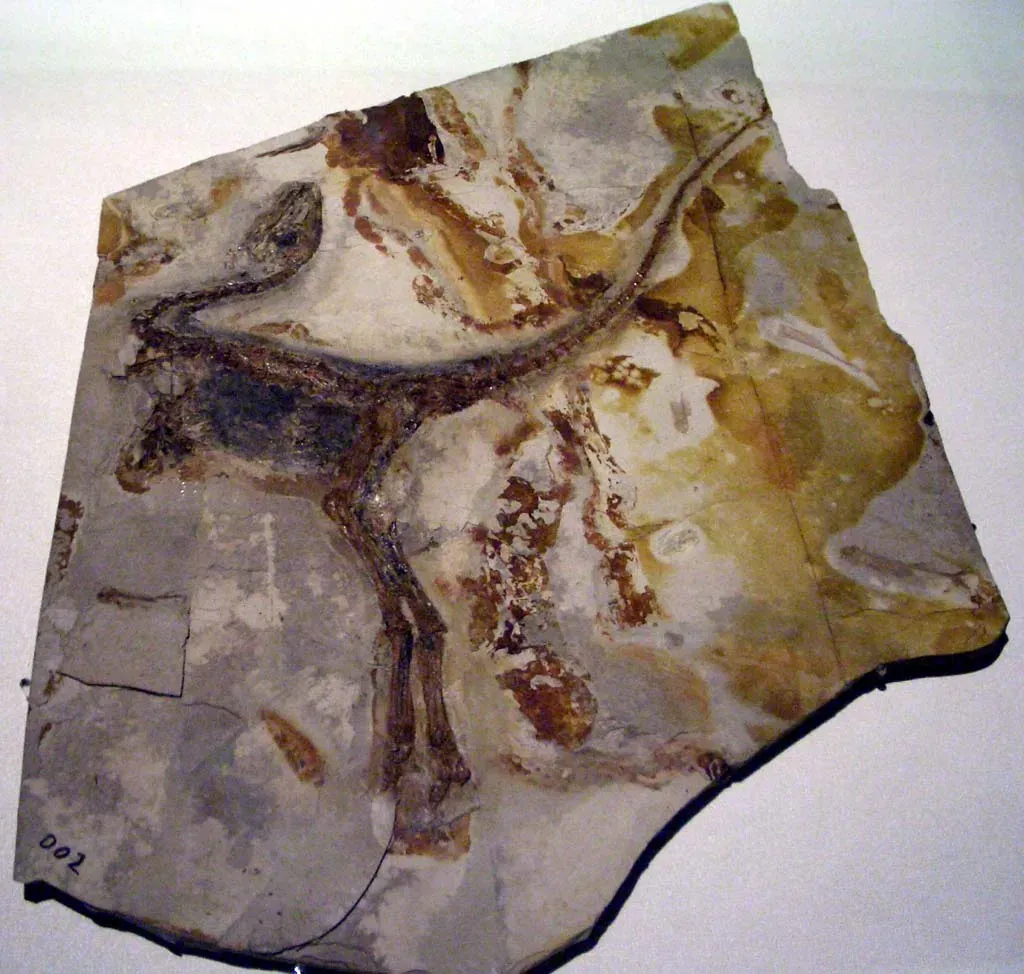
The most important discoveries at Liaoning have been a host of feathered dinosaur fossils, with a steady stream of new finds filling in the picture of the dinosaur-bird connection and adding more to theories of the evolutionary development of feathers and flight. Think of Liaoning province in northeastern China as the paleontological equivalent of striking gold, except the nuggets were fossilized feathers locked inside ancient stone.
It seems there was a great gap in the transition between dinosaurs and birds until 1996, when the first dinosaur fossil with preserved feathers was described: the Chinese Sinosauropteryx. This relative of Compsognathus was covered in fine filaments that were clearly not modern feathers, but something in between. The discovery was met with skepticism by some scientists who argued that the impressions could be dislodged collagen fibers, or remains of a reptilian frill. Skepticism is healthy in science, but in this case, the doubters were gradually proven wrong.
Not Just One Species, But Dozens
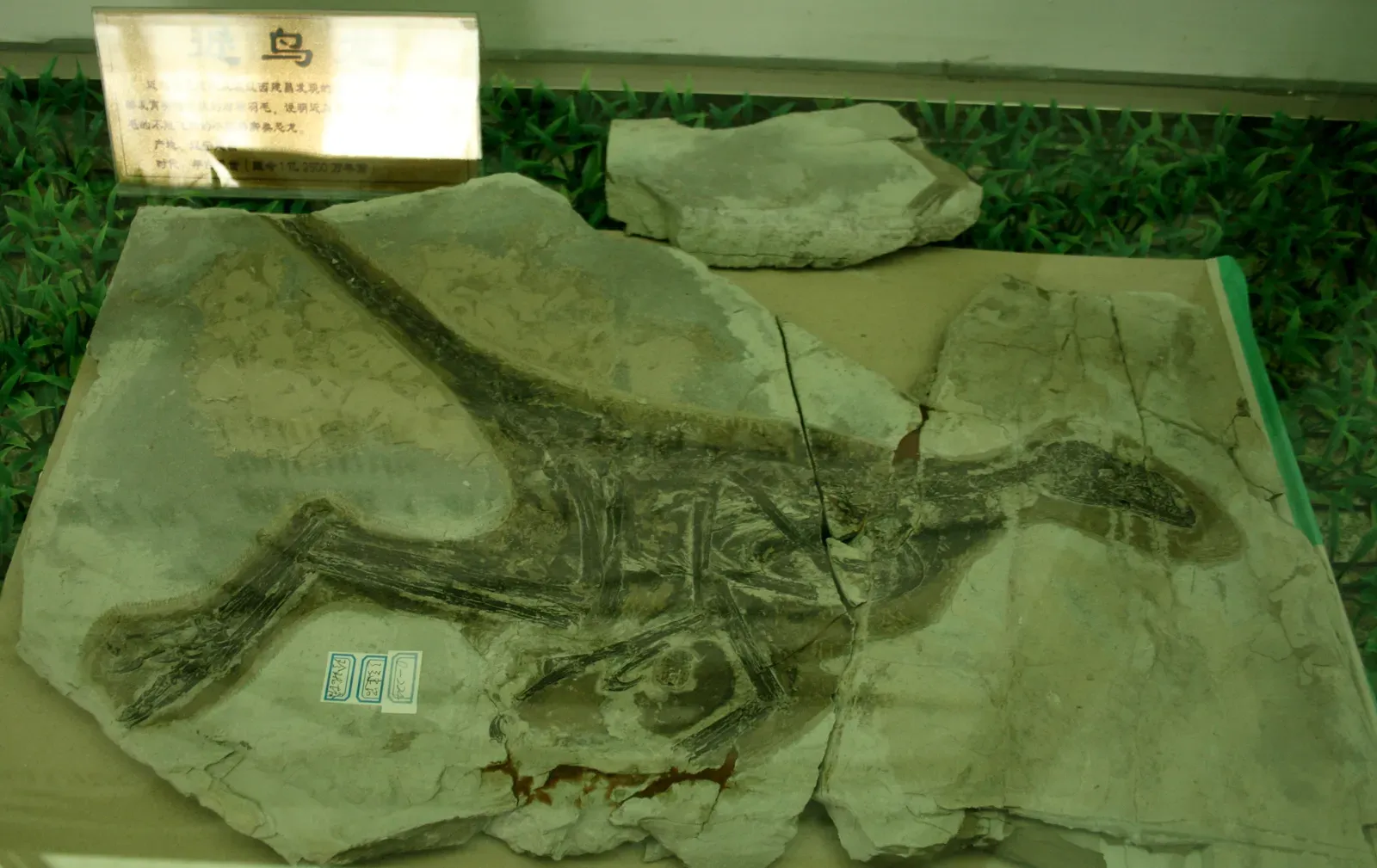
Uploaded by FunkMonk, CC BY-SA 2.0)
The realization that dinosaurs are closely related to birds raised the obvious possibility that some dinosaurs had feathers. Fossils of Archaeopteryx include well-preserved feathers, but it was not until the early 1990s that clearly non-avian dinosaur fossils were discovered with preserved feathers. Today there are more than a dozen genera of dinosaurs with fossil feathers, all of which are theropods. That number keeps climbing every year.
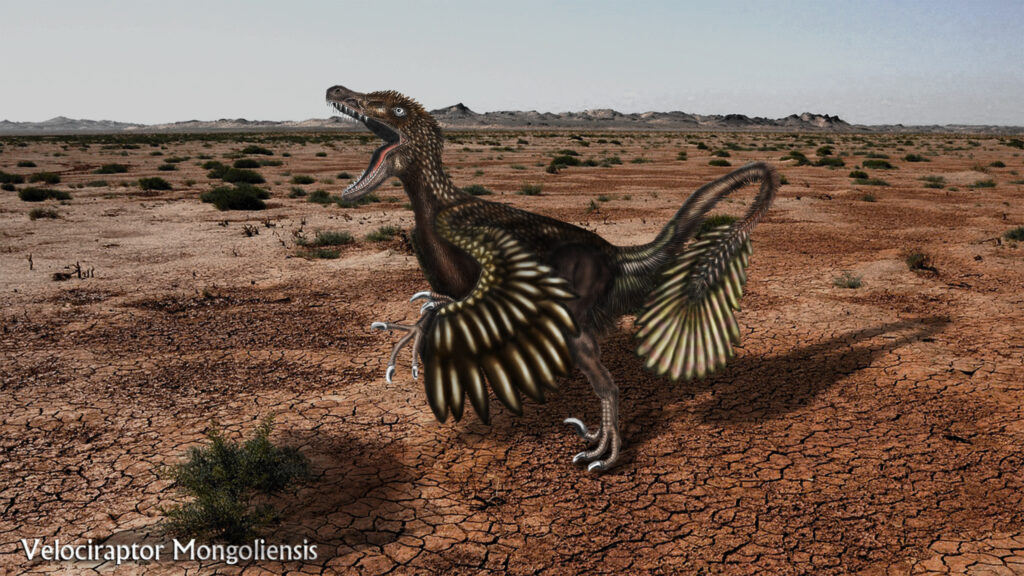
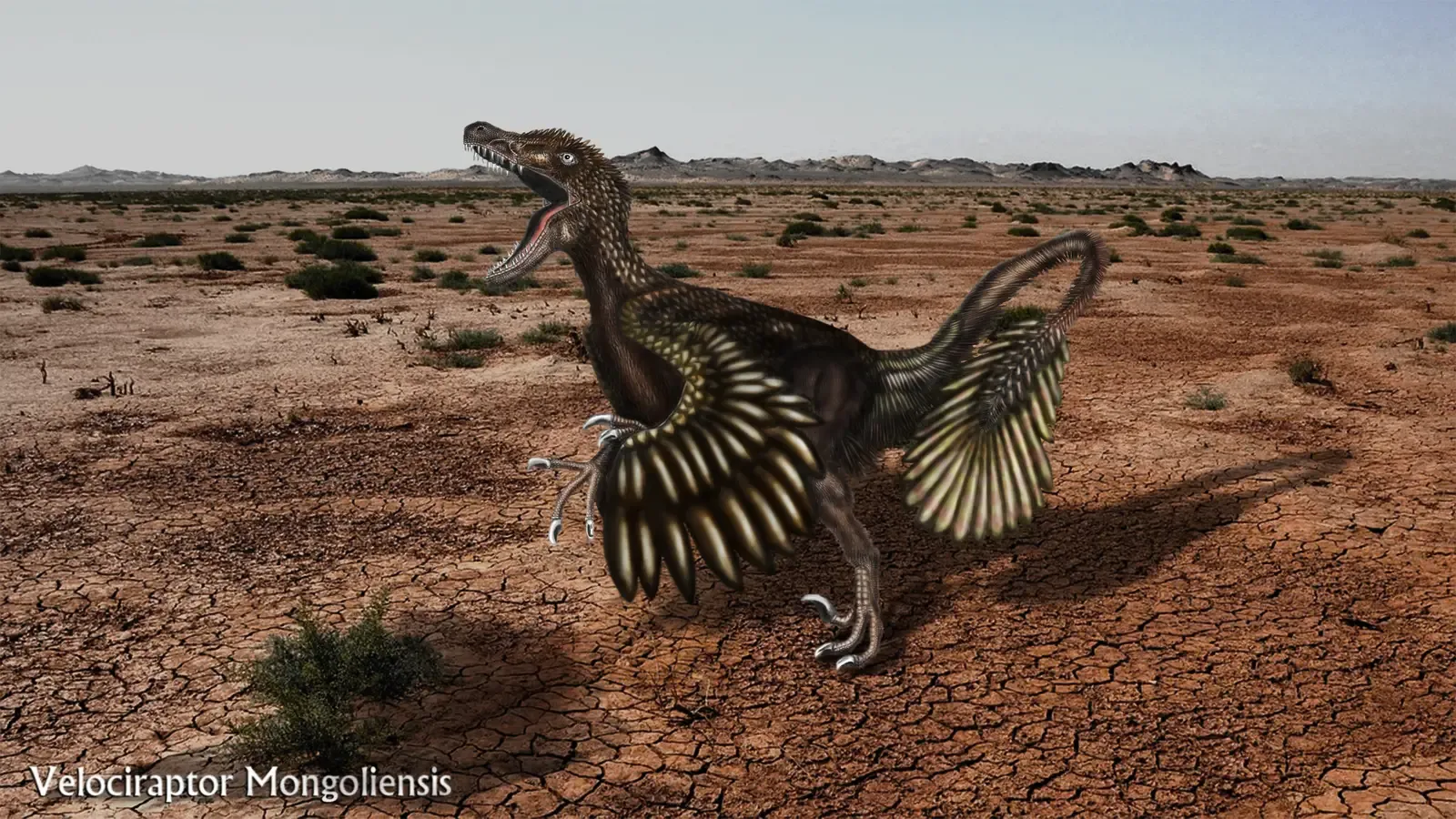
Some indirect pieces of evidence also allow scientists to determine conclusively the presence of feathers in some non-avian dinosaurs, like the quill knobs found in the famous Velociraptor and the pygostyles of Oviraptor and Deinocheirus. Quill knobs are bony bumps present in the arm bones of some birds like vultures that serve as attachment points for big feathers, and pygostyles are a collection of fused bones at the tip of the tails of birds which also provide support for feather attachment. So even the ferocious Velociraptor, that icon of cinematic terror, almost certainly sported feathers. Let that image sink in.
The Hidden Step Between Scales and Feathers
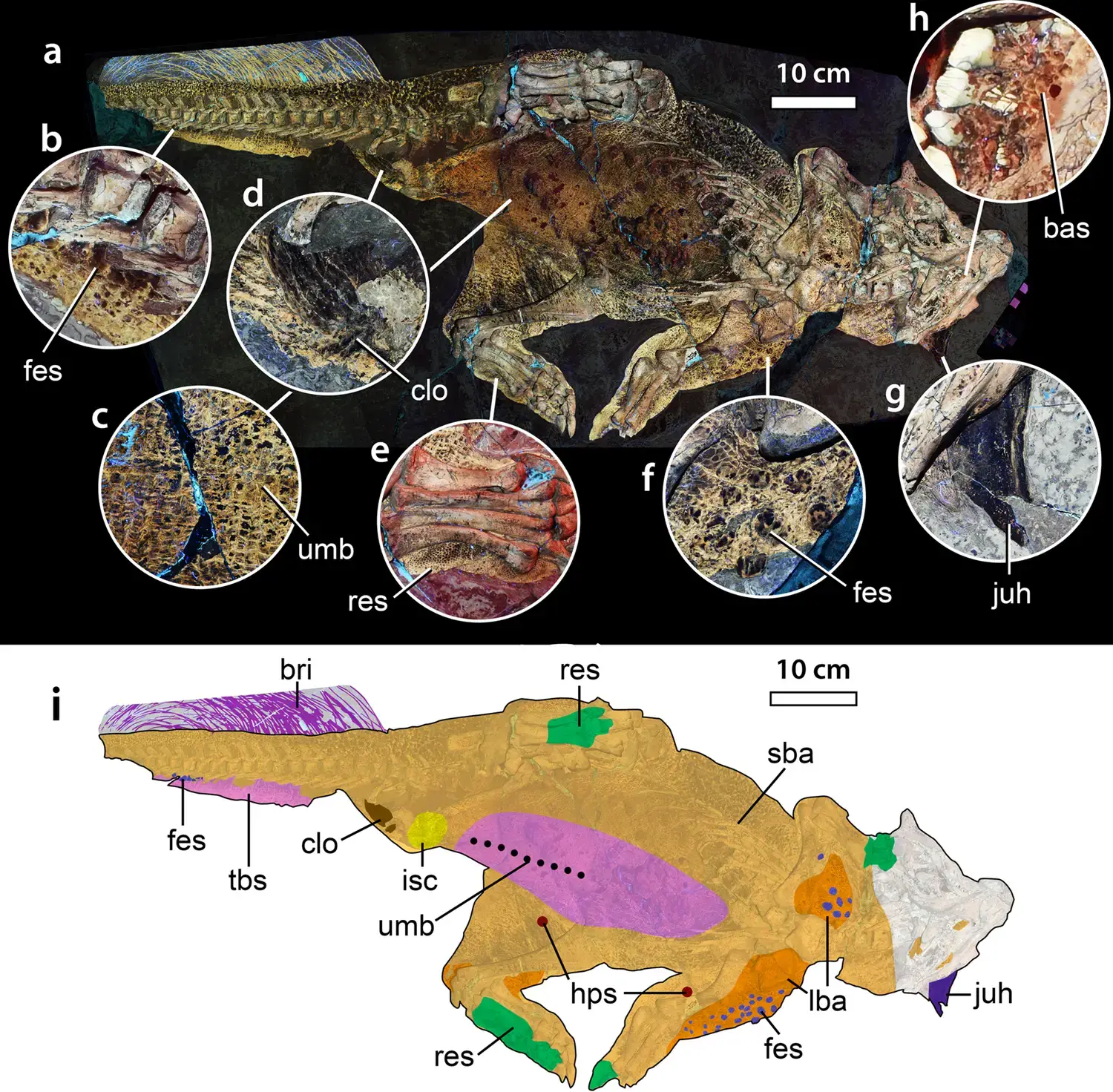
Here’s where things get really fascinating. You might assume it was a simple switch, scales in, feathers out. The actual story is far messier, and honestly, far more interesting. Palaeontologists at University College Cork in Ireland have discovered that some feathered dinosaurs had scaly skin like reptiles today, shedding new light on the evolutionary transition from scales to feathers. The researchers studied a new specimen of the feathered dinosaur Psittacosaurus from the early Cretaceous, a time when dinosaurs were evolving into birds. The study shows, for the first time, that Psittacosaurus had reptile-like skin in areas where it did not have feathers.
The discovery suggests that soft, bird-like skin initially developed only in feathered regions of the body, while the rest of the skin was still scaly, like in modern reptiles. This zoned development would have maintained essential skin functions, such as protection against abrasion, dehydration, and parasites. The first dinosaur to experiment with feathers could therefore survive and pass down the genes for feathers to its offspring. It is like upgrading only parts of a software system at a time. Nature does not do total overhauls in one go. It tests, adjusts, and builds on what works.
What Color Were Those Ancient Feathers?
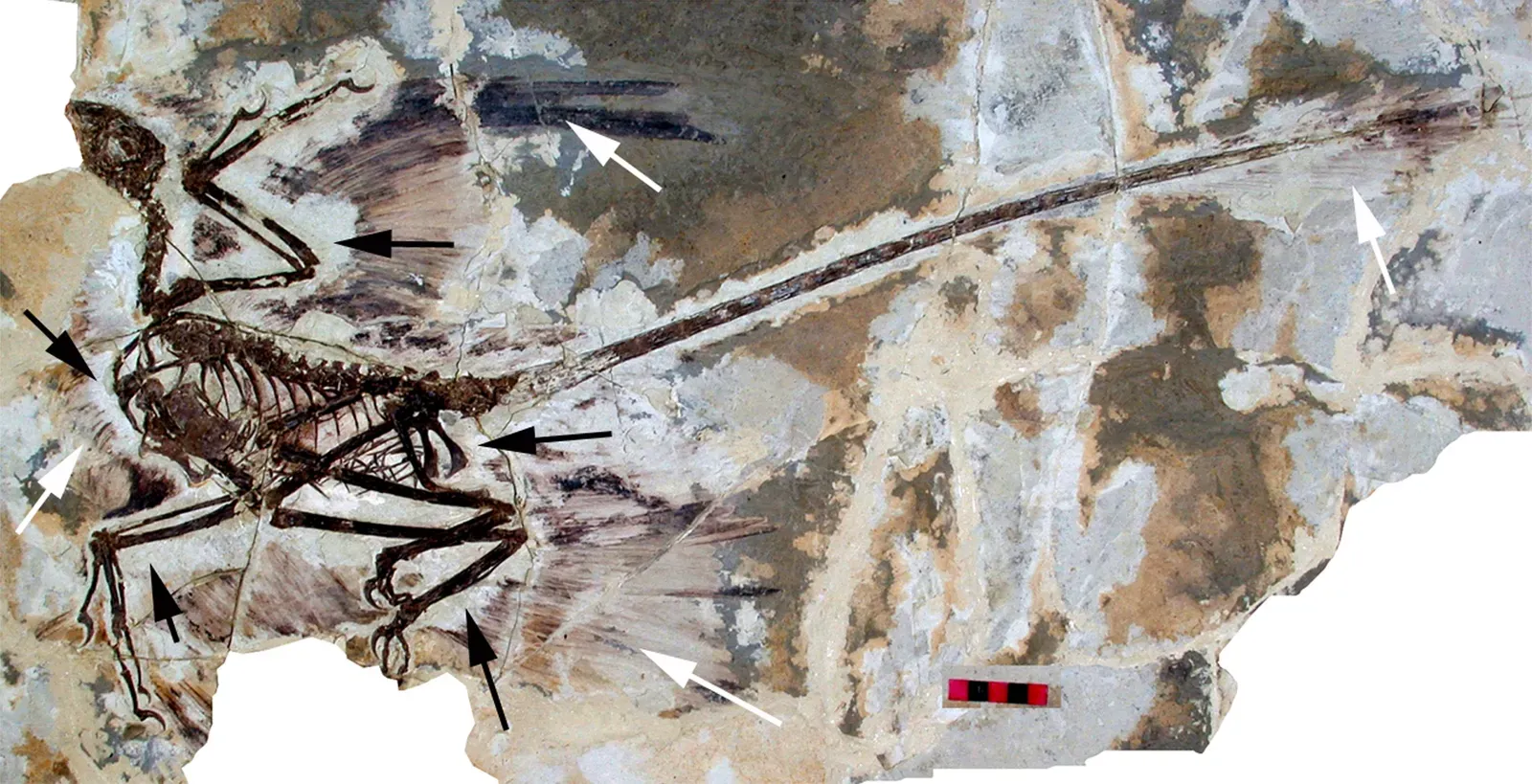
Melanosomes produce coloration in feathers, and as differently shaped melanosomes produce different colors, subsequent research on melanosomes preserved in feathered dinosaur specimens has led to reconstructions of the life appearance of several dinosaur species. This is genuinely mind-blowing. You can look at a 120-million-year-old fossil and, in some cases, reconstruct its original colors.
A team of American and Chinese researchers revealed the detailed feather pattern and color of Microraptor, a pigeon-sized, four-winged dinosaur that lived about 120 million years ago. A new specimen shows the dinosaur had a glossy iridescent sheen and that its tail was narrow and adorned with a pair of streamer feathers, suggesting the importance of display in the early evolution of feathers. Melanin-based colors are documented in multiple small theropods, including blacks, grays, browns, and rufous tones, while iridescence and structural color are confirmed in small, birdlike dinosaurs such as Microraptor and Caihong. Some of these ancient creatures were genuinely gorgeous. Picture a raven-black, iridescent dinosaur strutting through a Cretaceous forest, and you start to appreciate just how alive this ancient world truly was.
Feathers Were Not Invented for Flying
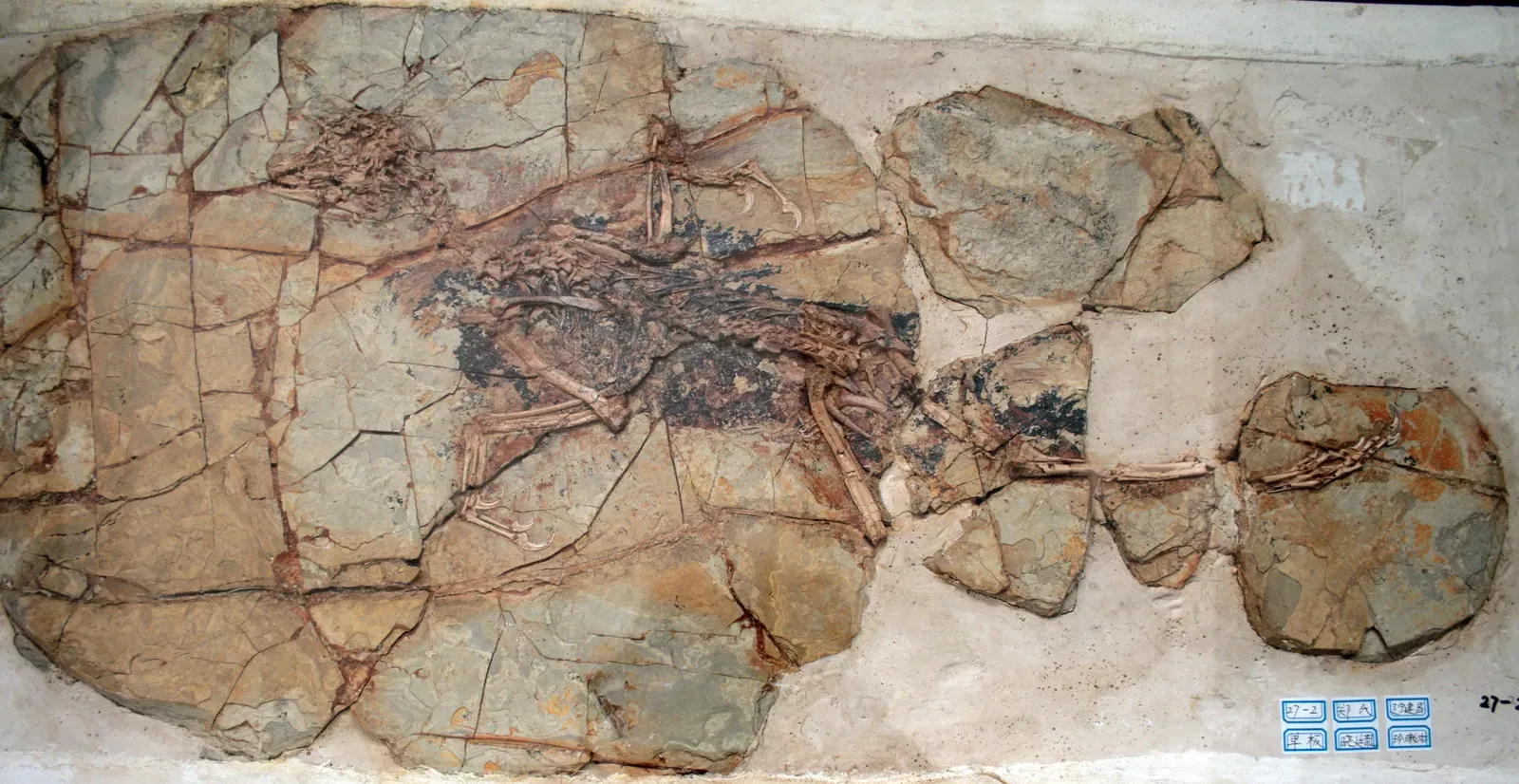
Uploaded by FunkMonk, CC BY-SA 2.0)
This might be the single most surprising piece of the puzzle. It has been suggested that feathers had originally functioned as thermal insulation, as it remains their function in the down feathers of infant birds prior to their eventual modification in birds into structures that support flight. In other words, feathers started their evolutionary journey not as wings, but as coats.
There is an increasing body of evidence that supports the display hypothesis, which states that early feathers were colored and increased reproductive success. Coloration could have provided the original adaptation of feathers, implying that all later functions of feathers, such as thermoregulation and flight, were co-opted. This hypothesis has been supported by the discovery of pigmented feathers in multiple species. One of the largest feathery dinosaurs yet found is Yutyrannus, a large carnivore that lived in prehistoric China about 125 million years ago, and its fossils underscore the possibility that other tyrannosaurs, such as T. rex itself, may have had fuzzy feathers too. So feathers were originally tools of warmth, attraction, and social signaling, not aerodynamics. Flight came much, much later.
Archaeopteryx and the Moment Flight Was Born
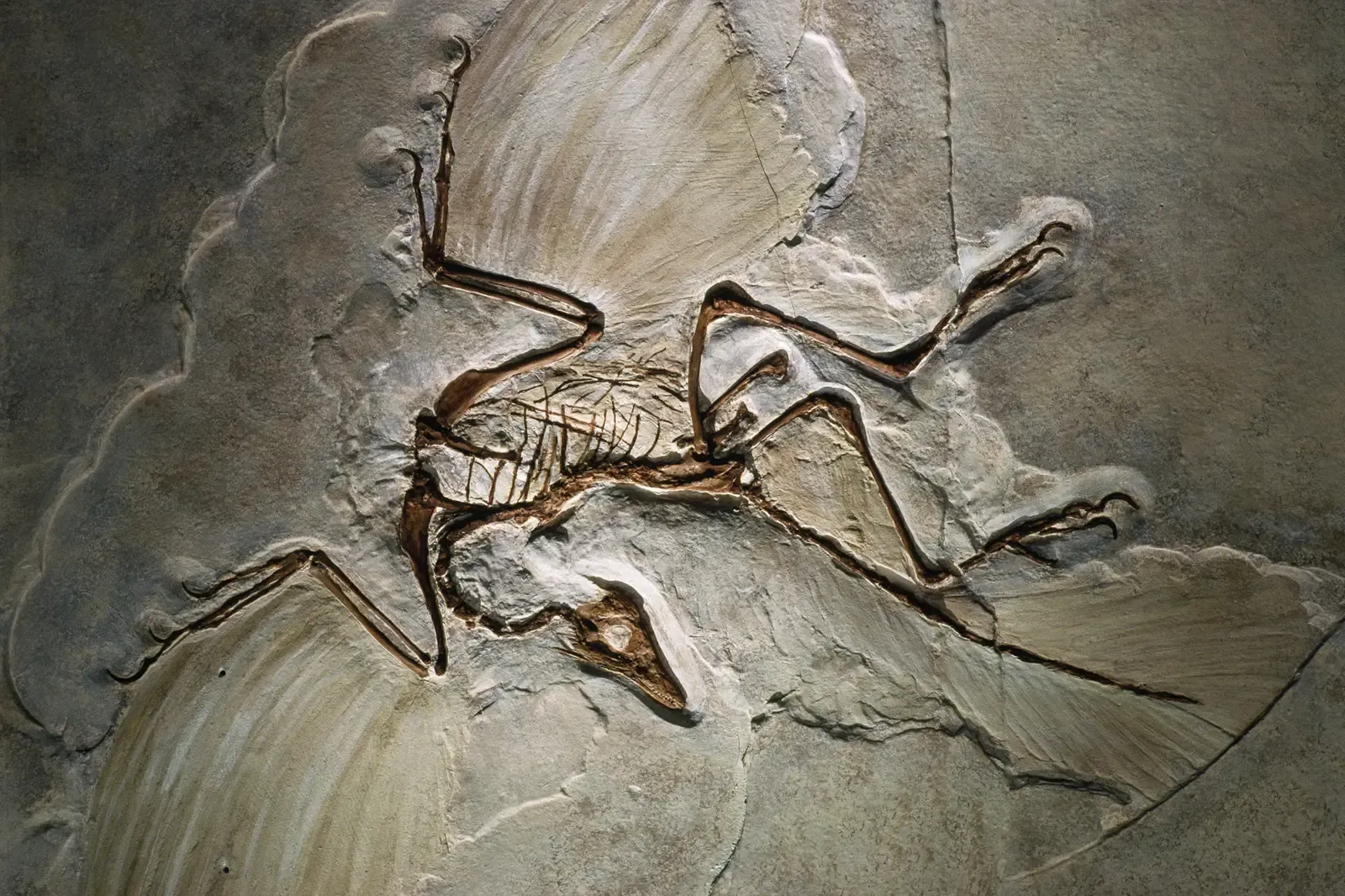
Archaeopteryx is not the first dinosaur to have feathers, or the first dinosaur to have wings. Scientists believe it is the earliest known dinosaur that was able to use its feathers to fly. That distinction matters enormously. It means a whole crowd of feathered dinosaurs existed before anyone in the lineage ever left the ground.
The “Chicago Archaeopteryx” specimen, one of the most well-preserved fossils of its kind, has offered a deeper look at the creature’s wings, skull, and limb structure. This fossil was carefully prepared using advanced techniques, revealing new features, including a unique set of wing feathers that support the idea that Archaeopteryx could use its wings for flight. These findings are reshaping our understanding of how flight evolved in early birds. Significantly, the Chicago Archaeopteryx is the first Archaeopteryx known to preserve tertials, which attach to the humerus and ulna and occupy the space between the wing and the body. These feathers are thought to contribute to a continuous aerodynamic surface during flight. Since such structures have never been observed in any non-avian feathered dinosaur, their presence in Archaeopteryx suggests they may represent a flight-related innovation, highlighting the evolutionary step toward powered flight. The Chicago specimen, now on display at the Field Museum, is nothing short of a scientific treasure.
Conclusion: The Dinosaur You Knew Never Really Existed
The great feathered revolution in paleontology is not slowing down. There is still a lot of work to do until the full origin of feathers can be pinned down, and until then, paleontologists will continue to search the world for the fossils that can finally settle this decades-old debate. Every new discovery seems to add another layer of color, warmth, and complexity to creatures we once dismissed as glorified lizards.
The story is not simply that dinosaurs had feathers. The deeper story is that everything from insulation to courtship, from camouflage to the first powered flight, played out across millions of years in creatures we barely understand. They were not just overgrown lizards but complex, potentially colorful creatures with advanced behavioral capabilities. Next time you watch a bird hop across your lawn, remember what you are actually looking at: a living dinosaur, walking proof that some of the most astonishing stories in Earth’s history are still being written.
So, be honest with yourself. Did you ever picture Velociraptor with feathers? What would that change for you? Drop your thoughts in the comments below.