When you picture a T. rex thundering across a fern-covered landscape or a long-necked Brachiosaurus stretching toward the treetops, it’s easy to think of those creatures as ancient history. Something distant, almost mythological. Yet the true scale of just how long they actually ruled this planet is something most people have never fully reckoned with.
We humans tend to place ourselves at the center of Earth’s story. Honestly, that’s a deeply understandable bias. But the numbers? The numbers are humbling. The gap between our brief existence and the dinosaurs’ centuries-deep dynasty is so staggering, it should genuinely shift how you see your place in time. So let’s dive in.
The Sheer Scale of the Dinosaur Era
Let’s be real about something upfront: the numbers here are almost impossible to genuinely absorb. Dinosaurs roamed the Earth for an impressive span of about 165 to 180 million years. That is not a typo. One hundred and sixty-five million years at minimum. To put it in perspective, if you stacked seconds to represent that entire reign, the tower would reach far past the moon.
Non-bird dinosaurs lived between about 245 and 66 million years ago, in a time known as the Mesozoic Era. The “Age of Dinosaurs” included three consecutive geologic time periods: the Triassic, Jurassic, and Cretaceous Periods. Each of those periods alone lasted longer than anything human civilization has ever managed to conceptualize, let alone achieve.
When Humans Actually Showed Up
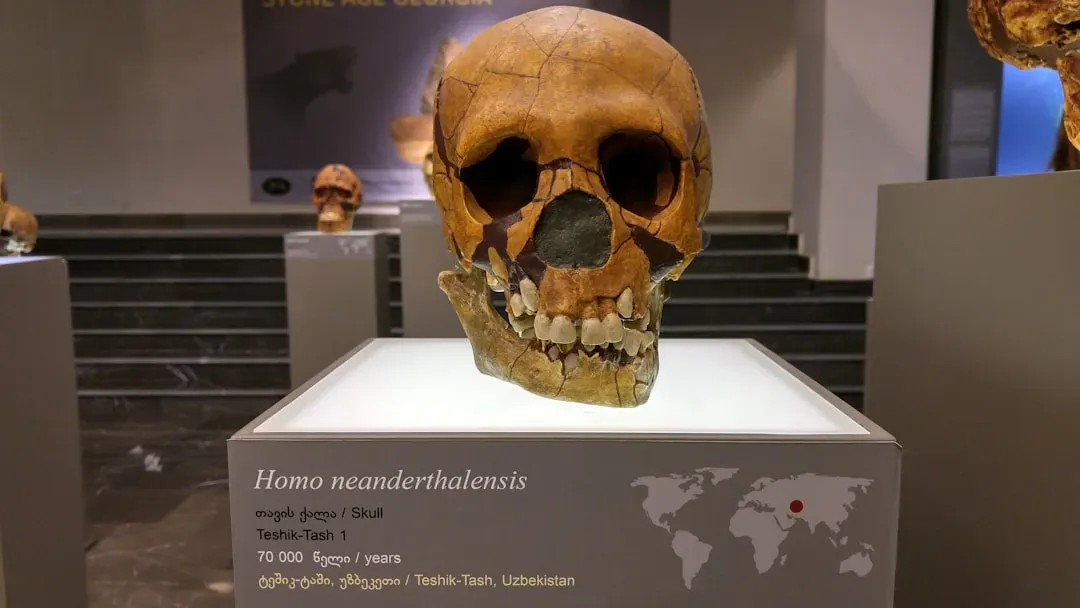
We humans are Homo sapiens, a culture-bearing, upright-walking species that lives on the ground and very likely first evolved in Africa about 315,000 years ago. Three hundred thousand years sounds ancient. Until you compare it to what came before us. Then it sounds like yesterday.
Dinosaurs lived approximately 164.8 million years longer than modern humans. Think about that for just a moment. Every empire you’ve ever read about, every war, every civilization from ancient Mesopotamia to the Roman Empire to the modern era, fits inside a pinprick of cosmic time compared to the dinosaurs’ run. Homo sapiens’ existence represents a minuscule fraction of dinosaur existence. It’s genuinely dizzying.
The World Dinosaurs Actually Lived In
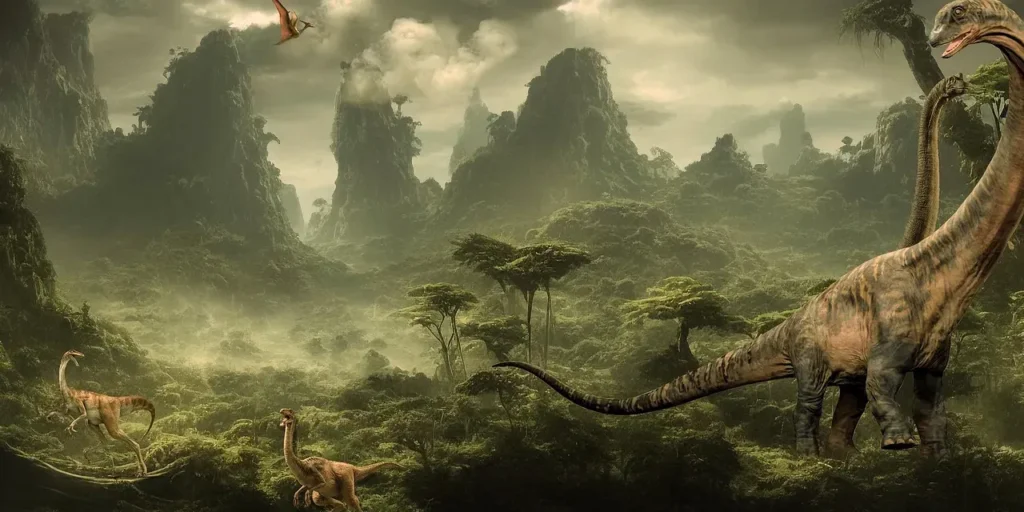
You might imagine dinosaurs wandering through something like today’s tropical forests. Close, but not quite. The Earth during the Mesozoic Era was significantly different from today. The climate was generally warmer and more humid, with higher sea levels. The continents were arranged differently, with the supercontinent Pangaea gradually breaking apart. Picture a world where your familiar continents simply did not exist in any recognizable form.
All continents during the Triassic Period were part of a single land mass called Pangaea. This meant that differences between animals or plants found in different areas were minor. As the land fractured and drifted, dinosaurs evolved independently in different parts of the world, becoming more diverse. The Earth itself was essentially a living laboratory, reshaping itself beneath their feet across millions of years.
Not All Dinosaurs Were Contemporaries
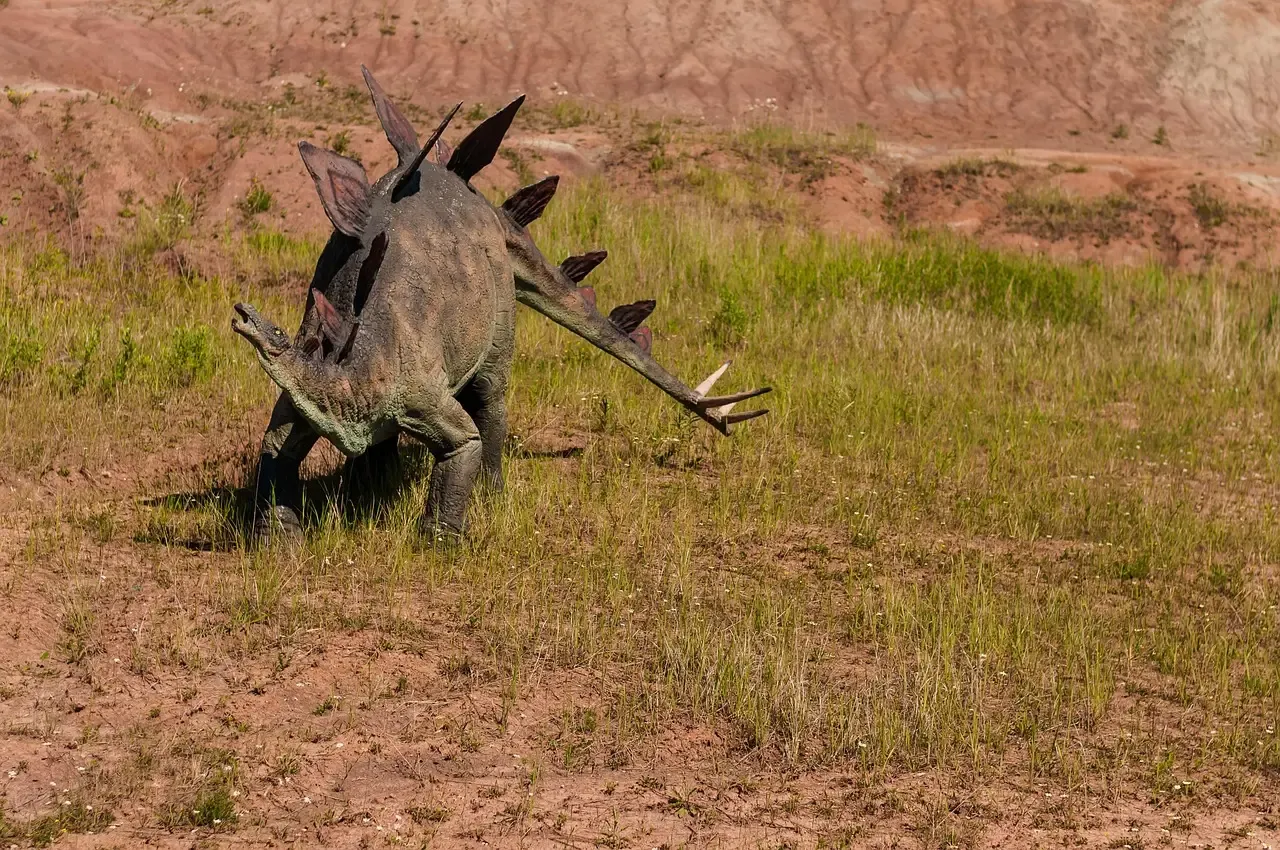
Here’s something that genuinely surprises most people. You probably picture a Stegosaurus and a T. rex coexisting in the same jungle. They didn’t. Not even close. Contrary to what many people think, not all dinosaurs lived during the same geological period. Stegosaurus lived during the Late Jurassic Period, about 150 million years ago. Tyrannosaurus rex lived during the Late Cretaceous Period, about 72 million years ago. Stegosaurus was extinct for 66 million years before Tyrannosaurus walked on Earth.
Think about that gap alone. The time between Stegosaurus and T. rex is longer than the gap between T. rex and you, sitting here reading this article. Their captivating tale begins in the Triassic period, reaches its peak during the well-known Jurassic period, and comes to a dramatic end in the late Cretaceous period. Each chapter of the dinosaur story was a world unto itself, separated by time frames that dwarf the entire existence of our species.
The Catastrophic End and What It Unleashed
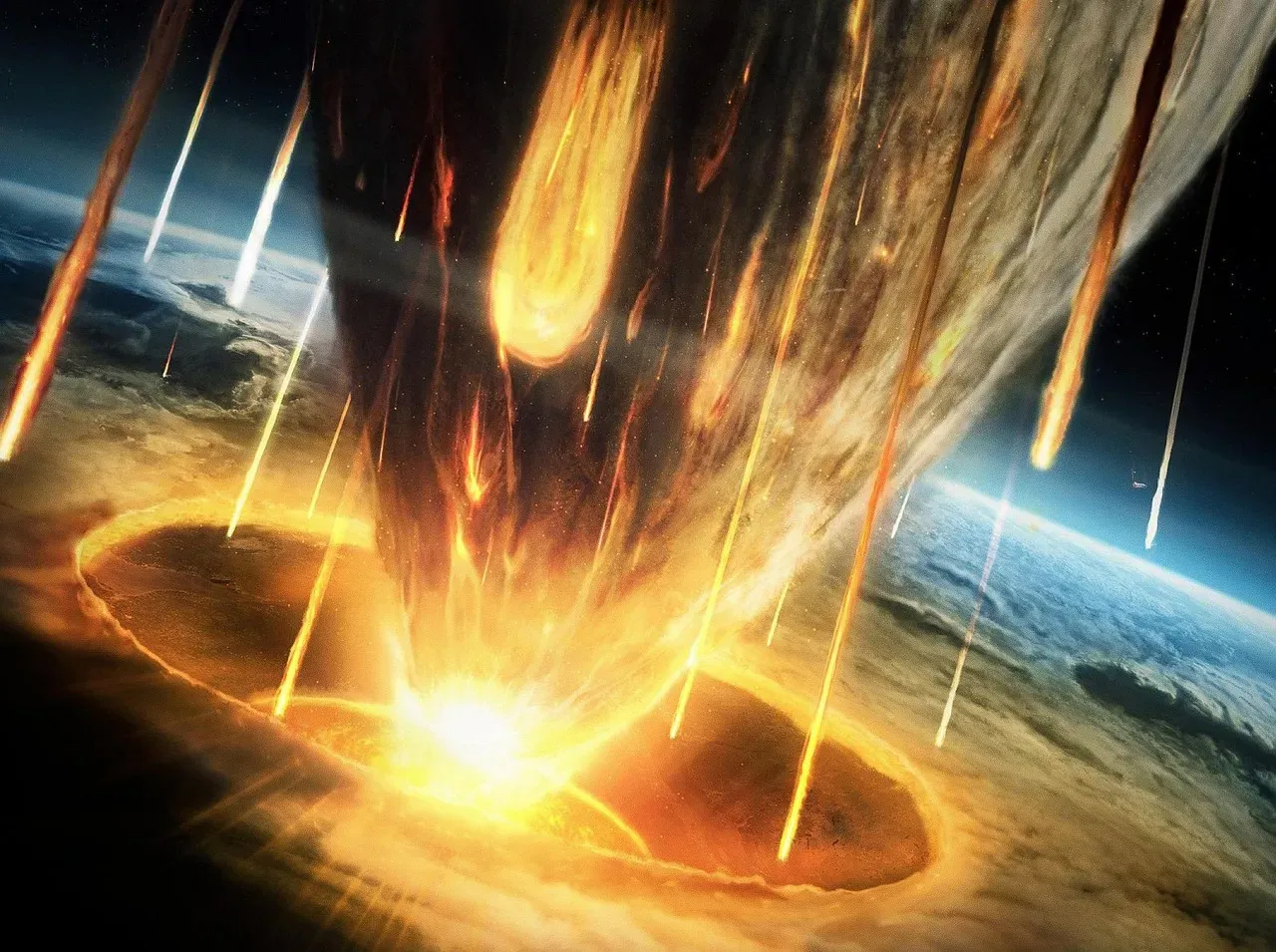
It didn’t end quietly. The mass extinction, known as the Cretaceous-Paleogene (K-Pg) extinction event, is believed to have been triggered by a massive asteroid impact in the Yucatán Peninsula near Chicxulub, Mexico. The asteroid struck Earth at 64,000 kilometers per hour, creating a crater more than 185 kilometers across and instantly vaporizing thousands of cubic miles of rock. The skies would have darkened. Plants could not photosynthesize. The food chain collapsed from the bottom up.
The impact caused catastrophic environmental changes, leading to the extinction of approximately 75 to 80 percent of all life on Earth, including most dinosaur species. It was the worst day in the history of life on land. Yet, strangely, that apocalyptic moment also set the stage for everything that came after, including you. The catastrophic event cleared the way for the rise of mammals, including the primates that would eventually give rise to humans. Had the dinosaurs not gone extinct, it is unlikely that humans would have ever evolved to occupy their current ecological niche.
The Mammal Explosion That Followed
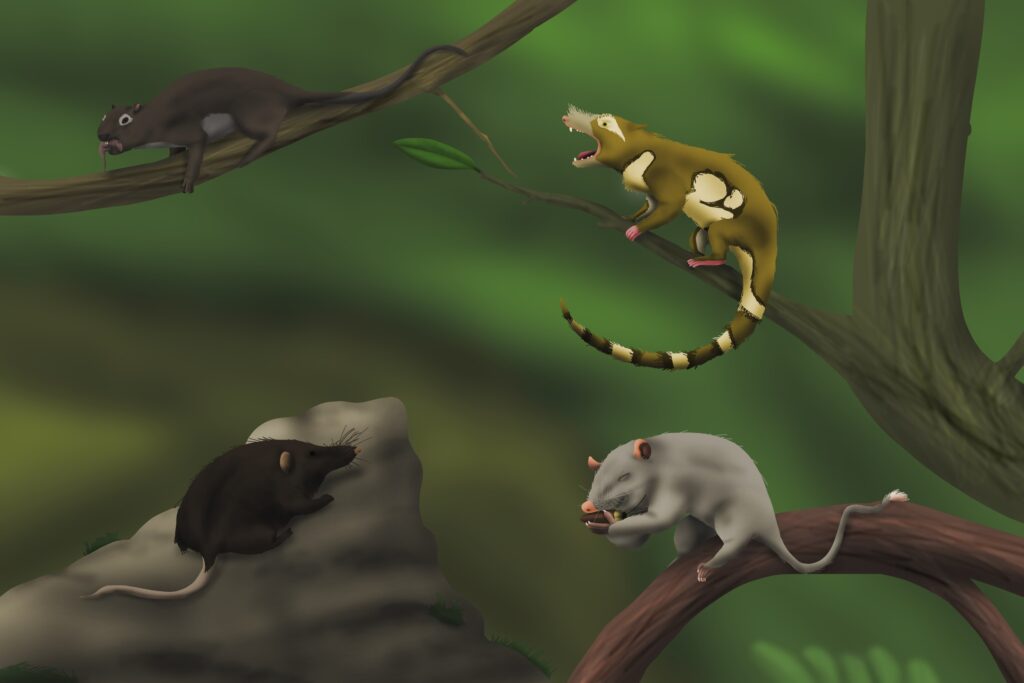
With the dinosaurs gone, life did not simply carry on as before. A revolution happened. Mammals evolved a greater variety of forms in the first few million years after the dinosaurs went extinct than in the previous 160 million years of mammal evolution under the rule of dinosaurs. That is a stunning acceleration. Millions of years of gradual change compressed into a biological sprint.
After barely surviving the cataclysm, mammals rapidly inflated their bodies from rat-sized to cow-sized, diversified their diets and behaviors, and eventually expanded their brains, ringing in a new Age of Mammals. The most fundamental change was the emergence of diurnal mammals active during the daytime, after they had been confined to more furtive nocturnal foraging by the dominance of the dinosaurs. In a sense, we owe our entire daylight existence to the vanishing of the ancient giants.
Dinosaurs Are Not Entirely Gone
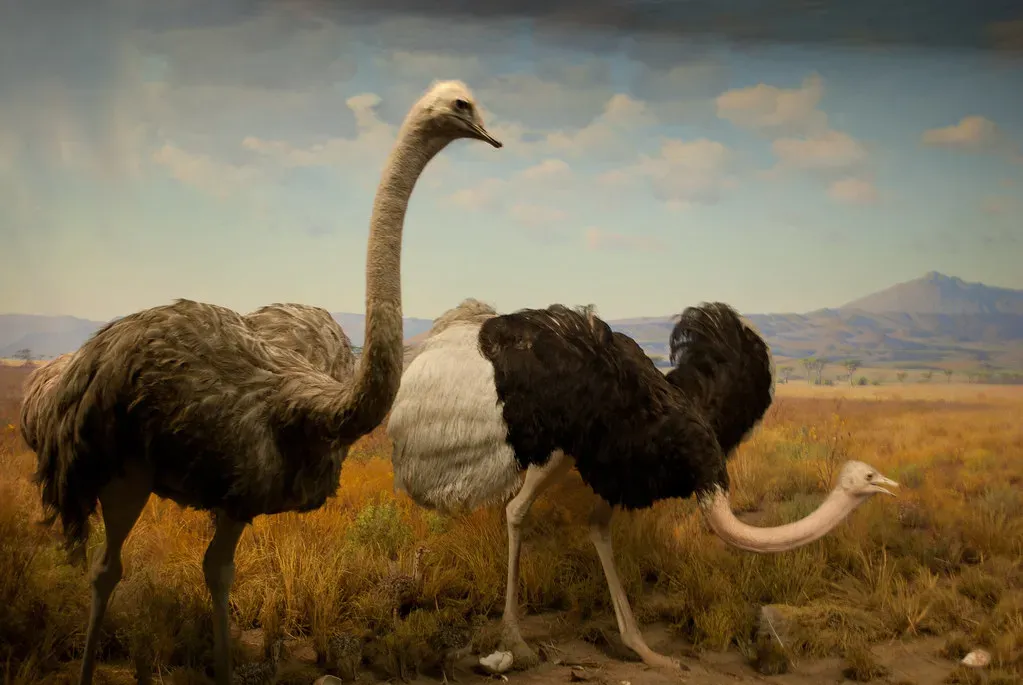
Here is the part that makes people do a double-take. Technically, not all dinosaurs vanished. While most dinosaurs went extinct 66 million years ago, their legacy continues through their avian descendants: birds. Birds are considered a living branch of the dinosaur lineage, having evolved from small theropod dinosaurs. So the next time a pigeon hops toward your sandwich, know that you are technically being approached by a dinosaur.
Millions of years later, humans do live together in domestic bliss with dinosaurs. We just call them chickens and parakeets. It’s a wonderful, slightly absurd truth. The same lineage that once produced the T. rex now produces the backyard chicken. Some scientists who study dinosaurs now think that birds are direct descendants of one line of carnivorous dinosaurs, and some consider that they in fact represent modern living dinosaurs. The story, in other words, never entirely ended.
Conclusion
You don’t have to be a paleontologist to feel the weight of this story. The dinosaurs walked, hunted, and thrived across this planet for a span of time so vast it makes all of recorded human history look like a brief afternoon. We arrived late. Very, very late. After the dinosaurs died out, nearly 65 million years passed before people appeared on Earth. And we have only been here, in our modern form, for roughly 300,000 years.
If Earth’s entire history were compressed into a single year, you would not appear until the last few seconds of December 31st. That thought should not make you feel small. If anything, it should make you feel something more interesting, a sense of wonder about the extraordinary chain of events, extinctions, collisions, and evolutionary leaps that had to happen perfectly in sequence just for you to exist. The dinosaurs had their time. An extraordinarily long time. Now it’s ours. The question is: what will we do with it?