Have you ever wondered what pulls you toward the unfamiliar? That restless feeling when life gets too predictable, the curiosity that makes you want to poke around corners or click on mysterious links online. It’s not random. Deep within your brain, ancient wiring whispers the same thing it told your ancestors thousands of years ago: go explore, seek novelty, discover what lies beyond the horizon.
Throughout human history, some individuals have always ventured further than others. While some stayed close to familiar ground, others wandered into unknown territories, crossed dangerous rivers, climbed treacherous mountains. That same urge lives in you today, though it might express itself differently. Maybe you switch up your commute route, try exotic restaurants, or lose yourself in documentaries about distant planets. Let’s dive into what makes exploration tick in the human mind.
The Evolutionary Blueprint Hidden in Your DNA

Your ancestors lived in constantly changing environments where they had to adapt to new challenges and navigate unfamiliar territories to survive, embedding this need for adaptation deeply in your DNA. Think about it this way: those who stayed put when resources dried up probably didn’t leave many descendants. The ones who explored, who took calculated risks, who ventured into new valleys seeking better hunting grounds? They thrived.
Curiosity is a fundamental human trait that drives exploration and learning about surroundings, enabling humans to evolve and adapt as a species. You carry those explorers’ genes. Curiosity can be considered an evolutionary adaptation based on an organism’s ability to learn. It’s hard to say for sure, but your urge to Google random facts at midnight might be the same mechanism that helped your great-great-great ancestors figure out which plants were edible.
How Your Brain Rewards the Unknown

Novel stimuli excite dopamine neurons and activate brain regions receiving dopaminergic input. Dopamine isn’t just about pleasure. It’s about motivation, anticipation, and the thrill of possibility. Dopamine plays a crucial role in shaping Explorer personalities, linked to novelty-seeking behavior and reward processing, with Explorers often having higher dopamine activity contributing to their adventurous nature.
When you encounter something new, your brain essentially lights up like a Christmas tree. Dopamine enhances novelty-driven value, and excessive novelty seeking might be caused by increases in dopamine. This chemical reward system explains why some people can’t resist clicking on “just one more” video or why traveling feels so intoxicating. Your brain literally chemically rewards you for exploring.
Why Some People Crave Adventure More Than Others
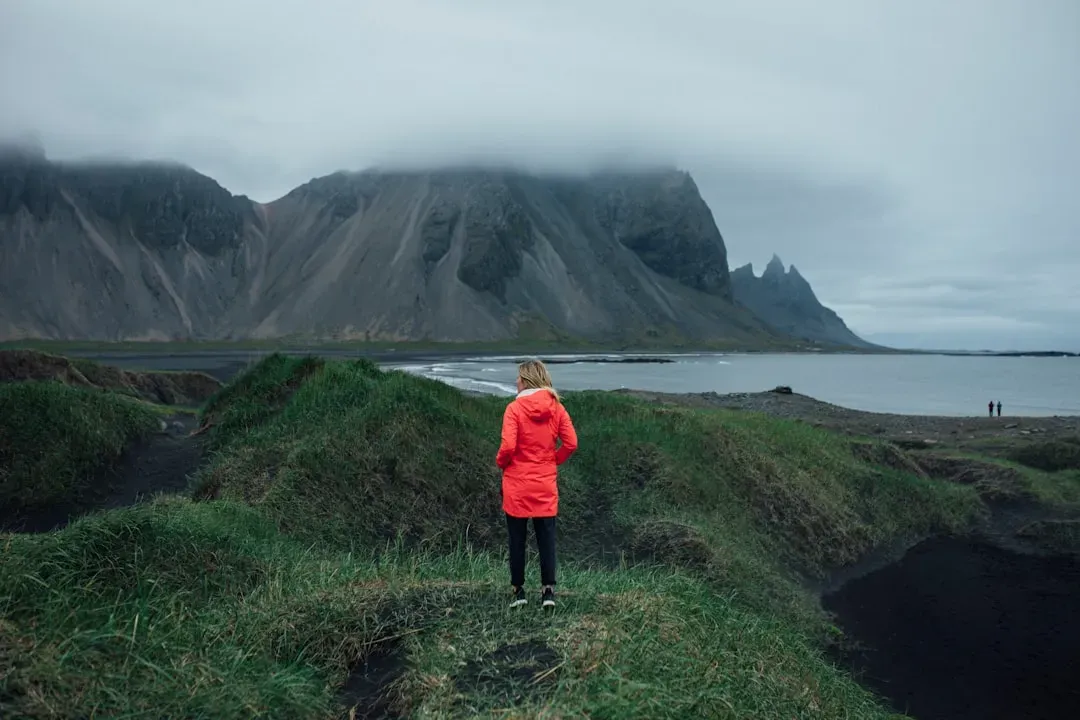
Explorers tend to be self-reliant, quick-thinking personality types who don’t mind handling uncertain situations and live for those types of situations, with their flexibility helping them adapt to the moment. If that sounds familiar, you might be wired differently than your friend who orders the same coffee every single day.
Core Explorer traits include authenticity, independence, freedom-loving nature, adventure-seeking, curiosity, and risk-taking. Honestly, these traits aren’t better or worse than others. They’re just different wiring. Roughly half of Explorers say they take risks simply for the fun of it. For some, the unknown feels threatening. For others, it feels like home.
The Ecology of Curiosity in Your Daily Life

Here’s something fascinating that recent research uncovered. A study published in Evolutionary Behavioral Sciences argues that curiosity evolves and fluctuates with environment. Curiosity may act as a cognitive thermostat, turning up when conditions are stable and safe, turning down when uncertainty or scarcity makes exploration costly.
Higher current socioeconomic status predicted higher curiosity across all dimensions, with people who felt more financially secure reporting being more curious and more willing to take intellectual or social risks. This doesn’t mean wealthy people are inherently more curious. It means when you’re stressed about rent or survival, your brain conserves energy. When people feel secure, they look outward, explore, and innovate, but when they feel threatened, they conserve and protect, with the freedom to explore beginning with feeling safe.
The Psychological Mechanisms Driving Your Wanderlust

Curiosity acts to dispel uncertainty by exhibiting curious and exploratory behavior, allowing one to gain knowledge of the unfamiliar and reduce states of uncertainty or unpleasantness. You’re not just randomly exploring. Your brain has a purpose: reducing the discomfort of not knowing.
Explorers are intellectual, methodical, and supportive, naturally curious and often diving deeply into their interests, understanding complicated concepts with relative ease and communicating well. Some people explore physical spaces. Others explore ideas, diving deep into obscure topics or complex theories. Both are expressions of the same fundamental drive. The format changes, the mechanism stays the same.
When Exploration Becomes Your Personality Type

An Explorer character seeks to uncover the world around them, doesn’t wait for an inciting incident to drive them to action, and is ready, set, go all the time. If this describes you, congratulations. You probably drive your more cautious friends slightly crazy with your spontaneous plans.
Roughly three-quarters of all Explorers report they find it easy to enjoy the present moment. Explorers are creative individuals, spontaneous in their response to life, able to think on their feet, and prefer to explore, experience, and try things themselves rather than be guided by speculation. There’s something liberating about that approach to existence, though it comes with its own challenges when life demands planning and structure.
The Role of Uncertainty in Shaping Exploration

Let’s be real about something. Exploration isn’t always comfortable. Curiosity develops from experiences that create a sensation of uncertainty or perceived unpleasantness, with curiosity acting to dispel this uncertainty. That uncomfortable feeling when you don’t understand something? That’s the spark that ignites exploration.
The drive to learn and explore is built into the human species, but its expression depends on the ecology inhabited. Your environment matters enormously. You might have a powerful exploratory drive, but if you’re surrounded by circumstances that punish risk-taking or novelty, that drive gets suppressed. It doesn’t disappear, though. It just waits for conditions to improve.
The Balance Between Exploration and Exploitation

Explorers can change their minds with minimal regret or second-guessing, dislike monotony, and may stray from obligations to try new things, sometimes leaving business unfinished because they’ve moved on to something fresh. Sound problematic? Maybe. Sound familiar? Possibly.
Explorers aren’t prone to making detailed plans, especially long-term ones, with their adaptable, explorative nature meaning things tend to turn out differently than expected. There’s wisdom in knowing when to explore versus when to exploit what you already know. Life requires both strategies. Too much exploration means you never master anything. Too much exploitation means you stagnate. You need to find your own balance.
Rekindling Your Exploratory Spirit in Modern Times

Curiosity can help keep up with rapid change, and when people experiment and stay open to uncertainty, they’re better equipped to handle whatever comes their way, with research showing curiosity helps with learning, problem-solving, connecting with others, and adapting to change. The ancient drive hasn’t disappeared from modern humans. It’s just expressing itself in new contexts.
Curiosity has always been a powerful driver of scientific discovery, with simple curious observations leading to incredible advancements. Maybe you can’t trek across continents anymore, but you can explore ideas, learn new skills, travel when possible, or simply take different routes through your neighborhood. Creating at least one moment of curiosity in your day, no matter how small, such as experimenting with a new recipe or taking a different route to work, can add up to a richer life.
What This Ancient Drive Means for Your Life Today

The evolutionary psychology of travel sheds light on fundamental human nature, with curiosity, the need for adventure, and benefits for mental health all driving forces behind the desire to explore and discover. Your exploratory urges aren’t childish or irresponsible. They’re deeply human, connecting you to every generation that came before.
The desire for exploration is deeply rooted in evolutionary psychology, with need for novelty, thrill of uncertainty, and curiosity playing roles in the innate drive to seek the unknown, with embracing exploration leading to personal growth and self-discovery. Whether you express this through physical travel, intellectual pursuits, creative projects, or simply staying curious about the people around you, you’re honoring something essential about what makes us human. The question isn’t whether you possess this ancient drive. The question is how you’ll choose to express it in your particular life circumstances.
So what will you explore today? Even small acts of curiosity count. What do you think? Does this resonate with how you experience the world?