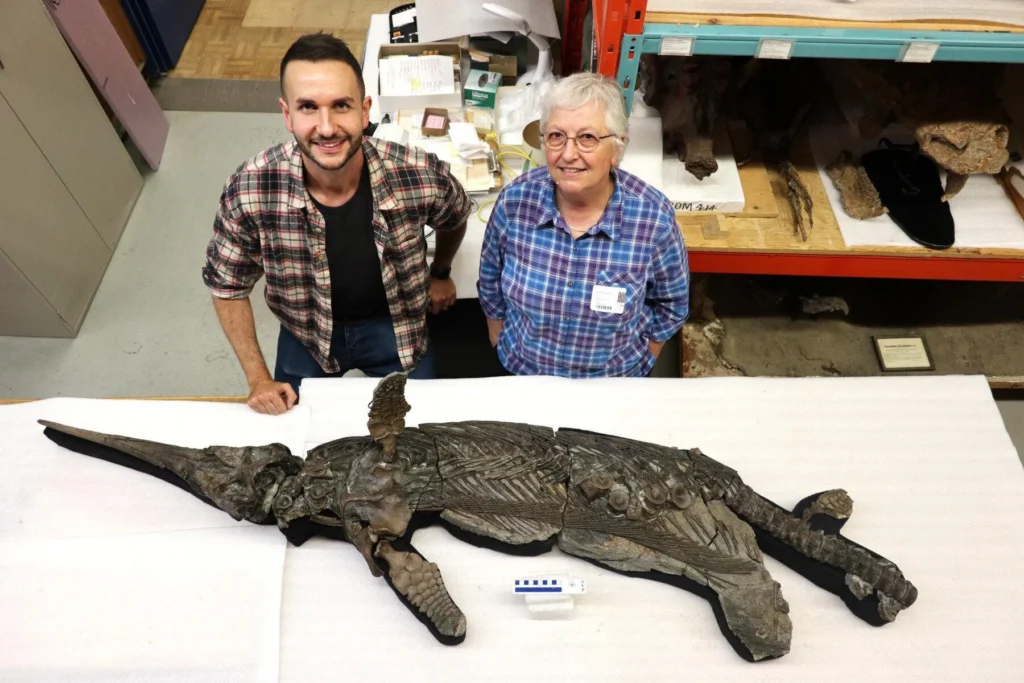
Dorset, UK – A fossil unearthed along the dramatic cliffs of the Jurassic Coast has revealed a new chapter in the story of ancient marine reptiles. Scientists recently described Xiphodracon goldencapensis, a dolphin-sized ichthyosaur nicknamed the “Sword Dragon of Dorset” for its striking, blade-like snout. This near-complete specimen, dating back approximately 190 million years, offers crucial insights into a poorly documented period of prehistoric ocean life.
The discovery underscores the enduring richness of the Jurassic Coast, a UNESCO World Heritage site famed for yielding fossils since the days of Mary Anning in the early 19th century. Researchers analyzed the skeleton over years, confirming its status as the most complete example from its era.
A Stormy Discovery on Golden Cap
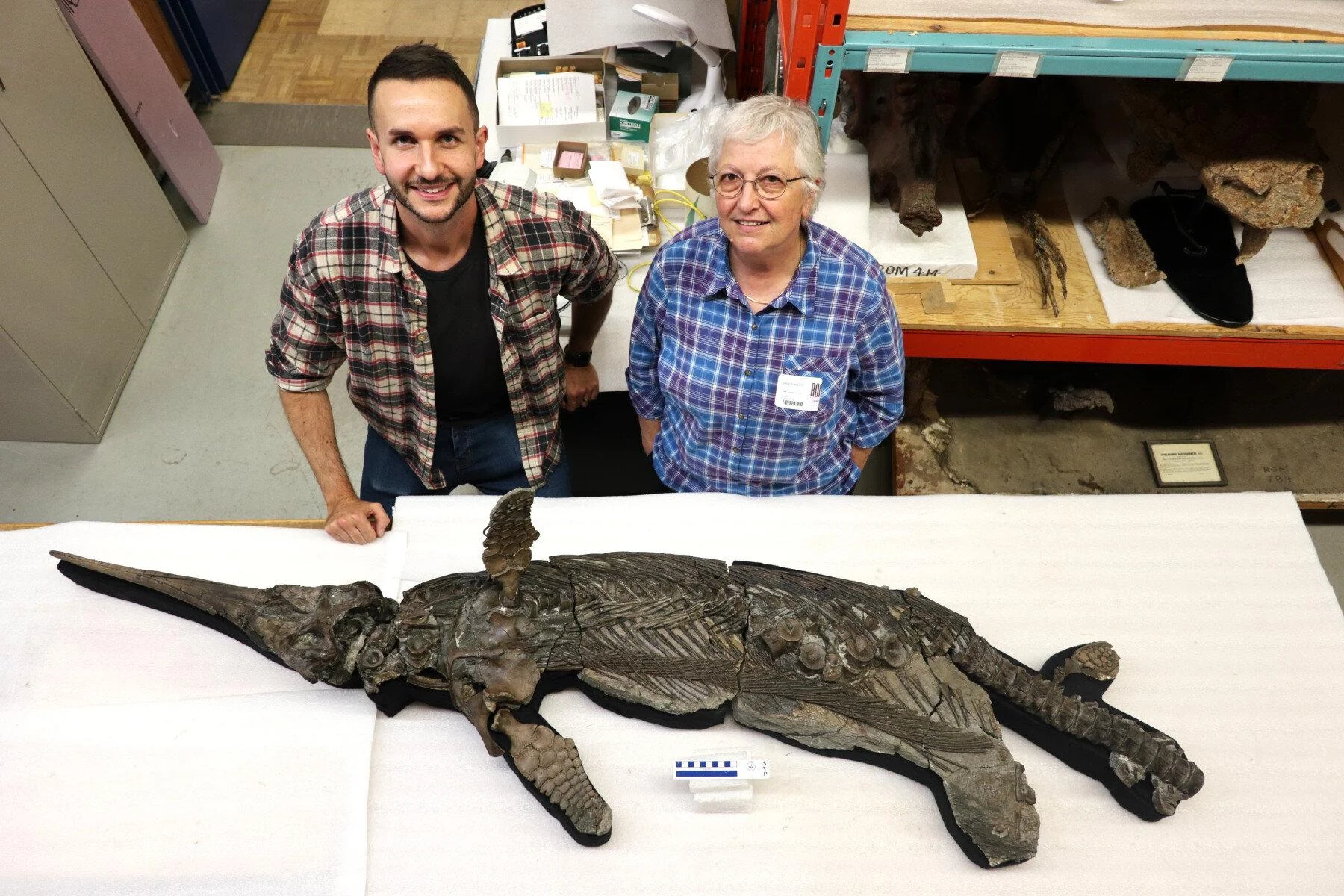
A Stormy Discovery on Golden Cap (Image Credits: Reddit)
Chris Moore, a seasoned fossil collector from Dorset, spotted the first signs of the skeleton in 2001 following a storm that eroded the shoreline near Golden Cap. He excavated the remains, which included tail vertebrae protruding from the rock, and later sold the specimen to the Royal Ontario Museum in Canada. There, it joined an extensive collection of ichthyosaurs but remained largely unstudied until paleontologist Dr. Dean Lomax examined it in 2016.
The fossil’s three-dimensional preservation set it apart immediately. Unlike many ichthyosaur remains that flatten during fossilization, this one retained its original structure thanks to the anoxic seabed conditions at the time. Moore had already found around 15 ichthyosaur fossils in his career, several proving to be new species.
Striking Features of the Sword Dragon
Xiphodracon measured about three meters in length, comparable to a modern dolphin. Its most eye-catching trait was the elongated, narrow snout resembling a sword, lined with hundreds of tiny, needle-like teeth ideal for snaring fish and squid. Enormous eye sockets suggested exceptional vision for hunting in dim underwater environments.
A particularly unusual element was the lacrimal bone near the nostril, featuring prong-like projections never before seen in any ichthyosaur. Dr. Lomax described this feature as “super weird,” highlighting its novelty.
- Long, sword-shaped rostrum for precise predation
- Massive orbital openings for enhanced eyesight
- Unique prong-like lacrimal bone structure
- Malformed limb bones and teeth indicating prior injury or illness
- Possible traces of a final meal in the stomach region
Traces of a Brutal Life and Death
Examination revealed signs of a harsh existence. The limb bones and teeth showed malformations consistent with serious injury or disease sustained while the reptile lived. Most dramatically, the skull bore a mark interpreted as a bite from a much larger predator, likely another ichthyosaur species.
Dr. Erin Maxwell, a co-author of the study, noted, “The skull appears to have been bitten by a large predator – likely another much larger species of ichthyosaur – giving us a cause of death for this individual. Life in the Mesozoic oceans was a dangerous prospect.” These clues paint a vivid picture of competition and peril in Early Jurassic waters.
Filling a Critical Evolutionary Void
The Pliensbachian stage of the Early Jurassic, spanning 193 to 184 million years ago, represents a sparse interval in the ichthyosaur fossil record. Thousands of well-preserved skeletons exist from before and after this time, but the faunas differ markedly, with no shared species despite similar ecologies.
Xiphodracon bridges this gap as the first new Early Jurassic ichthyosaur genus identified from the Jurassic Coast in over a century. Its traits link it more closely to later Early Jurassic forms, suggesting the major faunal turnover occurred earlier than previously thought. Professor Judy Massare, another co-author, explained that the specimen helps determine the timing of this shift, though the underlying causes remain elusive.
Dr. Lomax called it a “missing piece of the puzzle in the ichthyosaur evolution,” emphasizing its role in clarifying a pivotal transition.
Key Takeaways
- Xiphodracon goldencapensis is the sole known specimen of its kind, offering unparalleled completeness from the Pliensbachian.
- Its discovery narrows the window of a major ichthyosaur evolutionary turnover to the early Pliensbachian.
- Bite marks and injuries reveal the perilous dynamics of Jurassic marine predators.
The “Sword Dragon of Dorset” now resides at the Royal Ontario Museum, where it awaits public display. This find not only enriches our knowledge of ichthyosaurs – extinct marine reptiles that thrived alongside dinosaurs – but also reminds us of the ongoing surprises hidden in familiar fossil sites. What do you think about this ancient sea dragon’s story? Tell us in the comments.