Mycorrhizal fungi weave intricate webs beneath the Earth’s surface, forming partnerships with most plants and channeling vital resources across ecosystems.
Drawn to the Unknown Depths
Drawn to the Unknown Depths (Image Credits: Imgs.mongabay.com)
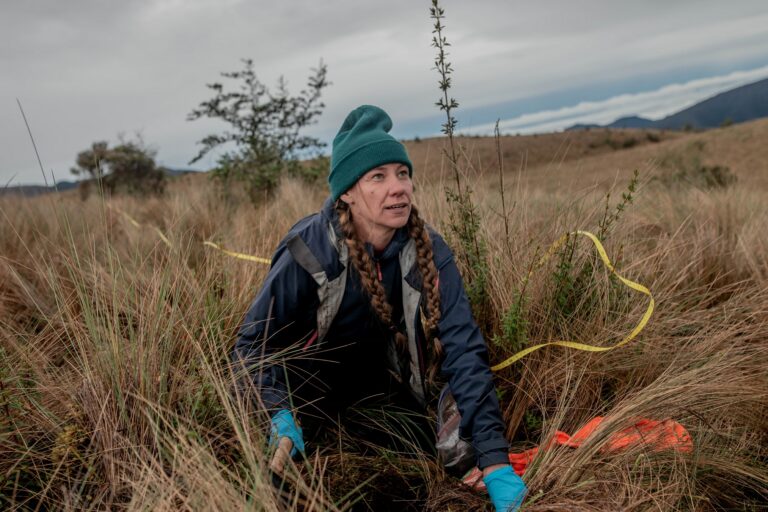
Toby Kiers discovered her passion for underground life during her late teens on Barro Colorado Island in the Panama Canal. Scientists around her focused on visible flora and fauna, yet she turned her gaze downward to the mycorrhizal networks that captivated her with their mystery. “It’s so alive, but humble and quiet,” she recalled.
That early fascination led to her first published experiment in 2000, which examined how tropical fungi influenced root growth in tree seedlings. Kiers, now an evolutionary biologist and professor at Vrije Universiteit Amsterdam, persisted despite the challenges of studying invisible organisms. Her work evolved from basic soil sampling to pioneering methods that revealed dynamic exchanges underground. Frustrated by academia’s emphasis on papers over impact, she co-founded the Society for the Protection of Underground Networks, or SPUN, in 2021.
Symbioses That Power the Planet
These fungal networks connect with 80-90% of plant species worldwide, trading nutrients like nitrogen and phosphorus for carbon from photosynthesis.
Fungi discriminate among partners, directing resources to those providing the most carbon in return, much like savvy traders. They even redistribute phosphorus from nutrient-rich areas to poorer ones, stabilizing ecosystems. Soil, bolstered by these interactions, holds 75% of terrestrial carbon, while underground realms harbor 59% of global biodiversity.
- Mycorrhizal fungi transfer over 13 billion metric tons of CO₂ annually into soils.
- Networks form lace-like structures with wave-like flows of carbon and nutrients.
- They function as Earth’s circulatory systems, yet remain overlooked.
- Fungi respond to inequality by reallocating resources across vast expanses.
From Black Box to High-Tech Tracking
Early research relied on “black box” techniques, such as digging soil samples and observing plant responses in greenhouses. Researchers stained fungi under microscopes and labeled elements to trace basic movements. Kiers advanced this in 2011 with studies showing reciprocal rewards that stabilized fungal-plant cooperation.
Recent innovations include quantum dots for fluorescent tagging, allowing visualization of phosphorus shifts, as detailed in a 2019 paper. Collaborating with biophysicists, she developed imaging robots that scan fungal arenas every few hours, mapping up to 500,000 nodes in real time. These devices reveal how fungi control flow speeds and directions, turning abstract concepts into observable patterns. Such tools now integrate with remote sensing and machine learning for global-scale mapping.
Overcoming Invisibility and Inaction
Mycology suffers from chronic underfunding because fungi evade easy study and capture public imagination less than charismatic species. Quantifying carbon flows underground proves technically daunting, with triggers for retention still unclear. Rising atmospheric CO₂ heightens the stakes, as disturbed networks could release vast carbon stores.
“We think of these networks as one of Earth’s circulatory systems, but people are not paying attention,” Kiers noted. SPUN addresses this by funding 137 local explorers to gather data worldwide. The organization pushes beyond science into advocacy, urging protection of these hotspots amid climate and biodiversity crises.
Key Takeaways
- SPUN launched its Underground Advocates program in January 2026 to link data with legal protections for conservation and restoration.
- Restoring native plant-fungi pairings offers a practical path to rebuild ecosystems.
- Fungi demand urgent attention as foundational engineers of life on Earth.
These underground alliances challenge humanity to rethink conservation priorities and harness nature’s engineers for a stable future. As mapping efforts accelerate, they promise tools to safeguard carbon sinks and biodiversity hotspots. What steps should we take to protect these vital networks? Share your thoughts in the comments.