Eastern Morocco – Scientists from the Faculty of Sciences at Mohammed I University in Oujda have brought to light the skeletal remains of a previously unknown herbivorous dinosaur. The fossils, unearthed near Tendrara in the Oriental region, date back more than 100 million years to the Cretaceous period. This discovery underscores the area’s untapped potential for revealing secrets of prehistoric life.
Unprecedented Find Shakes Up Regional Paleontology
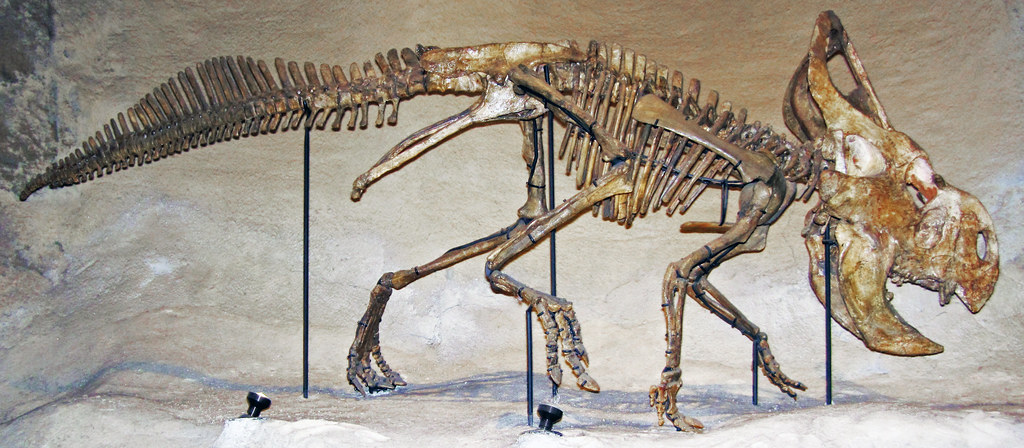
Unprecedented Find Shakes Up Regional Paleontology (Image Credits: Flickr)
A faculty source described the breakthrough as unprecedented for the region. The remains confirm that eastern Morocco hosted massive prehistoric creatures tens of millions of years ago. Researchers collaborated with international experts over years of meticulous excavation to recover the scattered bones.
The site near Tendrara, close to the Algerian border, lies outside more famous fossil beds like the Kem Kem group. Yet it now joins Morocco’s growing list of significant sites. University President Yassine Zarhloule praised the geology department professors for their hard work before, during, and after the find.
Project supervisor Professor Lahbib Boudchiche noted that the work remains in the analysis phase. Such dedication highlights Morocco’s rising role in global dinosaur research.
Specialized Methods Unlock Ancient Secrets
Teams applied specialized techniques to extract and preserve the fragile fossils. They transported fragments to laboratories for cleaning and classification. Advanced 3D scanning now aids in precise skeleton reconstruction.
Laboratory analysis includes studies of bone density and physiological traits. Scientists also map the ancient environment through surrounding sediments. These steps will help classify the species and its habitat.
- Prolonged fieldwork for bone collection
- Safe extraction using preservation methods
- 3D scanning for digital reconstruction
- Bone analysis for anatomical details
- Sediment study for ecological context
Professor Boudchiche emphasized that final results await full analysis before international publication.
Herbivores Thrive in Cretaceous North Africa
The dinosaur belonged to the herbivorous group that shared ancient Morocco with carnivores. Such finds add data on plant-eating species from the Early-Late Cretaceous transition. Eastern Morocco emerges as a key habitat during this era.
Previous Moroccan discoveries include theropods from Kem Kem and early ornithischians elsewhere. This herbivore expands understanding of diverse ecosystems. Paleontologists anticipate it will reveal more about regional evolution.
| Dinosaur Type | Key Traits | Known Moroccan Sites |
|---|---|---|
| Herbivorous | Plant-eaters, varied sizes | Tendrara, Middle Atlas |
| Carnivorous | Predators like theropods | Kem Kem beds |
The two main groups coexisted, painting a picture of balanced prehistoric communities.
From Lab to Legacy
Once reconstructed, the skeleton will anchor the University Museum of Archaeology and Heritage in Oujda. Visitors and students will explore millions of years of natural history there. International publication will share findings with the global community.
Morocco’s fossil heritage continues to draw experts worldwide. This discovery signals more revelations from the east.
“This discovery is unprecedented for the region. It reflects the rich fossil heritage of Eastern Morocco – an area that continues to hold untapped secrets regarding the history of life on Earth.”
– Faculty source to SNRTnews
Key Takeaways
- Over 100-million-year-old herbivorous dinosaur found near Tendrara by Mohammed I University team.
- Advanced 3D scanning and lab work ongoing for full reconstruction.
- Boosts knowledge of Cretaceous life in North Africa; display planned at Oujda museum.
This Tendrara trove reminds us how much ancient history still sleeps beneath the surface. What other giants might await in Morocco’s eastern sands? Share your thoughts in the comments.