Bale Mountains, Ethiopia — Scientists recently captured images of sleek reddish-brown wolves extending their necks to lap nectar from tall, fiery flowers high in the Ethiopian highlands. Their muzzles, coated in bright yellow pollen, resembled those of busy bees after hours amid the blooms. This behavior positions the world’s rarest canid as a potential pollinator, challenging traditional views of carnivores in ecosystems.
A Predator’s Surprising Sweet Tooth
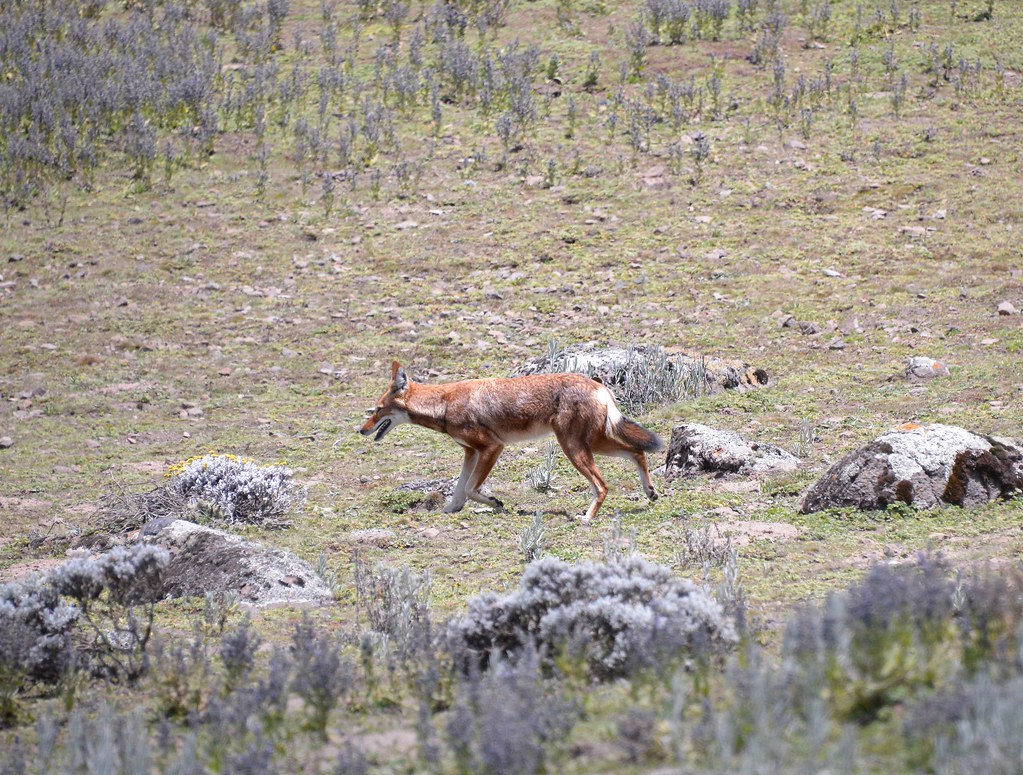
A Predator’s Surprising Sweet Tooth (Image Credits: Flickr)
Researchers documented six Ethiopian wolves engaging in nectar feeding, a sight rarely associated with large carnivores. The animals stretched upward to reach clusters of yellow-orange blossoms, their long tongues probing deep into the petals. One wolf spent hours visiting multiple flower stalks, moving methodically through the patch.
Ethiopian wolves primarily hunt rodents in the afroalpine grasslands, but this opportunistic foraging adds a new dimension to their diet. Observations occurred during the plant’s blooming season from June to November, when nectar flows abundantly. Such adaptability highlights the species’ resilience amid shrinking habitats.
Kniphofia foliosa: The Flower in Question
Commonly known as Ethiopian red hot poker, Kniphofia foliosa thrives at elevations above 3,000 meters. Its cone-shaped flower heads, resembling flaming torches, attract typical pollinators like insects and birds. Yet wolves now join this roster, drawn by the sugary reward hidden at the base of each floret.
The plant relies on precise pollen transfer for reproduction, a process usually handled by smaller visitors. Wolves’ larger size and fur-covered muzzles provide ample surface for pollen grains, which cling visibly during feeding bouts. Individual wolves visited up to 30 stalks in a single session, suggesting repeated exposure.
Pollen Trails and Pollination Potential
Yellow pollen dusted the wolves’ faces after nectar laps, mirroring bee behavior on a grander scale. As the animals moved between flowers, this pollen could transfer to stigmas, fertilizing blooms. Researchers noted the coating’s similarity to insect pollinators, though efficacy requires verification.
The study, published in the journal Ecology, marks the first such documentation for a large carnivore.Ecology Journal While wolves clearly consume nectar and acquire pollen, confirming pollination demands tracking pollen movement and fruit set rates. Bats and sunbirds typically handle this role, making the wolves’ involvement novel.
- Wolves observed feeding on nectar for hours at a time.
- Muzzles accumulate pollen matching flower anthers.
- Multiple flower visits per wolf increase transfer chances.
- First large predator documented in this interaction.
- Behavior seen in Bale Mountains populations.
Threats to a Fragile Species
With fewer than 500 individuals remaining, Ethiopian wolves face severe pressures from habitat loss and disease. Confined to isolated highland pockets, they number around 300 in the Bale Mountains alone. Rodent population crashes, linked to climate shifts, already strain their main prey base.
This nectar habit offers nutritional supplements during lean times, potentially aiding survival. Conservation groups like the Ethiopian Wolf Conservation Program emphasize understanding such behaviors for better protection strategies. Protecting flower patches could indirectly support wolf health and biodiversity.
| Factor | Impact on Wolves |
|---|---|
| Habitat Fragmentation | Reduces prey and foraging areas |
| Disease from Domestic Dogs | High mortality rates |
| Climate Change | Alters rodent cycles and vegetation |
Charting the Path Ahead
Further studies must quantify visitation frequency and pollination success. Experiments could involve marking pollen on wolves to trace transfers. Genetic analysis of seeds from visited flowers would confirm contributions.
Ecologists from the University of Oxford and partners call for expanded monitoring. Such insights could redefine conservation priorities, linking predator protection to plant health.
Key Takeaways
- Ethiopian wolves nectar feed on Kniphofia foliosa, acquiring pollen on muzzles.
- Potentially first large carnivores acting as pollinators, per recent Ecology paper.
- Behavior supports endangered species amid habitat and prey challenges.
This discovery reveals the intricate ties in highland ecosystems, where even top predators play multifaceted roles. As research progresses, it underscores the urgency of safeguarding these unique canids. What role do you think nectar foraging plays in their survival? Share your thoughts in the comments.