Africa – Targeted killings of lions for their bones, skins, teeth, and claws have surged, casting a shadow over the species’ survival amid already dwindling numbers.
A Newly Identified Peril Compounds Familiar Struggles
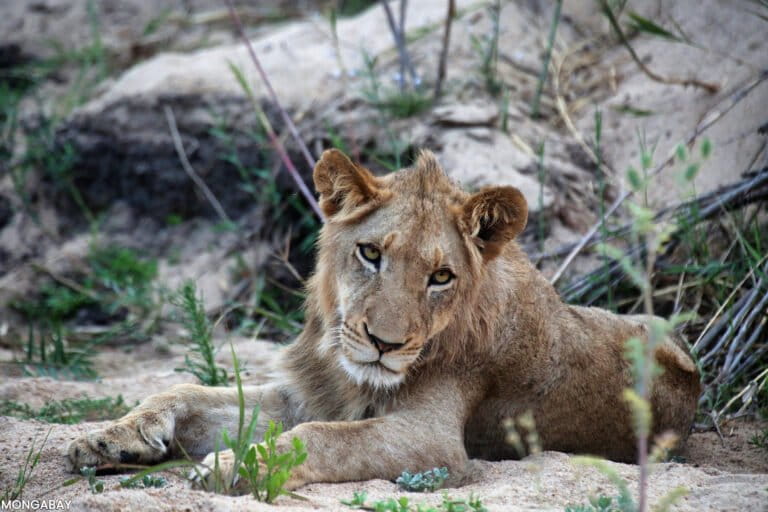
A Newly Identified Peril Compounds Familiar Struggles (Image Credits: Imgs.mongabay.com)
Researchers documented a sharp rise in deliberate poaching across the continent, distinct from longstanding issues like habitat loss and livestock conflicts. A peer-reviewed study published in Conservation Letters revealed that lions now occupy just 6% of their historical range, with roughly 25,000 adults and subadults remaining. Lead author Peter Lindsey warned that without intervention, this trade-driven threat could push populations toward collapse.
The analysis drew from mortality records, seizures, and expert reports spanning 2019 to 2025. In Mozambique alone, known poaching cases climbed from one per year between 2010 and 2017 to seven annually from 2018 to 2023. Of 326 human-related lion deaths tracked there over that period, 25% involved targeted harvesting of body parts. Such trends signal a shift from opportunistic scavenging to organized hunts.
Demand Fuels a Shadowy Trade Network
Body parts fetch value in traditional medicine, rituals, and status symbols. Across 37 African countries, communities prize lions for attributes like strength and protection, incorporating claws, skulls, teeth, and fats into amulets and healing practices. In Asia, lion bones substitute for scarce tiger products in tonics and wines.
Traffickers exploit these markets through routes overlapping with ivory and rhino horn smuggling. Seizures underscore the scale: authorities in Maputo, Mozambique, confiscated over 300 kilograms of parts in 2023, while 17 skulls surfaced in Zambia the prior year. Poachers deploy poisoned baits – even entire giraffes – to fell entire prides at once, amplifying impacts on ecosystems.
- Bones and skeletons for medicinal brews
- Claws and teeth as jewelry or talismans
- Skins for adornments
- Fats and organs in spiritual rituals
Hotspots Reveal a Spreading Crisis
Southern Africa emerged as a focal point, though underreporting likely masks broader reach. Northern Kruger National Park in South Africa lost nearly 60% of its lions from 283 in 2005 to 122 in 2023, partly due to snares and targeted kills. Incidents also plagued Botswana, Zimbabwe, Uganda, and Senegal, where markets demand dozens of lions yearly despite tiny wild populations.
West and East Africa show similar patterns, with parts traded even in lion-free nations like Ghana and Ivory Coast. Luke Hunter of the Wildlife Conservation Society described the poaching as “a defining threat to the future of Africa’s lions.” Detection lags in remote areas, capturing perhaps only 20% of cases.
Pathways to Turn the Tide
Experts outlined six priority interventions to curb the menace. Enhanced monitoring via databases like the African Lion Database tracks mortalities for rapid response.[4] Community guardians and livestock protections foster local buy-in, while intelligence disrupts syndicates.
| Priority Area | Key Actions |
|---|---|
| In-situ protection | Funding, patrols, lion collaring |
| Trade disruption | Seizure tech, cross-border ops |
| Demand reduction | Cultural campaigns, alternatives |
Success stories abound: reintroductions in Rwanda’s Akagera and Zambia’s Liuwa Plain proved effective management works. Zambia boosted wildlife crime convictions to 87% in 2024 through judicial reforms.[3]
- Poaching incidents have tripled in hotspots like Mozambique.
- Organized networks link lion trade to global wildlife crime.
- Coordinated action now can prevent irreversible losses.
Lions endured centuries of pressures, but this clandestine trade demands swift resolve. Protected areas could sustain triple the current numbers with bolstered support. What steps should governments prioritize to save these savanna icons? Share your thoughts in the comments.