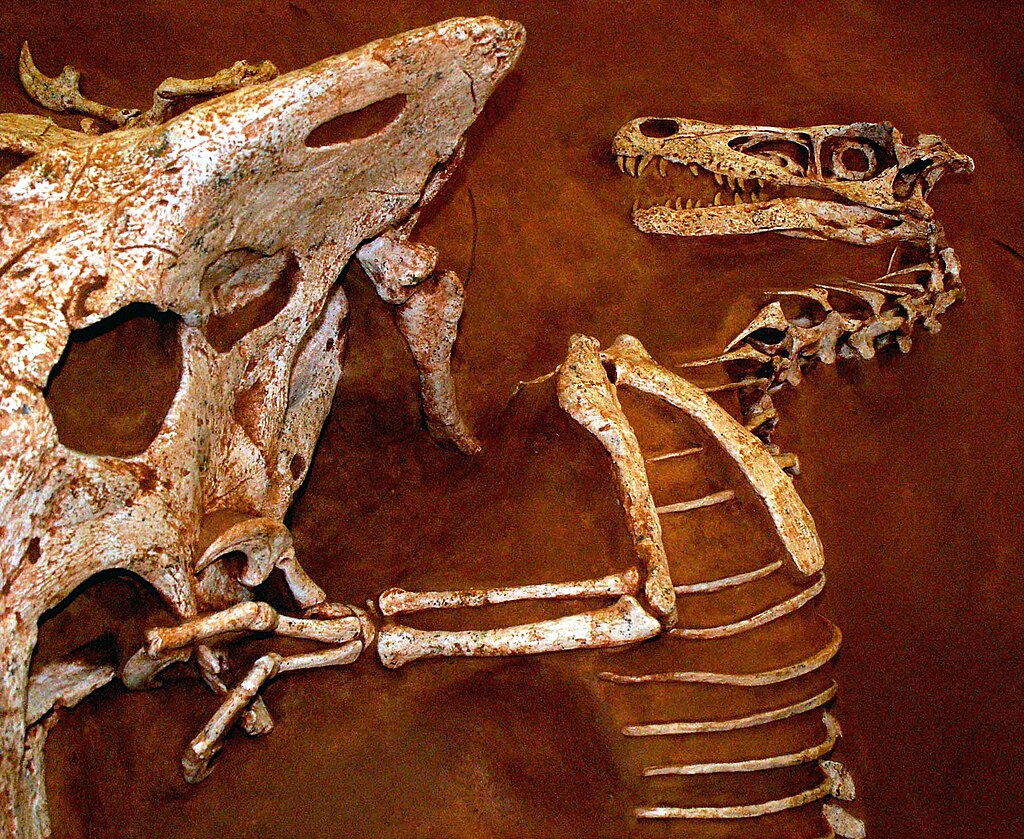
When early naturalists began uncovering strange bones in the earth during the 17th and 18th centuries, they unwittingly sparked a theological crisis. These mysterious remains didn’t match any known living creatures, raising uncomfortable questions: Could God’s perfect creation include animals that no longer existed? The concept of extinction challenged long-held religious beliefs about divine purpose and biblical timelines. Over centuries, religious institutions and believers developed varied and evolving responses to paleontological discoveries—from outright denial to thoughtful integration with faith. This complex relationship between religious thought and scientific discovery reveals much about how humans reconcile new knowledge with established beliefs, and continues to shape contemporary discussions about science and religion.
The Pre-Fossil Worldview: Creation and Perfection
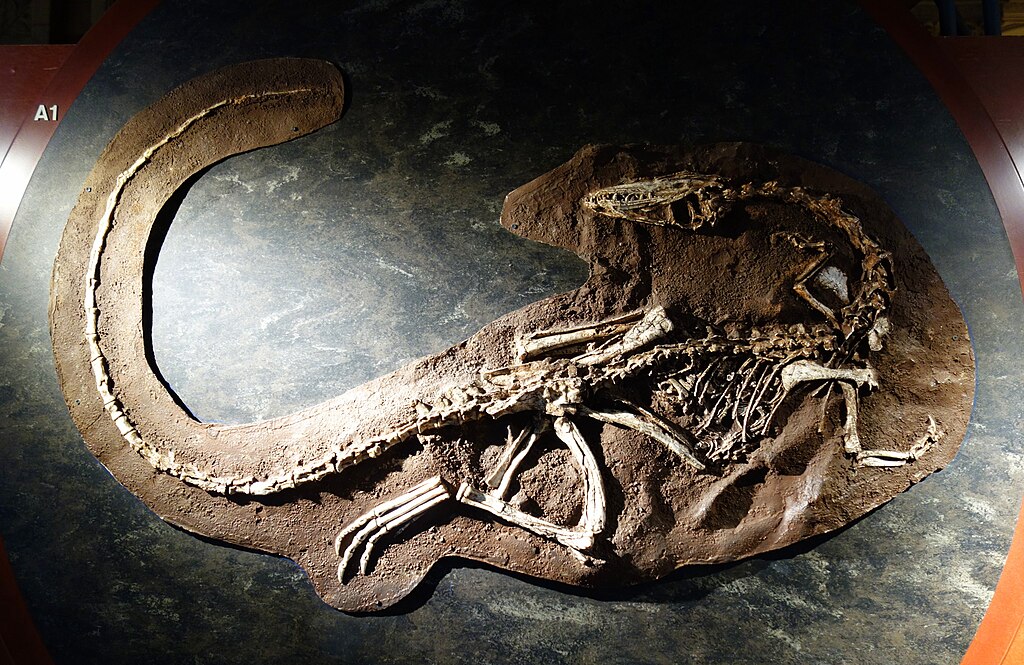
Before the scientific understanding of fossils emerged, Christian theology held firmly to the concept of a perfect divine creation. The prevailing belief was that God had created all species at once, in their final form, with no extinctions or substantial changes occurring thereafter. This view, heavily influenced by literal interpretations of Genesis, presented Earth as relatively young, typically calculated at around 6,000 years old based on biblical genealogies. Natural philosophers, including many clergymen, maintained that God’s creation was complete and perfect, operating according to divinely ordained natural laws. The idea that entire species might disappear contradicted this vision of perfection and divine purpose. When strange bones began to surface, they were typically interpreted as monsters, giants mentioned in scripture, or misidentified remnants of known animals, rather than as evidence of extinct creatures.
The Shock of Megafauna: Mammoth Discoveries

The discovery of mammoth bones across Europe and North America in the 18th century presented a significant challenge to traditional interpretations of God’s creation. These enormous creatures, clearly different from any known living elephant, forced naturalists and theologians to consider troubling possibilities. Some religious authorities initially suggested these remains belonged to biblical giants or creatures that drowned in Noah’s flood, but were not granted passage on the ark. Georges Cuvier, a French naturalist and a religious man himself, definitively established the reality of extinction through comparative anatomy, demonstrating that mammoth remains belonged to species no longer living. His work showed that these animals were distinct from modern elephants but related to them, suggesting a pattern of successive creations. For many religious communities, the mammoth became the first incontrovertible evidence that God’s creation included species that no longer walked the Earth, requiring theological reconsideration.
Biblical Reinterpretation: Squaring Scripture with Science
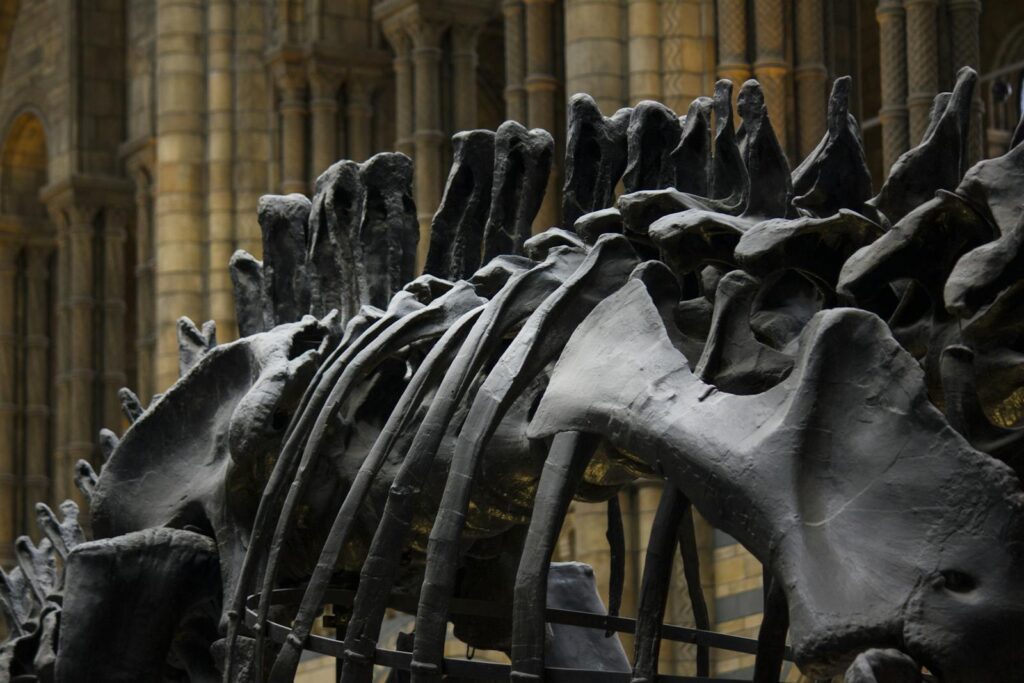
As fossil evidence mounted, many theologians began reinterpreting scripture to accommodate new scientific understandings. The “day-age” interpretation gained popularity, suggesting that each “day” mentioned in Genesis represented not 24 hours but vast geological epochs. This allowed for a much older Earth while maintaining biblical authority. Other theologians developed the “gap theory,” proposing that an unspecified time gap existed between Genesis 1:1 and 1:2, during which prehistoric creatures lived and became extinct before God created modern species and humans. Progressive revelation became another important theological concept, suggesting that God reveals truth gradually as humanity becomes ready to receive it. These interpretive approaches allowed many believers to embrace scientific discoveries while maintaining their faith in biblical truth. Religious scholars increasingly differentiated between the Bible’s spiritual messages and its pre-scientific descriptions of natural phenomena, arguing that scripture aimed to teach salvation rather than natural history.
Catastrophism: Reconciling Faith Through Disaster

Catastrophism emerged as a powerful early framework for reconciling fossil evidence with religious belief. This theory, championed by figures like Georges Cuvier, proposed that Earth’s history was marked by a series of global catastrophes that repeatedly wiped out species. Each catastrophe was followed by the divine creation of new species, explaining the succession of fossil types in different rock layers. The biblical flood was often identified as the most recent of these catastrophes, though evidence for multiple extinction events complicated this simple alignment. Catastrophism allowed religious thinkers to acknowledge extinction while preserving the concept of special creation and divine intervention. It positioned God as actively involved in Earth’s history through multiple creative acts rather than a single creation event. Though catastrophism was eventually supplanted by uniformitarian geology, which emphasized slow, consistent processes over dramatic events, elements of the catastrophist view persist in some religious interpretations of Earth history today, particularly in young-Earth creationist models that compress geological time.
The Dinosaur Dilemma: Theological Responses to Ancient Reptiles
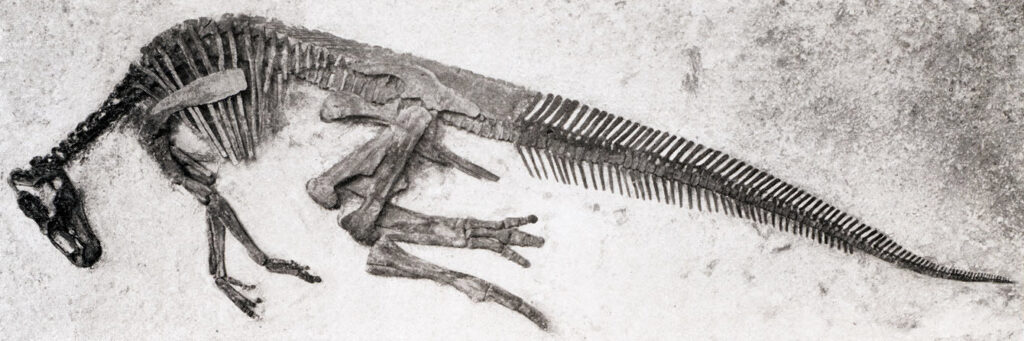
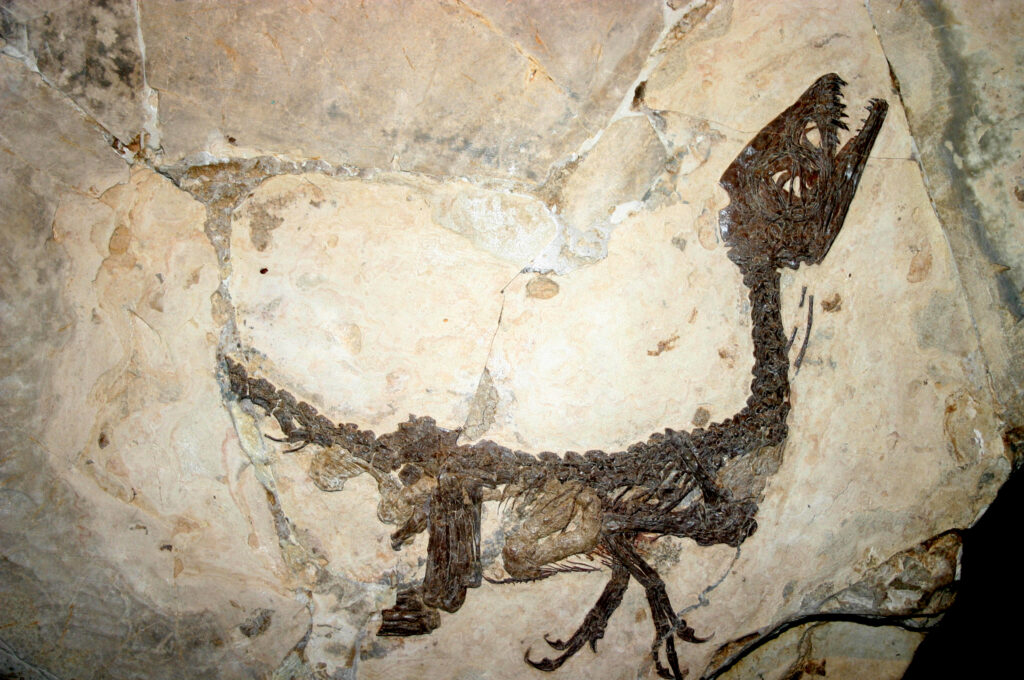
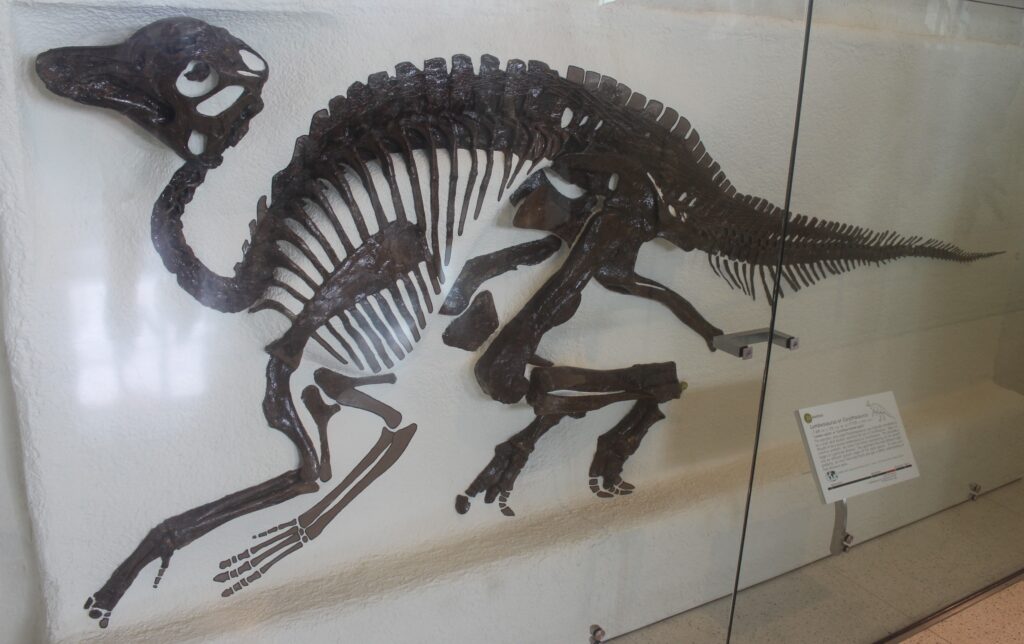
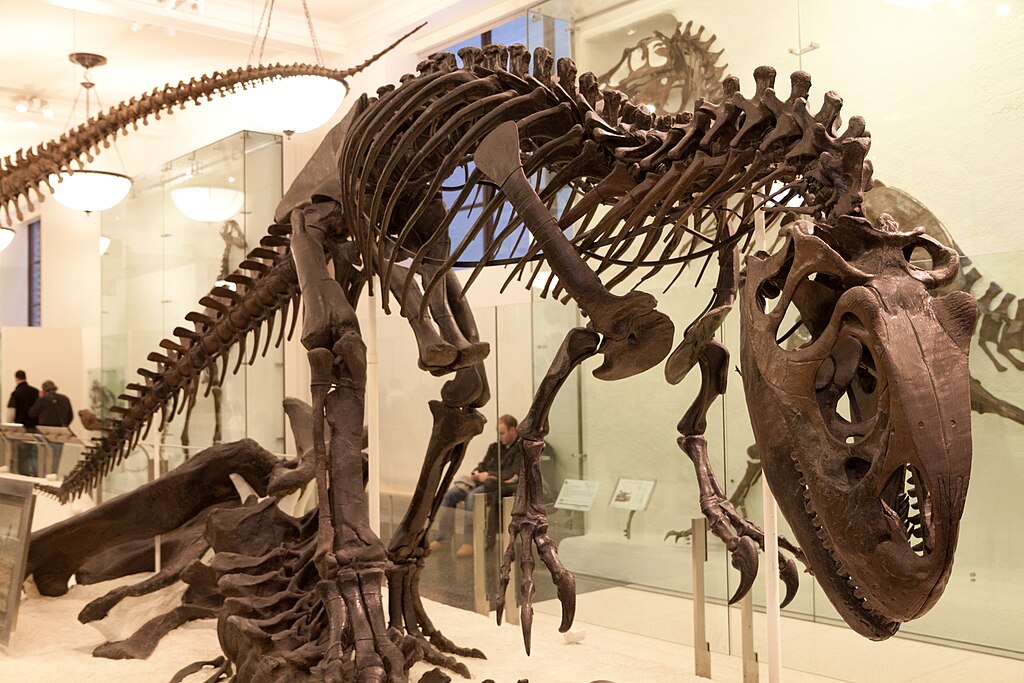
The discovery of dinosaur fossils in the early 19th century presented perhaps the most profound challenge to traditional religious frameworks. These enormous reptiles had no clear biblical references and appeared to have dominated Earth for far longer than the traditional biblical timeline allowed. Religious responses varied dramatically across denominations and individuals. Some conservative theologians insisted dinosaurs were contemporaries of early humans, despite geological evidence to the contrary. Others incorporated dinosaurs into the creation narrative by suggesting they were created on the fifth day alongside other “beasts of the earth.” More liberal religious thinkers embraced the evolutionary timeline and suggested dinosaurs represented earlier stages of God’s creative process. The sheer scale and strangeness of dinosaurs sparked theological creativity, with some suggesting they were casualties of the Fall of Man or demonic creations rather than part of God’s original design. Dinosaurs ultimately became a focal point for broader questions about biblical interpretation, Earth’s age, and the relationship between science and faith.
Evolutionary Theory: The Ultimate Challenge
When Darwin published “On the Origin of Species” in 1859, it represented the most significant challenge yet to traditional religious explanations of life’s diversity. Darwin’s theory provided a natural mechanism for both speciation and extinction, removing the need for divine intervention in the creation of each species. Religious responses to evolution proved far more varied than the simple opposition narrative often portrayed in popular culture. While some religious leaders immediately rejected evolution as incompatible with faith, others saw it as revealing God’s method of creation. The Catholic Church generally avoided confrontation with evolutionary theory, eventually adopting a cautious acceptance that continues today. Various Protestant denominations split along lines partly defined by their response to evolution, with fundamentalist movements often defining themselves in opposition to evolutionary science. For many religious thinkers, the random nature of natural selection posed a greater theological challenge than extinction itself, as it seemed to remove purpose and direction from creation.
The Age of Earth: Theological Time Compression

Geological discoveries revealing Earth’s ancient age created another point of tension between science and traditional religious chronologies. While scripturally-derived calculations typically placed Earth’s age at approximately 6,000 years, geological evidence by the mid-19th century suggested an age measured in millions of years. Religious responses included various attempts to reconcile these vastly different timescales. The emergence of young-Earth creationism in the 20th century represented one approach, suggesting that geological formations were created rapidly during Noah’s flood rather than slowly over millions of years. This view required substantial reinterpretation of geological evidence but allowed for a literal reading of Genesis. Old-Earth creationism, by contrast, accepted scientific evidence for Earth’s age while maintaining belief in the special creation of species. Theistic evolutionists went further, embracing both the scientific timeline and evolutionary processes as God’s method of creation. Each of these positions reflected different approaches to scriptural authority and scientific evidence, demonstrating the diversity of religious responses to paleontological discoveries.
The Rise of Fundamentalism: Reaction and Resistance

The late 19th and early 20th centuries saw the emergence of Christian fundamentalism, partly in response to theological challenges posed by scientific discoveries, including extinction and evolution. Fundamentalism emphasized biblical inerrancy and literal interpretation as foundational to authentic Christian faith. The movement gained particular strength in American Protestantism, where it developed into organized opposition to evolutionary teaching in public schools, culminating in events like the 1925 Scopes “Monkey Trial.” Fundamentalist approaches to fossils varied but often included claims that the fossil record was created by Noah’s flood, that radiometric dating methods were fundamentally flawed, or that Satan had planted dinosaur bones to test believers’ faith. The rise of creation science and later intelligent design movements represented attempts to develop alternative scientific frameworks compatible with particular religious interpretations. While representing only one segment of religious response to extinction, fundamentalist positions gained outsized cultural visibility through political activism and media attention, shaping public perception of the relationship between religion and science.
Clerical Scientists: Religious Figures Who Advanced Paleontology
Throughout the development of paleontology, numerous clergymen made significant contributions to the field, demonstrating that religious faith and scientific inquiry were not necessarily in conflict. Reverend William Buckland, an Anglican priest and Oxford professor in the early 19th century, was among the first to scientifically describe dinosaur fossils and advocated for an old Earth compatible with Genesis through the “gap theory.” Jesuit priest Pierre Teilhard de Chardin combined his religious vocation with paleontological fieldwork, participating in the discovery of Peking Man and developing influential theological interpretations of evolution as moving toward divine purpose. Adam Sedgwick, a Canon of Norwich Cathedral, became one of England’s most important geologists despite initially opposing evolutionary theory. These clerical scientists saw their scientific work as revealing God’s creative methods rather than undermining religious truth. Their dual commitments to both religious and scientific communities often positioned them as important bridges between these worlds, articulating how faith might accommodate discoveries about Earth’s history while maintaining core theological principles.
Official Church Positions: Institutional Responses

Major Christian denominations developed varying official positions on extinction and evolution as scientific understanding advanced. The Catholic Church, following initial caution, eventually accepted both extinction and biological evolution as compatible with faith, with Pope Pius XII formally addressing evolutionary theory in his 1950 encyclical Humani Generis and subsequent popes further affirming compatibility between evolution and Catholic theology. Mainline Protestant denominations generally followed similar trajectories, gradually incorporating scientific understandings of extinction and evolution into their theological frameworks, though with significant variations between and within denominations. Eastern Orthodox traditions typically emphasized that evolution, if accurate as a scientific description, represented God’s creative method rather than a challenge to divine purpose. Official denominational statements often stressed that scientific theories address mechanisms while religion addresses meaning and purpose, suggesting complementary rather than competing domains. These institutional positions continue to evolve, with many religious organizations now actively engaging with environmental concerns raised by modern extinction crises, seeing ecological responsibility as a theological imperative.
Individual Believers: Diverse Personal Responses

Beyond institutional positions, individual believers developed diverse personal responses to paleontological discoveries based on their educational backgrounds, theological traditions, and personal experiences. Many religious scientists maintained compartmentalized approaches, applying scientific methodologies in their professional work while holding separate religious convictions about ultimate meaning and purpose. For some believers, fossil discoveries sparked profound spiritual crises, forcing reconsideration of previously held certainties about scripture and divine action. Others found that engagement with Earth’s deep history enhanced rather than diminished their spiritual lives, inspiring awe at creation’s complexity and antiquity. Psychological research has revealed that individuals often navigate potential cognitive dissonance between scientific and religious claims through various integration strategies rather than simple rejection of either domain. Educational level significantly influences these personal responses, with scientifically literate believers more likely to develop nuanced theological frameworks accommodating both extinction and evolution. These diverse individual responses remind us that religious communities are not monolithic in their approaches to scientific challenges but contain multiple perspectives and ongoing internal dialogues.
Modern Religious Environmentalism: Extinction as Moral Crisis
Contemporary religious engagement with extinction has increasingly focused on current biodiversity loss rather than paleontological discoveries. Many religious traditions now frame modern extinction as a moral and spiritual crisis requiring faithful response. Pope Francis’s 2015 encyclical Laudato Si explicitly addressed biodiversity loss, calling believers to “care for our common home” and connecting environmental degradation to human sin and injustice. The “creation care” movement among evangelical Christians emphasizes humanity’s responsibility as stewards rather than exploiters of God’s creation. Jewish perspectives on extinction often emphasize the concept of bal tashchit (prohibition against needless destruction) and humanity’s role as shomrei adamah (guardians of the Earth). These religious environmental movements represent a significant shift from earlier theological concerns about whether extinction could occur to moral questions about humanity’s responsibility to prevent it. By framing extinction in moral and spiritual terms, religious communities have become important participants in conservation efforts, bringing theological resources and community networks to environmental activism.
Conclusion: The Ongoing Dialogue Between Faith and Fossils
The relationship between religious thought and paleontological discovery remains dynamic, reflecting broader interactions between science and faith. Early fears that extinction would undermine religious belief have largely given way to more nuanced theological frameworks capable of incorporating scientific understandings of Earth’s history. While some religious communities continue to resist aspects of evolutionary science, many others have developed interpretive approaches that maintain core theological commitments while embracing scientific evidence. Religious perspectives on extinction have evolved from questions of possibility to concerns about stewardship and responsibility. This historical journey demonstrates religion’s capacity for adaptation and reinterpretation in light of new knowledge, even when that knowledge initially appears threatening to established beliefs. The dialogue between faith and fossils continues today, with religious voices increasingly contributing to conversations about extinction not as scientific skeptics but as moral advocates for biodiversity preservation. This evolving relationship suggests that religious and scientific perspectives may find common ground in addressing contemporary environmental challenges, even while maintaining distinct approaches to knowledge and meaning.