Wildlife populations have declined dramatically in recent decades, yet researchers uncovered a hidden vulnerability in species that form only casual social bonds.
Overturning Conventional Wisdom on Social Survival
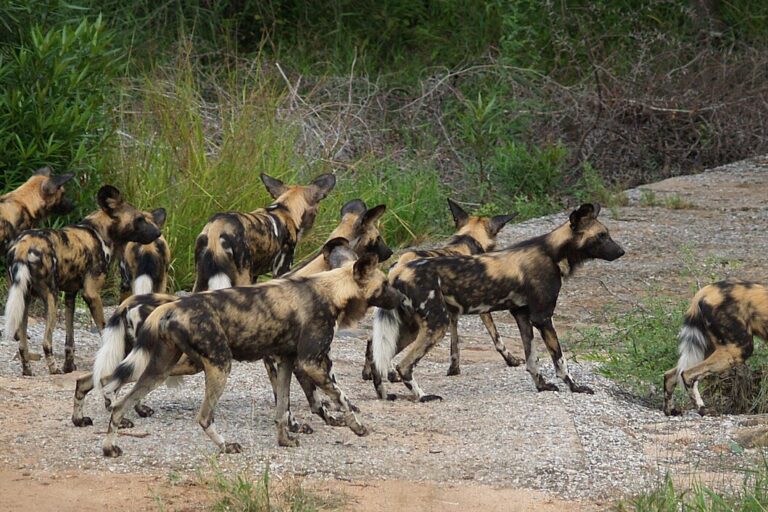
Overturning Conventional Wisdom on Social Survival (Image Credits: Imgs.mongabay.com)
Scientists long assumed highly social animals, such as meerkats and African wild dogs, suffered most from population drops because their stable groups provided essential benefits like predator vigilance and cooperative breeding. Larger packs in African wild dogs, for instance, produced more pups per individual, but surviving members often formed new groups to maintain those advantages. A University of Colorado Boulder study challenged this view, arguing that loosely social species proved more susceptible to collapse.
Samantha Rothberg, the lead author, noted that removing individuals from loosely social groups not only reduced numbers but also eliminated the benefits those animals provided to survivors, sparking a vicious cycle. Michael Gil, senior author, described highly social species as having a built-in buffer, much like extroverted humans who readily form new connections after losses. Loosely social animals, however, resembled introverts who rarely sought replacements for lost companions. This distinction emerged from a review of ecological theory, models, and case studies spanning decades.
Defining Loose Sociality Across the Kingdom
Loosely social animals engaged in temporary interactions rather than fixed group living, relying on chance encounters for advantages like shared information on food or threats. Deer gathered sporadically at watering holes, squirrels exchanged vigilance cues during foraging, and chickadees perched together briefly to scan for predators. These behaviors spanned invertebrates, fish, birds, and mammals, making loose sociality far more common than tight-knit societies.
As populations shrank, encounters in these species dwindled proportionally, unlike in highly social groups where members actively recruited to restore sizes. Gil observed birds outside his window, highlighting how such moment-to-moment ties often went unnoticed yet proved critical for survival. The study termed this “experienced density,” the local social contact frequency that scaled directly with overall numbers in loosely social taxa.
The Dangerous Feedback Loop Explained
Population declines triggered Allee effects in loosely social species, where low densities hampered reproduction and survival, further eroding numbers. Without mechanisms to boost interactions, benefits like collective foraging or mating opportunities vanished, accelerating the downturn.
Rothberg explained, “When you remove individuals, you’re not just removing those individuals from the population, you’re also removing the benefits that they conferred on surviving individuals. That creates a feedback loop.” Models showed this loop operated at both population and metapopulation levels, especially in fragmented habitats. Highly social species often decoupled group stability from broader declines, preserving core functions.
Species Examples Highlight the Pattern
The research drew from diverse taxa to illustrate vulnerabilities:
- Deer: Temporary herds for vigilance, but rarer meetings in low densities heighten predation risk.
- Squirrels: Loose foraging groups share food intel, lost amid sparse populations.
- Chickadees: Brief perching boosts threat detection, undermined by isolation.
- Agoutis and tapirs: Occasional pairings for mating dwindle, stalling reproduction.
- Fish schools: Smaller, fluid groups hunt better together but fragment easily.
These examples underscored loose sociality’s prevalence and peril, contrasting with resilient pack-formers like wild dogs.
| Social Type | Response to Decline | Extinction Risk |
|---|---|---|
| Highly Social (e.g., meerkats) | Form new groups | Buffered |
| Loosely Social (e.g., deer) | Fewer encounters | Heightened feedback loop |
Conservation Calls for New Strategies
Global wildlife populations fell at least 73% over the past 50 years, per the World Wildlife Fund, fueling the sixth mass extinction. Gil warned that climate change, habitat loss, and exploitation fragmented networks, pushing loosely social species toward tipping points. The study offered a framework to forecast risks based on social traits and density scaling.
Protecting connectivity in landscapes emerged as key, alongside traditional population monitoring. Advances in tracking and genomics promised better detection of these subtle dynamics.
Key Takeaways
- Loosely social species outnumber highly social ones and face amplified risks from routine declines.
- Feedback loops from lost interactions drive Allee effects more potently here than in stable groups.
- Conservation must prioritize social connectivity amid accelerating environmental pressures.
This research reframed social behavior as a core extinction driver, urging swift action to safeguard everyday wildlife. What do you think about these findings? Share in the comments.