Florida – Coral reefs lining the state’s southeastern coastlines act as vital natural barriers against tropical storm waves, but their ongoing degradation promises to intensify flooding risks for communities and infrastructure alike.
Reefs Absorb Waves, But Threats Mount
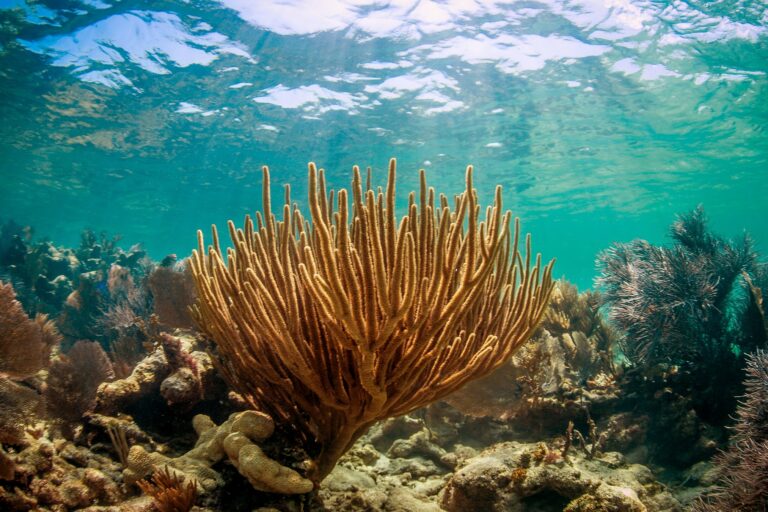
Reefs Absorb Waves, But Threats Mount (Image Credits: Imgs.mongabay.com)
Coral reefs dissipate up to 97 percent of incoming wave energy, with their crests alone handling 86 percent of that force during storms. This natural armor has shielded Florida’s shorelines for decades, reducing surge heights and preventing widespread inundation. Researchers noted that degradation deepens the seafloor through erosion, allowing larger waves to propagate farther inland.
Over the past several decades, live coral cover in the Florida Keys dropped by about 90 percent, according to NOAA data. Bleaching events affected more than 80 percent of global reefs in the latest episode, while diseases, pollution, and physical damage compound the losses. Even partially degraded structures retain value, yet further decline erodes this protection significantly.
New Study Quantifies Rising Flood Hazards
A recent analysis in Earth’s Future modeled coastal flooding across 430 kilometers of reef-lined shores under various tropical storm scenarios. Scientists compared current conditions to projections of continued degradation through century’s end. The results revealed stark increases: annual flooding could expand to over 8.77 square kilometers of land and 4,980 kilometers of roads.
More than 7,315 people would face heightened exposure, alongside damage to 1,400 buildings totaling $412.5 million yearly. Economic disruptions from lost business and infrastructure issues added another $438.1 million, pushing total annual risks near $850 million in 2024 dollars. Relative threats rose 42 percent for people and 47 percent for structures compared to today.
Vulnerable Hotspots Emerge Along the Coast
Southeast Florida emerged as the epicenter of concern, with low-lying areas and narrow reefs amplifying impacts. Along 17 percent of the coastline, or 68 kilometers, combined damages and disruptions exceeded $1 million per kilometer annually. Mainland regions and barrier islands faced steeper rises than the broader Florida Keys reefs.
| County | People Affected (Mean Scenario) | Building Damages ($M) |
|---|---|---|
| Miami-Dade | 5,384 | 296 |
| Broward | 621 | 50 |
| Palm Beach | 204 | 17 |
| Martin | 137 | 20 |
Disadvantaged groups bore disproportionate burdens: minorities saw 115 to 125 percent risk hikes, children under 16 faced 120 to 137 percent increases, and those below poverty lines encountered 196 to 210 percent jumps.
- Private sector economic risks climbed 115 to 122 percent, far outpacing public infrastructure.
- Roads and essential facilities like schools and medical centers risked six to eight times more flooding.
- 100-year floodplains could grow by over 165 square kilometers under mean degradation.
Protection Offers Clear Path to Resilience
Lead author Curt Storlazzi of the U.S. Geological Survey emphasized the direct link: protecting reefs safeguards specific populations and assets. Co-author Michael Beck highlighted cost-effective solutions even for damaged reefs. The study urged prioritizing conservation in high-value zones like Miami-Dade to align with larger disaster funding pools.
Restoration efforts could avert these projections, framing reefs as essential for both ecology and economy. Managers now possess granular data to target interventions amid rising seas and storm intensities.
- Reef degradation threatens $850 million in yearly flood costs, hitting 7,300+ people and 1,400 buildings.
- Southeast Florida hotspots like Miami-Dade face the highest stakes, with vulnerable groups at greatest risk.
- Targeted protection delivers measurable returns, blending conservation with disaster mitigation.
As Florida’s reefs teeter, safeguarding them stands as a proven strategy to blunt storm impacts and preserve coastal vitality. What steps should communities take next to protect these underwater defenders? Share your thoughts in the comments.