South Carolina – Nestled deep within the coastal woods of Berkeley County lies a fortified sanctuary dedicated to preventing the extinction of some of the world’s most imperiled reptiles.
A High-Security Refuge for Survival
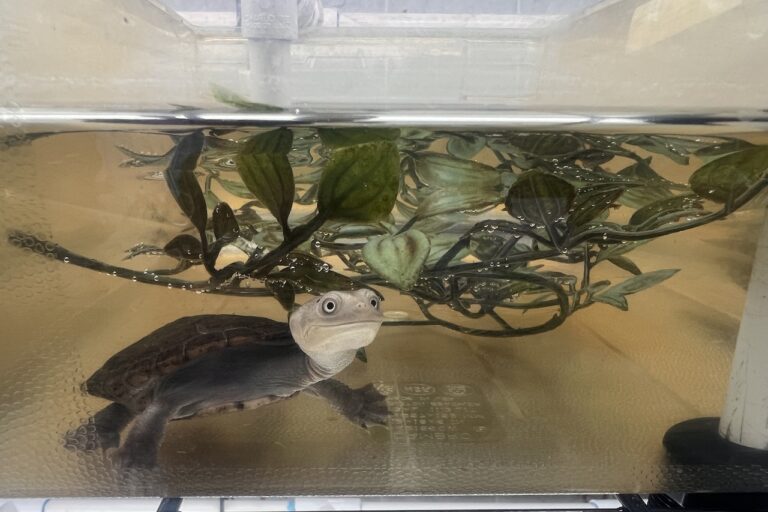
A High-Security Refuge for Survival (Image Credits: Imgs.mongabay.com)
High fences, vigilant guard dogs, and surveillance cameras encircle the Turtle Survival Center in Cross, South Carolina. This facility, operated by the Turtle Survival Alliance, functions as a genetic repository — often called a “turtle bank” — for critically endangered species. Experts gather in a moss-green classroom adorned with posters and paintings of turtles and tortoises. A dedicated turtle-themed library occupies one corner, underscoring the depth of knowledge housed there.
The center supports the global mission of zero turtle extinctions. Staff maintain scientifically managed populations, focusing on species that face severe threats in the wild. Long-term captivity allows for breeding programs aimed at future reintroductions. The subtropical climate of the region proves ideal for replicating the native habitats of Southeast Asian turtles.
Spotlight on Southeast Asia’s Vanishing Treasures
The facility prioritizes turtles from Southeast Asia, where poaching, habitat loss, and the pet trade have decimated populations. Over 800 turtles and tortoises representing 27 species reside here, including many considered functionally extinct in their natural ranges. Five species in particular teeter on the brink, with no viable wild populations remaining.
Among the residents are several box turtle varieties, prized in illegal markets as “living gems.” The collection includes:
- Rote Island snake-necked turtle (Chelodina mccordi), presumed extinct in the wild due to trade and habitat destruction.
- Arakan Forest Turtle (Heosemys depressa).
- Spiny Turtle (Heosemys spinosa).
- Burmese Star Tortoise (Geochelone platynota), which has benefited from reintroduction efforts elsewhere.
- Vietnamese Pond Turtle (Mauremys annamensis).
- Indochinese Box Turtle (Cuora galbinifrons) and relatives like Bourret’s Box Turtle (Cuora bourreti).
- Asian Big-headed Turtle (Platysternon megacephalum).
These enclosures mimic humid tropical forests and riverine environments, complete with temperature-controlled setups to study sex ratios in hatchlings.
Breeding Programs and Research Innovations
Breeding success remains central to the center’s strategy. Offspring from these programs hold potential for augmenting wild populations or full reintroductions once conditions improve. Experiments explore how incubation temperatures influence hatchling sex, addressing climate-driven imbalances observed globally.
Clinton Doak, director of operations, emphasized the structured approach: “It’s a very structured plan.” The facility hosts workshops, such as one in September 2025 that drew 16 enthusiasts from three countries. Internships and volunteer events further engage the next generation in chelonian care and biology.
Not open to the general public, the center collaborates with zoos and conservation partners. Cris Hagen, director of animal management, highlighted trade vulnerabilities: “Even the most critically endangered, protected turtles in the world can legally be sold every day of the week.”
Facing Poaching, Climate, and Long Odds
Threats persist despite the sanctuary’s efforts. Illegal wildlife trade, fueled by demand for rare pets, generates billions annually and exploits legal loopholes. Habitat degradation from sand mining and rising seas compounds the crisis, even in South Carolina analogs.
Reintroduction timelines stretch over decades or centuries, given turtles’ longevity — up to 50 years in captivity for some. Doak noted future uncertainties: “Right now, there is no chance of putting any of these animals back into the wild… The hope is that, in a hundred years, culture change is enough.”
David Collins, who leads domestic operations, pointed to stronger U.S. protections as a model. The center’s work buys time, preserving genetic diversity against immediate collapse.
Key Takeaways
- The Turtle Survival Center houses over 800 turtles from 27 species, many critically endangered from Asia.[2]
- High-security measures protect against poaching in a facility mimicking native habitats.[1]
- Breeding and research aim for eventual wild releases, despite long-term challenges like climate change.
This unassuming fortress in the pines stands as a beacon of hope, proving that dedicated conservation can halt the slide toward oblivion. What steps can we take to support such vital efforts? Share your thoughts in the comments.