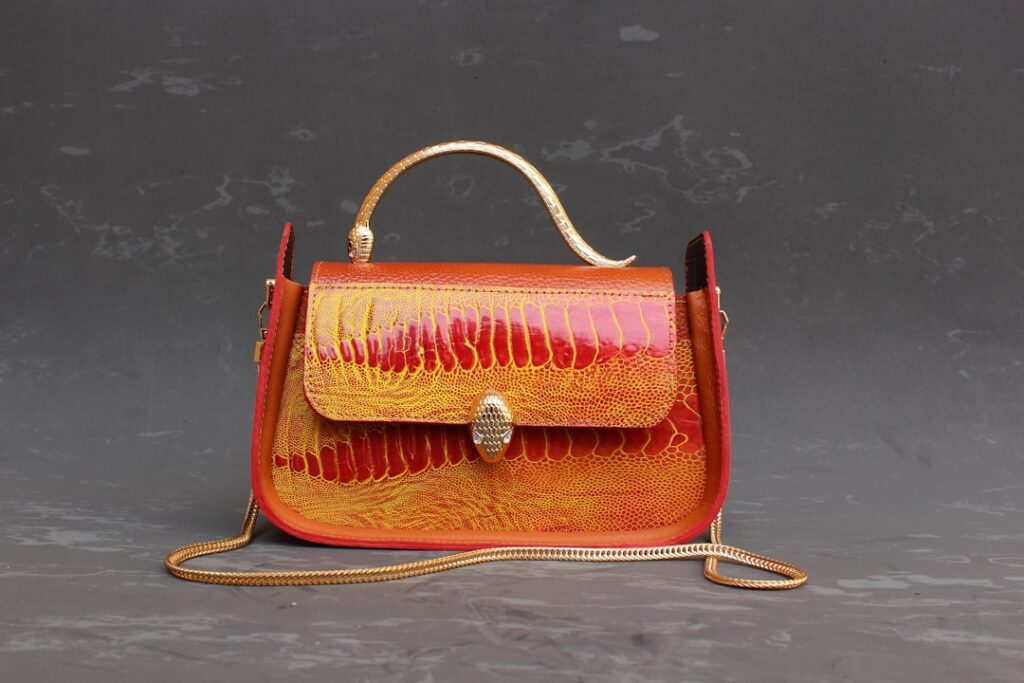
Amsterdam – Scientists and designers unveiled the world’s first handbag crafted from lab-grown collagen derived from Tyrannosaurus rex fossils on April 2 at the Art Zoo Museum. The one-of-a-kind teal clutch, displayed alongside a massive T. rex skeleton replica until May 11, merges prehistoric protein sequences with modern biotechnology. This project demonstrates how biofabrication could redefine luxury materials while offering a cruelty-free alternative to traditional leather.
A Predator’s Legacy Takes Center Stage
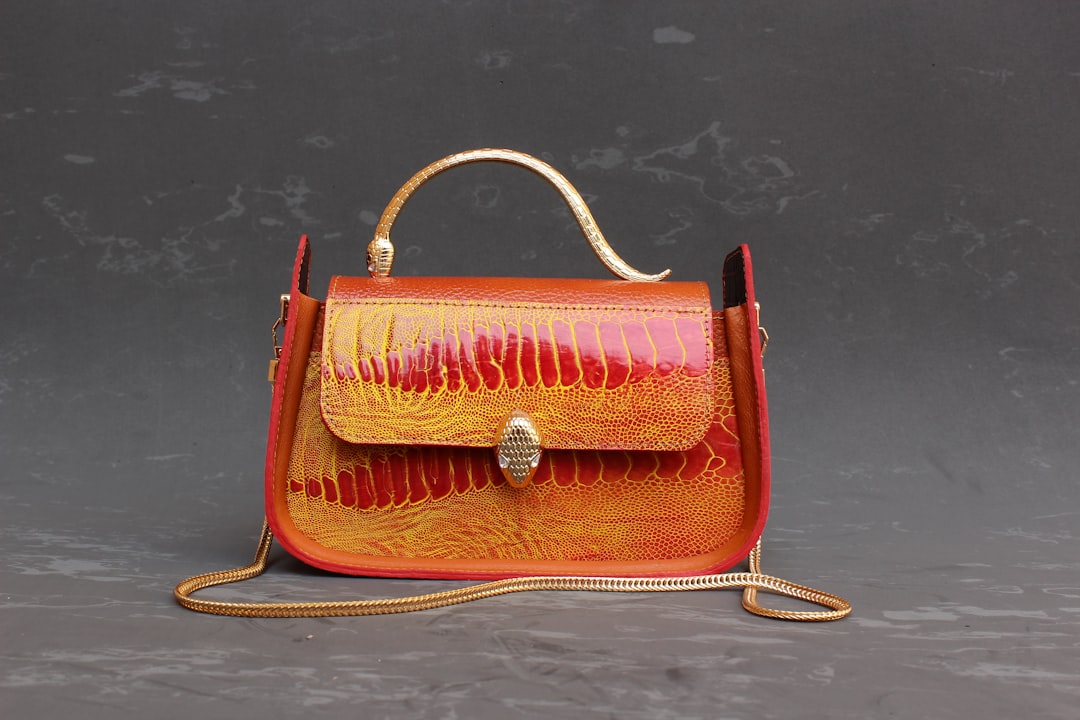
A Predator’s Legacy Takes Center Stage (Image Credits: Unsplash)
Visitors to the Art Zoo Museum encountered a caged rock displaying the angular handbag, complete with incisions evoking dinosaur claw marks. The creation drew immediate attention for its bold fusion of paleontology and high fashion. Organizers plan to auction the piece shortly after the exhibit closes, with bids starting above half a million dollars.
Collaboration among creative agency VML, genomic firm The Organoid Company, and biotechnology specialist Lab-Grown Leather produced the material. Fashion label Enfin Levé transformed it into the functional prototype. Such partnerships underscore the shift toward interdisciplinary innovation in materials science.
Reconstructing Collagen Through Computational Wizardry
Researchers began with fragmented collagen proteins extracted from U.S. T. rex fossils, remnants preserved in bone over 66 million years. These traces lacked complete sequences, so teams employed AI modeling and computational biology to predict and fill gaps. The result formed a full genetic blueprint for Type I collagen, the protein key to leather’s strength.
Synthetic DNA based on this blueprint entered a carrier cell line. Billions of engineered cells then proliferated via Lab-Grown Leather’s Advanced Tissue Engineering Platform. A scaffold-free method allowed natural fiber assembly, yielding a durable, biodegradable sheet without animal harm or toxic tanning.
- Extract protein fragments from T. rex bone fossils.
- Use AI to reconstruct full collagen gene sequence.
- Synthesize DNA and insert into host cells.
- Cultivate cells in bioreactors for collagen production.
- Process into leather-like textile.
Design Meets Dino-Inspired Durability
Enfin Levé founder Michal Hadas tested the material’s unique tension and resistance before shaping the clutch. The deep teal finish and sleek form highlight its artisanal potential. Properties like repairability and traceability position it as a premium option for luxury brands.
Thomas Mitchell, CEO of The Organoid Company, noted the technical hurdles overcome. “This project demonstrates how genome and protein engineering can create entirely new classes of biomaterials,” he stated. Che Connon of Lab-Grown Leather emphasized its edge: “It’s not just a green alternative to leather; it’s a technological upgrade.”
Skepticism Shadows Scientific Spectacle
Not all experts embraced the “T-Rex Leather” moniker. Paleontologist Melanie During of Vrije Universiteit Amsterdam argued that fossil collagen survives only as traces unsuitable for recreating skin. Thomas R. Holtz Jr. of the University of Maryland pointed out the bone origin lacks skin’s fiber structure.
Critics contend the process relies on modern cells, diluting claims of pure dinosaur origin. Yet proponents view it as a valid proof-of-concept. Thomas Mitchell welcomed the debate: “Criticism is the bedrock of scientific exploration.”
Biofabrication’s Broader Horizon
The handbag previews scalable production via automated bioreactors and robotics. Sensors monitor growth conditions, while robotic systems handle transfers and finishing. This automation promises efficiency in creating custom biomaterials, from spider silk to mammoth wool.
Plans include commercializing T-Rex Leather for accessories, then automotive uses. VML’s Bas Korsten captured the vision: “We’re harnessing the biology of the past to create the luxury materials of the future.” Reduced livestock demands could slash environmental impacts tied to conventional leather.
Key Takeaways
- AI bridges gaps in ancient protein data for novel materials.
- Lab-grown leather avoids ethical and ecological pitfalls of animal hides.
- Automation scales biofabrication, enabling programmable textiles.
This T. rex handbag marks a pivotal step where extinct biology inspires sustainable innovation. As biofabrication matures, everyday goods may soon carry echoes of prehistoric might. What do you think about dino-derived designs? Tell us in the comments.