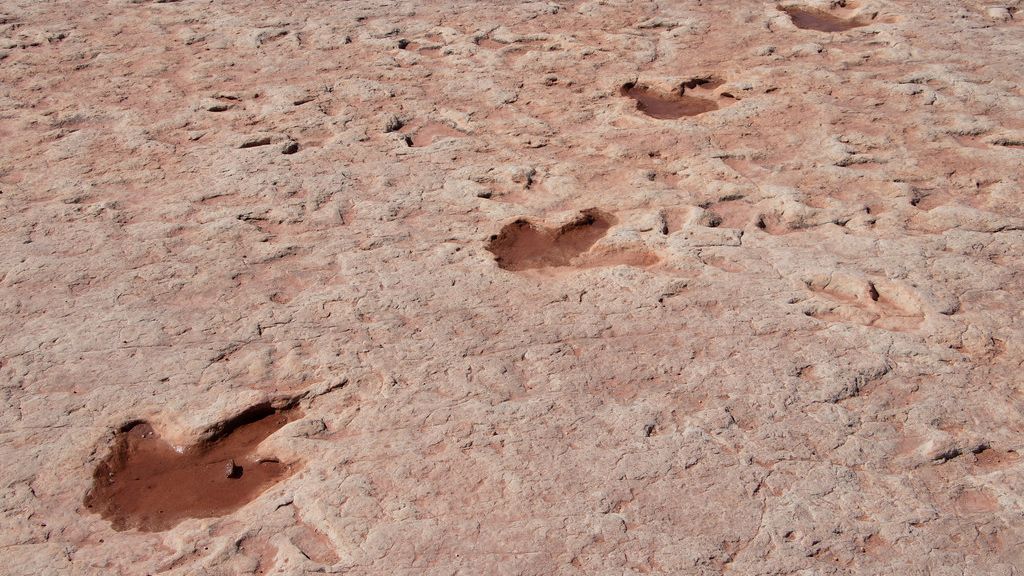
Imagine standing on a remote riverbank in Cameroon, and beneath your feet, pressed into ancient stone, is the three-toed imprint of a dinosaur that walked the very same ground over 120 million years ago. The wild part? That exact same footprint is sitting on the other side of the Atlantic Ocean, thousands of miles away in Brazil. Not a similar one. Not a look-alike. The same footprint, separated by an ocean that simply did not exist yet.
Dinosaur fossils have always fascinated us, but footprints? They are something else entirely. They are moments, frozen in time, capturing a single step taken by a living, breathing creature long before humans were even a distant thought. What those footprints are now telling us about ancient migrations, lost land bridges, and continent-crossing journeys is nothing short of staggering. Let’s dive in.
The Science of Frozen Footsteps: What Ichnology Really Tells You
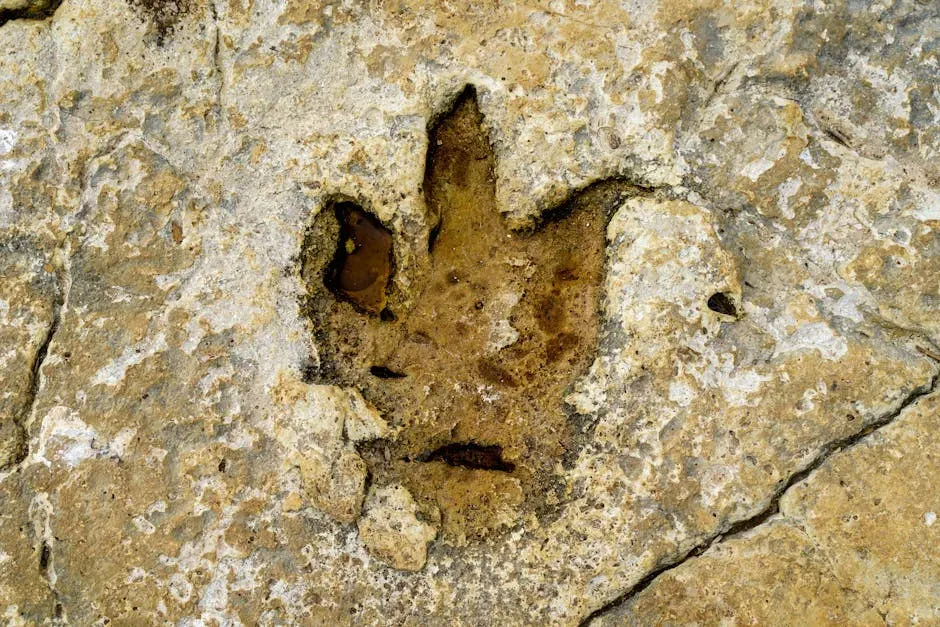
You have probably seen a dinosaur skeleton in a museum and thought, “wow, that’s incredible.” Honestly, though, you are only getting half the story when you look at bones. Unlike body fossils that show what dinosaurs looked like, footprints capture moments in time, revealing how dinosaurs moved, interacted, and lived their daily lives. That distinction matters more than most people realize.
The study and interpretation of tracks is the basis of dinosaur ichnology, a subscience of paleontology that is providing an unprecedented understanding of the behavior of dinosaurs and the environment in which they lived. The word “ichnology” itself stems from the Greek word “ichnos,” meaning “footprint” or “track.” Think of it as forensic science for the prehistoric world, except the crime scene is 100 million years old.
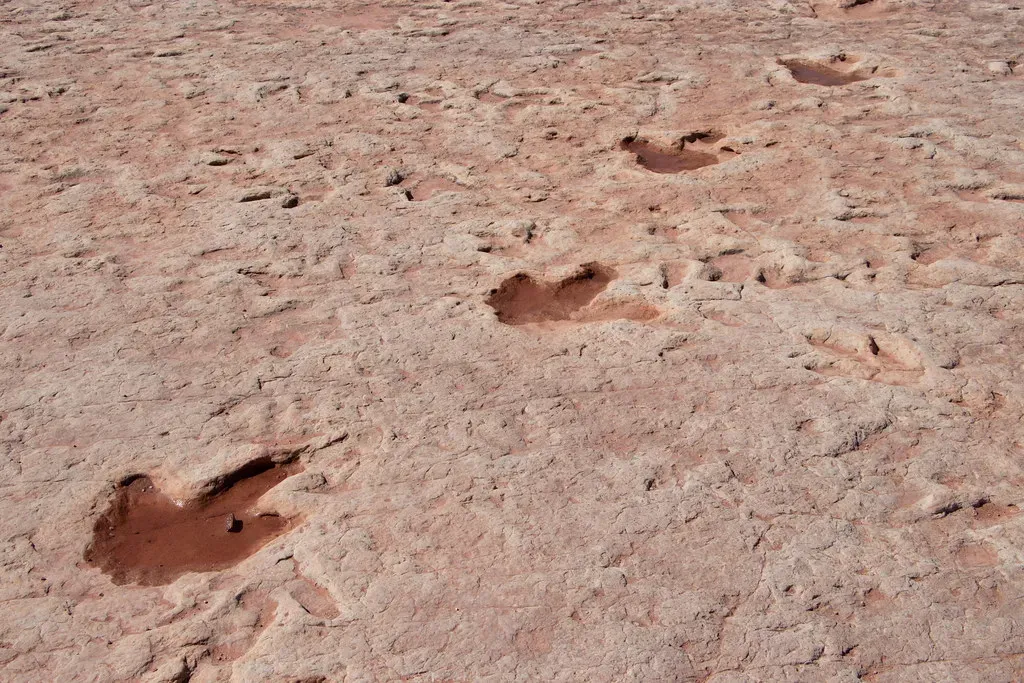
When dinosaurs walked across soft substrates like mud or sand that later hardened and became preserved, they left behind evidence of their movement patterns, speed, and even anatomical details not always preserved in skeletal remains. Scientists analyze track depth, stride length, and foot morphology to determine how dinosaurs distributed their weight and how they moved. It’s remarkable, when you think about it, that something as delicate as a muddy footstep survived longer than most mountain ranges.
A Discovery That Rewrote the Map: Brazil Meets Cameroon
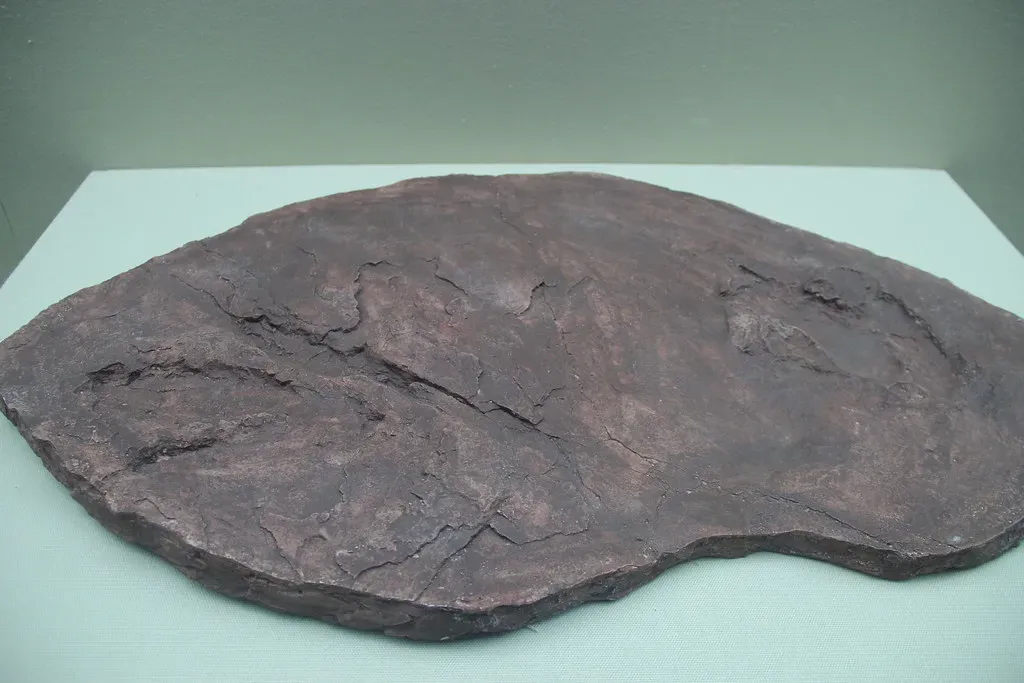
Here’s the thing about the 2024 discovery that shook the paleontology world. More than 260 footprints were discovered in Brazil and in Cameroon, showing where land-dwelling dinosaurs were last able to freely cross between South America and Africa millions of years ago before the two continents split apart. The footprints, impressed into mud and silt along ancient rivers and lakes, were found more than 3,700 miles away from each other.
The footprints are similar in age, shape, and geologic context, according to Louis L. Jacobs, a paleontologist at Southern Methodist University in Texas and lead author of the study describing the tracks. The research team determined that in terms of age, the footprints were similar. In their geological and plate tectonic contexts, they were also similar. In terms of their shapes, they are almost identical. That level of similarity is not coincidence. That is history.
The sites where the fossils are preserved are now 3,700 miles distant, but they were once only 600 miles apart, according to the study led by Jacobs. Picture the two continents as neighbors sharing a back fence, before the Earth itself slowly tore that fence apart over millions of years.
The Ancient Highway: River Corridors and Land Bridges
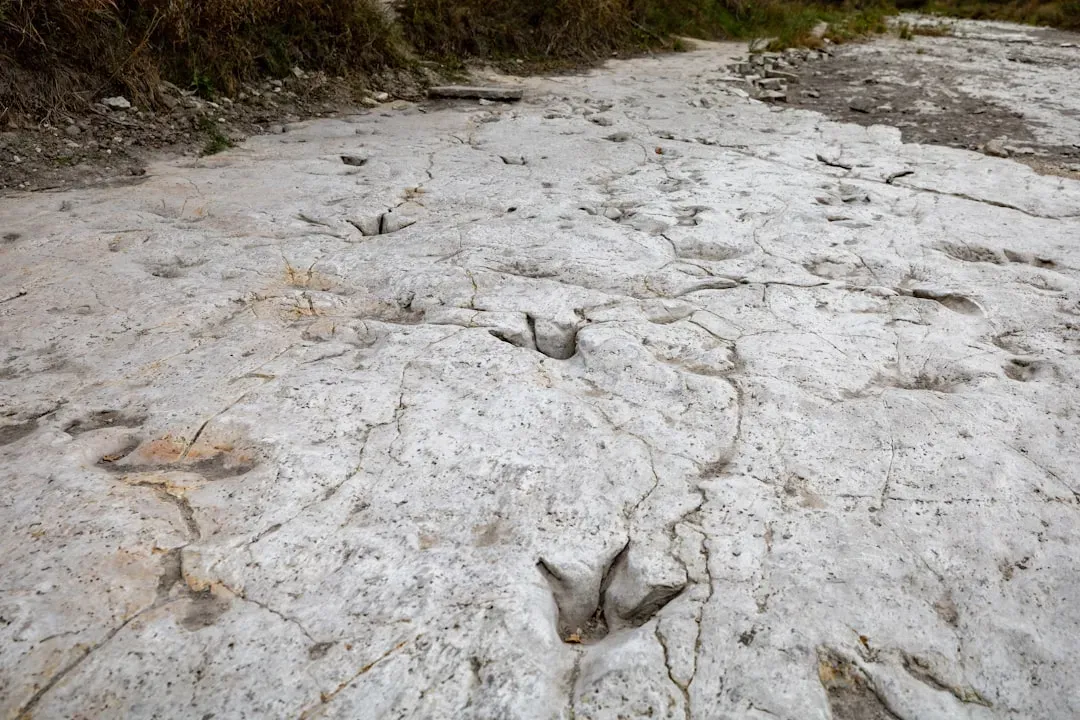
Dinosaurs made the tracks 120 million years ago on a single supercontinent known as Gondwana, which broke off from the larger landmass of Pangea. Most people have heard of Pangea, the ancient supercontinent that all the landmasses once formed. But Gondwana was its southern offspring, and it was the stage for some of the most dramatic migrations in Earth’s history.
River valleys served as natural highways. Their floodplains offered water, sheltering vegetation, and soft ground ideal for capturing prints. Along with dinosaur tracks, these sediments contain fossil pollen that indicate an age of 120 million years. Before the continental connection between Africa and South America was severed, rivers flowed and lakes formed in the basins. It was essentially a lush tropical corridor, humming with life. Think of it as the ancient equivalent of a modern wildlife migration route, one that stretched across a continent.
By around 120 million years ago, the area’s environment would have been similar to a modern tropical rainforest, and it would have drawn dinosaurs to its plentiful vegetation. Together, the African and South American sites confirm that dinosaurs strolled across a contiguous landmass long after Pangea began unraveling, using the same river corridors that would later drown beneath the Atlantic. Even as magma welled up offshore, rivers still braided across the future ocean floor, allowing wildlife to wander freely between the continents.
Who Was Walking? The Dinosaurs Behind the Tracks
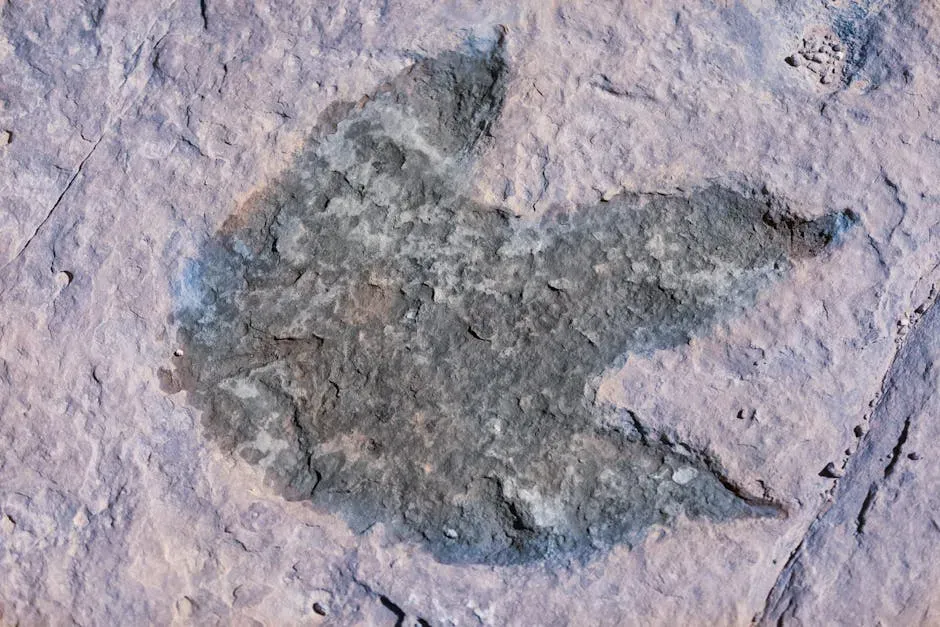
The footprints, left behind in mud and silt along ancient bodies of water, were mostly made by three-toed theropods, carnivorous dinosaurs that walked on two feet. A few were probably also made by sauropods, large four-legged herbivores with long necks and tails, or ornithischians, dinosaurs with bird-like hips. Honestly, that is a wild cross-section of prehistoric life sharing the same ancient road.
It’s difficult for scientists to determine exactly which species of dinosaurs walked between the continents. The fact that these tracks are almost identical on both continents suggests that the same species of dinosaurs roamed freely across the land bridge before being separated by the forming ocean. It is hard to say for sure exactly which creatures left which prints, but the physical evidence of the journey itself is undeniable.
Theropods, such as Tyrannosaurus, Baryonyx, or Velociraptor, had narrower and longer footprints than ornithopods. Theropod footprints typically have long, slender toes and a V-shaped outline. So when you picture these ancient travelers, you are imagining creatures ranging from swift, agile predators to enormous four-legged giants, all trudging along the same muddy riverbanks toward an unknown horizon.
North America’s Dinosaur Freeway: A Continent-Wide Migration Route
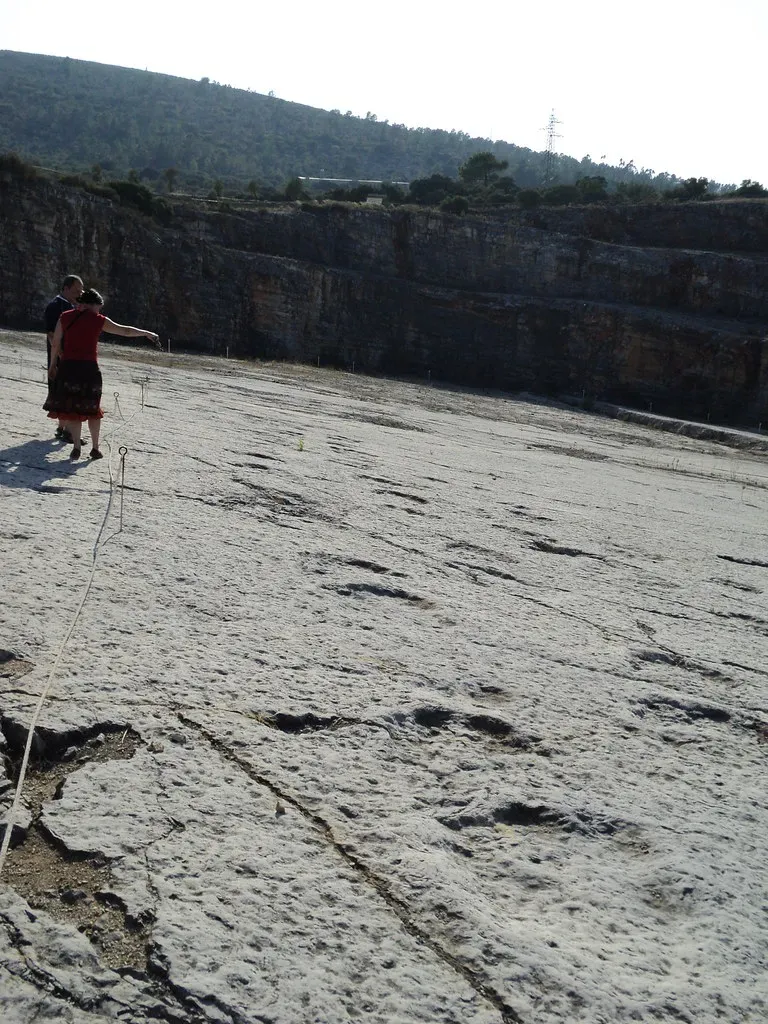
The Brazil-Cameroon discovery is breathtaking, but it is not the only place where dinosaur footprints tell a story of mass movement. In North America, you can find what researchers have literally called the “Dinosaur Freeway,” and it is every bit as dramatic as it sounds. Just as individual tracks link together to form trackways, paleontologists now link individual trackways into “megatrackways.” Each is a record of regional dinosaur movements that support the theory that certain dinosaurs migrated hundreds of miles.
Colorado’s Dinosaur Freeway consists of 20 individual trackways over a distance of 40 miles, each made by the same types of dinosaurs in the same 100-million-year-old Cretaceous geologic horizon. The Dinosaur Freeway marks the western shore of the Cretaceous Interior Seaway, an inland sea with a broad coastal plain that hosted a booming dinosaur population. You have to appreciate the scale here. Forty miles of ancient footprints, all pointed in the same direction, all made by the same kind of animal.
Around 100 million years ago during the Late Cretaceous Period, global sea levels were high, and a body of water called the Western Interior Seaway split North America into eastern and western land masses. Large herds of dinosaurs left trackways as they moved north and south along the coastal plain of the western shoreline. The Purgatoire River track site in Colorado shows hundreds of sauropod tracks all moving in a consistent direction, possibly documenting a migration event. The evidence of organized, directional movement is right there in the stone.
Bolivia’s Record-Breaking Tracksite and What It Reveals
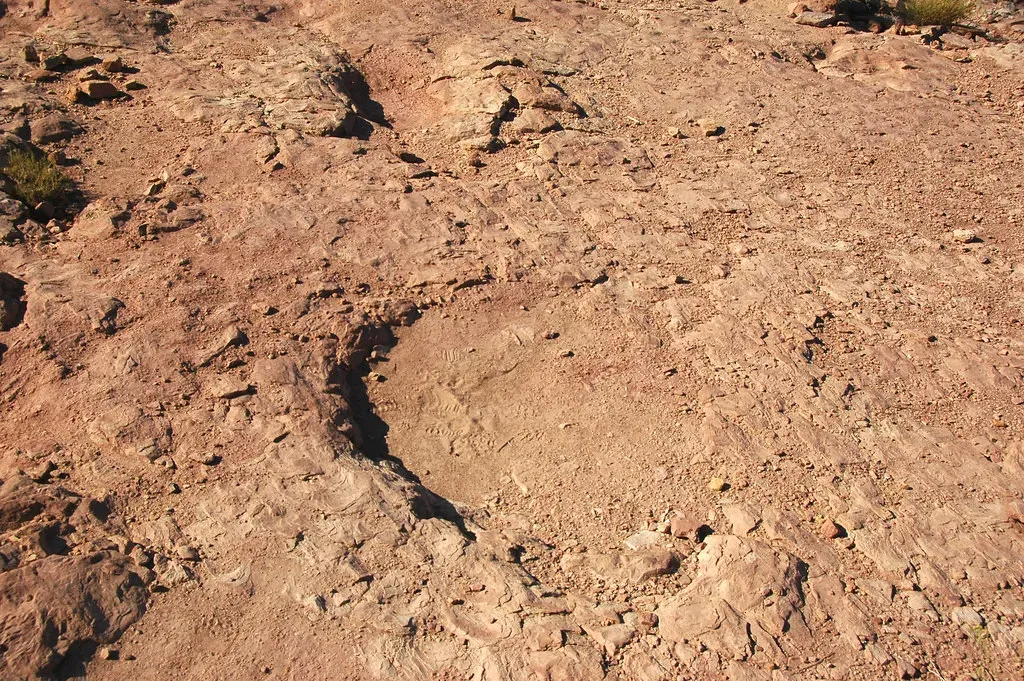
If you think the Dinosaur Freeway is impressive, prepare yourself for what researchers uncovered in Bolivia. Scientists recently counted 16,600 theropod tracks at the Carreras Pampas tracksite in Bolivia’s Torotoro National Park. The theropods stamped their feet into the soft, deep mud between roughly 101 million and 66 million years ago, toward the end of the Cretaceous period. That is more theropod tracks in one place than anywhere else on Earth.
Print shapes and the distance between the footprints revealed how the animals were moving. Some strolled at a leisurely pace, while others sprinted through the muddy shoreline, and more than 1,300 tracks preserved evidence of swimming in shallow water. Several trackways included drag marks from the theropods’ tails, and varying lengths and widths of the footprints suggested that the dinosaurs ranged greatly in size.
These thousands of footprints provide important clues about dinosaurs that fossil skeletons cannot, because trackways reveal how living animals moved. Tracks are a record of soft tissues, of movements, and of the environments the dinosaurs were actually living in. This site, with its abundant tracks of different-size animals moving in various ways, really brings these lost ecosystems to life in a way that bones don’t. It is, without exaggeration, like watching an ancient wildlife documentary carved in stone.
Technology, Tectonic Plates, and the Future of Footprint Science
What makes all of this even more exciting is how the science of reading footprints is evolving. Computer simulations based on track evidence allow paleontologists to recreate dinosaur movement with increasing accuracy, testing hypotheses about speed, agility, and energy efficiency. These technological advances have transformed ichnology from a descriptive science to a dynamic analytical field that continues to extract new behavioral information from even well-studied track sites.
Machine learning algorithms are being developed to automatically identify and classify thousands of tracks across sites, potentially revealing patterns too subtle for human observation. Integration of track data with other paleoenvironmental evidence, including ancient climate records, plant fossils, and sedimentology, is creating more comprehensive pictures of complete dinosaur ecosystems. We are, in a real sense, entering a golden age of footprint science.
Studying the dispersed footprints sharpens computer models that reconstruct continental drift, improving predictions of where oil, minerals, or groundwater might reside today. They also highlight how living routes shift as climates and coastlines change, offering lessons for wildlife facing modern habitat fragmentation. By understanding how prehistoric animals adapted to changing climates, migrated across continents, and formed complex social structures, we can gain insights into the resilience and vulnerability of today’s wildlife. Modern climate change may force animals to alter their migratory routes or social behaviors, as their ancestors once did in response to ancient environmental shifts. Conservationists can use this knowledge to design wildlife corridors and protect critical habitats.
Conclusion: The Ground Remembers Everything
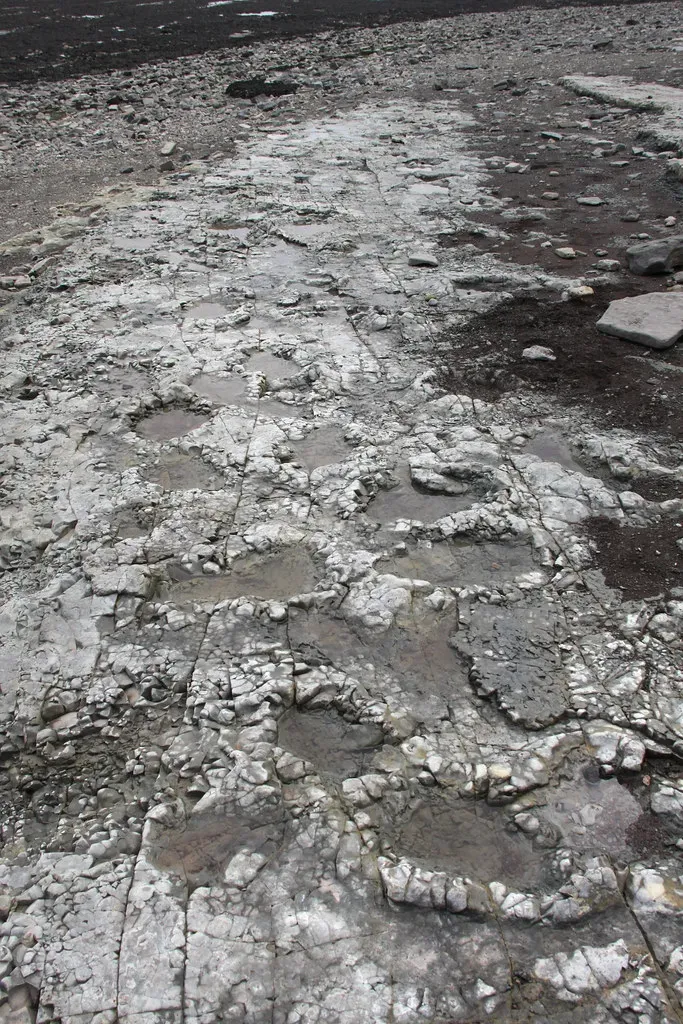
There is something deeply humbling about knowing that the Earth itself has been keeping records all along. Long before anyone was around to write history down, the mud was doing it for us. Every footprint pressed into ancient sediment was a message, sealed in stone and waiting patiently across millions of years for someone to finally read it.
The matching footprints in Brazil and Cameroon do not just tell us about two specific dinosaurs. They tell us that life was always restless, always moving, always searching for greener ground across the next horizon. These footprints are not just marks in the ground. They are direct evidence of how plate tectonics and continental drift have shaped life on Earth. By studying these tracks and the geological contexts in which they were found, researchers can better understand how species adapted to and navigated changing environments over time.
The story encoded in fossilized footprints is still being told, still being deciphered. And every new site that gets discovered, whether in Bolivia, Cameroon, Colorado, or somewhere we haven’t found yet, adds another chapter to a journey that started before the world even looked the way it does today. What would you have guessed was hiding beneath your feet?