Imagine standing in the desert heat of New Mexico, looking down at a shallow depression pressed into ancient rock, and realizing you are staring at the exact moment an ancestor of yours paused mid-stride more than twenty thousand years ago. That is the raw, almost electric power of fossilized footprints. They are not bones, not tools, not art. They are pure motion, frozen in stone.
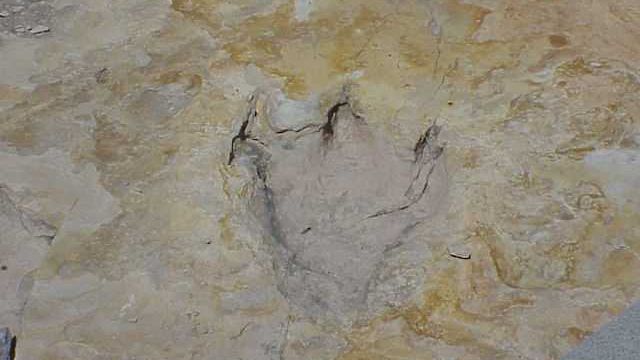
Unlike most fossils that tell you what an animal looked like, these trace fossils tell you what an animal was actually doing. Fossilized footprints, also known as trace fossils or ichnites, offer scientists an unparalleled window into not only what prehistoric animals looked like, but how they moved, socialized, hunted, and survived. Unlike bones or teeth, footprints capture a moment in time – an action, a decision, even a struggle for survival. From predator chases to family treks and cross-continental migrations, these ancient impressions are rewriting what you thought you knew about life on Earth. So let’s dive in.
What Exactly Is a Fossilized Footprint, and How Does One Survive Millions of Years?
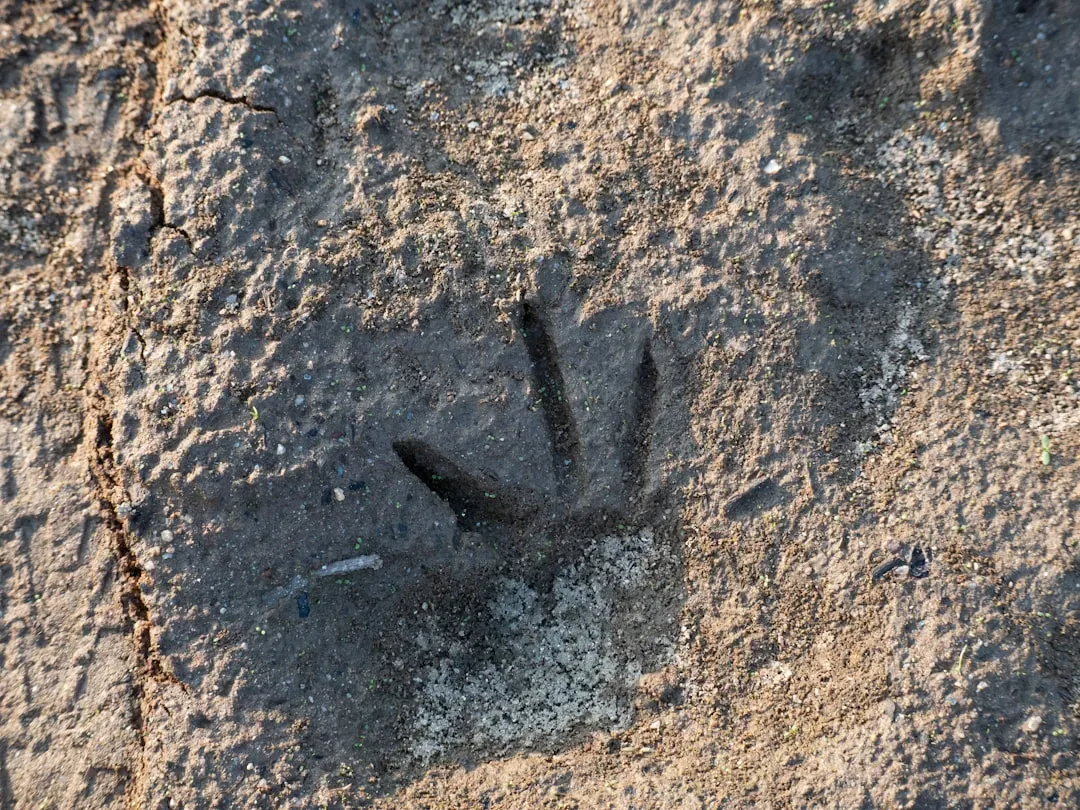
Here’s the thing about trace fossils – they’re actually more fragile and rare than bones, which makes finding one in pristine condition feel like winning the paleontological lottery. Footprints happen when an animal steps on wet or soft earth. The weight of its body pushes down, leaving a mark in the ground. The toes push and move sediment, making a real track. Pressure goes deeper, making small marks in the lower layers. The print is soon covered by new sediment and hardens over time.
Special conditions are required in order to preserve a footprint made in soft ground. A possible scenario is a sea or lake shore that became dried out to a firm mud in hot, dry conditions, received the footprints, and then became silted over in a flash storm. Think of it like concrete – you only get one short window to press your hand in before it sets forever. The same principle applies across millions of years of geological time.
The environments necessary for preserving body fossils are quite different from those necessary for preserving tracks. Whereas body fossils require rapid burial to escape scavenging or decay, tracks must dry out or be buried slowly to avoid disturbance of the soft substrate. This means that tracks and body fossils are often found in different types of rock, so tracks can provide evidence of animals that are otherwise not represented in a given set of rock layers.
Reading the Tracks: What Science Can Extract From a Single Footprint
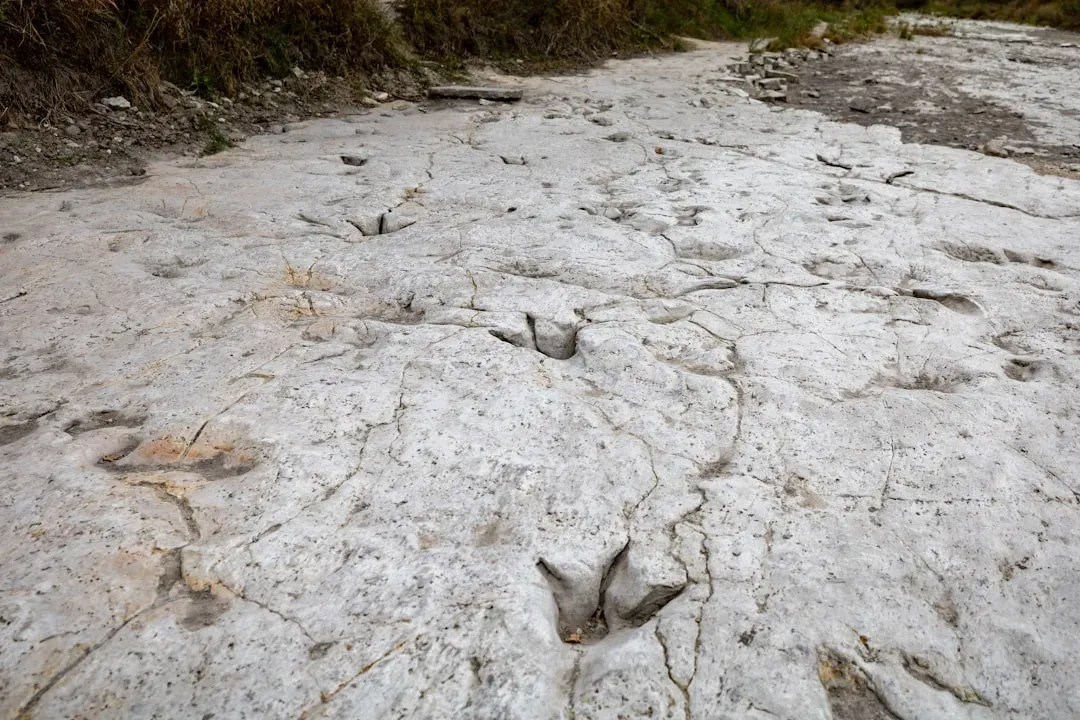
You might be surprised just how much information can be pulled from what looks like a simple pressed impression in rock. Fossil tracks can provide different types of information about the lives of the animals that made them. By examining the shapes of tracks, researchers learn about the characteristics of the track-maker’s feet. By measuring trackways, researchers learn about the posture of animals and how they moved. By analyzing multiple trackways, researchers can find clues about how ancient animals interacted with each other.
Fossil trackways can indicate speeds: there is a constant relationship between the spacing of footprints, or stride length, leg length, and speed. Honestly, it is a bit like reading tire marks at a crash scene – the length between impressions tells you everything about how fast that creature was moving, and whether it was strolling, fleeing, or hunting. In this way, trace fossils can be thought of as fossilized behaviour.
Recent studies use biomechanical modeling to replicate how ancient animals moved. They take dinosaur footprints and compare them to how reptiles and birds move today. By doing this, scientists turn fossilized footprints into guides that show how ancient life moved. The result is a living, breathing picture of creatures that vanished long before humans walked the earth.
The Bolivia “Dinosaur Freeway”: A Prehistoric Highway Unlike Any Other
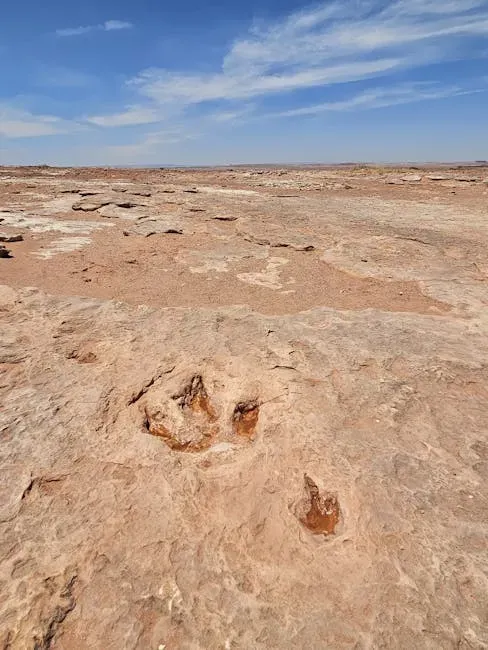
If you want proof that ancient animals were not solitary wanderers but active travelers moving in massive numbers, look no further than Bolivia. Scientists recently counted 16,600 theropod tracks – more than any other trackway site – at the Carreras Pampas tracksite in Bolivia’s Torotoro National Park. There, the theropods stamped their feet into the soft, deep mud between 101 million and 66 million years ago, toward the end of the Cretaceous period. This study is the first scientific survey of the footprint-covered areas, which extend roughly 80,570 square feet.
Print shapes and the distance between the footprints revealed how the animals were moving. Some strolled at a leisurely pace, while others sprinted through the muddy shoreline, and more than 1,300 tracks preserved evidence of swimming in shallow water. Several trackways included drag marks from the theropods’ tails, and varying lengths and widths of the footprints suggested that the dinosaurs ranged greatly in size: from a hip height of about 26 inches to more than 49 inches.
Most of the tracks were traveling north-northwest or southeast. They were likely made over a relatively short time span, indicating that this area was a popular thoroughfare for theropods and could have been part of a larger dinosaur freeway that spans Argentina, Bolivia and Peru. Let’s be real – “dinosaur freeway” is one of the coolest phrases in all of science.
White Sands: Where Human and Animal Footprints Crossed 23,000 Years Ago
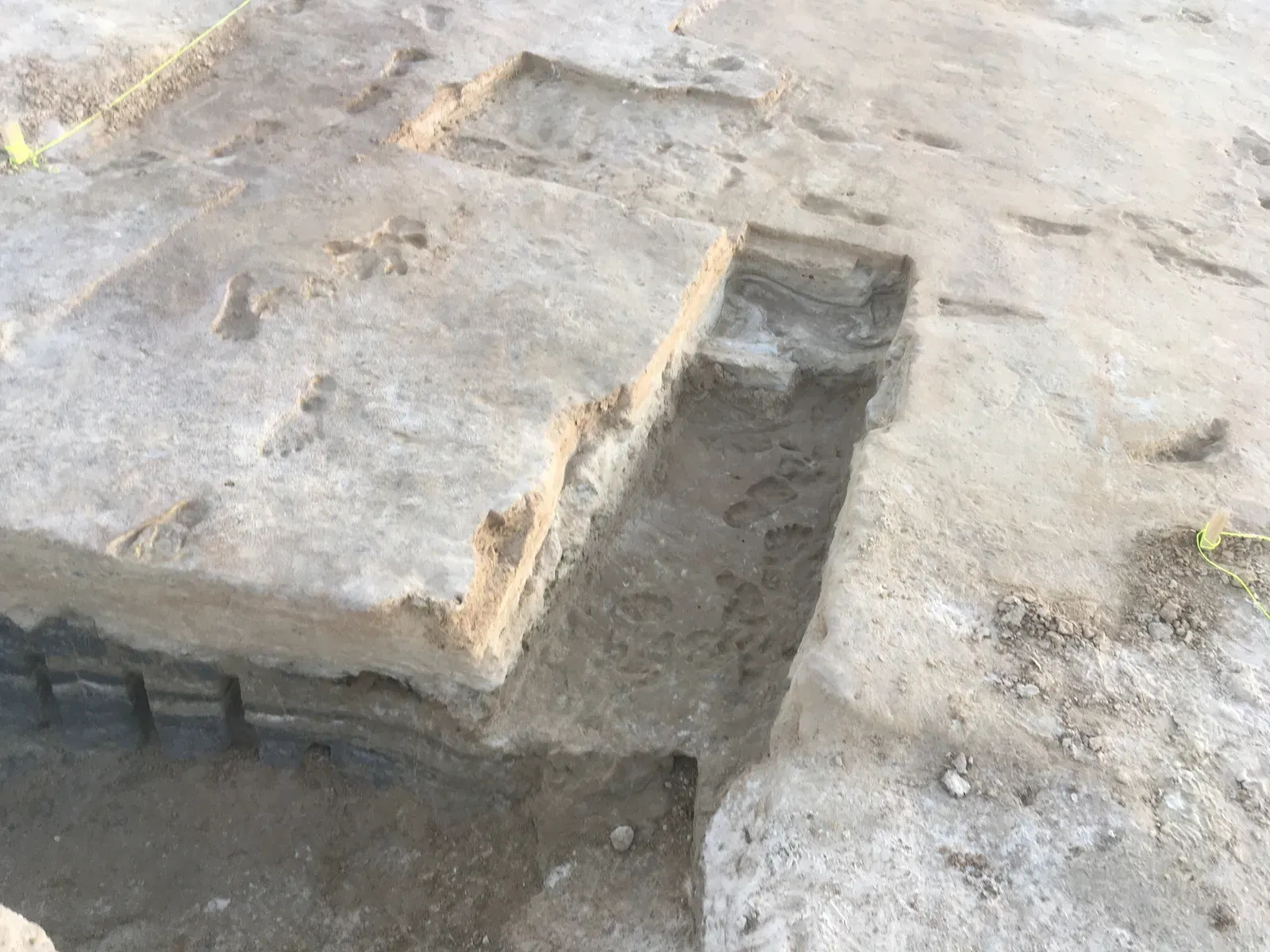
New Mexico’s White Sands National Park is, without question, one of the most extraordinary fossil sites on the planet. According to a paper published in the journal Science, footprints were pressed into the mud near an ancient lake at White Sands between 21,000 and 23,000 years ago, a time when many scientists think that massive ice sheets walled off human passage into North America. That timeline alone rattled the scientific community.
The lake and its lush surrounding vegetation attracted not only humans but also many now-extinct species such as plant-eating ancient camels, mammoths and ground sloths. Predators, like American lions and dire wolves, enjoyed good living here as well. But when the climate shifted, a centuries-long drought began to rapidly shrink the lake, and the shorelines became surrounded by soft wetlands. Humans and animals frequented this area, and when it dried up, many thousands of their footprints became fossilized.
One set of prints appears to have been made by a woman and a toddler who intermittently walked on its own and then was picked up and carried. At some places the child’s little prints disappear even as the woman’s broaden in the mud under the burden of the youngster’s extra weight. Other tracks tell the story of a group of ancient hunters apparently stalking a giant sloth. Their prints follow the animal’s prints and at times appear inside the sloth’s own, as though they stepped in its tracks as they trailed it.
A Parent’s Epic Trek: The Longest Human Trackway Ever Found
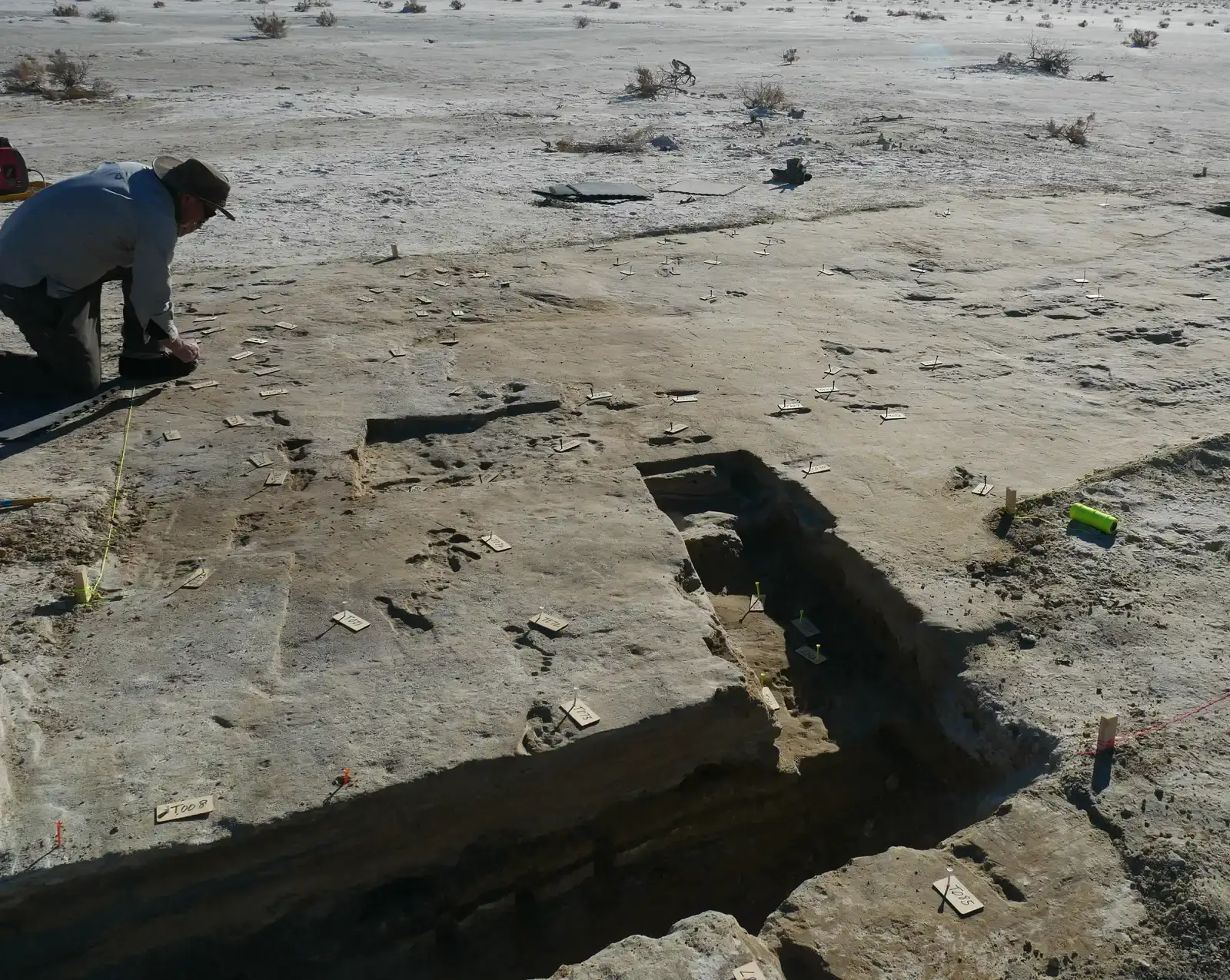
I know it sounds almost unbelievable, but fossilized footprints once told the story of a parent carrying a child across a dangerous prehistoric landscape – and then walking back alone. The tracks run for 1.5 kilometers and show a single set of footprints that are joined, at points, by the footprints of a toddler. The paper’s authors have shown how the footprint tracks, as well as the distinctive shapes they left, show a woman – or possibly an adolescent male – carrying a toddler in their arms, shifting the toddler from left to right, and occasionally putting the child down.
The spacing of the tracks suggests the person was traveling around 3.8 miles an hour. While not a jog, this would have been a hasty pace considering the muddy conditions and heavy load. In a few spots, the traveler’s strides were unusually long, as if they were stepping or leaping over an obstacle. Picture navigating a flooded mudflat while holding a squirming three-year-old. That is exactly the kind of human detail these tracks preserve.
Sloths and mammoths were found to have intersected the human tracks after they were made, showing that this terrain hosted both humans and large animals at the same time, making the journey taken by this individual and child a dangerous one. A team of scientists has documented nearly a mile of fossilized footprints from this out-and-back venture – the longest human trackway of its age ever found.
Two Ancient Human Species, Crossing Paths 1.5 Million Years Ago in Kenya
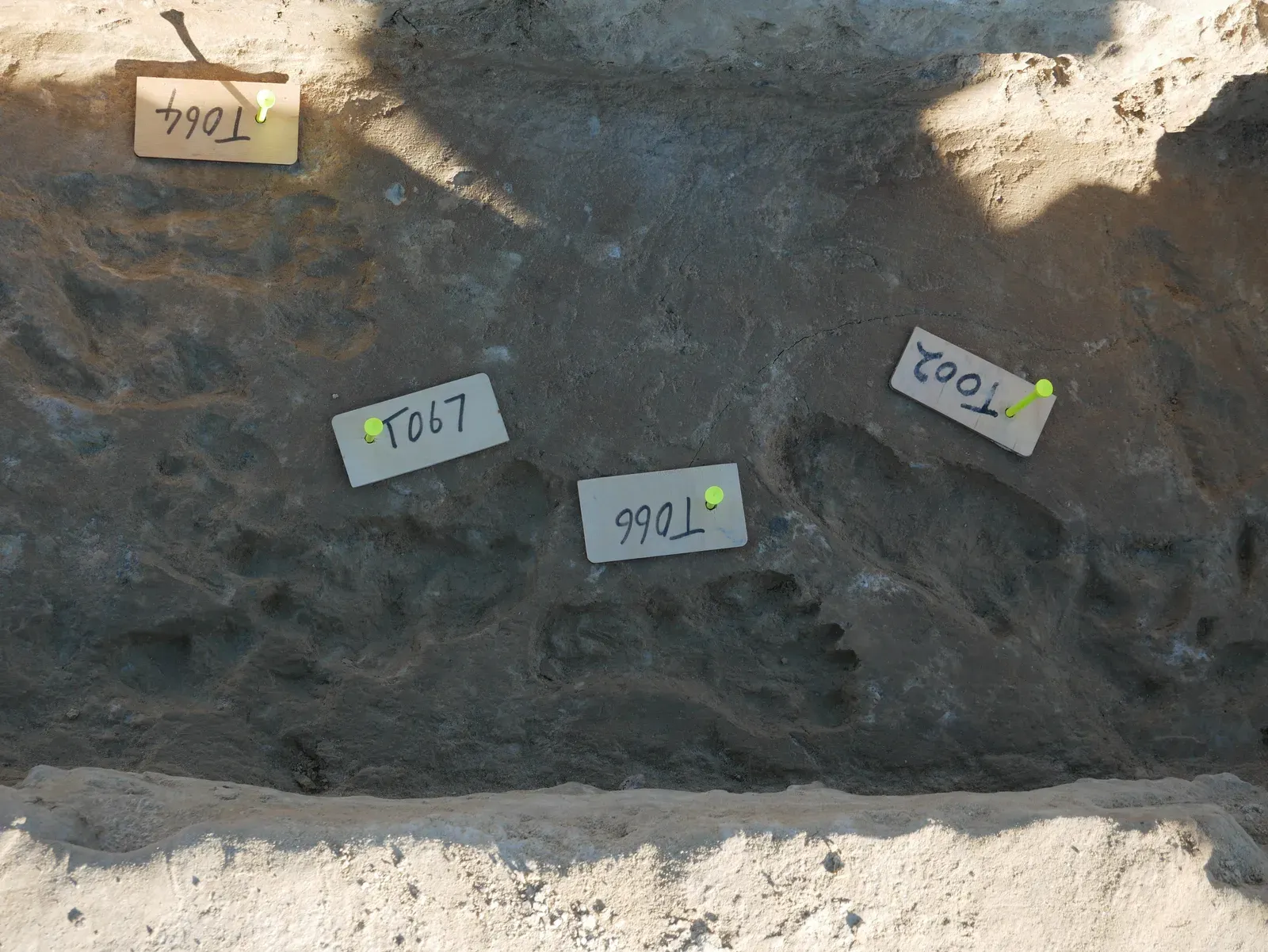
One of the most jaw-dropping fossil discoveries in recent years came out of Kenya in 2024, and it rewrote everything about how early humans may have coexisted. More than 1.5 million years ago, two different species of ancient human crossed paths on a lakeshore, perhaps locking eyes with each other. These early forerunners of Homo sapiens wandered in a landscape teeming with wildlife, including giant maribou storks that stood 2 meters tall. A stunning discovery of fossilized footprints pressed into soft mud preserved the unexpected and extraordinary moment.
The dozens of footprints in the 2021 find were made about 1.5 million years ago in soft sediments beside the lake, then covered by other sediments and eventually fossilized. When examining the footprints, Hatala, who is an expert on the evolution of human feet, noticed that some resembled those of modern humans, whereas many others looked more primitive.
This is the first direct evidence that Homo erectus and Paranthropus boisei were living in the same place at the same time and that they seem to have been using the same natural resources for food. “These were definitely species that were around on that landscape at the same time and probably aware of each other’s existence,” the lead researcher explained. Two entirely different branches of humanity, sharing the same shoreline. That image is something you don’t easily forget.
Oregon’s Ancient Ecosystem: Shorebirds, Saber-Toothed Predators, and Running Lizards
You might not think of Oregon as a prehistoric hotspot, but between 29 and 50 million years ago, it was absolutely teeming with extraordinary life. Between 29 million and 50 million years ago, Oregon was teeming with life. Shorebirds searched for food in shallow water, lizards dashed along lake beds and saber-toothed predators prowled the landscape. Now, scientists are learning more about these prehistoric creatures by studying their fossilized footprints.
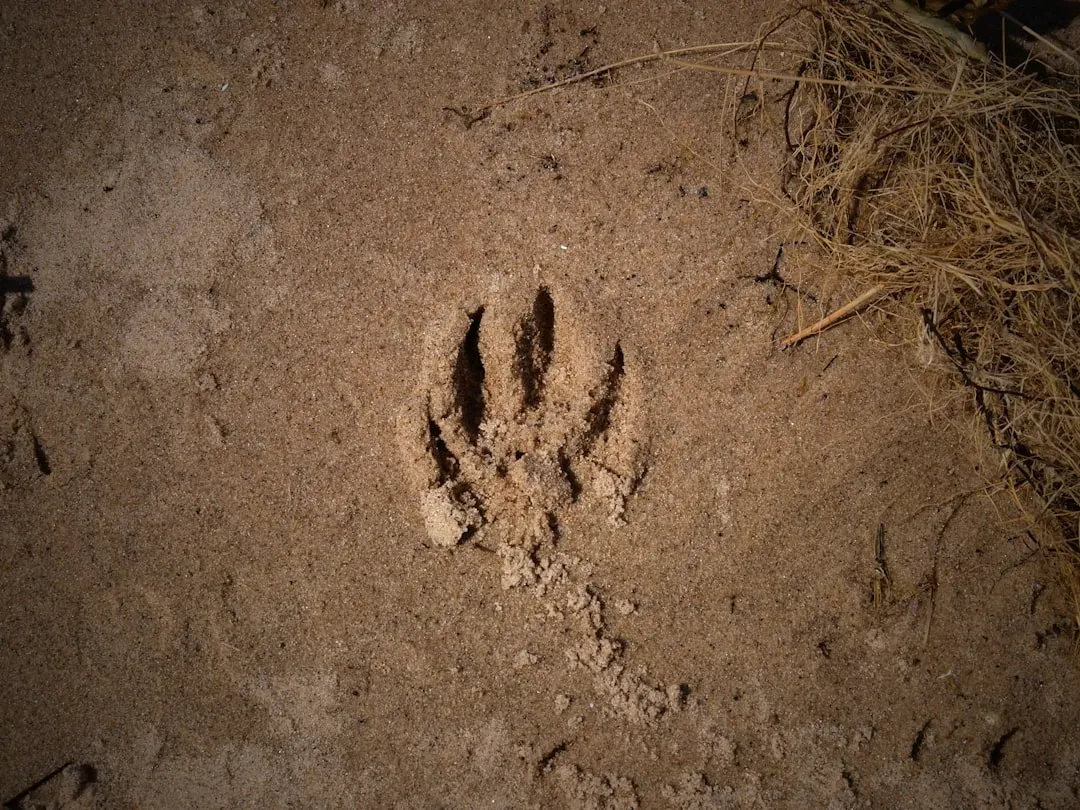
They also found evidence of a cat-like predator dating to roughly 29 million years ago. A set of paw prints, discovered in a layer of volcanic ash, likely belonged to a bobcat-sized, saber-toothed predator resembling a cat – possibly a nimravid of the genus Hoplophoneus. Since researchers didn’t find any claw marks on the paw prints, they suspect the creature had retractable claws, just like modern cats do.
Scientists analyzed the tracks using a technique known as photogrammetry, which involved taking thousands of photographs to produce 3D models. These models allowed researchers to piece together some long-gone scenes. Small footprints and beak marks were discovered near invertebrate trails, suggesting that ancient shorebirds were pecking around in search of a meal between 39 million and 50 million years ago. This prehistoric behavior is “strikingly similar” to that of today’s shorebirds.
Footprints Across Continents: Evidence of Ancient Land Bridges and Migration Routes
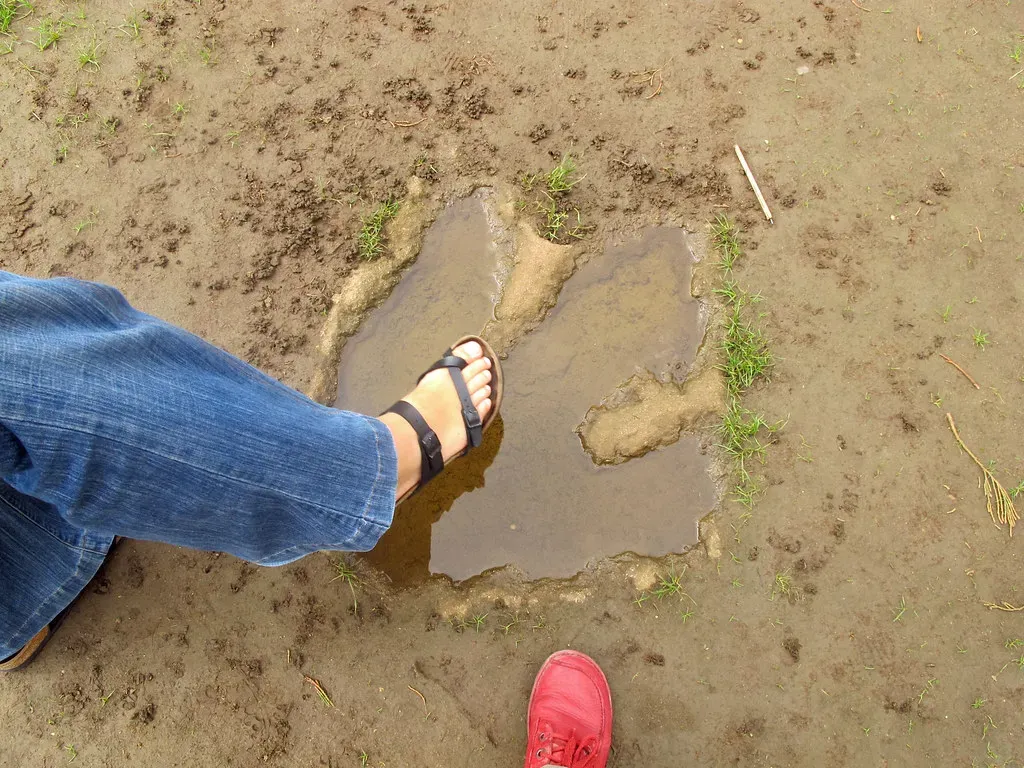
Perhaps the most mind-bending thing fossilized footprints reveal is not just the journey of individual animals, but the grand, geological story of entire continents drifting apart. In a remarkable 2024 discovery, over 260 Early Cretaceous dinosaur footprints were found in both Brazil and Cameroon, providing evidence of an ancient land connection between South America and Africa. That is not a migration route – that is proof that two continents were once part of the same landmass, confirmed by the footsteps of creatures that walked between them.
Over the past decade, researchers spent summers in South Africa on a mission to look for footprints. They surveyed more than 275 kilometers of South African coastline, locating over 100 sites with animal tracks dating back 100,000 years or more. The fossilized footprints re-create a vanished world, full of lions and elephants, buffalo and horses. Researchers even found giraffe tracks, evidence that the landscape was dotted with trees.
Studying ancient footprints is not just about satisfying curiosity; it has real implications for modern conservation. By understanding how prehistoric animals adapted to changing climates, migrated across continents, and formed complex social structures, we can gain insights into the resilience and vulnerability of today’s wildlife. Modern climate change may force animals to alter their migratory routes or social behaviors, as their ancestors once did in response to ancient environmental shifts. In other words, the footprints of the past are pointing us toward the future.
Conclusion: The Ground Beneath Your Feet Has Always Had Stories to Tell
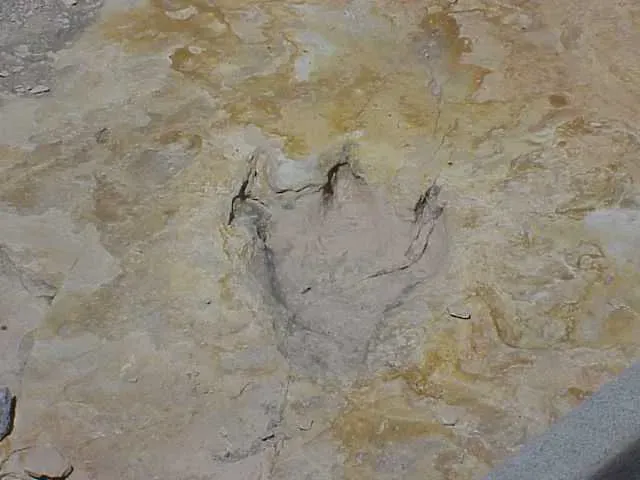
Every time you take a step in soft sand or wet mud, you are briefly joining a conversation that stretches back hundreds of millions of years. Fossilized footprints are not just curiosities under glass in a museum. They are living archives of behavior, survival, love, hunger, and migration – pressed into the very fabric of the earth by creatures who never knew they were being recorded.
From a prehistoric parent rushing a toddler through mammoth-filled wetlands to carnivorous dinosaurs thundering across a Bolivian coastal highway, these tracks carry an emotional weight that bones simply cannot match. The record of life is written not just in bones, but in the footprints that mark the journey of evolution itself.
What strikes you most about these ancient travelers? The distances they covered, the dangers they navigated, or just the ordinary tenderness of a parent carrying a child? Drop your thoughts in the comments – because honestly, some of the best conversations start with a single footprint.