Chesapeake Bay region – Ornithologist Mitchell Byrd devoted more than 50 years to monitoring bird populations across Virginia’s waterways, providing the scientific backbone for one of conservation’s great success stories. His aerial surveys captured the bald eagle’s journey from a perilously low of 33 breeding pairs in 1977 to roughly 1,000 pairs throughout the bay area today. Through persistent fieldwork and collaboration with landowners, Byrd helped transform a symbol of American wilderness from the brink of local extinction into a common sight along the region’s rivers and shores. His efforts highlighted how targeted data collection and habitat advocacy can reverse decades of decline.
Aerial Surveys Reveal a Crisis
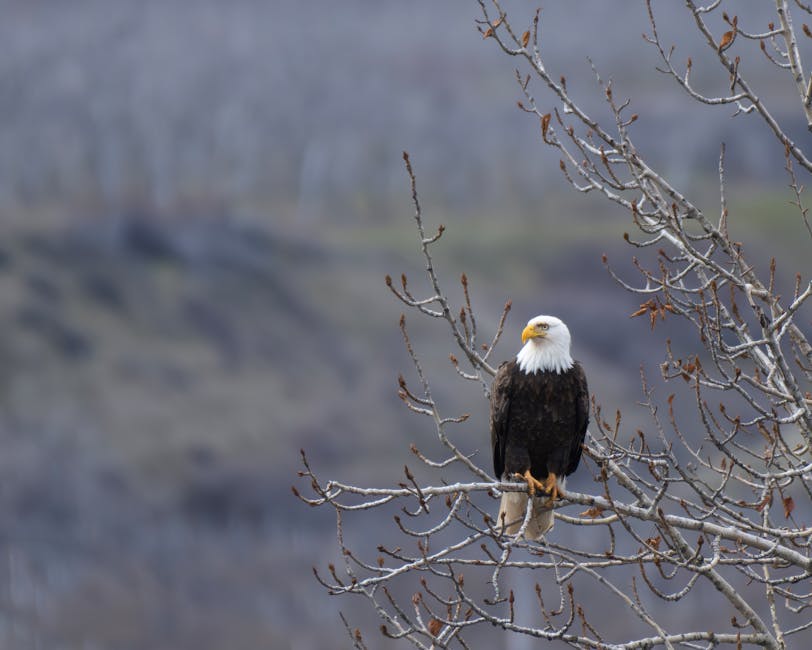
Aerial Surveys Reveal a Crisis (Image Credits: Pexels)
In 1977, Virginia officials enlisted Byrd and the College of William & Mary to assess non-game bird populations, including the beleaguered bald eagle. Flying low over the lower Chesapeake’s intricate waterways, Byrd’s team documented just 33 active nests producing 18 young eaglets. The pesticide DDT, though banned years earlier, continued to ravage reproduction through eggshells too thin to survive incubation. Habitat loss from shoreline development compounded the threat, leaving eagles scarce along once-prime rivers like the James.
Byrd committed to annual surveys, returning each breeding season to map nests and track productivity. This baseline data proved invaluable as recovery efforts gained momentum. He emphasized that eagles responded naturally to reduced toxins and legal protections under the Endangered Species Act of 1973, rather than dramatic interventions.
Guiding the Path to Recovery
The U.S. Department of the Interior appointed Byrd to lead the Chesapeake Bay Bald Eagle Recovery Team, which crafted an ambitious plan targeting 175 to 225 breeding pairs for downlisting and delisting. Those benchmarks fell years ahead of schedule in 1988 and 1992, respectively. By the early 2000s, the Tidewater region alone supported 428 active nests, with the broader bay exceeding 1,000 pairs.
Byrd’s surveys informed land-use policies, urging protections for waterfront habitats amid booming human development. He engaged private landowners directly, framing eagle presence as a mark of healthy stewardship rather than a burden. Progress appeared gradually: nests reemerged along forgotten river stretches, fledglings took flight, and territories expanded.
- 1977: 33 breeding pairs documented in Virginia.
- 1988: Recovery goals met for federal downlisting.
- 1992: Sufficient population for delisting achieved.
- 2000s: Over 400 nests in Tidewater; 1,000+ bay-wide.
- Ongoing: Surveys continue to monitor against new threats like habitat fragmentation.
Broader Wings: Peregrine Falcons and Beyond
Byrd’s influence extended to the peregrine falcon, wiped out east of the Mississippi by pesticides. As leader of the Eastern Peregrine Falcon Recovery Team, he oversaw the release of captive-bred chicks and constructed nesting towers along the Chesapeake coast. Falcons thrived there, drawn by abundant prey, despite initial relocation attempts to inland mountains.
His fieldwork spanned the watershed, addressing ospreys, waterfowl, and other species vulnerable to pollution and loss of wetlands. Byrd co-authored numerous reports, including annual Virginia bald eagle productivity surveys through the 2010s. These documented not just numbers but resilience, such as post-hurricane nest repairs after Isabel in 2003.
Founding a Conservation Powerhouse
Facing academic shifts toward lab-based biology, Byrd co-founded the Center for Conservation Biology at William & Mary in 1992 with colleague Bryan Watts. The center preserved field-oriented research, training generations in aerial monitoring and stakeholder engagement. Byrd served as Chancellor Professor Emeritus of Biology and Director Emeritus, mentoring students who now lead eagle surveys.
This institution ensured continuity, producing technical reports that shaped state and federal strategies. Byrd remained active into his later years, logging flights and advocating for undeveloped shorelines.
A Legacy of Humility and Persistence
Byrd consistently downplayed personal acclaim. “I don’t know that I’ve saved it, but I have worked with the bald eagle for about 28 years now,” he said in 2005. He credited policy wins like the DDT ban and public awareness campaigns, while warning of ongoing human-eagle conflicts over prime real estate.
Key Takeaways from Byrd’s Work:
- Long-term data drives effective conservation more than short-term fixes.
- Habitat security remains essential even after population rebounds.
- Collaborating with landowners turns potential adversaries into allies.
Mitchell Byrd’s career at William & Mary spanned five decades, from department chair in the 1960s-70s to emeritus roles today. His patient ledger of nests and fledglings proved that conservation thrives on observation and quiet persuasion. As eagles soar freely once more, his model endures for species still in peril. What role can everyday stewardship play in your local ecosystem? Share your thoughts in the comments.