Ithaca, N.Y. – The Paleontological Research Institution (PRI) and its flagship Museum of the Earth confronted a dire funding shortfall that risked dismantling one of North America’s premier fossil collections. For nearly a century, these institutions advanced paleontological research and public education, only to teeter on the edge of foreclosure in late 2025. A surge of donations from thousands worldwide transformed the narrative, securing the mortgage and operations into 2026. This episode underscored the fragility of independent science hubs amid shifting philanthropy.
A Century of Fossil Stewardship Faces Peril
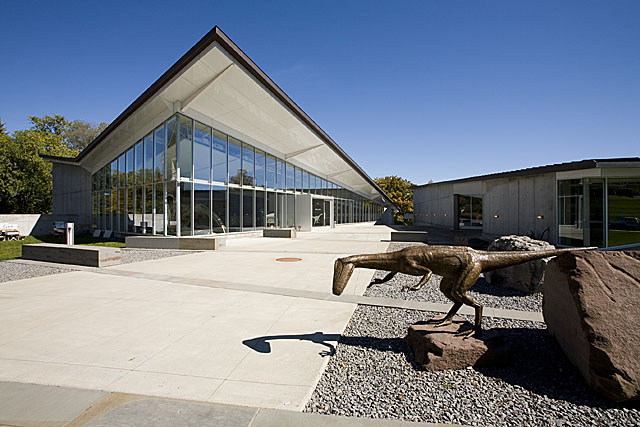
A Century of Fossil Stewardship Faces Peril (Image Credits: Reddit)
Established over 90 years ago, PRI evolved into a vital repository for paleontologists, housing more than seven million specimens – one of the largest assemblages in the United States. The Museum of the Earth, opened in 2003, brought these treasures to the public with exhibits featuring touchable dinosaur bones, the Hyde Park mastodon, and vast New York State fossils. Cornell University researchers relied on the collections for studies in evolution, biodiversity, and ancient climates, viewing PRI as an essential extension of campus resources.
PRI’s holdings extended beyond local finds, encompassing premier fossils from Antarctica, Venezuela, and the Dominican Republic. These specimens fueled decades of discoveries, from Devonian starfish to modern mollusk shells once held by Cornell. Warren Allmon, PRI’s director and a Cornell paleontology professor, emphasized the public trust aspect: natural history museums steward collections for humanity, not ownership. No single venue could absorb the entire trove if dispersed, amplifying the stakes.
Roots of the Financial Storm
The crisis ignited in 2023 when PRI’s primary donor encountered a liquidity crunch, halting a $30 million pledge and mortgage interest payments on a 2003 loan for the museum building. That $3 million debt carried a steep 13 percent interest rate, compounding operating deficits. Leaders initially hoped for recovery, but permanence set in by 2024, forcing drastic measures.
PRI slashed its budget and staff by half, shuttered public access to the Cayuga Nature Center, and transferred Smith Woods – New York’s largest old-growth forest – to local authorities. Programs dwindled, yet core research persisted amid uncertainty. By fall 2025, $1 million was urgently needed by year’s end to avert foreclosure, with broader stability requiring millions more.
A Wave of Support Averts Disaster
Public appeals, amplified by media like The Ithaca Voice and The New York Times, sparked an extraordinary response. Over 2,000 donors contributed in 2025, raising $4 million to clear the mortgage by New Year’s Eve. Highlights included a $1 million gift from a Cornell alumnus inspired by a former director, plus smaller acts like $1,000 from a Syracuse family and $2,400 from a 14-year-old volunteer paleontologist aspirant.
Paleontologists nationwide rallied despite self-admitted fundraising shortcomings, while international backers joined locals. Allmon described the turnaround: “We pulled off something close to a miracle in 2025… We’re exhausted, but I think we all have a renewed sense of mission.” Contingency plans for packing collections into storage were shelved as funds flowed in.
Charting a Sustainable Path Forward
With the mortgage resolved, PRI operates through at least July 2026 at a leaner scale, prioritizing education via workshops, online resources like Earth@Home, and Cornell collaborations. Upcoming events include the 20th Darwin Days in February 2026 with panels and screenings, alongside a National Science Foundation-backed coral exhibit.
Challenges linger, including staff strains, facility maintenance, and donor diversification. PRI seeks over $500,000 in unrestricted funds for fiscal 2025-26 to build resilience. Allmon noted the broader lesson: “People think what we do matters through thick and thin.”
| Milestones in PRI’s Crisis and Recovery | Date |
|---|---|
| Donor liquidity crisis begins | 2023 |
| Staff and budget halved | 2024 |
| $1M urgent mortgage appeal | Fall 2025 |
| $4M raised, mortgage paid | Dec 2025 |
Key Takeaways
- PRI safeguards 7+ million fossils critical for global research.
- Community donations – from millions to pocket change – proved decisive.
- Independent museums remain vulnerable without diversified funding.
The saga of PRI and the Museum of the Earth reveals the power of collective action in preserving scientific heritage. As these institutions press on with diminished but determined resources, their survival bolsters ongoing quests into Earth’s deep past. What role should communities play in sustaining such vital cultural assets? Share your thoughts in the comments.