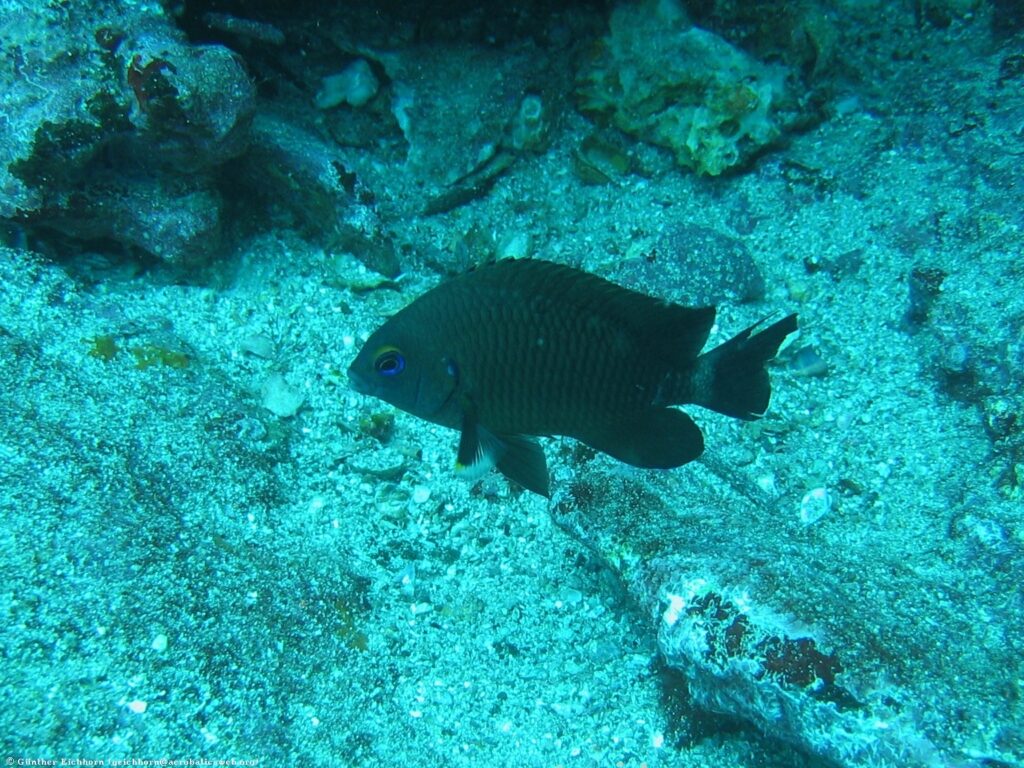
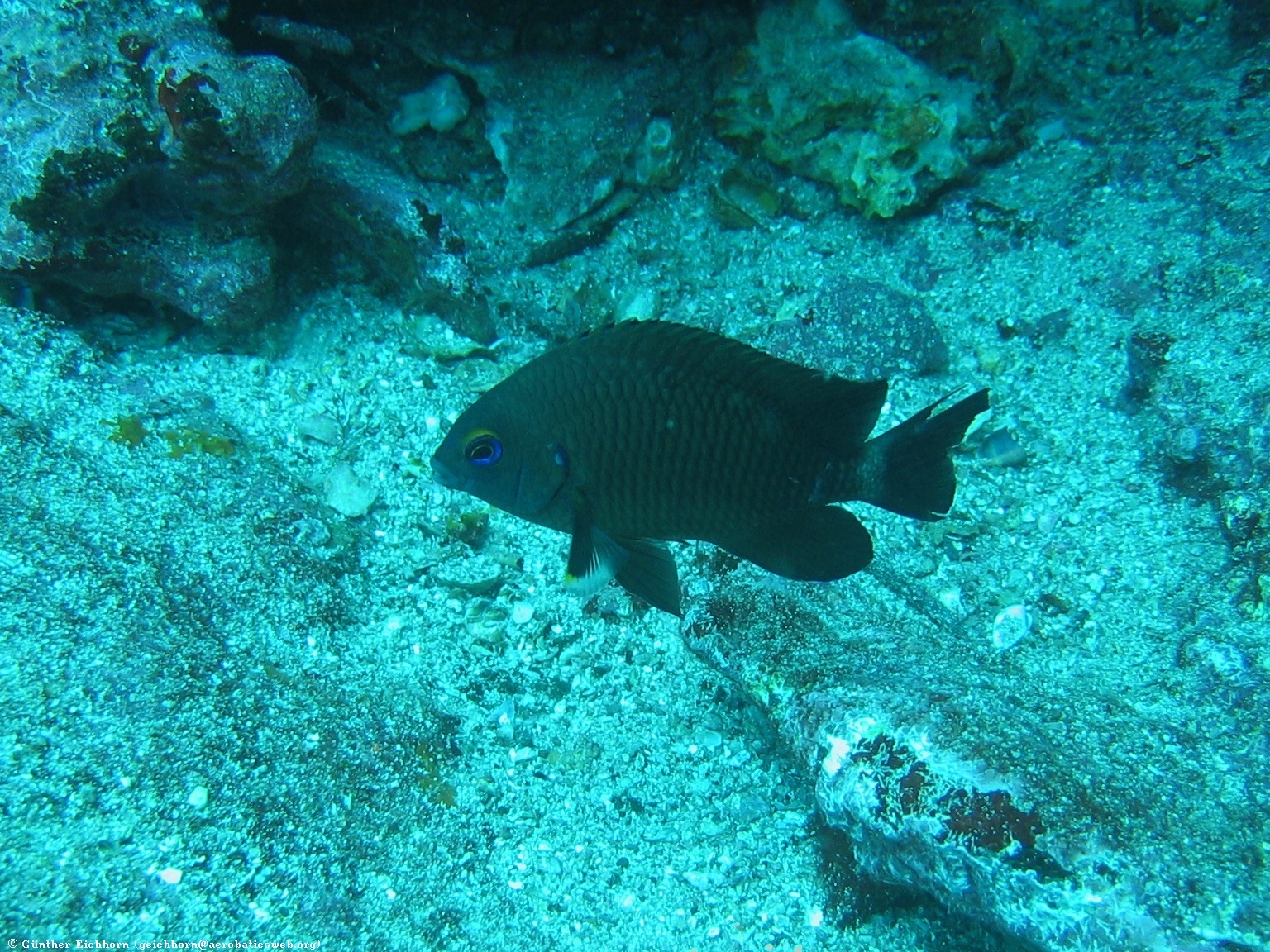
Along the rocky shores of the Galápagos Islands, a small blue-gray fish once schooled in plain view for divers and scientists. The Galápagos damselfish, or Azurina eupalama, appeared regularly until the early 1980s. Now, more than four decades later, a new scientific analysis declares it likely extinct, raising alarms about ocean warming’s toll on isolated ecosystems.
A Familiar Presence Suddenly Gone
A Familiar Presence Suddenly Gone (Image Credits: Upload.wikimedia.org)
Scientists first documented the Galápagos damselfish in 1898 during the Hopkins-Stanford Expedition near Floreana and Española islands. The species measured up to 15 centimeters long and favored shallow reefs from five to 30 meters deep, often near drop-offs. It fed primarily on plankton while schooling loosely with similar fish like Chromis atrilobata.
Through the 20th century, major expeditions collected specimens repeatedly. The Albatross expedition gathered them in 1904, followed by the California Academy in 1905 and 1977, Velero III in 1934 and 1938, and Alpha Helix in 1967 and 1978. Observers noted the fish at sites across islands including Santiago, Isabela, and Marchena. Jack Stein Grove photographed the last confirmed individual in 1983 at Sullivan Bay on Santiago Island.
The Devastating 1982-83 El Niño Trigger
The strongest El Niño Southern Oscillation event on record struck in 1982-83, halting nutrient-rich upwelling around the Galápagos. Sea temperatures rose dramatically, slashing plankton levels and collapsing the marine food web. Coral reefs suffered massive mortality, with 97 percent of reef-building corals perishing.
As an obligate planktivore adapted to cooler waters, the damselfish proved especially vulnerable. Warmer conditions reduced its food supply and altered habitats along exposed shorelines. Unlike more adaptable species, it could not shift ranges or recolonize from elsewhere due to its endemic status confined to the archipelago. Subsequent El Niños in 1997-98 compounded the stress, but no recovery occurred.
Exhaustive Searches Yield No Trace
Over 43 years, professional divers, naturalists, and expeditions scoured historical sites. The Galápagos National Park, Charles Darwin Foundation, and East Pacific Corridor Alliance conducted surveys, including thousands of underwater photographs in 2024. Popular dive spots with clear visibility turned up nothing.
The fish’s habits made evasion unlikely; it schooled openly in accessible shallows frequented by guides and photographers. A 2025 study by Grove and Benjamin Victor reviewed these efforts and historical data, concluding the prolonged absence points to extinction rather than oversight. The International Union for Conservation of Nature lists it as critically endangered, possibly extinct, based on a 2022 assessment.
- Endemic range limited to Galápagos, blocking external rescue.
- Obligate dependence on upwelling-driven plankton.
- Shallow, exposed habitats hit hardest by warming.
- No records despite intensive monitoring of 683 fish species in the islands.
- Potential unconfirmed sighting at Cocos Island, but irrelevant to core population.
Lessons from a Potential First Marine Extinction
This case may mark the first documented extinction of a tropical reef fish linked to climate-driven events. While marine species often persist via larval dispersal, the damselfish’s niche constraints prevented such survival. Broader ocean trends, including record heat in 2023, amplify risks for other endemics.
Researchers propose environmental DNA sampling from seawater at key sites to confirm absence. A targeted expedition planned for 2025 could provide final clarity using genetic barcoding. Dr. James Gibbs of Galápagos Conservancy noted, “The loss of the Galápagos damselfish is cause for concern. While it involves a single species, it may also reflect broader ecological shifts underway in our oceans. Without further attention and action, similar declines could occur in other species.”
Key Takeaways
- Azurina eupalama disappeared post-1983 El Niño, with no sightings despite rigorous surveys.
- Climate change intensifies El Niño impacts, threatening cool-water specialists.
- eDNA offers next step to verify extinction in this World Heritage site.
The Galápagos damselfish’s story underscores how isolated ecosystems bear the brunt of global warming. One species’ fade from reefs serves as a stark reminder: act now to safeguard marine biodiversity. What do you think about this potential extinction? Tell us in the comments.