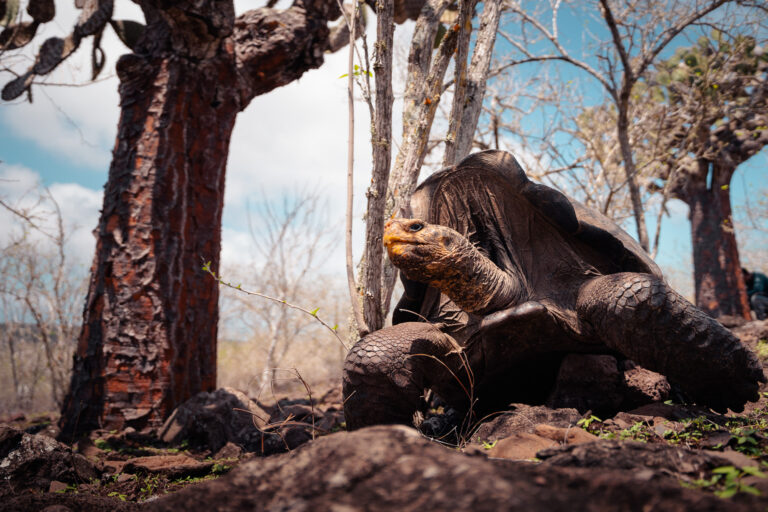
Floreana Island, Galápagos – Nearly two centuries after their disappearance, 158 juvenile giant tortoises stepped onto the volcanic soils of this remote island, heralding a major advance in one of the archipelago’s boldest restoration efforts.
A Legacy Erased by Human Hands
A Legacy Erased by Human Hands (Image Credits: Imgs.mongabay.com)
Sailors and early settlers drove the Floreana giant tortoise to extinction in the mid-1800s through relentless hunting and landscape changes wrought by introduced goats. These massive reptiles, once numbering in the thousands, provided easy sustenance for whalers and altered the island’s ecology when absent. Goats devoured native vegetation, preventing tortoise habitats from regenerating. The subspecies Chelonoidis niger niger vanished shortly after Charles Darwin’s visit in 1835. Floreana’s ecosystem suffered profoundly without these keystone species.
Conservationists documented the loss through historical records and genetic traces. Invasive species like rats and cats further suppressed native recovery. The island’s transformation underscored the long-term ripple effects of exploitation. Efforts to reverse this damage began decades ago but gained momentum recently.
Breeding a Comeback from Genetic Scraps
Scientists ignited hope in 2017 upon discovering tortoises on nearby Isabela Island carrying Floreana ancestry, including hybrids from the extinct lineage. A targeted breeding program launched that year with 20 such animals at the Galápagos National Park’s facilities. Researchers selected specimens with the purest genetic ties to Floreana’s originals. Over nearly a decade, this initiative produced hundreds of juveniles ready for release. NASA satellite data pinpointed optimal sites with ample food, water, and nesting grounds.
The process demanded meticulous care. Hatchlings grew under controlled conditions to sizes that deter predators. Fredy Villalba, director of the park’s breeding center on Santa Cruz Island, noted the tortoises reached a robust stage just as seasonal rains arrived. This timing ensured survival amid threats from invasives. The Floreana Ecological Restoration Project coordinated the multi-year push.
Release Day Ushers in Rewilding Era
On February 20, 2026, teams transported the 158 tortoises to two carefully chosen sites on Floreana, where they dispersed into the undergrowth. Park officials, local residents, and partners from Galápagos Conservancy, Charles Darwin Foundation, and Island Conservation witnessed the event. These young animals, weighing several pounds each, navigated terrain unchanged since their ancestors’ era. Monitoring systems track their progress via GPS and cameras.
The release formed the cornerstone of a plan to reintroduce 12 extinct species total. Earlier phases eradicated invasives and restored habitats. Community involvement proved vital, with Floreana’s 160 inhabitants supporting biosecurity measures. Dr. James Gibbs of Galápagos Conservancy described the moment as a return to ancestral grounds after 180 years.
Restoring Balance Through Ecosystem Architects
Giant tortoises function as ecosystem engineers, grazing invasive plants, dispersing seeds, and enriching soils with their waste.[6] Their presence promises to revive native flora suppressed for generations. Birds like the Floreana mockingbird and Darwin’s finches stand to benefit from healthier corridors. Soil health improves, aiding water retention in this arid environment.
Partners outlined key steps in the broader project:
- Eliminate invasive predators and competitors.
- Regenerate vegetation and protect water sources.
- Reintroduce species in phases, starting with tortoises.
- Implement ongoing monitoring and community education.
- Establish biosecurity to prevent future incursions.
Such efforts demonstrate scalable restoration models worldwide.
Key Takeaways
This tortoise homecoming signals hope for degraded ecosystems everywhere, proving patient science can rewind the clock on extinction. As populations grow, Floreana may flourish anew. What do you think about this conservation victory? Tell us in the comments.