Mongolia’s Gobi Desert yielded a extraordinary discovery when paleontologists unearthed a nearly complete skeleton of a minuscule mammal from the Late Cretaceous period. Measuring just one centimeter long, the fossil offers a rare glimpse into the lives of micro-mammals that shared the landscape with towering dinosaurs. This find, preserved in remarkable detail, challenges previous understandings of biodiversity during the age of dinosaurs.
Exceptional Preservation of a Fragile Specimen
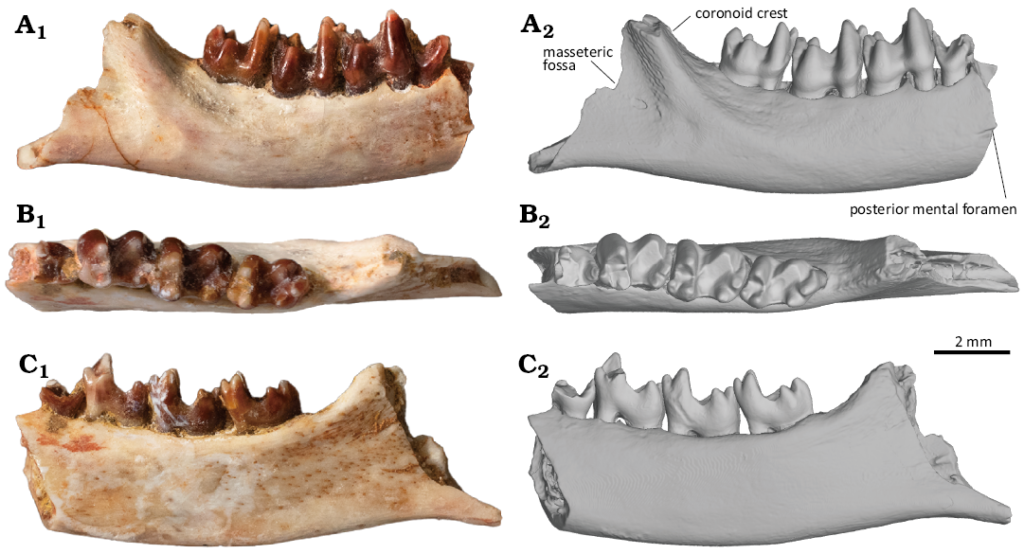
Exceptional Preservation of a Fragile Specimen (Image Credits: Wikimedia)
The skeleton stunned researchers with its intact skull, limbs, and even impressions of soft tissues. Such completeness at this scale proved extraordinarily rare, as most tiny fossils consist only of isolated teeth or fragments. Discovered in the Ukhaa Tolgod region, the specimen resembled a shrew-like insectivore, an advanced stem-mammal that scurried through a world dominated by predators like Velociraptor.
High-resolution micro-CT scanning created a digital 3D model, allowing scientists to examine internal structures such as teeth and middle-ear bones without risking damage to the original. The American Museum of Natural History highlighted the anomaly: “Finding a complete and intact specimen at this tiny size… is very uncommon.” This technology revealed adaptations that helped these creatures thrive in harsh conditions.
Secrets Behind the Gobi’s Time Capsule
Protracted aridification in the Eastern Gobi Basin around 75 to 100 million years ago played a pivotal role in the fossil’s survival. Rising mountain ranges triggered widespread dryness, leading to intense sandstorms that rapidly buried small animals under fine sediment. This process shielded delicate bones from decay, erosion, and scavengers, creating a natural preservation vault.
The Gobi Desert long famed for massive dinosaur remains now demonstrated its capacity to safeguard even the smallest vertebrates. Unlike larger fossils, which often endured exposure, this micro-specimen benefited from the basin’s extreme climate shifts. Researchers noted how such events mirrored ancient global warming phases, providing clues to species resilience.
Life Among the Giants: Adaptations Revealed
This fossil illuminated the ecological niches filled by early mammals during the Mesozoic. The creature likely foraged for insects in arid environments with scarce water, showcasing specialized skeletal features for agility and survival. Its presence alongside dinosaurs underscored a diverse understory of life often overlooked in favor of colossal reptiles.
Key characteristics of the fossil include:
- A miniature skull with detailed teeth suited for insectivory.
- Intact limbs indicating a nimble, shrew-like build.
- Soft-tissue impressions hinting at fur or skin textures.
- Middle-ear bones suggesting advanced hearing for evading predators.
- Overall length comparable to a fingernail.
These traits offered transformative insights into mammalian evolution, particularly how micro-mammals occupied spaces dinosaurs ignored.[1]
Broader Implications for Ancient Biodiversity
The discovery enhanced knowledge of Late Cretaceous ecosystems, where small mammals navigated seasonal extremes. It highlighted the Gobi’s role in Mesozoic paleontology, from dinosaur eggs to now these elusive micro-fossils. Scientists from joint Mongolian-American expeditions continued to explore how climate drove evolutionary pressures.
Comparisons with prior finds revealed patterns in preservation:
| Feature | This Fossil | Typical Finds |
|---|---|---|
| Size | 1 cm complete skeleton | Teeth or fragments |
| Preservation | Articulated with soft tissue | Isolated bones |
| Era | Late Cretaceous | Various Mesozoic |
Such rarities redefined timelines for mammalian diversification.
Key Takeaways
- The 1 cm skeleton ranks among the smallest well-preserved vertebrate fossils.
- Arid sandstorms enabled its survival for 75-100 million years.
- It reveals micro-mammals’ adaptations in dinosaur-dominated worlds.
This pint-sized fossil from the Gobi Desert reminded scientists that the Mesozoic hosted far more than giants – tiny innovators paved the way for modern mammals. As studies progressed, the specimen promised further revelations about ancient resilience. What do you think about this micro-marvel? Tell us in the comments.