Gorgosaurus, a formidable predator from the Late Cretaceous period, remains overshadowed by its famous relative, the Tyrannosaurus rex, despite being equally fascinating. This powerful tyrannosaurid roamed western North America approximately 76.6 to 75.1 million years ago, predating the T. rex by about 10 million years. While less celebrated in popular culture, paleontologists have uncovered remarkable aspects of this dinosaur’s biology and behavior that suggest it was a swift, agile hunter with unique adaptations that helped it thrive in its prehistoric ecosystem. The following exploration reveals why Gorgosaurus deserves recognition as more than just “another tyrannosaur” and highlights the distinctive characteristics that set it apart from its more famous cousin.
Evolutionary Context and Discovery
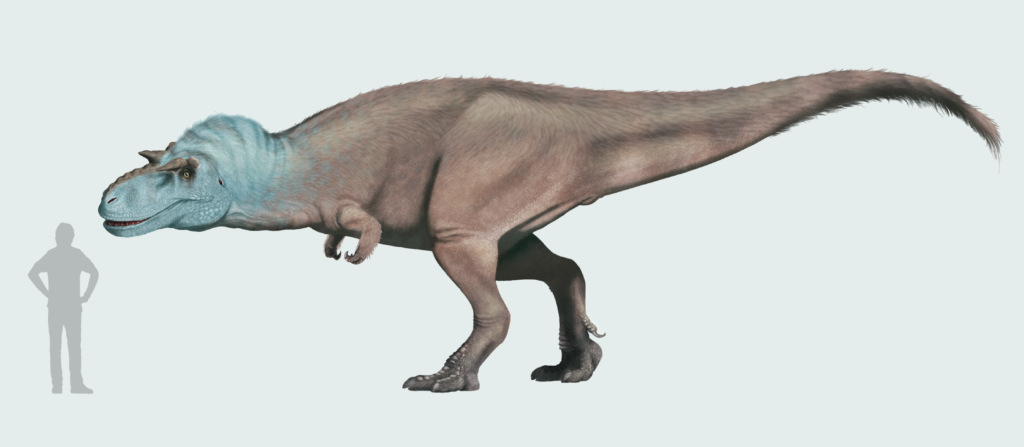
Gorgosaurus libratus, whose name means “fierce lizard,” was first discovered in Alberta, Canada, in 1913 by Charles H. Sternberg. The initial specimen was remarkably complete, providing paleontologists with substantial material to study this tyrannosaurid in detail. Unlike many dinosaur genera known from fragmentary remains, numerous well-preserved Gorgosaurus specimens have been unearthed over the decades, making it one of the best-understood tyrannosaurids. These fossils have been primarily recovered from the Dinosaur Park Formation in Alberta, Canada, and equivalent-aged formations in Montana, USA. The abundance of specimens spanning different growth stages has allowed scientists to study its ontogeny (growth and development) more comprehensively than many other dinosaur species, providing valuable insights into tyrannosaur biology as a whole.
Physical Characteristics and Size
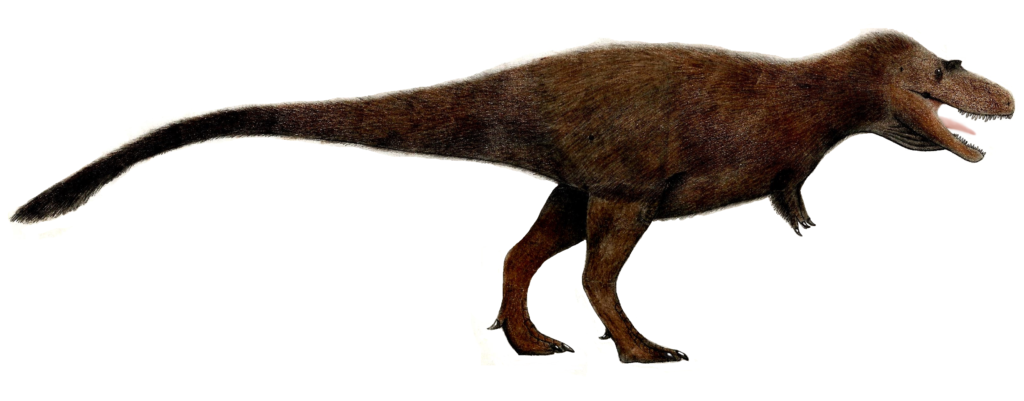
Gorgosaurus was a substantial predator, though smaller than its later relative T. rex. Adults typically measured between 8 to 9 meters (26 to 30 feet) in length and stood approximately 2.5 to 3 meters (8 to 10 feet) tall at the hip. Weight estimates suggest these dinosaurs reached about 2 to 3 tons, roughly half the mass of a full-grown Tyrannosaurus. Like other tyrannosaurids, Gorgosaurus had a massive skull equipped with dozens of serrated, bone-crushing teeth, some reaching lengths of over 10 centimeters (4 inches). Its skull featured the characteristic tyrannosaurid shape with a wide back and narrow snout, well adapted for delivering powerful bites. The forelimbs were notably small, a trademark feature of tyrannosaurids, with just two functional fingers tipped with sharp claws that may have assisted in handling prey.
Specialized for Speed
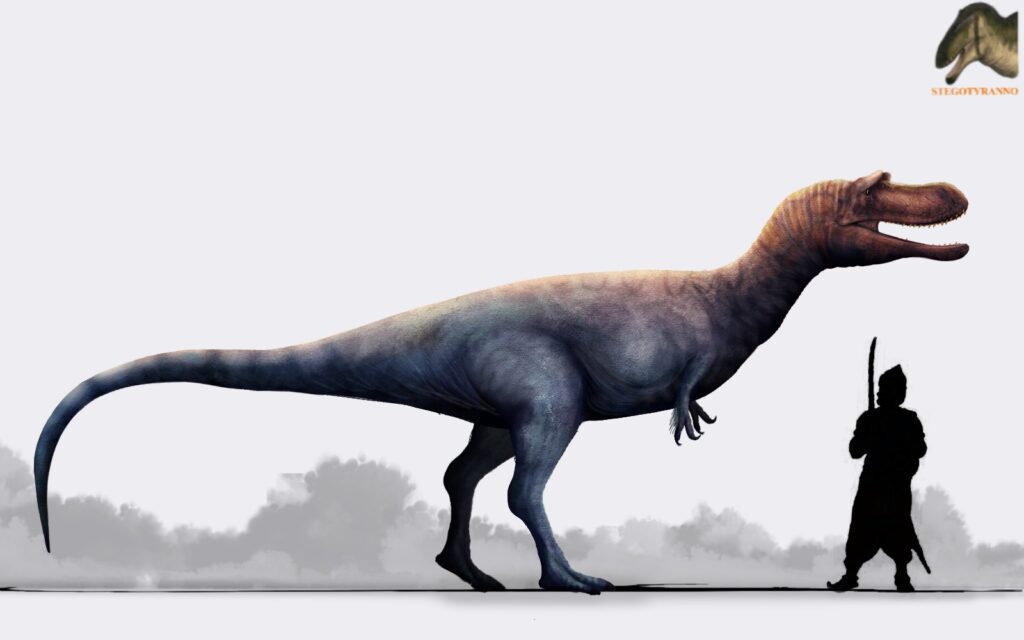
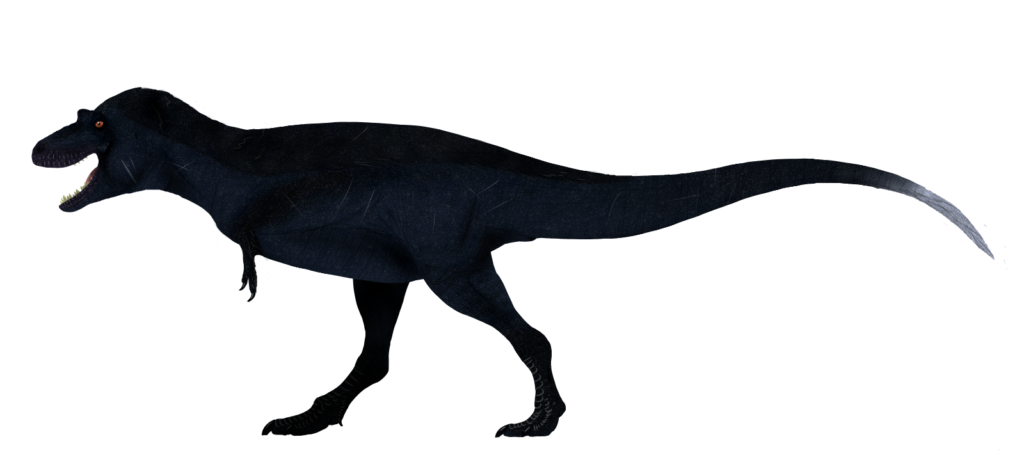
One of the most distinctive aspects of Gorgosaurus was its speed adaptation, which differentiated it from the T. rex. Analyses of its limb proportions reveal longer, more slender leg bones compared to the more robust Tyrannosaurus. This configuration suggests Gorgosaurus was built for greater agility and possibly faster running speeds than its later, bulkier cousin. Biomechanical studies estimate that Gorgosaurus could have reached speeds of approximately 20-25 miles per hour (32-40 km/h), making it one of the faster large theropods. The dinosaur’s tail was also long and muscular, providing balance during rapid movements and quick turns. These adaptations indicate a predator that relied more on pursuit and agility rather than the overwhelming power and ambush tactics that may have characterized T. rex hunting strategies.
Ecological Niche and Habitat

Gorgosaurus inhabited a very different North America than we know today. During the Late Cretaceous, a warm, humid climate prevailed, and a shallow inland sea divided the continent into eastern and western landmasses called Appalachia and Laramidia, respectively. Gorgosaurus lived in coastal plains and floodplains of western Laramidia, environments characterized by river systems, swamps, and lush vegetation. These areas supported diverse ecosystems with abundant prey, including large herbivorous dinosaurs like hadrosaurs (duck-billed dinosaurs) and ceratopsians (horned dinosaurs). Paleoecological studies suggest that Gorgosaurus occupied the apex predator niche in its environment, though it likely shared its habitat with other large predators, including dromaeosaurids (“raptors”) and potentially other tyrannosaurids. This complex ecosystem provided numerous hunting opportunities but also presented competition, which may have shaped Gorgosaurus’s specialized hunting tactics.
Hunting Behavior and Diet
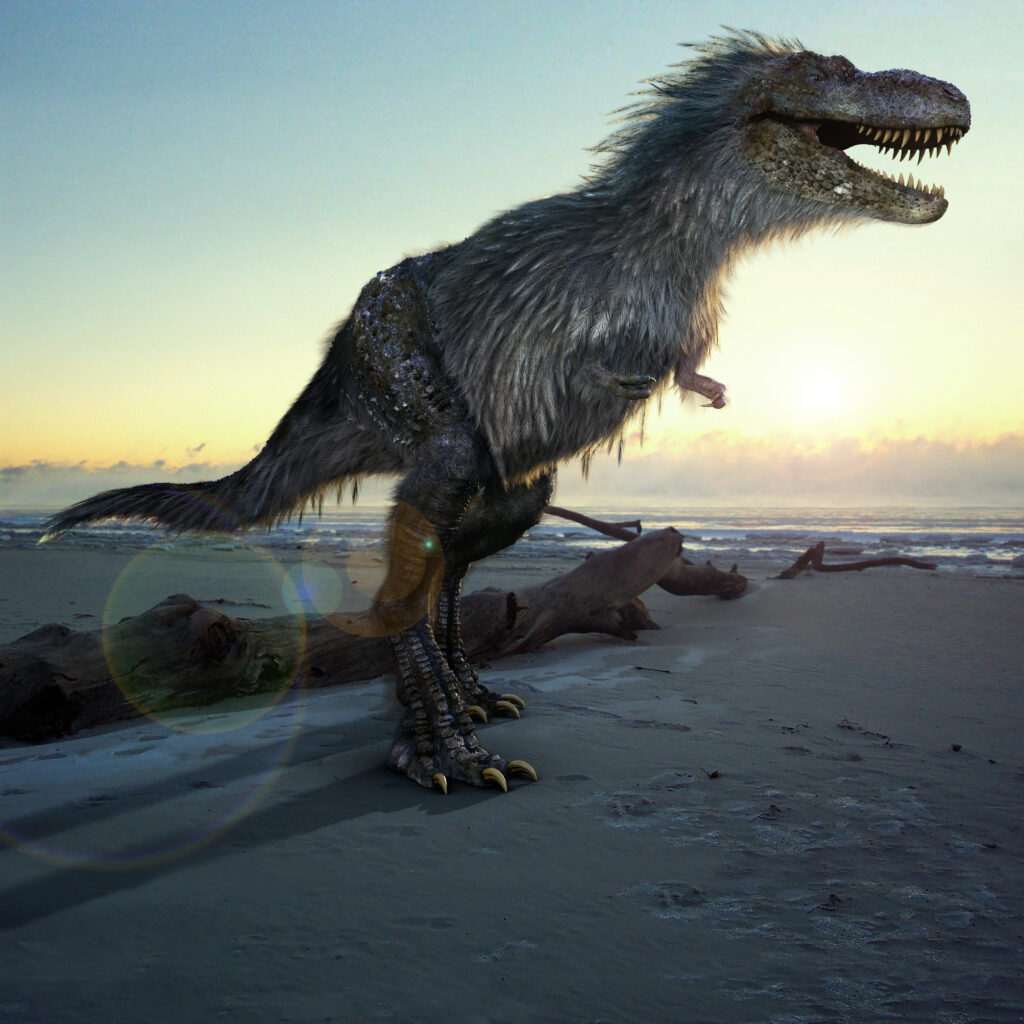
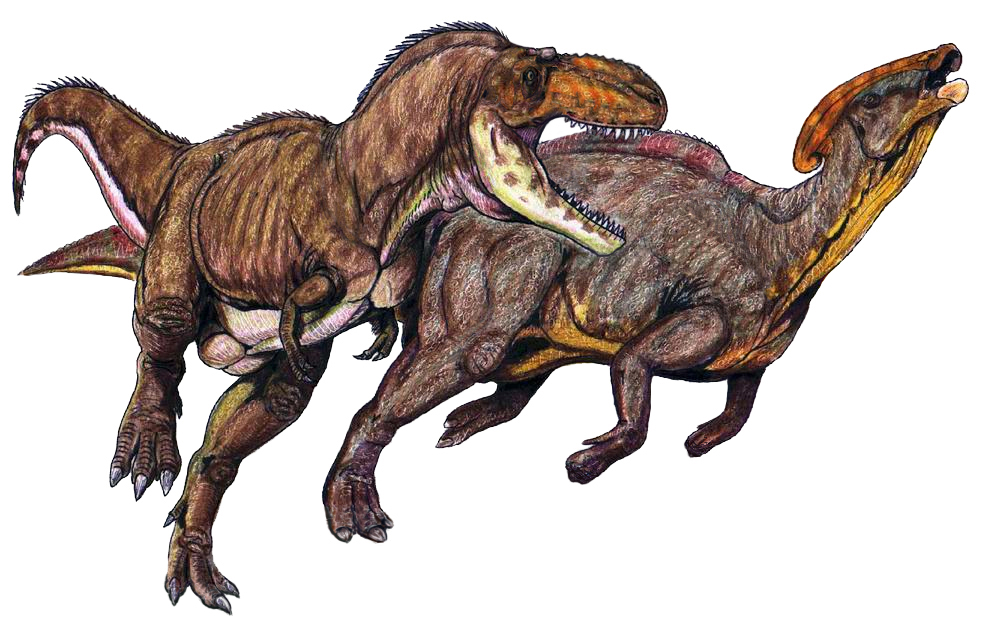
Fossil evidence strongly suggests that Gorgosaurus was an active predator rather than primarily a scavenger. Its speed adaptations and powerful jaws indicate a dinosaur well-equipped to pursue and take down large prey. Bite mark analyses on herbivorous dinosaur fossils from the same formations provide direct evidence of predation. Gorgosaurus’s bite force, while formidable, was likely less crushing than that of the T. rex, possibly indicating different hunting strategies. Some paleontologists hypothesize that Gorgosaurus may have specialized in hunting hadrosaurs, which were abundant in its environment. The predator’s speed would have been advantageous in chasing these potentially swift herbivores. Additionally, tooth marks on ceratopsian remains suggest Gorgosaurus wasn’t deterred by the horns and frills of these well-defended prey items. The combination of speed and strong jaws made Gorgosaurus a versatile hunter capable of tackling various large dinosaurs.
Growth and Development
The discovery of multiple Gorgosaurus specimens at different growth stages has provided paleontologists with rare insights into tyrannosaur development. Juvenile Gorgosaurus fossils reveal that younger individuals had proportionally longer legs, more slender builds, and different tooth morphologies compared to adults, suggesting ecological differences between age groups. Studies of bone microstructure indicate that Gorgosaurus experienced rapid growth during adolescence, potentially gaining over 500 pounds per year during peak growth phases. This growth pattern resembles that of modern birds (living dinosaur descendants) more than reptiles. Analysis of growth rings in Gorgosaurus bones, similar to tree rings, indicates that these dinosaurs reached sexual maturity at approximately 12-15 years of age but continued growing for several more years. Full adult size was likely achieved around 20-25 years, with a potential lifespan extending to 30 years or more under favorable conditions.
Comparison with Tyrannosaurus Rex

While often overshadowed by the Tyrannosaurus rex, comparing these relatives reveals fascinating evolutionary trends within tyrannosaurids. Beyond the size difference—T. Rex being significantly larger, several anatomical distinctions exist. Gorgosaurus possessed a more lightly built skull with slightly different tooth arrangements and generally more gracile proportions throughout its skeleton. T. rex evolved more extreme bite-focused adaptations, including more robust teeth and a reinforced skull capable of exerting tremendous force. The arm length relative to body size was slightly greater in Gorgosaurus, though both had reduced forelimbs. Another key difference lies in their temporal separation: Gorgosaurus lived approximately 10 million years before T. rex, occupying similar geographic regions but in different ecosystems with distinct prey species. These differences likely reflect adaptation to specific ecological niches and evolutionary responses to changing environments over millions of years.
Potential Pack Behavior
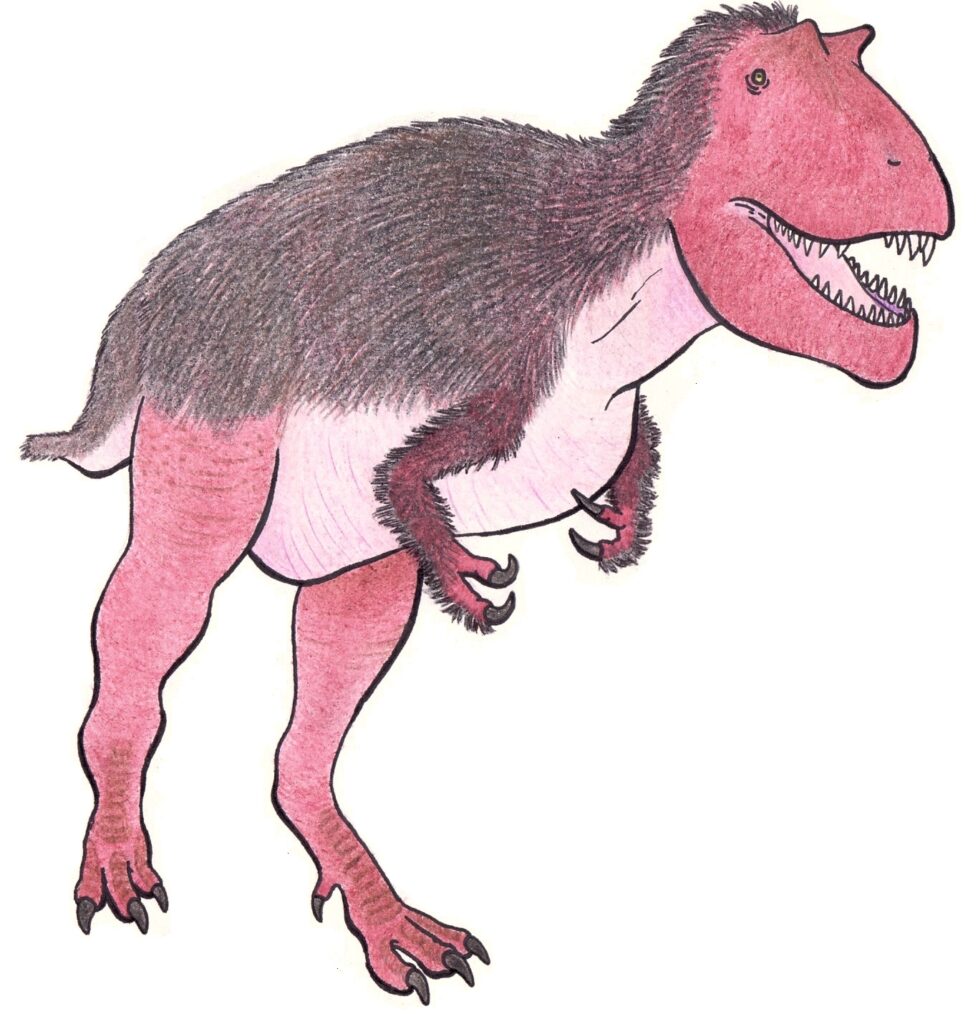
Intriguing evidence suggests Gorgosaurus may have engaged in some form of social behavior, challenging the traditional view of large theropods as solitary hunters. Multiple Gorgosaurus fossils discovered nearby at certain sites have led some paleontologists to hypothesize potential pack hunting or at least temporary group associations. One particularly noteworthy site in Alberta contained three Gorgosaurus individuals of similar age preserved together without signs of scavenging or water transport, suggesting they may have died simultaneously. If Gorgosaurus did hunt in groups, even occasionally, it would have significantly enhanced their ability to take down very large prey like adult ceratopsians or hadrosaurs. However, the evidence remains circumstantial, and the degree of sociality, if any, remains debated among experts. Alternative explanations include drought-related mass mortality events or coincidental preservation of animals that died separately.
Sensory Capabilities

Gorgosaurus possessed highly developed senses that made it a formidable hunter. Endocasts of its brain cavity reveal large olfactory bulbs, indicating an exceptional sense of smell that likely played a crucial role in locating prey and possibly carrion across long distances. Its vision was similarly advanced, with forward-facing eyes providing substantial binocular vision and depth perception, essential attributes for a predator that needed to judge distances accurately when pursuing prey. Studies of its inner ear structure suggest Gorgosaurus had excellent balance and spatial awareness, complementing its agile, speed-adapted body. Surprisingly, the relative brain size of Gorgosaurus was larger than many other dinosaurs of similar size, though still small compared to modern mammals. This relatively advanced neurology suggests Gorgosaurus may have exhibited more complex behaviors than once thought for dinosaurs, potentially including more sophisticated hunting strategies or environmental problem-solving abilities.
Skin and Appearance
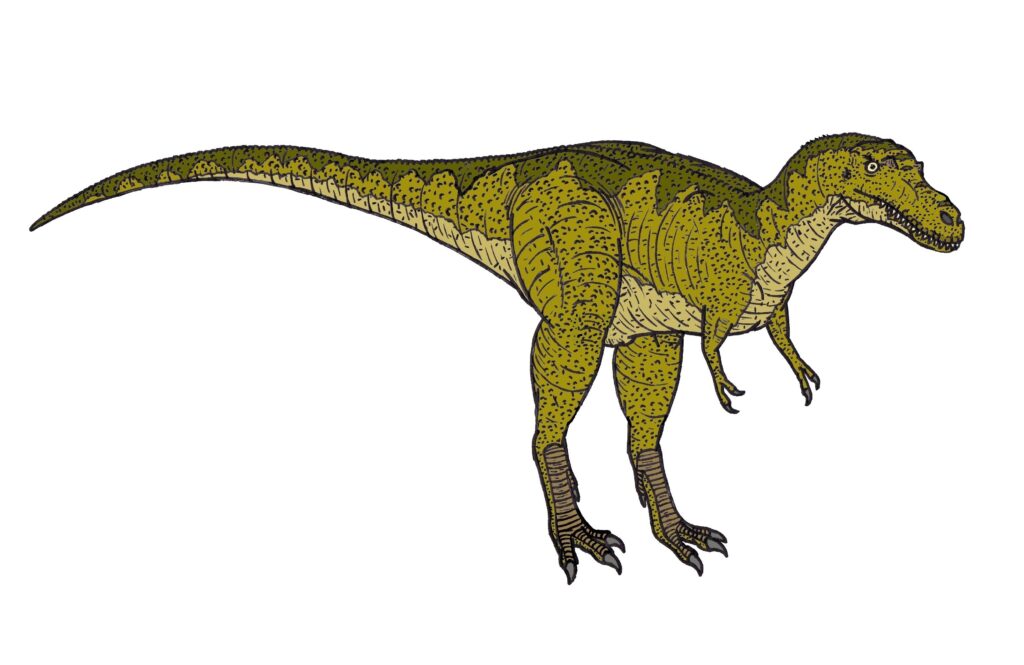
While no direct skin impressions of Gorgosaurus have been found, paleontologists can make educated inferences about its appearance based on closely related tyrannosaurids and broader theropod evidence. Unlike the feathered smaller theropods, large tyrannosaurids like Gorgosaurus likely had primarily scaled skin, though the possibility of sparse feather-like structures, particularly along the back or as display features, cannot be ruled out entirely. The coloration remains speculative, but biological principles suggest Gorgosaurus may have exhibited camouflage patterns adapted to its woodland and floodplain environments, possibly with counter-shading (darker above, lighter below) to break up its outline when seen by prey. Some paleontologists hypothesize that Gorgosaurus might have had distinctive facial features, possibly including keratin-based ornamental structures around the eyes or snout that could have served as species recognition signals or played roles in mating displays. These features, if present, would have made Gorgosaurus visually distinct from other contemporary predators.
Contemporary Dinosaur Species

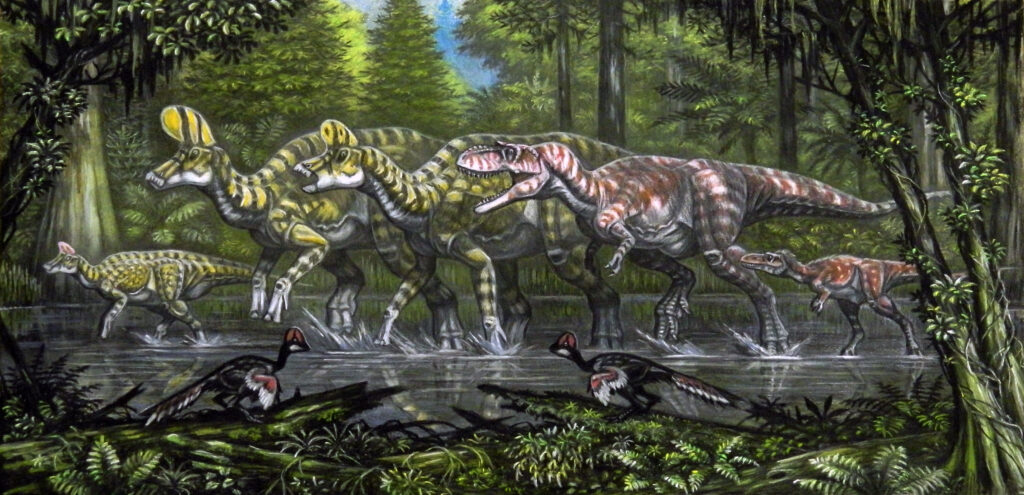
Gorgosaurus shared its Late Cretaceous ecosystem with a remarkable diversity of other dinosaur species, creating a complex ecological web. Among the most common herbivores were hadrosaurs like Corythosaurus and Lambeosaurus, whose abundant fossils suggest they formed large herds that would have been prime targets for Gorgosaurus. Ceratopsians, including Centrosaurus and Styracosaurus, were also prevalent, using their horns and frills as defense against predators. The heavily armored ankylosaurs, such as Euoplocephalus, presented too formidable a target for even Gorgosaurus to attack from most angles. Smaller predators, including dromaeosaurids like Dromaeosaurus and troodontids, occupied different niches, likely focusing on smaller prey. Interestingly, in some parts of its range, Gorgosaurus coexisted with another tyrannosaurid, Daspletosaurus, raising questions about how these similar large predators divided resources to avoid direct competition. This rich biodiversity indicates a productive ecosystem that could support multiple large predator species through niche specialization.
Scientific Significance and Ongoing Research
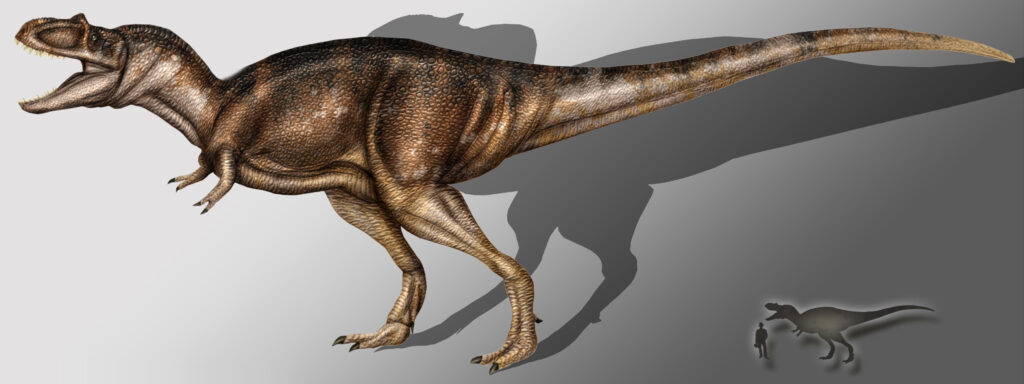
Gorgosaurus continues to be a focal point for groundbreaking paleontological research due to the relatively large sample size of specimens available for study. Recent technological advances have enabled more sophisticated analyses, including detailed biomechanical modeling of its bite force, running capabilities, and sensory systems. Digital reconstructions of its muscular system have provided new insights into its strength and movement capabilities. In 2017, a particularly significant study examined microscopic structures in Gorgosaurus bones, revealing evidence of medullary bone—a calcium-rich tissue found in female birds during egg-laying—potentially allowing scientists to identify the sex of certain specimens. Ongoing research includes isotope analyses of Gorgosaurus teeth to determine diet specifics and potential seasonal migrations. The genus also serves as an important reference point for understanding tyrannosaurid evolution, offering a well-documented intermediate form between earlier, smaller tyrannosauroids and the massive apex predators like Tyrannosaurus that evolved later.
Cultural Impact and Museum Displays
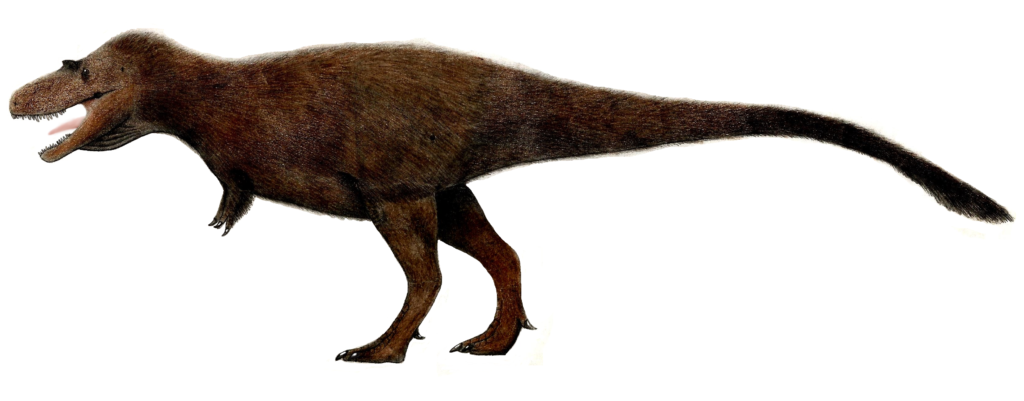
Though less famous than the T. rex in popular culture, Gorgosaurus has nonetheless captivated the public imagination through impressive museum displays and educational programs. The Royal Tyrrell Museum in Alberta, Canada, features multiple Gorgosaurus specimens, including one of the most complete skeletons ever discovered. The American Museum of Natural History in New York and the Royal Ontario Museum in Toronto also display notable Gorgosaurus fossils that attract thousands of visitors annually. The dinosaur made a memorable appearance in the BBC documentary “Planet Dinosaur,” where its hunting behavior and speed were highlighted. More recently, Gorgosaurus gained additional recognition through its inclusion in the Jurassic World franchise, introducing this lesser-known tyrannosaur to new audiences. In 2022, the sale of a Gorgosaurus skeleton at Sotheby’s auction house for over $6 million generated controversy among paleontologists concerned about scientifically important specimens entering private collections instead of remaining accessible for research in public institutions.
Conclusion
Gorgosaurus represents a fascinating chapter in dinosaur evolution, demonstrating how tyrannosaurs adapted to specific ecological niches millions of years before the T. rex dominated the landscape. Its combination of speed, power, and predatory adaptations made it perfectly suited to hunting the diverse herbivores of Late Cretaceous North America. As research techniques continue to advance, our understanding of this remarkable predator grows increasingly sophisticated, revealing a complex animal that was far more than simply “T. rex’s smaller cousin.” The ongoing discovery and analysis of Gorgosaurus fossils continue to provide valuable insights not just into this specific dinosaur but into the broader evolutionary history of tyrannosaurids and the dynamic ecosystems of the Late Cretaceous period. For paleontologists and dinosaur enthusiasts alike, Gorgosaurus remains a compelling subject that deserves recognition alongside its more famous relatives.