Greenland – Researchers examining decades-old sediment from beneath two miles of ice have discovered pristine plant and insect remains that paint a picture of a long-lost tundra landscape. The findings, drawn from the heart of the world’s largest island, challenge assumptions about the stability of the Greenland Ice Sheet. This revelation underscores how dramatically warmer conditions in the geologic past reshaped the region.
A Hidden Ecosystem Unearthed
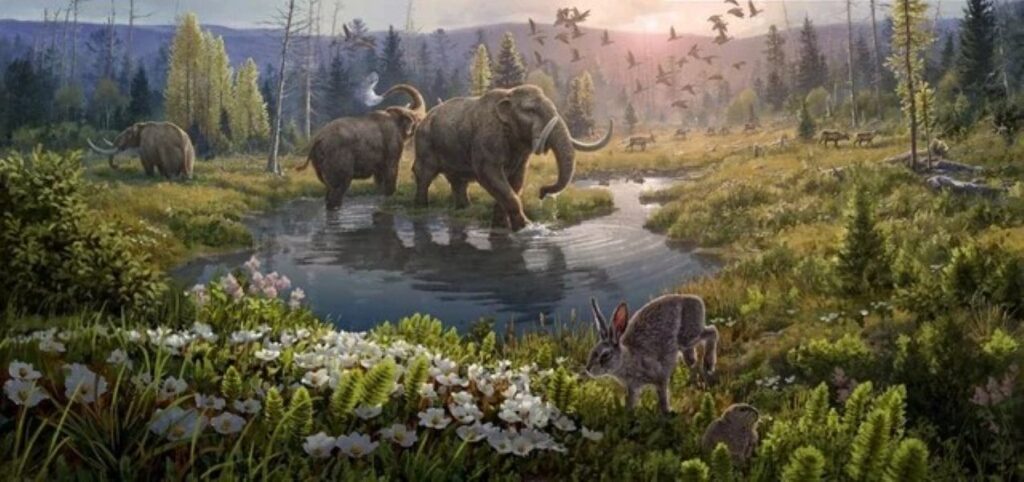
A Hidden Ecosystem Unearthed (Image Credits: Reddit)
Scientists reanalyzed sediment trapped at the bottom of the GISP2 ice core, drilled in 1993 near the summit of the Greenland Ice Sheet. Stored for over 30 years, the sample yielded remarkably well-preserved organic material. Under the microscope, tiny fragments emerged, offering direct proof of life where ice now dominates.
Halley Mastro, a graduate student at the University of Vermont, led the microscopic examination alongside experts like Dorothy Peteet from Lamont-Doherty Earth Observatory. The pristine state of the fossils stunned the team. Paul Bierman, a co-lead author, noted, “These fossils are beautiful.”
What the Fossils Tell Us
The sediment contained willow wood shards, a bud scale from a young willow, and a seed from an Arctic poppy. Insect parts included a compound eye likely from a fly and leg fragments. Fungi spores and megaspores from rock spikemoss rounded out the collection, alongside moss remnants.
These discoveries indicated a rocky tundra with patches of moss, low shrubs, and flowers. Soil had time to form, supporting a basic ecosystem with bugs and plants. No tall trees appeared, but woody willows suggested summers warm enough for growth.
- Willow wood and bud scales: Evidence of shrubby vegetation.
- Arctic poppy seed: A hardy flower adapted to cold edges.
- Insect eye and legs: Proof of active animal life.
- Fungi and moss spores: Indicators of moist, organic-rich ground.
- Rock spikemoss megaspores: Primitive plants thriving in tundra.
Pinning Down the Timeline
Cosmogenic nuclides in the bedrock beneath provided key age constraints. Previous work by Joerg Schaefer dated exposure to cosmic rays at less than 1.1 million years ago. The fossils aligned with this window, likely from an interglacial period around 400,000 years ago.
Such nuclides accumulate only when rock surfaces lie exposed without ice cover. Their presence confirmed the ice sheet vanished completely at the summit. Global temperatures then hovered near levels projected for century’s end, though CO2 remained lower than today.
Links to Earlier Finds
The GISP2 results echoed a 2021 analysis of Camp Century sediments from Greenland’s northwest coast. That site, drilled in 1966, revealed twigs, seeds, mosses, lichens, and possible conifer fragments under nearly a mile of ice. Both locations showed ice-free conditions within the last million years.
| Site | Location | Key Fossils | Implications |
|---|---|---|---|
| GISP2 | Summit/Center | Willow, poppy seed, insects, fungi | Full ice sheet melt, tundra ecosystem |
| Camp Century | Northwest coast | Twigs, seeds, moss, lichens | Coastal melt, vegetation growth |
Andrew Christ, lead on Camp Century, described the plant structures as “perfectly preserved” like a time capsule. Together, these bolster evidence of repeated vulnerability.
Warnings for a Warming World
If the center melted, much of the ice sheet likely followed, raising sea levels significantly. Full melt could contribute 23 to 24 feet globally, threatening coastal cities from New York to Mumbai. Bierman warned, “Look at Boston, New York, Miami… and add 20-plus feet of sea level.”
Richard Alley, a climate scientist, affirmed the findings show ice gone long enough for tundra to establish, similar to modern cold ecosystems. The study appeared in PNAS, shutting down doubts about interior stability. Peteet added, “The climate was warm enough for most of the ice to go away. It’s a warning for us today.”
- Direct fossils prove central Greenland supported tundra life post-melt.
- Ice-free within 1.1 million years, at near-future temperatures.
- Potential for 7+ meters sea level rise if warming persists.
These ancient remnants remind us that ice sheets respond swiftly to modest warming. As climate change accelerates, Greenland’s past offers a stark preview of possible futures. What do you think about these findings? Tell us in the comments.