El Impenetrable National Park, Argentina – Five guanacos completed their reintroduction to the Dry Chaco ecosystem this month after a 3,200-kilometer journey from Patagonia National Park and a year of acclimatization in pre-release pens.
A Groundbreaking Translocation Effort
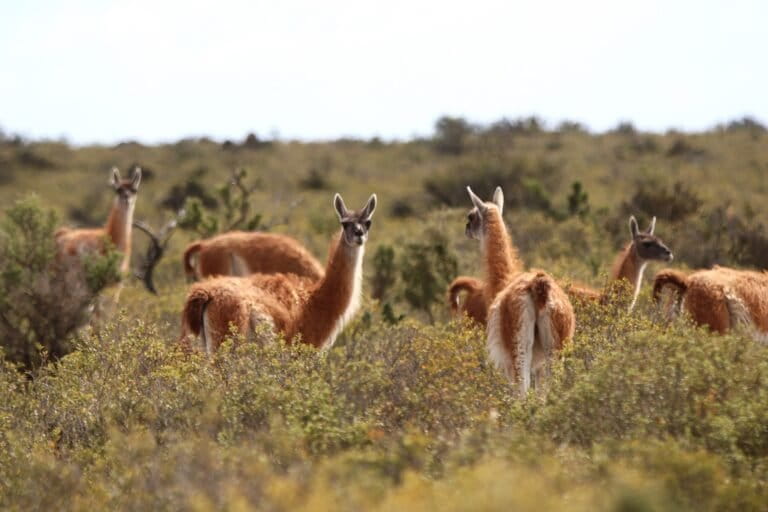
A Groundbreaking Translocation Effort (Image Credits: Imgs.mongabay.com)
Conservation teams captured the animals using innovative herding techniques with motorcycles to form a funnel, ensuring family groups remained intact during transport. The custom trailer, designed with input from South African experts, allowed for temperature control, vaccinations, and constant monitoring, resulting in no faRewilding Argentina coordinated the operation alongside Argentina’s National Parks Administration and the provinces of Chaco and Santa Cruz. The group consisted of three females, one male, and one juvenile, selected from Patagonia’s robust population that represents about 90% of the country’s guanacos.
This marked the longest overland wildlife translocation for conservation purposes ever recorded. Upon arrival, the guanacos adapted over 12 months, feeding on native plants and producing offspring with high survival rates. All now wear GPS and VHF collars for satellite tracking to monitor their movements and integration.
Reviving a Vital Ecological Role
Guanacos, South America’s largest wild camelids, once roamed the Chaco’s grasslands in large herds but vanished locally around 1913 due to hunting and habitat loss from cattle ranching. Their grazing maintains plant diversity, enriches soil with dung, and reduces wildfire fuel by clearing dry vegetation. In El Impenetrable, decades of overgrazing by livestock have degraded ecosystems, creating an opportunity for guanacos to restore balance as prey for reintroduced predators like jaguars and pumas.
Sebastián Di Martino, Rewilding Argentina’s conservation director, noted the animals’ importance: “In the absence of guanacos, the ecosystems of El Impenetrable have been severely degraded.” The project builds on prior efforts, including 45 guanacos moved to the Pampas region in 2023.
Community Ties and Economic Promise
Indigenous groups like the Qom, Wichi, and Guaraní hold cultural names for guanacos – Nawananga, Lu’hüt, and Guasukaka – recalling their historical abundance. Local resident Montiel Romero recalled: “Nawananga… were all over the Chaco in ancient times, but they disappeared with the arrival of settlers.” The reintroduction supports nature-based tourism, training communities for wildlife viewing and generating jobs in the emerging park corridor.
Rewilding Argentina integrates locals through programs like Entrepreneurs by Nature, fostering restorative economies amid broader species recoveries such as red-footed tortoises and marsh deer.
Debate Among Experts Intensifies
While supporters celebrate the milestone, scientists question the translocation’s wisdom. Critics highlight risks of disease transmission, genetic dilution from Patagonian stock, and mismatch between the cold Patagonian steppe and the Chaco’s subtropical dry forests. Ulises Balza, an ecologist at the National University of Tierra del Fuego, warned: “If conservation actions are to be guided by science, such an intervention would struggle to withstand rigorous scientific scrutiny.”
Filippo Marino of the Institute of Applied Ecology stressed adherence to IUCN guidelines for evidence-based moves. Di Martino countered concerns on genetics: “There will be no genetic swamping because we are using guanacos from the same species [and] subspecies.” Key concerns include:
- Disease risks during transport and integration.
- Potential ecosystem disruptions without full feasibility studies.
- Private-led initiatives bypassing public science oversight.
- Habitat suitability across vast climatic gradients.
Monitoring Success and Next Steps
Teams will track the initial group’s survival before proceeding with 20 more guanacos currently acclimatizing. Success could expand rewilding across the Gran Chaco, a biodiversity hotspot spanning Argentina, Paraguay, and Bolivia.
This bold step underscores rewilding’s potential yet highlights the need for balanced science and collaboration.
Key Takeaways
- The translocation covered 3,200 km, the farthest overland for conservation.
- Guanacos aid grassland recovery degraded by cattle.
- Debates center on genetics, disease, and habitat fit.
As these guanacos forge new paths in the Chaco, their journey tests the frontiers of restoration. What do you think about such ambitious translocations? Tell us in the comments.